


Hotmail application for Android phones
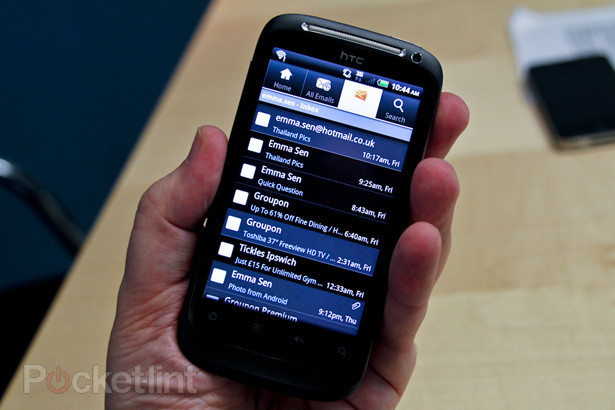
Microsoft has released an official Hotmail application for Android, and Pocket-lint was invited to the company’s London headquarters to check it out in advance of its public unveiling.
Demonstrated by Bryan Saftler, Hotmail product manager, Microsoft Consumer and Online UK, the new app offers cunning integration with the operating system, with a “you’ve got mail” icon appearing in the top left of the screen even when the screen is locked. The handset also vibrates to signify that an email has arrived. However, it’s not a native application, and is a free download on Android Market.
The layout of the screen is simple, offering tabulated access to the several different functions. There’s tabs for home, all emails, inbox and search, and one of the benefits is that you can add as many Hotmail accounts as you like. They’ll be split into separate inboxes or you can view all of the emails from all of the accounts together.
Microsoft kicks off Windows Phone 7.5 roll out
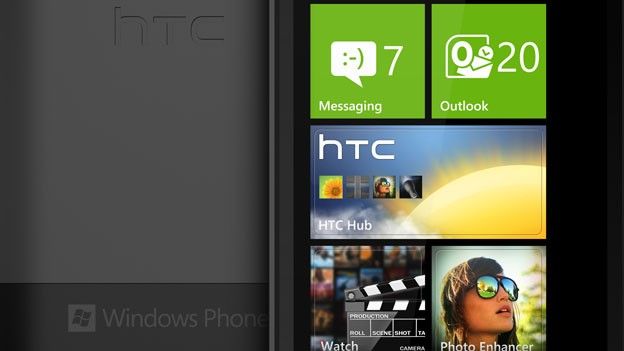
Got a Windows Phone? Well, today’s the day you’ve been waiting for. The new version of the OS, Windows Phone 7.5, or Mango to give it its proper in-house title, is being rolled out now, with all devices getting the upgrade by the end of October.
The new software includes improved Twitter integration, proper multitasking, better Facebook features and beefed up contacts and messaging apps. In all, it promises to make an already impressive OS much better.
Some phones, including HTC’s new Titan and Radar handsets, have already got the update. Nokia’s first Windows Phone is expected to be released later this year, loaded up with the latest edition of the OS.
Got a Windows Phone? Have you received your update yet? Tell us all about it in the comments section now.
Microsoft eyeing own-brand Windows 8 tablet for end of 2012?

There’s little doubt that the launch of Windows 8 will bring with it a wave of new tablet devices from all sorts of manufacturers and vendors. But did any of us expect to see one bearing Microsoft’s own logo? According to DigiTimes’ sometimes accurate, sometimes shaky upstream supplier sources, Steve Ballmer’s team is looking into putting together an own-brand Windows 8 slate, which will be powered by Texas Instruments silicon and put together by Taiwan-based ODMs. The deadline for this device is said to be by the end of 2012 and TI’s involvement suggests it’d be one of those newfangled ARM-based Windows machines, but beyond that, we’ve little more to go on. Whatever the outcome, don’t expect Microsoft to go overboard, DigiTimes says the company is “proceeding on a low profile.”
via Microsoft eyeing own-brand Windows 8 tablet for end of 2012? — Engadget.
Microsoft details SkyDrive integration with Windows Phone Mango (video)

We already knew Windows Phone Mango would include SkyDrive functionality, but Microsoft has now released a few more details on some of the cloud storage features we can expect to see when the update rolls out, later this year. With the update, SkyDrive users will be able to share their stored photos via text message, e-mail or IM, and to upload their videos to the cloud with the touch of a button. They’ll also be able to browse, share and edit uploaded MS Office documents directly from their handhelds, while searching through their entire SkyDrive via the Office Hub. Storage limits remain capped at 25GB, though Microsoft says we should expect to see more cloud-based features roll out in the near future (including a revamped, HTML5-based SkyDrive web interface), so more changes may very well be on the horizon. Soar past the break for some demo videos from Redmond, along with a hands-on clip from WinRumors.
via Microsoft details SkyDrive integration with Windows Phone Mango (video) — Engadget.
Windows Phone ‘Mango’ will be used on first Nokia WP devices
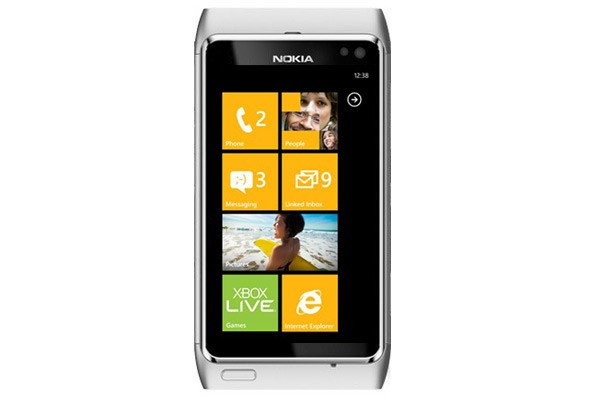
Nokia has noted Microsoft’s announcement of the new Windows Phone 7 (aka Mango) with word that the software being demonstrated today will be the one we’ll see on the first Nokia with Windows Phone device. It also slightly contracts the roadmap for the first handset born from the Microkia partnership, though Nokia’s statement makes sure not to make any promises about when said device will show up. Finally, we find the “Nokia with Windows Phone” phrasing somewhat peculiar, don’t be surprised if you see it turn into a branding strategy for Nokia’s smartphones going forward. Here’s the relevant statement, straight out of Finland:
“Today Microsoft has announced the key new ingredients of the latest ‘Mango’ release of the Windows Phone operating system. This is the software that will be used on the first Nokia with Windows Phone device, and so should be of keen interest to Nokia-watchers everywhere.”
Update: Microsoft just concluded its keynote with word that it already has Nokia phones running Mango in its labs. And none have leaked out yet, amazing!
Update 2: We were just contacted by a Nokia representative indicating that there was a mistake in the original announcement the company distributed. It wasn’t supposed to read device, it was supposed to be devices. More than one!
via Windows Phone ‘Mango’ will be used on first Nokia WP devices (updated: multiple!) — Engadget.
Microsoft announces Windows Phone ‘Mango’ update, coming in early autumn

Mango may no longer be a secret in and of itself, but we doubt Microsoft would’ve set up an entire event to preview its big Windows Phone update if there was nothing hidden up that Redmond sleeve. To that end, we’ve just come across an official press release from the company, released on its Romanian website. The machine translation awaits after the break.
The first thing to note is that the update will be “freely available” to all current Windows Phone handsets, something Microsoft already committed to, and will be ready for download “at the beginning of this summer.” (Update: it looks like our translation machinery betrayed us, tipsters are saying it’s actually the beginning of autumn.) Naturally, the new goodness will also figure in new devices and from new partners, including Acer, Fujitsu, and ZTE. Those fresh faces join Nokia and the incumbent partners of Dell, HTC, Samsung, and LG to expand the WP ecosystem.
A Beta SDK of the new Windows Phone free tools will be available within 24 hours, we’re promised, for developers to sink their teeth into.
In the communications department, Microsoft is introducing conversation threads, which seamlessly transition between MSN Messenger chats, SMS, and other messaging to keep you talking to the same person irrespective of the method. New contact group tiles are also incoming, with the ability to send quick emails or IMs to entire groups. Twitter and LinkedIn contact integration is mentioned, though we expect this go a lot deeper in Twitter’s case, as Microsoft has already demonstrated. Speaking of more in-depth integration, Microsoft has improved the Live Tiles to allow the display of more dynamic information from apps, which will of course be able to multitask beautifully. Internet Explorer 9 is also joining in on the Mango fun with support for HTML5. Jump past the break for all the details.
via Engadget.
Microsoft to show off a slew of tablets at CES
 Who knew that the collective noun for a group of tablets was a “slew”?
Not us, but that’s the word that The New York Times has gone with when it describes just how many slate devices Microsoft will be showing off at CES in January.
The report quotes a number of people “familiar with Microsoft’s plans” and indicates that Mr Excitable himself, Steve Ballmer, will take to the stage to demo Windows devices from the likes of Dell and Samsung.
There’s even a suggestion that the shiny headed CEO will give us a sneak peak of some devices running Windows 8. Oooooh (that right there is genuine intrigue people).
The new tablet-like devices are said to have the iPad in their sights, although with an extended reach.
“The company believes there is a huge market for business people who want to enjoy a slate for reading newspapers and magazines and then work on Microsoft Word, Excel or PowerPoint while doing work”. said a NYT source.
The Samsung one is described as being “similar in size and shape to the Apple iPad, although it is not as thin. It also includes a unique and slick keyboard that slides out from below for easy typing”.
Now we’ve heard rumours about a slider QWERTY Samsung slate before, but it has so far been mentioned in the same breath as Android. Could it be that it will be making the jump to the good ship Windows?
The devices are said to run Windows 7 in landscape mode, but with a new “layered-interface” when you swivel the machine into portrait. Oooooh – again, genuine intrigue.
Windows tablets are often talked up and Ballmer even promised himself that we’d see some before Christmas. But, so far, the only big player to come to the market with one is HP with the business-aimed Slate 500, although we have also seen efforts from the likes of ViewSonic and Tega.
Could CES 2011 really be the big launch pad for mainstream Windows tablets?
We hope so, because with rumours of the iPad 2 heating up, and Honeycomb bringing Android into a more comfortable tablet space, next year could be an exciting one in the tablet market.
First official HTML5 tests topped by…Microsoft
 The Worldwide Web Consortium has released the results of its first HTML5 conformance tests, and according to this initial rundown, the browser that most closely adheres to the latest set of web standards is…Microsoft Internet Explorer 9.
Yes, the HTML5 spec has yet to be finalised. And yes, these tests cover only a portion of the spec. But we can still marvel at just how much Microsoft’s browser philosophy has changed in recent months.
The W3C tests — available here — put IE9 beta release 6 at the top of the HTML5 conformance table, followed by the Firefox 4 beta 6, Google Chrome 7, Opera 10.6, and Safari 5.0. The tests cover seven aspects of the spec: “attributes”, “audio”, “video”, “canvas”, “getElementsByClassName”, “foreigncontent,” and “xhtml5”:
The tests do not yet cover web workers, the file API, local storage, or other aspects of the spec.
Not do they cover CSS or other standards that have nothing to do with HTML5 but are somehow lumped under HTML5 by the likes of Apple, Google, and Microsoft. As Mozilla man Asa Dotzler pointed out, when Microsoft released its IE9 platform preview 6, it said that its “HTML5 features include CSS3 2D Transforms.”
“WTF, Microsoft? Are you trying to add more confusion to the conversation?” Dotzler wrote.
“HTML5 features include CSS3? That’s seriously confused. Please stop this. HTML5 is HTML. CSS3 is CSS. The two are not the same thing.”
Microsoft motion control coming to Windows?
 Say what you like about Microsoft Kinect; we’ve wanted to breeze through T3.com with a swish of the hand since we saw Tom Cruise controlling his computer that way in Minority Report way back in 2002.
Happily, it seems Microsoft feels the same way, announcing yesterday that it has just purchased Silicon Valley-based gesture recognition company Canesta, which makes chips that can allow computers with attached cameras to perceive depth and see in three dimensions. The goal is a more grown-up version of Microsoft’s Kinect, which could be used to control your PC without the need for any additional peripherals.
Far from limited to computers, however, Canesta’s mission is to put intelligent cameras into all kinds of everyday appliances including cars, televisions and mobiles.
Microsoft CEO Steve Ballmer commented recently that he is “excited to be way out in front and want to push the pedal on [gesture control]”. No word on when we expect to ditch the mouse and keyboard on our home computers, but we’ll be keeping our ear close to the ground on this one.
Office 2011 for Mac is available
 There are plenty of free, paid, web-based, desktop-bound, cross-platform, or uni-platform alternatives, but there can only be one Office. Microsoft’s flagship desktop suite of productivity applications just got a major new update. Office 2011 for Mac replaces Microsoft’s Mac-specific Entourage email app with the industry standard Outlook, brings in some interface tweaks from Office 2010 over in PC land, and integrates with those Office Web Apps you’ve been hearing so much about. The entire “Home & Business” bundle goes for $279, and if you’re not so into Outlook, you can get the Word / PowerPoint / Excel “Home & Student” version for $149.

