


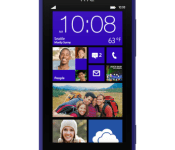
HTC working with Microsoft to bring Windows Phone Blue to 8X

HTC hasn’t forgotten about Windows Phone after all. The company’s been pretty silent on any sort of collaboration with Microsoft for a long time, but the North American product team spoke up today on Reddit. When asked if HTC is done with Windows Phone, the team stated: “we’re working with Microsoft on the Blue update on Windows Phone 8X and will continue to take new products into consideration.” Indeed, it appears that the 8X — which will be nearly a year and a half old in April, when the Blue update is rumored to launch — will get the latest and greatest version of Windows Phone after all, and perhaps we may even see new hardware down the road. Sadly there’s no word on what will happen to the 8S, which launched around the same time, so we’ll have to wait and see. As a sidenote, it’s also rare to hear companies directly confirm the existence of upcoming updates, but let’s face it: It’s not as if it’s really that big a secret these days anyway.
Filed under: Wireless, Mobile, Microsoft, HTC
Source: Reddit
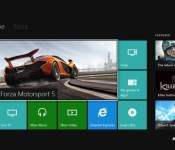
First Xbox One update goes live

Microsoft’s spring update for the Xbox One is here! (Cue triumphant trumpets.) It’s a few days later than anticipated but, as they say, better late than never. The first major update for the console packs a host of improvements, including better Kinect voice recognition, improved all-round stability, and some key fixes to the dashboard — such as onscreen meters for the controller’s battery and free HDD space. You’ll also be able to plug a USB keyboard in, which should make web browsing and searching a whole lot less painful. The update is rolling out to customers during “off-peak” hours in their local time zones. Or as the ever eloquent Larry Hryb put it, “never fear you’ll see it sometime over the weekend.” If you’re taking advantage of Xbox’s Instant On feature, the console will check for an update next time you turn it off.
Filed under: Gaming, Microsoft
Source: Major Nelson

Microsoft Office for iPad Coming ‘Sooner Than Most Think’
Microsoft has been rumored for a number of years to be bringing its Office productivity suite to the iPad, and according to a new report from ZDNet, it is coming “sooner than most think.” Sources have indicated to ZDNet‘s Mary Jo Foley that Office for iPad may even arrive before the “touch first” Windows version that had been reported to be leading the way.
But I hear Ballmer and the senior leaders of the company may have had a change of heart towards the end of last year. According to one of my contacts, Ballmer OK’d the suggestion by the Office team that they’d bring Office for iPad to market as soon as it was ready, even though that would likely mean before the Windows 8 version. I’m hearing that new date for Office for iPad is some time in the first half of calendar 2014. (My sources last summer were hearing Office for iPad wouldn’t debut until Fall 2014.)

Foley notes that it is still unclear in exactly what form Office for iPad will arrive, but it will presumably involve Microsoft’s Office 365 subscription service and potentially integrate with the company’s OneDrive cloud storage. The company currently offers an iPhone app that offers viewing and limited editing capabilities, with the available free of charge but requiring an Office 365 subscription.
     |
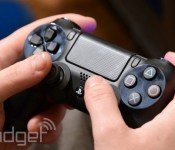
PlayStation 4 tops next-generation console sales in the US for January

As it turns out, Microsoft’s lead in US next-generation console sales was short-lived. The NPD has just released estimates which show that the PlayStation 4 outsold the Xbox One during January. Neither the NPD nor Sony is providing exact numbers, although Sony Senior VP Guy Longworth states that PS4 sales were almost twice as high as Microsoft’s. The system was certainly alluring enough to drive game sales during the quarter — the PS4 was the platform of choice for five of the top 10 games, while the Xbox One was never higher than second.
Microsoft also isn’t divulging Xbox One figures, although the NPD tells us that the system was the runner-up in hardware sales. The company can trumpet the strength of the overall Xbox brand, though. Together, the Xbox 360 and Xbox One represented 47 percent of game sales; the Xbox 360 was also the most popular system for five of the top 10 software releases. Nintendo has a silver lining on its dark cloud, too. Game sales for the 3DS and Wii U respectively increased by six and 26 percent year-over-year. That’s no mean feat when overall spending was down by a quarter. Whichever platform you prefer, we wouldn’t declare the console wars over — not when expected system sellers like Titanfall could easily shift the balance of power.
This just in: PS4 the #1 selling game console in the US in January, still #1 worldwide. Thanks, guys! pic.twitter.com/1vOFmtUukX
– PlayStation (@PlayStation) February 13, 2014
per @LuckyLongworth: PS4 was #1 in sales for next gen consoles in January, nearly doubling the nearest next gen competitor.
– Geoff Keighley (@geoffkeighley) February 13, 2014
Filed under: Gaming, Sony, Microsoft, Nintendo
Source: PlayStation (Twitter), Xbox Wire, Geoff Keighley (Twitter)

Cable companies and tech giants reportedly joining forces to push ‘WifiForward’

Time Warner, Comcast, Charter, Google, Microsoft and Motorola aren’t the most likely of allies, but it appears they’ll be teaming up to form the new WifiForward coalition. According to the Wall Street Journal, the group will be pushing to expand WiFi access, primarily by lobbying the government to free up more spectrum for unlicensed uses. Each of the companies has been pushing for such measures independently, but by joining forces they’re hoping to have more success. Increasing the available airwave space for WiFi transmissions will become increasingly important as the number of smartphones and over all data consumption in the US grows. Cisco Systems says that the average American consumed 1.4 GB of data per-month in 2013 and 57 percent of that was over WiFi. By 2018 that number could grow to 9 GB per-month.
Notably absent from the list of companies are the mobile carriers. AT&T and Verizon in particular have invested heavily in building robust LTE networks. The less traffic traveling over those wireless frequencies, the less money the companies are generating — and the percentage of mobile data sent over WiFi is only increasing. Google has invested heavily in WiFi across the country, and the major cable providers have joined forces to share their roughly 250,000 hotspots. Now these big players need to figure out how to take the next step.
Filed under: Wireless, Microsoft, Google
Source: Wall Street Journal
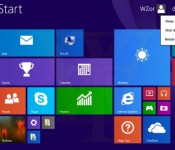
Windows 8 sales pass the 200 million mark, still trail Windows 7’s success

Back in May, Microsoft announced over 100 million sales of Windows 8, but how much progress has the software made now that we’re in 2014? Today the company reported shipment of more than 200 million Windows 8 licenses. As usual, Microsoft didn’t specify whether or not that figure includes Windows RT licenses as well.
Naturally, those numbers mean nothing without context. Compared to Windows 7 sales a few years back, the latest-gen operating system is lagging. Windows 7 passed the 240 million mark within its first 12 months on the market, while Windows 8 is just hitting 200 million after more than 15 months of availability. Several reasons factor into Windows 8′s slower pace — among them lackluster sales of Microsoft’s Surface tablets and a shortage of touch- and tablet-optimized apps. The company hasn’t said much about the upcoming Windows 8.1 Update 1, but rumors point to better compatibility with budget tablets and an interface that favors the classic desktop over the Start screen. Look for that update to hit the market in April.
Filed under: Desktops, Tablets, Software, Microsoft
Source: ZDNet
Skype: Our mobile experience could be better
Skype is a very inconsistent experience, especially when compared to it’s iOS counterpart. It seems, however, that Skype are fully aware of this. They just took to their blog to reassure loyal Android users that they are working hard to improve the service.
We know that as users have started using Skype on multiple devices, they’ve had difficulty keeping conversations in sync, or they’ve missed messages and seen “read” messages on one device that are still marked as “unread” on another. We’ve been working hard to solve these issues while adding other experiences to make an improved Skype chat.
Of most importance is the sync feature of the Skype application, which keeps the chat messages and notifications in sync with the server, and it’s this which is somewhat unreliable on Android. With Skype promising to fix this issue, it will make the experience on Android substantially better.
Skype also mentions that they are working on an update to improve battery usage, and startup/resume times also. It seems the Skype team have been a busy bunch lately. Stick around on AndroidGuys for when this update gets pushed out, plus any additional features that may find their way into it.
The post Skype: Our mobile experience could be better appeared first on AndroidGuys.
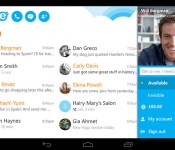
Skype’s new tweaks will sync all your devices and notify you quicker

One of the downsides of owning a smartphone, tablet and a computer, is that you can miss important messages if they only land on one of that trio. That’s the thinking behind the latest Skype update, which will now sync your chats across all of your devices. The tweaks also bring push notifications, alerting you to new messages and, perhaps best of all, delivery receipts, so you’ll always know exactly when your missives have been read — or ignored.
Filed under: Software, Mobile, Microsoft
Source: Skype

Xbox One Media Remote briefly surfaces, hints at March 4th release

Between Kinect, Smartglass and the Xbox One controller, there are plenty of ways to control Microsoft’s new home entertainment system – but no traditional clicker for media moguls. That might change next month. A pre-order page for an Xbox One Media remote briefly appeared on Amazon’s Canadian website today, revealing an image, a price and little else. The page wasn’t up for long, but a Google Cache preserved the details: the above image, a $24.99 price tag ($22.69 in US currency) and a March 4th release date. The Xbox-branded clicker is light on buttons, and seems outfitted only with the bare minimum needed to navigate the console’s menus, switch apps and pause, play or rewind media. It seems like a nice (and affordable) companion to Microsoft’s other March-bound Xbox One accessories, but take this leak with a grain of salt: the Amazon page lists the remote as a game, and even gives it a pending ESRB rating. At least you’ll know if it’s safe for your kids.
Filed under: Gaming, Home Entertainment, HD, Microsoft
Source: Amazon.ca (Google Cache)

Nokia Lumia Icon coming to Verizon February 20th for $200 (hands-on)

Yes, Windows Phones are finally keeping up with the Joneses. Thanks to the latest update, smartphones running Microsoft’s mobile OS can now have top-of-the-line components. We got a good taste of how this feels with the Nokia Lumia 1520 (spoiler: It’s pretty dang good), but most people would prefer flagship specs in a smaller phone. Enter the Lumia Icon, a loaded 5-inch WP8 device exclusive to Verizon that goes on sale in black and white colors February 20th for $200 with a two-year contract. (It’ll cost $550 at full retail or Edge pricing.)
The Icon comes with nearly all the same specs as the Lumia 1520: a 1080p display, 2.2GHz Qualcomm Snapdragon 800 processor, 20-megapixel PureView rear camera (with optical image stabilization, a 1.2MP front-facing webcam, a Gorilla Glass 3 screen, Qi wireless charging, NFC, dual-band WiFi 802.11a/b/g/n/ac and Bluetooth 4.0 + LE. Unsurprisingly, the 2,420mAh battery is smaller, and we hope it can efficiently manage the high-def screen and quad-core processor without a huge drain to the battery.
Aside from the battery and smaller screen, the Icon is an exclusive to Verizon, as evidenced by the three carrier-specific logos on the front and back. And while we wouldn’t be surprised to see a 5-inch 1080p Lumia device hit the rest of the market at some point, it probably won’t look like the Icon. The phone sports straight aluminum sides and a curved back fashioned out of matte polycarbonate. In many ways, the setup reminds us of the Lumia 925, which features rounded metal sides and the same plastic back; the Icon is 0.5mm thicker, but it also doesn’t have a distracting camera hump like the 925 has. We’ll offer more impressions below, but not before showing off a gallery of images and a brief walk-through video.
Before we go any further, it’s important to acknowledge the display — the first 5-inch 1080p ClearBlack panel to show up in a Windows Phone. Nokia opted for an OLED screen instead of LCD this time around — the 1520 features the latter, while the 1020 and 925 use the former — and it boasts a pixel density of 441 pixels per inch. In addition to a sharp picture, it brings fantastic viewing angles, 500 nits max brightness and an incredibly low-glare screen (similar to what we saw on Nokia’s Lumia 2520 tablet). While the Lumia 1520 screen was beautiful, we found ourselves champing at the bit to play with a similar HD display in a smaller size — and we were impressed as soon as we saw it.
Another aspect of the Icon worth mentioning is its four-microphone setup for directional audio. The Lumia 1520 had this as well, but it’s great to see it becoming a standard on Nokia’s latest devices. With a pair of mics in the back and another pair in the front, it allows you to hear audio from the situation in front of you while filtering out the extra noise going on in the background. And speaking of audio, the external rear speaker is placed near the bottom end, right where the flattest part of the back begins to slope gradually to the edges; Nokia assures us that audio won’t sound muffled because the back is curved, however, so we’ll have to save our conclusion for the official review in a few days.

When viewing the front or back of the Icon straight-on, you’ll notice that the metal sides ring around the perimeter, which we presume serve as protection from most impacts. Those same sides are also connected to the back by a small chamfer. The top and bottom edges are nearly symmetric: The bottom features a centered micro-USB fast-charge 2.0 port and you’ll find a 3.5mm headphone jack in the same spot up top (though there’s a metallic tray for your nano-SIM just to the left, which throws off the symmetry a bit), and each port is flanked by the phone’s gray antennas.
It’s a solid device with good materials, to be sure, but there are a couple things to watch out for. Since the metal plays a prominent role in the phone’s design, you probably won’t last a full two years without at least a few minor dings and scratches on the side (if not much worse) — if you’ve used the iPhone for an extensive period of time, you may already know what we’re talking about. Additionally, if you don’t typically like blocky phones, the Icon won’t appeal to you — it’s essentially a thinnish block with a little bubble in the back. On the flip side, it’s easy to hold and you won’t ever feel like it’s going to slip out of your hands, but it’s certainly something worth noting.
We’ll have a full review ready for you in just a few days, so stay tuned.
Filed under: Cellphones, Wireless, Mobile, Microsoft, Nokia, Verizon

