


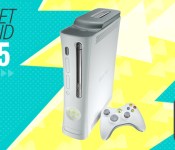
Gadget Rewind 2005: Xbox 360

The current-gen console wars may be tilting in Sony’s favor with its PlayStation 4, but once upon a very recent time (i.e., the previous console generation), Microsoft had a big early lead. When the company released its Xbox 360 back in 2005, the console had a considerable head start on the competition, beating Sony’s PlayStation 3 launch by a full year. There were, however, intrinsic pitfalls in rushing the 360 out to market so fast; hardware problems Microsoft paid for dearly.
The Xbox 360′s November 2005 launch was highly anticipated, with thousands of gamers (several Engadget editors among them) braving late hours and cold weather to snag one. Unfortunately for those eager gamers, Microsoft’s haste to meet holiday deadlines resulted in limited stock levels, leaving many shoppers empty-handed and disappointed. On top of that, a significant portion of this initial run — about 3 percent, according to Microsoft — was afflicted with the “red ring of death,” a dreaded, scarlet indicator that signaled a defunct, or “bricked” console. That production hiccup meant a good deal of early adopters had to spend those first days on the phone with customer support instead of playing their new 360s. Microsoft eventually responded to the crisis and made an effort to smooth out those issues with extended warranties, software updates and revised production runs.
Early hardware issues aside, the Xbox 360 was regarded by many as a beautiful thing, with a slimmer and more streamlined build than that of its hulking predecessor. Its gamepad even went on to become a high-water mark for controller design, setting a standard that’s been emulated by many third-party companies since. And it’s still the go-to for many PC gamers to this day. The 360′s also credited with popularizing online multiplayer for console gaming with Xbox Live. That service, which debuted on the original Xbox, benefitted tremendously from Microsoft’s earlier dalliance with online gaming and, of course, the 360′s robust install base.
Limited onboard storage capacity, however, certainly discouraged wanton spending on digital games. The Premium Edition of the Xbox 360 came with a 20GB hard drive, making it the preferred option for most consumers. The cheaper Core version didn’t have a hard drive at all, although for $100, gamers could purchase a 20GB add-on HDD. Without it, however, they couldn’t download much content or play last-gen Xbox games. As the years went by, Microsoft released new 360 models with larger-capacity drives to accommodate the growing file size of games and gamers’ appetite for downloads.
It didn’t take long for Microsoft to garner gamers’ loyalty with the Xbox 360. In its first three years on the market, the 360 effectively surpassed the original Xbox’s lifetime sales with over 30 million units sold. That number then rose to 80 million units by 2008 and got another boost with the Kinect’s release in 2010. Thanks to that monstrous install base, new games continue to arrive for the console to this day; games that are also seeing simultaneous release on next-gen consoles.
Microsoft may be passing the torch to its shiny and new Xbox One, but regardless, sales numbers for the 360 remain strong. In March of this year, over 100,000 units were sold. In fact, the Xbox 360′s been handily beating Nintendo’s struggling Wii U for 25 months straight. Not bad for a nearly 9-year-old console, eh?
Did you own an Xbox 360? Add it to your Engadget profile as a device you had (or still have) and join the discussion to reminisce or share photos of your device with other like-minded gadget fans.

AOL strikes deal with Microsoft to get more eyeballs on its online videos

Judging by the comments y’all leave on every story about AOL, a few of you still think the company makes its money off grandmas who forgot to cancel their landline service. In fact, AOL owns, among other things, The Huffington Post, TechCrunch, Engadget (hey-o!) and the online video service AOLOn — yep, the same one we use to publish our review videos. After inking a movie streaming deal with Miramax earlier this week, AOL has signed a distribution deal with Microsoft, which means depending on which OS you use, you might soon be seeing a lot more AOLOn videos than you’re used to. In particular, the agreement brings a portion of AOL’s 900,000-item catalog to MSN and Bing apps on Windows and Windows Phone. All told, according to Variety, the deal includes 15 channels (“technology,” for example), along with AOL’s 2014 original programming, though none of those shows have actually been announced to the public yet. Look for those videos to start popping up this summer; in the meantime, you can find our video reviews where they’ve always been.
Filed under: Internet, HD, Microsoft
Source: Variety

Weekends with Engadget: Nokia joins Microsoft, lost Andy Warhol artwork and more!

Welcome to Weekends with Engadget, a quick peek back at the top headlines from the past seven days — all handpicked by the editors here at the site. For even more action, subscribe to our Flipboard magazine!

Nokia is now officially part of Microsoft
Well, it’s finally official: Nokia is now one with Microsoft. What does that mean for the of the Nokia X and Lumia handsets? Read on to find out exactly what you need to know about the acquisition.

A traveler’s guide to in-flight WiFi
Just as airlines are becoming more friendly towards gadgets, in-flight WiFi is making great strides at 30,000 feet. Read on as Zach Honig, our own resident travel expert, explains the newest connectivity options from several major airlines.

Netflix data didn’t feed House of Cards’ success, ‘the bliss of ignorance’ did
If you were turned off to Netflix’s House of Cards after the serie’s brutal opening scene, you wouldn’t be alone. But regardless of the negative feedback, Beau Willimon, the man responsible for the show’s development, says that his only responsibility is to “tell a great story.”

Defiantly plastic: designing the Galaxy S5
Many of you might be wondering why the Samsung Galaxy S5 is crafted from polycarbonate instead of metal. According to Senior Product Designer Dong Hun Kim, plastic is warmer, friendlier and better symbolizes the company’s design concepts.

Sony Xperia Z2 Tablet review: A top-tier slate with a familiar face
The Xperia Z1 slate was Sony’s debut into the high-end tablet market. Now, the company’s back for round two with the Xperia Z2 Tablet — and it looks a lot like its sibling. The Z2 may be more of a refinement than exciting new product. But hey, if it ain’t broke, don’t fix it.

Google Senior VP and head of Google+ Vic Gundotra is leaving the company
Earlier this week, Vic Gundotra, the man responsible for Google+, announced he’s parting ways with Google. After eight years of service to the Mountain View company, Gundotra fittingly took to G+ and explained that “now is the time for a new journey, a continuation.”

Lost Andy Warhol artworks discovered on Amiga floppies from the ’80s
Apparently, pop artist Andy Warhol crafted a small, previously unseen collection with an Amiga 1000 back in 1985. And thanks to the collaborative efforts of several artists, archivists, curators and the Carnegie Mellon University Computer Club, the works have been recovered from a whopping 41 floppy discs.

Google Glass now available to anyone, may be prepping for public launch
Move over Google Explorers. As of this week, anyone can splurge on their very own Google Glass headset, not just those with an invite. Now you can finally spend the $1,500 of cash that’s burning a hole in your back pocket.

Samsung opens its own Innovation Museum, we take an early tour
Samsung recently opened its new Innovation Museum to the public, offering a stylish look at the history behind some of the greatest technological milestones of our time. Fortunately for you, our own Mat Smith already visited the complex for a tour.

Samsung Gear Fit review: a messy merger of fitness band and smartwatch
Samsung’s Gear Fit is an interesting blend between a smartwatch and fitness tracker. Sure, it’s comfortable, has a beautiful display and a built-in hear rate monitor, but its software leaves much to be desired. As is, the Gear Fit isn’t worth $200.
Filed under: Misc

Microsoft’s E.T. game excavation hits paydirt

It looks like the legend might be true after all. Microsoft has uncovered intact copies of E.T. for the Atari 2600 at a New Mexico landfill, supporting claims that Atari buried legions of unsold cartridges in the desert after the movie-themed game proved to be a massive failure. With that said, it’s not yet clear that this is the treasure trove that Microsoft was hoping to find for its first Xbox-only documentary. The excavation team has only found a few E.T. units as of this writing, and they have company — there’s a shrink-wrapped copy of Centipede in the mix, for one thing. If the team does find many more examples of the extra-terrestrial flop, though, it could finally put a 32-year-old mystery to rest.
[Image credit: Lauren Hansard, Twitter]
Filed under: Gaming, Microsoft
Source: Major Nelson (Twitter 1), (2)

Windows Phone’s music app now lets you start playlists using your voice

When the Windows Phone 8.1 preview rolled out, its music app was underwhelming; you couldn’t use Cortana voice commands for everything, and it was fairly buggy. Both of those gripes are gone now that Microsoft has updated the music client with its latest mobile OS in mind. You can now use voice to do most anything, including starting playlists by name; you no longer have to go hunting for that collection of hot summer jams. Problems with unexpected black screens should also be gone, and interface transitions should be smoother across the board.
This is just a hint of what’s to come, too. Microsoft is promising a series of updates that bring Live Tile support, initial background syncing and more intuitive playback controls. You should see the next upgrade sometime within two weeks, as of this writing. If there’s something you don’t like now, there’s a chance that Redmond will fix it in short order.
Filed under: Cellphones, Mobile, Microsoft
Via: Xbox Music Team
Source: Windows Phone Store
Daily Roundup: Nokia joins Microsoft, a traveler’s guide to in-flight WiFi, and more!

You might say the day is never really done in consumer technology news. Your workday, however, hopefully draws to a close at some point. This is the Daily Roundup on Engadget, a quick peek back at the top headlines for the past 24 hours — all handpicked by the editors here at the site. Click on through the break, and enjoy.

Nokia is now officially part of Microsoft
Well, it’s finally official: Nokia is now one with Microsoft. What does that mean for the of the Nokia X and Lumia handsets? Nadella and Co. promised to continue supporting both lineups, but only time will tell, right?
A traveler’s guide to in-flight WiFi
Just as airlines are becoming more friendly towards gadgets, in-flight WiFi is making great strides at 30,000 feet. Read on as Zach Honig, our own resident travel expert, explains the newest connectivity options from several major airlines.
Netflix data didn’t feed House of Cards’ success, ‘the bliss of ignorance’ did
If you were turned off to Netflix’s House of Cards after the serie’s brutal opening scene, you wouldn’t be alone. But regardless of the negative feedback, Beau Willimon, the man responsible for the show’s development, says that his only responsibility is to “tell a great story.”

Watch this six-way trailer for Evolve, the latest shooter from the makers of Left 4 Dead
Turtle Rock Studios, the team behind Left 4 Dead, have a brand new co-op shooter incoming called Evolve. What’s more, the game’s trailer is interactive, allowing viewers to switch between the perspective of each player with just a click of the mouse.
You also might like:

Judge rules US search warrants still apply to info stored overseas

A New York judge just made a ruling that could set a dangerous precedent: he’s decided that US search warrants still apply to email accounts and other digital info, even if they’re stored overseas. US Magistrate James Francis made that decision to make sure a search warrant issued to Microsoft for a user’s account whose emails are stored on a Dublin, Ireland server goes through. The tech giant’s thankfully fighting that decision, and in a statement says:
A U.S. prosecutor cannot obtain a U.S. warrant to search someone’s home located in another country, just as another country’s prosecutor cannot obtain a court order in her home country to conduct a search in the United States. We think the same rules should apply in the online world, but the government disagrees.
Sadly, Judge Francis doesn’t share the same thinking and believes search warrants for digital contents should be executed no matter where in the world they’re stored. He also says internet companies like Google and Microsoft have no right to refuse if a court orders them to hand over a user’s details.
Sadly, Judge Francis doesn’t share the same thinking and believes search warrants for digital content should be executed no matter where in the world they’re held.
Filed under: Microsoft
Source: Reuters

What you need to know about Microsoft’s acquisition of Nokia

Nokia hasn’t always been a phone manufacturer. The company dabbled in paper products, footwear and tires before it became involved in the wireless industry. Starting today, it begins a new chapter as its Devices and Services division gets swallowed up by Microsoft in a $7 billion deal. Change is in the air, but very little is known about what exactly will be different now that the two companies are coming together in holy matrimony. Neither party was legally allowed to discuss details about the acquisition in public.
Today, Microsoft gets to flip the switch and Nokia gets to switch its business cards. (A shame, since its cards are very happy-go-lucky.) But this is just the beginning of a lengthy move-in process in which the two companies can finally start working together as one. Chances are we’ll still be asking questions about the merger several months down the road, but as execs explained to us, these kinds of procedures take time to get everything sorted out. For now, what should we know about the merger?
What is it?

Microsoft will take over Nokia’s Devices and Services business, which includes both Smart Devices and Mobile Devices. In other words: The Lumia, Asha and X series are now all under Microsoft’s umbrella. Design teams, supply chain, accessories, employees, developer relations and most of Nokia’s manufacturing plants and testing facilities are also on Microsoft’s side, as are most of the company’s services like MixRadio, Store and more. Here, Nokia’s mapping entity, is considered a separate business and isn’t included as part of the deal, but Microsoft has agreed to a 10-year licensing agreement.
Microsoft will also control IP agreements and any third-party contracts related to Nokia’s devices. Symbian should fit in this category, as well as any partnerships Nokia had with Qualcomm and other silicon companies. And in case you were wondering, the company’s imaging talent will make the switch over to Microsoft as well.
Since Microsoft retains rights to the Lumia and Asha brand names, the company will take advantage of them for the time being. Anything Nokia had in the pipeline will likely still come out in the next several months (unless Microsoft decides to veto certain products). A true Microsoft phone probably won’t be seen for at least 10 months, since it usually takes a long time to push a device through the development process.
Stephen Elop, who served as Nokia’s president and CEO, is now executive VP of Microsoft’s Devices Group and will report directly to CEO Satya Nadella. In this role, he oversees the company’s entire hardware lineup: phones, tablets, Surface, Xbox, Perceptive Pixel products (PPI) and even accessories. Additionally, 25,000 Nokia employees will make the transition over to Microsoft.
Why is this happening?
Microsoft and Nokia were already the closest of BFFs, but they still had to act as separate companies. Even though the two collaborated frequently, they each had to go through different development processes; both companies had their own resources, tools, culture and trade secrets, which created a lot of inefficiencies. By bringing Nokia into the fold, Microsoft can now work on both firmware and hardware from day one, theoretically making the process of developing, manufacturing and distributing a new phone or tablet much more efficient.
Additionally, Microsoft claims that with a greater understanding of how hardware and software work together, it will be able to apply that knowledge to its relationships with existing partners, developers and operators.
What will happen to my phone?

If you own a Nokia device, nothing should change. Your phone won’t mysteriously stop working or explode, but even if it does, Microsoft will honor any warranties you had in the first place. In a blog post, Elop reiterated his commitment to continued support for featurephones, as well as the Lumia, Asha and X lineups. We’d like him to be more specific, of course, but he likely means that Microsoft will stick to the current roadmap of new devices and firmware updates. Whether the company drifts away from this strategy later on is a different matter entirely, but existing Nokia users shouldn’t notice any changes to their phones as a result of this transition.
In a similar fashion, owners of other Windows Phones won’t see any changes either. At the moment, there isn’t any reason to suspect that Microsoft will magically stop working with other companies on updates or new devices; this wasn’t the case with the company when it launched the Surface, and it appears that Microsoft is actually expanding its relationships with other partners, as we’ll discuss shortly.
How do Microsoft’s partners feel?
Aside from generic press statements, most of Microsoft’s partners aren’t discussing how they feel about the acquisition, but we’re guessing there are mixed emotions. Reports say that Samsung teamed up with Google in China last month, arguing with regulatory officials that Nokia’s patent-licensing fees would go up under Microsoft rule; in fact, licensing in general has always been, and will continue to be, a concern. However, a handful of new companies have stepped forward as Windows Phone partners, including LG, ZTE and Lenovo and several Indian phone makers, which suggests that many companies are embracing the change instead of shunning it.
Perhaps these new partners are just open to the idea of launching a Windows Phone and are just waiting to see what happens after today’s merger. After all, few if any of the listed companies have announced their plans, and the rumor mill is curiously dry. Granted, it’s never a bad idea to have a partnership like this in your back pocket just in case it comes in handy. If any of Microsoft’s partners (outside of Samsung) are worried about not getting equal treatment, they aren’t speaking up about it — of course, this wouldn’t be anything new, since Nokia was considered the Windows Phone poster child ever since it started supporting the platform in 2011, so not much has actually changed in that sense.
How does the future look?
According to Microsoft, the future looks bright. However, mergers are historically much messier than the flowery press releases lead you to believe. They’re often riddled with layoffs, and customer-support issues, so it’s hard to believe that everything will just go as smoothly as planned.
As more details about the transaction come to light, there are two areas that we’ll be paying close attention to. The first is organizational: Will Microsoft keep all 25,000 employees for the long term, or will it have to streamline the workforce as is often the case? The second is in the form of device support. While Microsoft says it will continue to support Nokia’s entire portfolio, will it eventually drop the X because it runs on Google’s mobile OS? Will Lumia phones get Windows Phone updates before everyone else, or will the company treat all of its partners fairly? We still have plenty of questions, and now that Nokia’s device division is part of “One Microsoft,” the company can finally start answering them.
Filed under: Cellphones, Wireless, Mobile, Microsoft, Nokia
Nokia is now officially part of Microsoft

As expected, Nokia’s devices and services business has been officially acquired by Microsoft today. The date was set earlier this week, and it seals the deal the two companies entered into last September. Nokia has long been allied with Microsoft, committing fully to Windows Phone, but as explained when the merger was announced, Microsoft’s new arm will continue to support feature phones like the Asha and Nokia X ranges, as well as smartphones (we’ll have to wait to see what “support” means exactly). The obligatory press releases from both companies don’t reveal any grand plans or shift in focus, but each side has issued some closing remarks, if you like.
Microsoft CEO Satya Nadella said:
“Today we welcome the Nokia Devices and Services business to our family. The mobile capabilities and assets they bring will advance our transformation. Together with our partners, we remain focused on delivering innovation more rapidly in our mobile-first, cloud-first world.”
Stephen Elop, former Nokia CEO who’s moved over to become head of Microsoft’s hardware division, penned an open letter with similar sentiment:
“As Microsoft and Nokia Devices and Services come together as an expanded family, we will unify our passion, dedication and commitment to bringing you the best of what our joint technologies have to offer.”
Filed under: Cellphones, Mobile, Microsoft, Nokia
Source: Nokia, Microsoft, Elop open letter (Nokia)
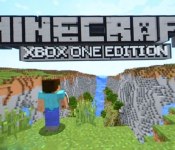
Minecraft on Xbox One will transfer saves from Xbox 360

Due to a lack of backwards compatibility, upgrading to new-gen systems like the Xbox One and PS4 has meant mostly leaving your old games and the progress made in them behind, but not in this case. Phil Spencer, the new leader over at Xbox, announced tonight that Minecraft on Xbox One will be able to transfer saves from its Xbox 360 version, so whatever you’ve already built will come with you. He didn’t drop any other details on exactly how the move will work, but mentioned it is the product of cooperation between Microsoft and the game’s developer, Mojang, while promising more news soon.
After months of teaming up with Mojang, we can confirm that Minecraft X360 Edition will save transfer to Xbox One Edition…more news soon!
– Phil Spencer (@XboxP3) April 25, 2014
Filed under: Gaming, HD, Microsoft
Source: Phil Spencer (Twitter)

