


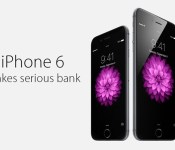
Apple sees 10 million iPhone 6 and 6 Plus sales in three days

The new iPhones have been on sale for three days, which means it’s time for Apple to announce how many devices it sold. Considering that the iPhone 5 hit five million sales in the same period, and the 5S and 5C earned nine million sales, it’s no surprise to see that both new devices raked in a record 10 million, even without the help of China. For now, the devices are only available in 10 countries, including the US, Canada and the UK, but the company promises that 20 more countries will have units available to sell by September 26th. Unfortunately, Apple neglected to mention how many people plumped for the 6 or its bigger sibling, but that’s hardly going to matter when Tim Cook wakes up and looks at the company’s bank balance.
Filed under: Cellphones, Mobile, Apple
Source: Apple (Businesswire)
.CPlase_panel display:none;
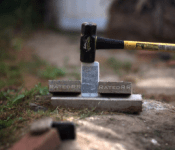
[VIDEO] Watch as an iPhone 6 Plus gets dunked in liquid nitrogen and shattered by a sledgehammer
 Continuing our coverage of iPhone misadventure after its global release yesterday (we promise we’ll stop soon), today we have YouTuber RatedRR doing some particularly nasty things to the new iPhone 6 Plus. Normally, RatedRR just shoots various devices (iPhones and Androids alike) with large guns, but they’ve decided to get a little more scientific with their torture test and dipping the iPhone 6 Plus into liquid nitrogen, before having a go at it with a sledgehammer. Classy.
Check out the results of the “test” below:
As many of you might have expected, the frozen iPhone 6 Plus literally shatters once it comes under the hammer – should’ve gone with sapphire displays after all, hey Apple?
We should point out that we never like seeing technology destroyed (yes, even iPhones) simply because it’s a bit of a waste of money, resources, etc. But, you have to admit that it does look pretty spectacular filmed in slow motion. And I do get a bit of a warm feeling imagining the face of someone who’s waiting to get an iPhone 6 Plus watching this video. Sadist? Probably.
What do you think about the iPhone 6 Plus? Think it has anything on Android phablets? Let us know your thoughts below.
Source: YouTube
//<![CDATA[
ord = window.ord || Math.floor(Math.random()*1E16);
document.write('‘);
//]]>
The post [VIDEO] Watch as an iPhone 6 Plus gets dunked in liquid nitrogen and shattered by a sledgehammer appeared first on AndroidSPIN.
.CPlase_panel display:none;
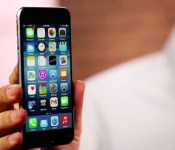
Impromptu drop test: First person in Perth to get iPhone 6 drops it on TV
 Words have failed me. In some parts of the world, like here in Australia, it has already ticked over on the 19th of September, opening the flood gates to those who want to get the iPhone 6 or iPhone 6 Plus – suffice to say, may of you reading this will not be among those lining up to get a piece of the action. But in perhaps one of the more inopportune (but potentially hilarious) moments during today’s proceedings, the first person in Perth to get iPhone 6 (Perth is Australia’s most western major city) managed to drop the device on national television. Check it out:
The man, only identified as Jack, seemed to brush off the brief misadventure of his prized device as a minor event, however drop tests of the devices that have gone up in the last day have shown that they are one of the more fragile iPhones of our time:
And for the iPhone 6 and iPhone 6 Plus which start from $869 AUD and $999 AUD respectively, you’d hope that it doesn’t take too many of those falls. But I feel like I’ve already talked about iPhones for too long; let’s hear what you guys think.
Source: YouTube (1), (2) via TechCrunch, Phone Arena
//<![CDATA[
ord = window.ord || Math.floor(Math.random()*1E16);
document.write('‘);
//]]>
The post Impromptu drop test: First person in Perth to get iPhone 6 drops it on TV appeared first on AndroidSPIN.
.CPlase_panel display:none;

iPhone 6 and 6 Plus review: bigger and better, but with stiffer competition

To say that Apple’s doing things differently would be an understatement. With the 4.7-inch iPhone 6 and the 5.5-inch iPhone 6 Plus, the company introduced two new high-end phones at the same time, both with a complete redesign and a much larger screen size than any iPhone that came before. Gone are the days of 3.5-inch and 4-inch phones that, at one time, seemed to provide more than ample amounts of screen space. Now, the new iPhones make their predecessors look like the tiny handset Ben Stiller used in Zoolander. The market has changed, and it was high time Apple did the same.
Even though this is Apple’s first attempt at building large phones, it’s not breaking new ground — in fact, it feels more like the company is catching up than innovating. To be fair, finding a fresh take is a difficult thing to do in this crowded space: Samsung’s Galaxy Note series, which started out at 5.3 inches and is now up to 5.7, is selling by the millions, and most competing flagships aren’t much smaller. Basically, Apple would be leaving money on the table if it didn’t address this segment of the market. So how did the company do on its first try at large phones? Pretty well — mostly.
Hardware
Aside from the screen size and a few minor hardware differences, the iPhone 6 and 6 Plus are identical. Unlike Apple’s last four flagships (the 4 to the 5s), which sported a squarish, blocky shape, the 6 series features soft, rounded sides. Not counting the glass screen, the entire frame is constructed of aluminum, similar to the material Apple uses on its MacBooks.
As you’ll see in my iOS 8 review, Apple’s following a design approach centered on “continuity” — the idea that its products should work seamlessly with each other. This is evident in the iPhone 6’s hardware as well. The 5 and 5s had straight sides that met the front and back via chamfered edges. On the 6, Apple opted for a unibody build; the bubbled-out sides and flat back are constructed from one continuous piece of material. Meanwhile, the front glass panel tapers down ever so slightly at the edge, producing an uninterrupted look. I’ll always have a soft spot for the chamfered edges on the 5 and 5s, but the 6 and 6 Plus feel fresh, especially after years of only modest design tweaks.
Both iPhones are thinner than their predecessor. Whereas the 5s was 7.6mm thick, the 6 comes in at 6.9mm, with the 6 Plus measuring a hair thicker at 7.1mm. I don’t always subscribe to the “thinner is better” mantra, but it’s a benefit in this case because larger iPhones wouldn’t feel as comfortable if they had the same shape as the 5s. If I had to choose based on in-hand feel alone, I’d pick the 6 over the Plus. I can still wrap my fingers around the 6 just as easily as I could with the 5s (and its curved sides don’t cut as sharply as the edges on the 5s), but the large-screened 6 Plus is… well, it’s manageable.
There’s no avoiding it: The Plus is even bigger than it looks. It’s easier to acclimate to the Plus if you’re already used to large phones, but even then, this is a massive piece of kit. Let’s do a close comparison with the 5.7-inch Samsung Galaxy Note 3, for instance (I have a review unit handy, and the unreleased Note 4 has similar dimensions). The Plus is nearly 7mm taller, 1.4mm narrower and 1.2mm thinner than the Note. Both are huge, and their width can fatigue even the biggest of hands if you hold on long enough. When you have a big handset, your fingers need to secure a firm grip; the Note’s straight, ridged sides and textured back make for a relatively easy grip. With the 6 Plus, though, those narrow, rounded edges feel sharper when the tips of your fingers are grasping on for dear life, and the aluminum is slipperier. I got used to the design, but it takes time.
But a phone’s screen size doesn’t have to dictate how large the device itself is. Take the LG G3, a 5.5-inch phone with the exact opposite in-hand feel. Compared with the LG G3, the Plus is nearly 12mm taller, 3.2mm wider and 1.8mm thinner; LG’s large-screened option has a smaller bezel and arched back that fit the natural contours of my hand extremely well. It feels much more comfortable to hold for long periods of time, and I never worry about it slipping out of my hands.
Both the 6 and 6 Plus use an IPS Retina HD display, but the Plus is even more high-def than the 6. It has a screen resolution of 1,920 x 1,080, which means you’ll get a pixel density of 401 pixels per inch. On the flipside, the 6 maxes out at 1,334 x 750, which translates into 326 ppi. (That’s the same screen density as the 5s.) Both displays are sharp, but I do see some minor differences between the two when I look at them side by side. Specifically, the Plus’ text and images are sharper, with no jagged lines whatsoever. That said, I don’t think it’s enough to steer you from one device to the other; they both look fantastic from a few inches away. Additionally, the color representation on both phones is less saturated than the Super AMOLED panel on the Note 3, and is extremely close to the colors on a Retina display MacBook Pro.

With the Retina HD display, Apple is also introducing what it’s calling “dual-domain pixels,” which arrange the display’s subpixels into a chevron-like pattern designed to compensate for the contrast that normally shows up when you look at the screen from oblique angles. It also helps produce deeper darks and sharper text; both new iPhones have brighter whites than the 5s, but the Plus has the warmest tint of the three. The viewing angles are indeed among the best I’ve seen, and it’s great to see Apple incorporate this technology into its latest products. All that said, it’s worth noting that while Apple makes this screen technology sound brand-new, it’s actually been used before on phones like the HTC One M7 and the One X.
Over the years, Apple’s continued to fine-tune its reputation for building devices that combine solid build quality with a premium design. While these new iPhones generally continue that tradition, there are a couple quirks that are difficult to un-see. The first is the excessive use of antenna lines on the back. The two stripes stretching across the top and bottom sections enhance the look of the phone’s rear — much like the HTC One series — but there are two unsightly lines that follow the upper and lower perimeter, and they stick out like a sore thumb. Secondly, though the phones got thinner, the camera module did not; the result is a lens that sticks out from the rest of the chassis, which increases the likelihood of the casing and lens getting scratched.

I am, of course, nitpicking. After all, an aluminum phone needs to have openings for antennas to get a signal, and that’s precisely what the stripes on the sides and back do. Unfortunately, though, they do detract from the device’s beauty, not enhance it. As for the camera, many flagship phones come with tiny humps around the camera module to compensate for the extra depth they require, but I would’ve rather seen Apple go with a design that’s less severe — and less likely to scratch.
One final concern: The phones are prone to scratches if you’re not careful. After just a day of use, I started noticing a few small marks on the backs of both devices. The most extreme thing I did to the phones during this time was slide them around on an office table. Granted, a case will resolve all of these issues, but unfortunately, cases also add a fair amount of bulk, and I’ve always preferred showing off my phones in all their beauty.
NFC
Apple’s coming out with a mobile payment service in October called Apple Pay. I haven’t been able to test it out yet, so I’ll revisit that when it becomes available. Once it’s up and running, it’ll use a wireless standard known as Near-Field Communications (NFC) that comes built into the iPhone 6 and 6 Plus. In short, a transmitter on your device can communicate with a receiver located just a few millimeters away; this is incredibly useful for mobile payment transactions because the short distance makes it more secure than any other wireless connection, so you don’t have to worry about a third party getting unauthorized access to your sensitive information.
Since NFC is a standard, the iPhone is theoretically capable of doing a lot more than just mobile payments — tap-to-pair for Bluetooth devices, unlocking doors and hotel rooms, mobile tickets for public transit, Foursquare check-ins, et cetera. For now, though, the iPhone’s NFC radio will be limited just to Apple Pay; developers can’t do anything with it right now. Apple hasn’t said if this will change in the future, but I suspect the company is approaching it with the same timidity as it did with Touch ID; Apple initially used it just to unlock the iPhone and approve iTunes purchases, and now, a year later, it’s finally opening up the sensor for developer support.
Software

Both iPhones come preloaded with iOS 8. You can find my in-depth review of the update here, so I won’t go into much detail in this review. But there are a few specific software features on the 6 and 6 Plus worth revisiting. Apple is treating the Plus as a small iPad mini (mini iPad mini?) of sorts: The springboard now can switch into landscape mode, and a few of the native apps (Mail, Calendar and Messages) come with dual-pane windows. This is a great use of the extra screen space, and it gives the Plus a clear productivity advantage over the 6.
While I’m on the subject of landscape mode, the keyboard also looks rather different. The standard keyboard shows up directly in the middle and is flanked by heaps of symbols and other options. Arrows and many of the popular punctuation marks are on the right, while options like copy and paste, undo and voice dictation are on the left.

Both iPhones also feature Display Zoom, which magnifies the screen and makes your icons, text and other materials larger. There’s one-handed mode, which Apple refers to as “Reachability.” This is technically available on both the iPhone 6 and 6 Plus, but it makes the most sense on the larger model. Since it’s tough to stretch your tiny fingers all the way to the top of the screen, Apple’s solution is to bring the screen down to you. When you double-tap on the Touch ID button, the entire UI slides down so the top half of the app is located on the bottom half of the screen. You can scroll and interact with it just like you normally could in full-screen mode, but in case you need to get to a link at the bottom of a website, or you’re trying to get down to the end of an email, you’ll have to go back out to see the entire screen. It’s better than having no one-handed mode at all, but it still feels cumbersome and I only really used it when I wasn’t able to use two hands (e.g., when I’m walking down the street while holding a bag).
It may sound like the Plus isn’t ideal, and indeed, it’s not for everyone. But for many, the additional screen real estate is worth sacrificing some one-handed comfort. Not only do you get more rows of icons on each screen (the 5s is 6 x 4, while the 6 is 7 x 4 and the 6 Plus is 7 x 4 with slightly larger icons and more space in between), but you’re also going to be able to see more emails, tweets, Google search results, Engadget posts, calendar appointments and, well… more of everything. More screen space equates to more room for consuming, creating and manipulating content, and since it’s still small enough to fit in most jeans pockets (provided they’re not too tight), it’s still more portable than any iPad.
Camera

While the megapixel war rages on among manufacturers like Sony, Samsung, LG and Microsoft Devices (Nokia), Apple doesn’t seem to feel compelled to join the fray. Instead, it’s sticking with a modest 8MP iSight camera similar to the one found n the 5s. Although the aperture and pixel size haven’t changed, Apple’s added “Focus Pixels,” which is the company’s fancy term for Phase Detection Autofocus (PDAF). The tech is used in many DSLRs and phones like the Galaxy S5, and the idea is to lock autofocus faster. Fortunately, Focus Pixels doesn’t disappoint; in several side-by-side shots in which my goal was to snap a photo as quickly as possible, the 6 and 6 Plus did considerably better at producing focused images.
In case you need extra perks for going with the larger device, the Plus comes with Optical Image Stabilization (OIS). This feature is designed to reduce the amount of blur that can come from the natural shaking of your hand, and it produces better low-light performance and less shaky video as a result. I took several nighttime shots with the 6 and 6 Plus side by side, and although there was no difference in how much light the cameras took in, the images from the Plus consistently came out sharper — both when viewing at standard size and especially when zoomed in.
I also pitted the Plus head to head against several other flagships. It bested the HTC One M8 in sharpness and white balance, though it didn’t get quite as much light; it had more natural colors and less noise than the LG G3; it got more light, better colors and clearer focus than the Galaxy S5; and although the Lumia 1020 brought in the most light, it also did so at the expense of unnatural colors and noise.
So the iPhone 6 Plus held its own against nearly every major flagship in terms of low-light images, but how did it (and its 4.7-inch twin) fare in the daylight? Shots taken by the Lumia 1020 were far more detailed and had a slightly more accurate white balance and color representation outside; but while it did a fantastic job capturing the shadows, the highlights were typically more blown out than they were on the iPhone. The GS5 is a respectable contender in the daylight as well, offering more detail, but the iPhone generally produced more accurate colors. The G3 appears to be overexposed by default and the dynamic range is not as wide, so shadows are incredibly dark and whites are slightly blown out. Finally, the iPhone bested the HTC One in dynamic range, detail and color.
The iPhone camera may not always be the best in every circumstance, but it’s consistently near the top in almost every scenario. The autofocus locks quickly; each shot contains all of the detail you’ll need (unless you have to zoom in incredibly far); dynamic range is great; and color representation is sound. And although there weren’t a lot of drastic improvements to the new iPhone cameras over the 5s, I know that if I need to snap a quick picture, it’s going to turn out well.
(Note: I will have full-res images available shortly.)
Performance and battery life

Last year, Apple rocked the boat by announcing that the iPhone 5s would be the first phone with 64-bit support, thanks to its A7 chip. This year’s bump to an A8 chipset isn’t quite as dramatic, but the company is claiming that the chip comes with a 25 percent uptick in CPU performance and 50 percent in GPU output. It packs 2 billion transistors, which is a number that few other companies boast in product launches; by comparison, Intel’s Haswell desktop processor has around 1.4 billion. Apple seldom dives into more specifics, but benchmarks reveal that we’re looking at a 1.4GHz dual-core processor.
I get why Apple would rather discuss the experience than the actual numbers — it’s because a 1.4GHz dual-core chipset doesn’t sound as good as a 2.5GHz quad-core Snapdragon or an octa-core MediaTek. But I’ve never had any problems getting iPhones to handle heavy loads, and the 6 and 6 Plus are no different. Games load and run smoothly and multitasking works great.
When it comes to benchmarking, it can be difficult to compare Apples to Androids. There are a few cross-platform tests, however, so I decided to take a look and see how the iPhone 6 holds up to a pair of Snapdragon 801-powered flagships, the Galaxy S5 and the HTC One M8. As you can see below, the iPhone does better in some areas and worse in others. On SunSpider, it produced the best scores I’ve seen on any smartphone. It does well on single-threaded activities in Geekbench and keeps up with the Snapdragon in multi-threaded tests. It does significantly better in Basemark X, but not in 3DMark. The long and short of it is that you shouldn’t feel like switching from one flagship phone to another simply because it has more cores; Apple holds its own against the strongest competition, and it still has the advantage of having 64-bit support on both hardware and firmware for at least a short period of time — at least, until Android L comes out and more chipsets integrate 64-bit support.
| iPhone 5s | iPhone 6 | iPhone 6 Plus | |
|---|---|---|---|
| 3Dmark Unlimited IS | 14,899 | 16,689 | 17,902 |
| Geekbench 3 (multi-thread) | 2477 | 2885 | 2803 |
| Basemark X | 14,404 | 15,572 | 16,538 |
| SunSpider 1.0 (ms) | 449 | 351 | 388 |
| SunSpider: lower scores are better | |||
The iPhone 6 series also comes with an upgraded motion coprocessor called the M8, which adds barometer support in addition to the accelerometer, gyroscope and compass. Since barometers can sense the variance in air pressure, this means you can now measure changes in elevation. Those measurements, in turn, will get added to the new iOS Health app.
Another interesting side effect of the size difference is how they manage thermal heat dissipation. Since it’s the smaller of the two, the iPhone 6 got noticeably toastier than the Plus when playing games — in fact, I rarely had any problem with the Plus getting warm.
If you’re having trouble choosing between the 6 and its extra-large twin, battery life may be the ultimate deciding factor. It’s no secret that the Plus comes with a larger battery and therefore longer runtime than the 6, but how much of a difference will it make? Turns out, a noticeable one. In our video-playback tests, the 6 lasted 10 hours and 19 minutes; that’s actually worse than the 5s results from last year, which managed to go for 10:50. The iPhone 6 Plus, on the other hand, still had 14 percent battery left when the 6 died. All told, it lasted almost 12 hours. Both of these results are lower than Apple’s claims, but likely are the outcomes of different testing methods.

But tests are tests: Real-world performance is where it’s at. And this is where the Plus truly shines. In my usage tests, I do a little bit of everything on the phone: calls, games, email, social networking, e-book reading, the works. After all that, I got through a full 17-hour workday with just 3 or 4 percent battery life remaining. On the 6, I managed to squeak out around 13 hours. With moderate to light usage, you should expect to see the Plus get roughly a day and a half, if not more.
Both iPhones come in two versions with different sets of wireless frequencies, so you’ll want to be aware of the differences. The first option comes with support for 16 LTE bands, while the second takes the same 16 and adds four more bands for a total of 20. This is the most I’ve ever seen included in one specific model. I usually list out which bands are covered on which devices, but let’s face it: If the 20-band option doesn’t include your specific needs, very few other phones likely will. The latter will ensure the most coverage globally, and will be sold in more places; in the US, however, you’ll only find this version on Sprint and US Cellular. Every model will come with penta-band HSPA+ and quad-band GSM/EDGE, and there’s also a CDMA variant that comes with those frequencies as well.
The new iPhones also support WiFi calling with 802.11ac compatibility (in addition to the usual a/b/g/n), both of which have been a long time coming. WiFi calling, which offers high-quality phone calls over your wireless router, is a carrier-dependent feature. T-Mobile is the only network that currently supports it in the US, though AT&T plans to support it sometime next year. Meanwhile, 802.11ac compatibility ensures that your iPhone isn’t a network bottleneck like it once was; its theoretical max speed is now 433 Mbps. Most customers don’t get speeds this fast from their ISPs, but at least the speed limit is no longer low enough to have a negative impact on your internet experience.
The competition

At 4.7 inches, the iPhone 6 is still technically smaller than most modern-day flagships. Samsung’s Galaxy S5 is 5.1 inches; the HTC One M8 is 5.0; the new Moto X is 5.2; and the LG G3 is 5.5, just to name a few. So if you pine for a top-of-the-line phone that’s larger than the iPhone 5s, but smaller than any of the aforementioned heroes, the iPhone 6 will be a great fit. From a
If you’re looking at the 5.5-inch iPhone 6 Plus, however, the competition is fiercer — at least, if you care less about the OS and more about what you can do with the screen size. The Samsung Galaxy Note 4 is coming early next month, and since it’ll have a 5.7-inch Quad HD display, it’ll be a tad shorter, wider and thicker; however, it’ll also have straight sides, which provide a firmer grip than the rounded edges on the 6 Plus. You can also get the LG G3, which has a higher-resolution 5.5-inch Quad HD display. Heck, if you’re extremely adventurous, you could get a Lumia 1520, which is a 6-inch Windows Phone with even sharper edges than the Plus.
Eventually, both iPhones will be available globally, but it’s only coming to a handful of countries at launch. Each one will come in three color choices (space gray, silver and gold) and three storage sizes: 16GB, 64GB and 128GB. The latter storage option is the most I’ve seen built into a smartphone (internally, at least) though the mid-tier should be plenty for most users — especially now that it’s doubled in size. The iPhone 6 will start at $199 on-contract ($649 retail) for 16GB, and go up to $299 ($749) and $399 ($849) for the 64GB and 128GB models, respectively. The iPhone 6 Plus is $100 more than its smaller sibling, so prices start at $299 ($749) and go up to $499 ($949).
Wrap-up

For the first time, iPhone fans can enjoy something Android users have taken for granted: choice. Until this year, buying a high-end iPhone wasn’t a tough decision. You either bought it or you didn’t. Now there are two to choose from, and while they look identical, each has its own set of trade-offs that you need to weigh: The 4.7-inch iPhone 6 features a respectable display size and a comfortable in-hand fit; it’s also my personal favorite after using both for several days. The 5.5-inch iPhone 6 Plus, on the flipside, isn’t as easy to hold in one hand, but you’ll want it if you’re hoping to get an iPad-like phone with great battery life and a lot more screen real estate.
This year’s iPhones aren’t groundbreaking, nor are they perfect. But they demonstrate something far more important to Apple’s success in the long run: freshness. Apple ditched the tried-and-true square design (which I’ve always been fond of) for a more rounded, modern look; it added features that should’ve been there ages ago (NFC, anyone?); and it made the phones large enough to start competing in a hotly contested space. No doubt about it, the iPhone needed to grow in size and function, and it did just that. Fortunately, it made the leap before it was too late.
Photos by Will Lipman.
Filed under: Cellphones, Mobile, Apple
.CPlase_panel display:none;
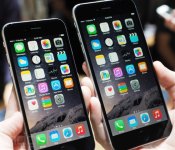
Apple’s latest pre-order record shows people want bigger iPhones

Apple’s new iPhone 6 and 6 Plus went up for pre-order just three days ago, and as expected, they’ve helped set a new sales record. The company announced today that combined sales of the new 4.7-inch and 5.5-inch iPhones topped 4 million in the first 24 hours. While the company hasn’t broken down sales by individual models, giving us an early insight into which form factor consumers prefer, it says that initial supply of both units are scarce, which shows people really do want bigger iPhones. To put that into context, Apple saw more than 2 million orders for the iPhone 5 over the same period, but the company didn’t share first-day for the combined launch of the iPhone 5s and 5c, which went on to sell more than 9 million units in three days. Given that Apple is pretty much the only phone maker that indulges in obligatory back-patting during every launch window, we’re unable to draw much of a comparison against its rivals. However, if you were waiting to grab the new iPhone when it goes on general sale this Friday, expect to get in line super early.
Source: Apple
.CPlase_panel display:none;

Feedback Loop: ‘Minecraft,’ home security, iPhones and more!

Happy Sunday, and welcome to another edition of Feedback Loop! By now, you’re probably sick of hearing about the Apple Watch. Thankfully, though, our community members have some great discussions for you this week. To kick things off, we’re talking about the implications Microsoft’s potential purchase of developer Mojang could have on the indie community favorite Minecraft. Once you’re done kvetching over Microsoft’s latest pursuit, let us know which apps help keep your busy life on task and whether or not you’re happy with the current selection of smart lock solutions.
Microsoft might buy Mojang (the Minecraft guys)
Microsoft is reportedly in talks to buy Mojang, the developer behind Minecraft. Notch, the game’s creator, has already built a small empire with the franchise, but Kris is wondering how this will impact its future. Obviously, more money and resources can be a good thing, but this could also lead to Microsoft limiting platform availability. Let us know if you’re happy with the news, or if the indie favorite is doomed.
What apps help you get things done?
I can be pretty forgetful. I have to rely on task apps for keeping me on track. Currently I’m rocking Things on my desktop and iPad, but I’m always looking for new options. The problem is there are just so many damn task-management apps out there. So, faithful Engadget community, I come to you for help. What tools are you using to stay focused?
Security solutions using your smartphone
User anishsomani likes the trend of using smartphones for unlocking your front door or bike lock. He just wishes these companies would make locks for other parts of our homes. He’s curious as to why he can’t use his phone to unlock his garage, laptop or mailbox, among other items. If you’re using smart locks, join the discussion and let the community know what you think of their progress so far.
iPhone 6 vs. iPhone 6 Plus: Which one is the flagship?
Apple finally did it: It announced a phablet-sized iPhone. But it also showed off a smaller 4.7-inch iPhone, meaning Apple is once again giving consumers a choice. Last year, the flagship was obvious: the 5s. This year, it’s more of a toss-up. If you had to pick just one, which new iPhone do you consider to be Apple’s current flagship?
Other discussions you may also like:
- How often do you upgrade your phone?
- What do you think of Destiny so far?
- Which family plan should I use with the new iPhones?
That’s all this week. Want to talk about your favorite gadget or have a burning question about technology? Register for an Engadget account today, visit the Engadget forums and start a new discussion!
.CPlase_panel display:none;
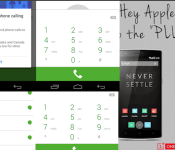
Google Hangouts Gets Google Voice! OnePlus One Welcomes the iPhone 6! – ManDroid Daily

Happy Hump Day Android friends. The Daily is here. Google Hangouts finally gets its Google Voice integration. A lot of us out there are happy about that. The OnePlus One guys are still treating their marketing with slight stupidity, but at least they’re trying to be different. Enjoy the Daily.
Android News
Google Hangouts 2.3 with Google Voice
Google Hangouts Dialer
HTC Nexus 9 to have a Tegra K1
OnePlus One welcomes iPhone 6 Plus
//<![CDATA[
ord = window.ord || Math.floor(Math.random()*1E16);
document.write('‘);
//]]>
The post Google Hangouts Gets Google Voice! OnePlus One Welcomes the iPhone 6! – ManDroid Daily appeared first on AndroidSPIN.
.CPlase_panel display:none;

OnePlus responds to the Apple iPhone 6 Plus, welcomes it to the “Plus” family
 In something that is becoming a bit of a tradition for the young company, OnePlus responds to the Apple iPhone 6 Plus by posting the above image via their Facebook page and offering yet another OnePlus One to win and more invites. As with many of OnePlus’ marketing campaigns, this one is no less confusing as it doesn’t really say anything, nor does it really compare their OnePlus One with the iPhone 6 Plus, at least, not explicitly. Of course, that doesn’t mean we can’t.
As we know, both devices have a 5.5-inch display, but that’s essentially where the similarities end. The OnePlus One has an almost-top-of-the-line quadcore Snapdragon 801 clocked at 2.5GHz with 3GB RAM, a 13MP camera and a 3,100mAh battery. Contrasting this is the iPhone 6 Plus which has a dualcore Cortex A8 64-bit processor running at 1.4GHz, 1GB RAM, 8MP OIS and 2,915mAh. While that might look like a win for the OnePlus One, the devil is always in the detail and the iPhone 6 Plus, like its predecessors, will likely have an extremely optimized experience – now with 64-bit architecture – that will generally equal or outstrip the performance of many an Android device, the OnePlus One included.
Of course, the one thing the OnePlus One does have going for it is price, which starts at $299 for the 16GB version off-contract, and is likely much better value than the $299 on-contract asking price for the 16GB iPhone 6 Plus.
Still, we’re all Android fans here, so what do you think about OnePlus’ attempt to piggy-back on the news of Apple‘s device releases? Let us know your thoughts below.
Source: Facebook via Android Authority
//<![CDATA[
ord = window.ord || Math.floor(Math.random()*1E16);
document.write('‘);
//]]>
The post OnePlus responds to the Apple iPhone 6 Plus, welcomes it to the “Plus” family appeared first on AndroidSPIN.
.CPlase_panel display:none;
ASUS asks: Would you prefer 6 ZenFones or 1 Apple?
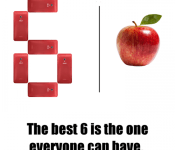
 It looks like everybody in the smartphone industry is having a go at Apple‘s new iPhone announcements. ASUS‘ attempt is a pretty good one, claiming that you can get 6 ZenFones – shaped in a 6, of course – for the price of one “Apple”, presumably referring to the large individual cost of Apple’s new iPhone 6 and iPhone 6 Plus. While ASUS’ latest ZenFone, the ZenFone 6, doesn’t necessarily compete with the new iPhones on a performance level, it must be said that their devices are not bad value, and it’s not at all a bad way, at least, financially, to get your family decked out with smartphones.
For reference, the ZenFone 6 is a 5-inch device carrying a dualcore Intel Atom processor 2GHz and 13MP camera. While the iPhone’s internals look quite a lot like the ZenFone’s on paper, their outright performance could not be more different. The ZenFone 6 isn’t likely to be a candidate for a pocket supercomputer and the new iPhones should be able to stick it to even the newest Android phones. But again, 6 ZenFones or 1 Apple?
What do you think of ASUS’ attempt at commenting on the new iPhone 6 devices? Let us know your opinion in the comments below.
Source: Facebook via Phone Arena
//<![CDATA[
ord = window.ord || Math.floor(Math.random()*1E16);
document.write('‘);
//]]>
The post ASUS asks: Would you prefer 6 ZenFones or 1 Apple? appeared first on AndroidSPIN.
.CPlase_panel display:none;

Apple iPhone 6 and 6 Plus vs Android: The flagship showdown
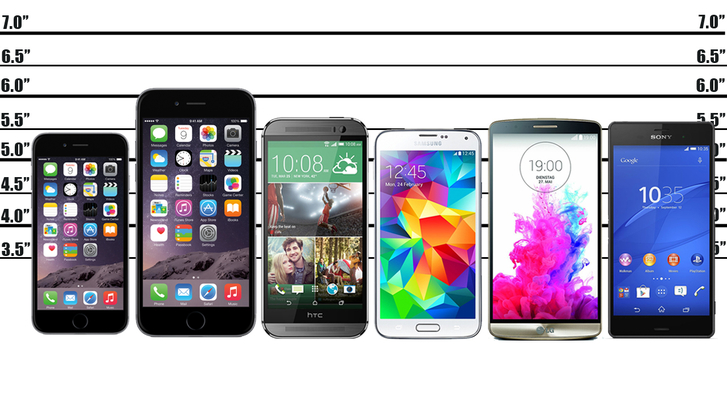 Apple has announced not one, but two new iPhones, which only means one thing – there are two new flagship smartphones that have been added to the mix of already stiff competition.
But which is the best device overall in terms of the numbers? Here we are breaking down all the specs into simple, matter of fact statements so you can see which flagship smartphone is the biggest, which is the lightest, which has the highest resolution display and which has the best camera.
Enter the usual suspects – Apple iPhone 6, iPhone 6 Plus, HTC One (M8), Samsung Galaxy S5, LGG3 and Sony Xperia Z3 – and let the spec crunching begin.
Build
The Apple iPhone 6’s aluminium build measures 138.1 x 67 x 6.9mm and weighs 129g, while the iPhone 6 Plus measures 158.1 x 77.8 x 7.1mm and hits the scales at 172g.
If you are looking for the lightest of all six devices, the Apple iPhone 6 is the winner, followed by the Samsung Galaxy S5 at 145g.
For those after the slimmest, both Apple iPhones are thinner than any of the Android competitors, with the Sony Xperia Z3 taking third place for its 7.3mm build.
The largest of the bunch is the iPhone 6 Plus at 158.1 x 77.8 x 7.1mm and the most compact is the iPhone 6 at 138.1 x 67 x 6.9mm.
Display
You’ll find a 4.7-inch 1334 x 750 pixel resolution display on the Apple iPhone 6, and a 1920 x 1080 pixel resolution on the 5.5-inch iPhone 6 Plus, which means a pixel density of 326ppi and 401ppi respectively.
The biggest display award goes to both the LG G3 and the Apple iPhone 6 Plus, both offering 5.5-inches.
LG mops up the sharpest display however, with its 2560 x 1440 resolution providing a pixel density of 534ppi.
All the other Android smartphones offer a 1920 x 1080 pixel resolution.
The smallest display is Apple’s iPhone 6, which is 0.3-inches smaller than the next contender, and also the lowest resolution and ppi.
Processor
The Apple iPhone 6 and Apple iPhone 6 Plus both feature the company’s latest A8 processor on board with 64-bit architecture, supporting the 64-bit software of iOS 8. It has the M8 coprocessor to handle motion.
Android is not 64-bit yet, which is lucky as none of the flagship Android devices support it.
All of the Android devices have a quad-core Qualcomm Snapdragon processor under the hood but the Sony Xperia Z3 has the most RAM at 3GB.
Comparing the devices like for like is very difficult: with undisclosed hardware from Apple, and different operating systems, there’s no easy way to measure them on the spec sheet.
Camera
When it comes to camera, the Apple iPhone 6 and Apple iPhone 6 Plus both feature an 8-megapixel rear snapper and a 1.2-megapixel front snapper.
If you arbitrarily want highest number of pixels on the rear camera, you’ll want the Sony XperiaZ3 with its 20.7-megapixel sensor.
If you are a selfie snapper, then you’ll want the HTC One (M8) for the best front camera with its 5-megapixel offering.
This is the fiercest battleground of all, but we’d expect the iPhone 6 and iPhone 6 Plus to be strong performers with the latest tech they are offering including HDR selfies. That’s not to say they will win though, we suspect the camera battle to be the hardest fought.
Battery
The Apple iPhone 6 comes with a better battery than the iPhone 5S and Apple claims it will offer 14 hours talk time and 240 hours standby, while the Apple iPhone 6 Plus is said to provide 24 hours talk time and 384 hours standby. Apple hasn’t disclosed the battery capacity, however.
For the biggest battery capacity, the Sony Xperia Z3 wins the group at 3100mAh, which means the longest standby too at 740 hours.
The Samsung Galaxy S5 and the LG G3 fight for the most amount of talk time though, both claiming up to 21 hours.
For audio playback, you’re answer is the Sony Xperia Z3 again with up to 130 hours of music playback.
The smallest battery capacity is the HTC One (M8) at 2600mAh and 496 hours standby.
Storage
Apple doesn’t offer microSD support but its iPhone 6 and iPhone 6 Plus will come in 16GB, 64GB and 128GB storage capacities.
This means Apple’s iPhone 6 and iPhone 6 Plus offers the biggest internal storage options.
All the Android flagships have microSD slots for storage expansion up to 128GB, but typically offer 16 or 32GB storage.
Features
The Apple iPhone 6 and iPhone 6 Plus has iOS 8 on board, which means a whole host of new features but its most unique offering is Apple Pay, which is launching initially in the US.
In terms of unique features for the Android handsets, the HTC One (M8) has a Duo Camera that captures depth of field information, the Samsung Galaxy S5 brings a heart sensor to the mix, theLG G3 uses laser focusing and the Sony Xperia Z3 is waterproof and lets you play PS4 games.
Prices
The new iPhone 6 will start at £539 for 16GB. The iPhone 6 Plus will start from £619 (16GB).
The cheapest SIM free handset on our panel of Android flagships is the LG G3, at £479 (16GB), which is the most affordable overall.
The iPhone 6 Plus is the most expensive and ironically has the same size display as the LG G3.
Conclusion
It depends what is most important to you as to which of the usual suspects will win you over, but if you just take them all on number value and nothing else … this is how it goes down.
The smallest, lightest and slimmest phone is the new Apple iPhone 6.
The biggest display is shared between the LG G3 and the Apple iPhone 6 Plus, but the sharpest display is the LG G3.
The highest resolution rear camera is the Sony Xperia Z3 and the best front camera is the HTCOne (M8).
The biggest battery capacity is the Sony Xperia Z3.
The most internal storage goes to Apple’s iPhone 6 and iPhone 6 Plus, but all the Android devices offer microSD card support.
The most affordable device is the LG G3 at £479.
And that friends, are the tech specs crunched.
.CPlase_panel display:none;
 AIVAnet
