


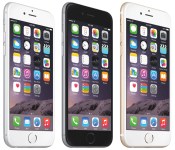
With larger iPhones, Apple accepts that smartphones have evolved

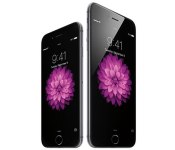
So it finally happened — after seemingly ages of rumors and speculation, Apple has unveiled larger iPhones (the 6 and 6 Plus) that are really, truly bigger than the 3.5-inch original. It’s no doubt a welcome move if you’re a fan who has been craving a big display, and it might even reel in people who have held off on an iPhone until now. However, this isn’t just an instance of a company tweaking its product line to accommodate changing tastes. That happens all the time. For Apple, it’s an acknowledgment that the very definition of a smartphone has changed over the years.
When Steve Jobs introduced the iPhone in 2007, the primary function of a smartphone was… well, the phone bit. Mobile data was too slow for many uses beyond email, while apps were both harder to find and more often for business than pleasure. You weren’t about to share selfies or stream your favorite show, since neither the technology nor the software was there for it. It’s not surprising, then, that Apple put a lot of its initial emphasis on basic (and usually one-handed) tasks, like calls and music.
You just have to watch the first iPhone launch event for proof. Jobs paid attention to web browsing, video and other tasks that benefit from a “really big” screen, but he was also proud of how well the iPhone fit in the hand and played Beatles albums. As far as the company was concerned, a 3.5-inch display was the sweet spot for everything, whether it was the mobile web or calling home. And it was, for a while; if you switched from a BlackBerry or Palm Treo, the iPhone’s then-huge display felt like a minor revelation.

The smartphone market started changing soon after the iPhone arrived, however. Mobile apps took off thanks to easy-to-use stores (including Apple’s own), making it simple to check your social networks and play games. Cameras got better, and cellular data got much faster. It was no longer far-fetched to share pictures with your friends or stream TV during your morning commute. Today, social sites like Facebook assume that you’re usually posting from your phone. The smartphone was quickly becoming a pocket computer that just happened to take calls, and that perfectly palm-sized design wasn’t as important as it used to be. A lot of phone makers helped fuel this trend through their endless attempts to one-up each other. Screen sizes grew to the point where a 5-inch display is now considered mid-range, and extra-large phones easily top six inches.
Only Apple’s hardware design didn’t seem to acknowledge this shift. While iOS was quick to support more sophisticated apps and media, the iPhone was purposefully limited to a 3.5-inch screen size for five years. As Jobs explained at a 2010 press event, he believed that people weren’t going to buy “Hummer” phones that they couldn’t grip using one hand. He had point a regarding the clunky designs at the time (a 5-inch Dell Streak feels gigantic compared to a Nexus 5), but this opinion was in stark contrast to an industry where larger phones were becoming commonplace. Even the 4-inch iPhone 5, while excellent, showed Apple’s reluctance to let go of its philosophy. The folks at 1 Infinite Loop went so far as to run ads where one-handed use was the big selling point, such as the TV spot you see below.
That insistence on going against the grain hasn’t hurt Apple’s bottom line so far. The company still sells gobs of iPhones, after all, and plenty of fans like the notion of a compact phone with top-tier performance. Even so, it’s apparent that this strategy clashes with modern tastes. If research is any indication, you probably prefer a big screen for internet access and video — I know I feel claustrophobic when web surfing or watching YouTube on my iPhone 5 versus the other devices at my disposal. There’s an appeal to having a phone small enough that you can easily use it in one hand while juggling bags in the other, but that convenience is arguably outweighed by the limitations it puts on software.
And practically speaking, there’s at least some concern that the world might eventually move on, leaving small iPhones by the wayside. At least one of Apple’s internal studies suggested that it was missing out on sales by sticking to 4-inch displays, since nearly all of the growth in high-end phone sales was limited to larger hardware. The company has definitely been losing opportunities in countries like China and India, where some people save money by buying an oversized smartphone in place of both a smaller handset and a PC or tablet. If your phone is going to be your only computing device, why wouldn’t you get the largest screen possible?

And that’s why the super-sized iPhones represent a milestone. Whether or not you think Apple needs to change to make a tidy profit, the company is clearly aware that the smartphone world has changed. It accepts that there’s a lot more on your phone than just messages and albums, and that all your content should have more room to breathe, whether it’s a Netflix video or a social update. The 5.5-inch iPhone 6 Plus in particular is a recognition that your smartphone can be good enough to replace a tablet, since it expands what you see in landscape mode. If Apple is afraid of losing iPad sales, it’s not showing that concern — it’d clearly prefer that you buy something from its lineup than risk losing you to a Galaxy Note.
It’s hard to say whether or not these new iPhones are hints that we’re looking at a more responsive Apple that not only creates trends in the smartphone space, but adapts to them as well. This could be the start of a more aggressive update strategy, or just a brief change in direction for a tech giant that will otherwise plot a steady course. Either way, it’s evident that the crew in Cupertino isn’t looking at the iPhone in the same light as it did in years past.
Filed under: Cellphones, Mobile, Apple
.CPlase_panel display:none;

Apple iPhone 6 and 6 Plus vs Android: The flagship showdown
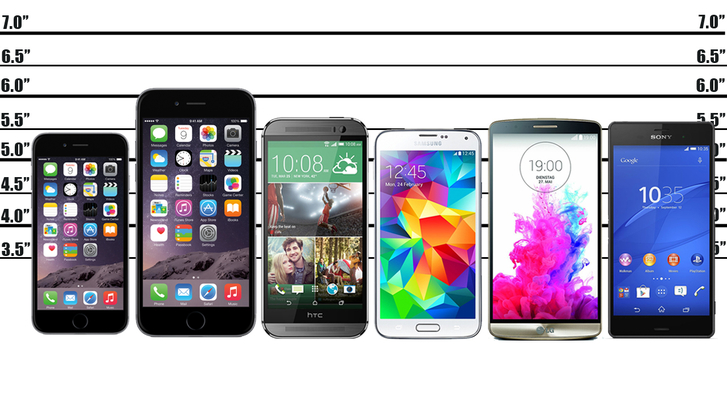 Apple has announced not one, but two new iPhones, which only means one thing – there are two new flagship smartphones that have been added to the mix of already stiff competition.
But which is the best device overall in terms of the numbers? Here we are breaking down all the specs into simple, matter of fact statements so you can see which flagship smartphone is the biggest, which is the lightest, which has the highest resolution display and which has the best camera.
Enter the usual suspects – Apple iPhone 6, iPhone 6 Plus, HTC One (M8), Samsung Galaxy S5, LGG3 and Sony Xperia Z3 – and let the spec crunching begin.
Build
The Apple iPhone 6’s aluminium build measures 138.1 x 67 x 6.9mm and weighs 129g, while the iPhone 6 Plus measures 158.1 x 77.8 x 7.1mm and hits the scales at 172g.
If you are looking for the lightest of all six devices, the Apple iPhone 6 is the winner, followed by the Samsung Galaxy S5 at 145g.
For those after the slimmest, both Apple iPhones are thinner than any of the Android competitors, with the Sony Xperia Z3 taking third place for its 7.3mm build.
The largest of the bunch is the iPhone 6 Plus at 158.1 x 77.8 x 7.1mm and the most compact is the iPhone 6 at 138.1 x 67 x 6.9mm.
Display
You’ll find a 4.7-inch 1334 x 750 pixel resolution display on the Apple iPhone 6, and a 1920 x 1080 pixel resolution on the 5.5-inch iPhone 6 Plus, which means a pixel density of 326ppi and 401ppi respectively.
The biggest display award goes to both the LG G3 and the Apple iPhone 6 Plus, both offering 5.5-inches.
LG mops up the sharpest display however, with its 2560 x 1440 resolution providing a pixel density of 534ppi.
All the other Android smartphones offer a 1920 x 1080 pixel resolution.
The smallest display is Apple’s iPhone 6, which is 0.3-inches smaller than the next contender, and also the lowest resolution and ppi.
Processor
The Apple iPhone 6 and Apple iPhone 6 Plus both feature the company’s latest A8 processor on board with 64-bit architecture, supporting the 64-bit software of iOS 8. It has the M8 coprocessor to handle motion.
Android is not 64-bit yet, which is lucky as none of the flagship Android devices support it.
All of the Android devices have a quad-core Qualcomm Snapdragon processor under the hood but the Sony Xperia Z3 has the most RAM at 3GB.
Comparing the devices like for like is very difficult: with undisclosed hardware from Apple, and different operating systems, there’s no easy way to measure them on the spec sheet.
Camera
When it comes to camera, the Apple iPhone 6 and Apple iPhone 6 Plus both feature an 8-megapixel rear snapper and a 1.2-megapixel front snapper.
If you arbitrarily want highest number of pixels on the rear camera, you’ll want the Sony XperiaZ3 with its 20.7-megapixel sensor.
If you are a selfie snapper, then you’ll want the HTC One (M8) for the best front camera with its 5-megapixel offering.
This is the fiercest battleground of all, but we’d expect the iPhone 6 and iPhone 6 Plus to be strong performers with the latest tech they are offering including HDR selfies. That’s not to say they will win though, we suspect the camera battle to be the hardest fought.
Battery
The Apple iPhone 6 comes with a better battery than the iPhone 5S and Apple claims it will offer 14 hours talk time and 240 hours standby, while the Apple iPhone 6 Plus is said to provide 24 hours talk time and 384 hours standby. Apple hasn’t disclosed the battery capacity, however.
For the biggest battery capacity, the Sony Xperia Z3 wins the group at 3100mAh, which means the longest standby too at 740 hours.
The Samsung Galaxy S5 and the LG G3 fight for the most amount of talk time though, both claiming up to 21 hours.
For audio playback, you’re answer is the Sony Xperia Z3 again with up to 130 hours of music playback.
The smallest battery capacity is the HTC One (M8) at 2600mAh and 496 hours standby.
Storage
Apple doesn’t offer microSD support but its iPhone 6 and iPhone 6 Plus will come in 16GB, 64GB and 128GB storage capacities.
This means Apple’s iPhone 6 and iPhone 6 Plus offers the biggest internal storage options.
All the Android flagships have microSD slots for storage expansion up to 128GB, but typically offer 16 or 32GB storage.
Features
The Apple iPhone 6 and iPhone 6 Plus has iOS 8 on board, which means a whole host of new features but its most unique offering is Apple Pay, which is launching initially in the US.
In terms of unique features for the Android handsets, the HTC One (M8) has a Duo Camera that captures depth of field information, the Samsung Galaxy S5 brings a heart sensor to the mix, theLG G3 uses laser focusing and the Sony Xperia Z3 is waterproof and lets you play PS4 games.
Prices
The new iPhone 6 will start at £539 for 16GB. The iPhone 6 Plus will start from £619 (16GB).
The cheapest SIM free handset on our panel of Android flagships is the LG G3, at £479 (16GB), which is the most affordable overall.
The iPhone 6 Plus is the most expensive and ironically has the same size display as the LG G3.
Conclusion
It depends what is most important to you as to which of the usual suspects will win you over, but if you just take them all on number value and nothing else … this is how it goes down.
The smallest, lightest and slimmest phone is the new Apple iPhone 6.
The biggest display is shared between the LG G3 and the Apple iPhone 6 Plus, but the sharpest display is the LG G3.
The highest resolution rear camera is the Sony Xperia Z3 and the best front camera is the HTCOne (M8).
The biggest battery capacity is the Sony Xperia Z3.
The most internal storage goes to Apple’s iPhone 6 and iPhone 6 Plus, but all the Android devices offer microSD card support.
The most affordable device is the LG G3 at £479.
And that friends, are the tech specs crunched.
.CPlase_panel display:none;
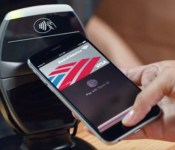
US carriers are bringing their tap-to-pay wallet to the iPhone 6

Don’t worry that Apple Pay will be the only game in town for tap-to-pay shopping on your iPhone 6. The carriers behind Softcard (aka Isis) have revealed that they’re working with Apple to bring their NFC-based payment system to newer iPhones sometime in 2015. While you’ll need a Softcard-aware SIM card in your phone for this to work, you hopefully won’t have to slap a bulky case on your device this time around. It’s doubtful that this solution will work as elegantly as Apple Pay, which doesn’t even require that you launch an app, but it should let you purchase with your iPhone in considerably more places.
Filed under: Cellphones, Mobile, Apple, Verizon, AT&T, T-Mobile
Source: Isis
.CPlase_panel display:none;
Sprint’s new $50 unlimited plan is only for iPhone 6 (and 6 Plus) owners

Not in a framily yet? If you’re in the market for one of Apple’s new iPhones, perhaps it’s time to jump on the Sprint bandwagon. The carrier’s rolling out a new individual rate plan: $50 gets you unlimited talk, text and data (and yes, that data is of the high-speed Spark LTE variety). Plus, Sprint will pay the ETF should you be breaking up with another carrier. Of course, that rate is exclusive to owners of the iPhone 6 and 6 Plus, so all you small-screened iPhone owners need not apply. And, should you struggle with up-front hardware costs, Sprint’s new iPhone for life initiative lets you pay just $20 a month with no money down and you get a new Apple handset every two years.
Filed under: Cellphones, Mobile, Sprint
.CPlase_panel display:none;
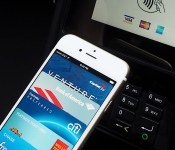
Taking Apple Pay for a spin: Hands-on with Apple’s mobile payment service

Rumors of Apple working on a wireless payment service have been droning on for years, so when the company introduced a mobile wallet-like feature called Passbook more than two years ago, it seemed at the time that such a service was inevitable in the very near future — perhaps the iPhone 5 would have it? It took a while, but come October Apple will be ready to utilize the Near-Field Communications chip built inside the new iPhone 6, iPhone 6 Plus and Apple Watch. The service, simply known as Apple Pay, wants to do exactly what every other payment service on the planet wants to do: Make it possible for you to ditch your wallet (aside from Driver’s Licenses and other forms of ID).
Much like any other mobile payment service, such as Google Wallet or Softcard (formerly Isis), a lot of Apple Pay’s success will come down to how many people actually use it. The hardware is definitely there; fingerprint scanning through Touch ID is an integral part of the feature, and NFC is now built into the new iPhones. Users will probably find it faster and easier than putting in a PIN code to make payments. Apple’s solution could certainly do better than its competitors, but it’s going to take a while for enough people to have the proper hardware in-hand — and it’ll take time to persuade users that the company isn’t solely out to get their personal information or make it easy for hackers to do the same.
Apple insists that this isn’t the case, that it’s using a Secure Element chip that encrypts user data in such a way that prevents the company and probing eyes from getting ahold of it. Instead, the only parties that can see your transaction details are the banks, credit card companies and/or merchants that are directly involved in the purchase. According to Apple, a unique device number is “assigned, encrypted and securely stored” to each phone, rather than the actual credit card number; each individual transaction features a one-time dynamic security code number as well.
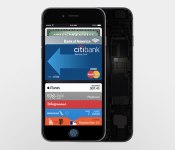
As we expected, Passbook is the central point for Apple Pay on the iPhone where your credit cards and accounts reside. This is where you set everything up on the phone (whether you manually add the info or use the camera to take an image of your card), but when it comes to actually making the payment, it’s simply a matter of holding the device within an inch of any payment terminal that supports NFC contactless payments (a lot of merchants now offer these stations in stores), holding your finger onto Touch ID for a fingerprint scan, and presto — the payment’s gone through, and you receive a notification telling you how much you just spent. The same goes for online checkouts through e-commerce sites: When it comes time to pay up, you just need to use Touch ID. (If you don’t want to use the default credit card, you need to go into Passbook to use it.)
The video above shows how Apple Pay is supposed to work. It’s quick, because the whole process — if done right — only takes a matter of a few seconds. In theory, faster than it takes to pull your wallet out, swipe your card, add your PIN or use your signature. As mentioned before, this isn’t a brand new idea. But as long as Apple is able to persuade enough people to trust the service and use it on a regular basis, it has a better chance of succeeding than any service we’ve seen before — that is, as long as the public is ready to move their trust away from magnetic stripes and onto Cupertino’s vision.
Once the service is ready to go in October, it’ll become available as an iOS update in the US. There’s no word on when we can expect it in other countries, but since this is a brand new service, it’s quite likely that the US is going to be a testing ground to make sure any and all bugs are worked out before opening it up to international merchants. It’ll start out with support from Wells Fargo, Amex, Visa, Mastercard, Chase Bank, BoA, CapitalOne and Citi; Apple claims 220,000 merchants will be onboard at the beginning as well.
Filed under: Cellphones, Wireless, Mobile, Apple
.CPlase_panel display:none;
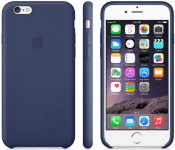
Apple Selling New Leather/Silicone Cases for iPhone 6, iPhone 6 Plus [iOS Blog]
During today’s unveiling of the iPhone 6, the iPhone 6 Plus and the Apple Watch, Apple also announced plans to introduce new cases for both of the new iPhones. First of all, the company will be continuing the leather line of cases that it first introduced for the iPhone 5s, offering cases that will fit both the iPhone 6 and the iPhone 6 Plus.
The cases are crafted from hand-selected leather that’s been treated with aniline dye, and they feature a microfiber interior to protect the phone and its new protruding lens. The leather cases are available in Black, Olive Brown, Midnight Blue, Soft Pink, and Product (RED).

Along with the leather cases, Apple is also offering custom-fit silicone cases for the iPhone 6 and the iPhone 6 Plus, which offer protection while “maintaining their incredibly slim form.” The silicone cases come in Black, White, Pink, Blue, Green, and Product (RED).

New custom-fit silicone cases cover iPhone 6 and iPhone 6 Plus while maintaining their incredibly slim form. The camera stays protected just beneath the case, while a soft microfiber lining cushions the entire iPhone. Each perfectly form-fitting case has a smooth finish that feels as good as it looks.
Leather cases for the 4.7-inch iPhone 6 are priced at $45, while leather cases for the 5.5-inch version are priced at $49. Silicone cases for the 4.7-inch iPhone 6 are priced at $35, and 5.5-inch silicone cases are $39.
Cases for the iPhone 6 and the iPhone 6 Plus are listed on Apple’s website and will presumably be purchasable beginning on Friday, September 19, when the iPhones hit stores. Pre-orders for the iPhone 6 and the iPhone 6 Plus will begin on Friday, September 12.
.CPlase_panel display:none;
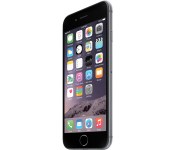
The iPhone 6 vs the competition: can it stay ahead?

By now you’re aware that there’s an iPhone 6 and you’ve seen what it has to offer. But are all those new bells and whistles (like Apple Pay) enough to make you choose it above other phones? It’s always hard to tell what features will work out, but in the meantime there’s always cold, hard specs to look at. We’ve stacked up the new iPhone against the latest and greatest its competitors have to offer, so check out the numbers and other internals of the iPhone 6 versus the Samsung Galaxy S5, LG G3 and the HTC One (M8) for Windows. Of course, you can also pick whatever devices you want and pit them against the iPhone 6 with our compare feature!
| iPhone 6 | Samsung Galaxy S5 | LG G3 | HTC One (M8) for Windows | |
|---|---|---|---|---|
| Pricing | $199, $299, $399 | $199 | $99-$199 | $149 |
| Known Dimensions | 138.1 x 67 x 6.9mm (5.54 x 2.64 x 0.27 inches) | 142 x 72.5 x 8.1mm (5.59 x 2.85 x 0.32 inches) | 146.3 x 74.6 x 8.9mm (5.76 x 2.94 x 0.35 inches), curved | 146.4 x 70.6 x 9.35mm (5.76 x 2.78 x 0.37 inches) |
| Weight | 4.55 oz (129 g) | 5.11 oz (145 g) | 5.26 oz. (149g) | 5.64 oz. (160g) |
| Screen size | 4.7 inches | 5.1 inches | 5.5 inches | 5.0 inches |
| Screen resolution | 1,334 x 750 (326ppi) | 1,920 x 1,080 (432ppi) | 2,560 x 1,440 (534 ppi) | 1,920 x 1,080 (441 ppi) |
| Screen type | IPS LCD, Retina HD | Super AMOLED Full HD | IPS LCD | S-LCD3 |
| Battery | NA | 2,800mAh (removable) | 3,000mAh (removable) | 2,600mAh (non-removable) |
| Internal storage | 16 / 64 / 128GB | 16 / 32GB | 32GB | 16 / 32GB |
| External storage | None | microSD (up to 128GB) | Up to SDXC standard/2TB theoretical | MicroSD (up to 128GB) |
| Rear camera | 8MP iSight, f/2.2, 1.5µm pixel size | 16MP, LED flash | 13MP with OIS | 4MP UltraPixel, f/2.0, 2.0µm pixel size, 1/3″ sensor size, 28mm lens |
| Front-facing cam | 1.2MP, f/2.2 | 2.0MP | 2.1MP | 5MP, f/2.0, BSI, wide-angle lens |
| Video capture | 1080p | 4K | 4K (30fps) | 1080p |
| NFC | Yes | Yes | Yes | Yes |
| Bluetooth | v4.0 | v4.0 | v4.0 | v4.0 with AptX |
| SoC | Apple A8 | Qualcomm Snapdragon 801 | Qualcomm Snapdragon 801 | Qualcomm Snapdragon 801 |
| CPU | NA | 2.5GHz quad-core | 2.5GHz quad-core | 2.3GHz quad-core |
| GPU | NA | Adreno 330 | Adreno 330 | Adreno 330 |
| RAM | NA | 2GB | 3GB | 2GB |
| WiFi | Dual band, 802.11a/ac/b/g/n | Dual-band, 802.11a/ac/b/g/n | Dual-band, 802.11a/ac/b/g/n | Dual-band, 802.11a/ac/b/g/n |
| Operating system | iOS 8 | Android 4.4 | Android 4.4.2 | Windows 8.1 |
| Standout features | Touch ID, next-gen gyroscope, barometer, Facetime HD, Apple Pay | Fingerprint scanner, heart rate sensor, Ultra Power Saving Mode, IP67 certified, 4K video | Smart Notice, LG Health, 4K video | UltraPixel sensor, Duo Camera, Zoe, BoomSound, BlinkFeed, Extreme Power Saving Mode |
Filed under: Cellphones, Mobile, Apple
.CPlase_panel display:none;
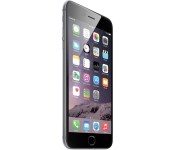
iPhone 6 Plus vs the competition: bigger is better, right?

Phones have been getting bigger and bigger, with many consumers embracing large handsets even as their screen sizes start to brush against the 6-inch mark. But those who prefer a larger screen have really only had Android as an option — until today. The larger iPhone 6 Plus is here, and it’s beautiful. While time will tell whether the iPhone 6 Plus has what it takes to challenge its more-established competition, we can still take a look at its specs versus the Galaxy Note 4 and LG G Pro 2 to see who’s coming out of the gate with the strongest start. Want to see how it compares to other phones, both big and small? Build your own specs comparison with our compare feature!
| iPhone 6 Plus | Samsung Galaxy Note 4 | LG G Pro 2 | |
|---|---|---|---|
| Pricing | $299, $399, $499 (16, 64 and 128GB options) | NA | NA |
| Known Dimensions | 158.1 x 77.8 x 7.1mm (6.22 x 3.06 x 0.28 inches) | 153.5 x 78.6 x 8.5mm (6.04 x 3.09 x 0.33 inch) | 157.9 x 81.9 x 8.3mm (6.22 x 3.22 x 0.33 inch) |
| Weight | 6.07 oz (172 g) | 6.21 oz (176 g) | 5.64 oz. (172 g) |
| Screen size | 5.5 inches | 5.7 inches | 5.9 inches |
| Screen resolution | 1,920 x 1,080 (401 ppi) | 2,560 x 1,440 (515 ppi) | 1,920 x 1,080 (373 ppi) |
| Screen type | IPS LCD, Retina HD | Super AMOLED Quad HD | True IPS+ LCD, Gorilla Glass 3 |
| Battery | NA | 3,220mAh (user removable) | 3,200mAh (non-removable) |
| Internal storage | 16 / 64 / 128GB | 32 GB | 16 / 32GB |
| External storage | None | microSD (up to 64GB) | MicroSD (up to 64GB) |
| Rear camera | 8MP iSight, f/2.2, 1.5µm pixel size, OIS | 16MP, LED flash | 13MP, LED flash |
| Front-facing cam | 1.2MP, f/2.2 | 3.7MP | 2.1MP |
| Video capture | 1080p | 4K | 4K |
| NFC | Yes | Yes | Yes |
| Bluetooth | v4.0 | v4.1 | v4.0 |
| SoC | Apple A8 | Qualcomm Snapdragon 805 | Qualcomm Snapdragon 800 |
| CPU | NA | 2.7GHz | 2.26GHz quad-core |
| GPU | NA | Adreno 420 | Adreno 330 |
| RAM | NA | 3GB | 3GB |
| WiFi | Dual-band, 802.11a/ac/b/g/n | Dual-band, 802.11a/ac/b/g/n | Dual-band, 802.11a/ac/b/g/n |
| Operating system | iOS 8 | Android 4.4 | Android 4.4.2, Optimus 3.0 |
| Standout features | Touch ID, barometer, next-gen gyroscope, Facetime HD, Apple Pay | Fingerprint scanner, heart rate sensor, UV light sensor | 1W Hi-Fi sound, OIS+, Natural Flash, Magic Focus |
Filed under: Cellphones, Mobile, Apple
.CPlase_panel display:none;
Apple aesthetics: a look at the iPhone’s design history

In order to properly appreciate the brand-spanking-new iPhone 6 and 6 Plus, you first have to examine its lineage. 2007’s OG iPhone introduced iOS to the masses, and 2013 saw the release of two separate models for the first time. Today, the long-rumored successors to those 5s and 5c handsets was unveiled, and with them comes new aesthetic tools that continue Apple’s lineage of design prowess. Let’s take a gander back at the full line, and examine the finer points that made each one unique.
Filed under: Cellphones, Mobile, Apple
.CPlase_panel display:none;
Apple Pay comes to the iPhone for handling mobile purchases, NFC in tow

For years, Apple has resisted including NFC connectivity inside its iPhone handsets… until now. With the arrival of the new iPhones, the folks in Cupertino are finally including the option that will sort mobile payments. What’s more, it’s doing so with a process it built for use on its handsets: Apple Pay. The new feature is included on both the iPhone 6 and iPhone 6 Plus and uses NFC, Touch ID and a Secure Element chip to keep that precious info under lock and key. So how does it work? Well, you add a card to your iTunes account which then adds it to Passport. From there, you can suspend payments on the phone if your card gets lost or stolen without the need to make a phone call. In terms of security, Apple doesn’t know what you’re buying, and cashiers won’t even see your name. Instead, a one-time payment number and a dynamic security code complete the transactions.
At launch, American Express, Mastercard and Visa are all on board with a load of banks opting in to Pay as well. As far as retail is concerned, Apple Stores, Bloomingdale’s, Macy’s, Walgreens, Subway, McDonald’s, Whole Foods and many more will allow you to pay for goods with that newfangled iPhone or the outfit’s wearable. For shopping on the web, there’s a one-touch feature that replaces the need to manually enter a card number, shipping address and other into. Once again, no credit card info is shared with merchants. Apple Pay is set to arrive in October via a free update to iOS 8
Filed under: Cellphones, Mobile, Apple
.CPlase_panel display:none;
 AIVAnet