



Huawei Honor 6 Plus review
<!–
–>
<!–
By use of this code snippet, I agree to the Brightcove Publisher T and C
found at http://corp.brightcove.com/legal/terms_publisher.cfm.
–>
- Great design, simplistically elegant
- Dual SIM setup co-ops the microSD card slot
- Display is vivid and enjoyable to use
- HiSilicon 925 proves itself once again as a high end processor
- Emotion UI one of the best Asian operating systems out there
- Few extra features outside the obvious (no NFC)
- Lack of Google Play Services cripples Google-centric users
- Battery life tends to hit the one day mark despite larger size
- Camera is a good performer, just not standout in quality
- Dual optics setup provides defocusing, but no low light enhancement that real aperture settings bring
Despite its elegance in design and in software, the Honor 6 Plus doesn’t deliver enough in its dual camera setup to separate itself from similarly performing competitors.
(function($)
$(document).ready(function()
$(“#aa_bottom_line .aa_bl_pros_cons”).each(function()
var aa_bl_pc=$(this).find(“.aa_bl_pc”);
var aa_bl_pros=$(this).find(“.aa_bl_pros”).height();
var aa_bl_cons=$(this).find(“.aa_bl_cons”).height();
if(window.innerWidth > 480 && aa_bl_pros != aa_bl_cons)
if(aa_bl_pros > aa_bl_cons)
aa_bl_pc.height(aa_bl_pros);
else
aa_bl_pc.height(aa_bl_cons);
)
);
)(jQuery);
We’ve seen the competition heating up recently with Chinese smartphone manufacturers like Huawei, Xiaomi, Meizu and Lenovo all doing their best to deliver the gold. Huawei, in particular, has been making great strides thanks to their high-end offerings at low-budget price points. The company has been on a roll recently with their highly-regarded Ascend Mate 7, which is currently one of the best selling smartphones in the East. But that’s not all the company has up their sleeve.
Read more: Huawei Honor 6 Plus hands-on and first impressions
Huawei’s Honor brand is geared towards younger consumers, offering high-end hardware while still being sold at an affordable price point. One of the more recent smartphones in this line is the Honor 6 Plus, the follow up to the company’s Honor 6 handset. We took a look at the handset at CES 2015, and went hands-on with the 6 Plus not too long ago. How does the 6 Plus stand up against other flagship devices on the market? Does the handset truly offer a great user experience and high-end hardware for a cheap price? We find that out, and more, in our in-depth review of the Huawei Honor 6 Plus!
Related Videos
.rvs_wrapper
width: 335px;
.rvs_wrapper.align_left
float: left;
.rvs_wrapper.align_right
float: right;
.rvs_wrapper.align_center,
.rvs_wrapper.align_none
width: 100%;
.rvs_wrapper.align_center
text-align: center;
.rvs_wrapper.align_center.cbc-latest-videos ul li
float: none;
display: inline-block;
vertical-align: top;
.rvs_wrapper.cbc-latest-videos:not(.align_none) ul li:nth-child(2n+1)
clear: both;
.rvs_title
font-weight: 600 !important;
margin: 0 !important;
.rvs_wrapper.align_right .rvs_title
padding-left: 20px;
.rvs_title a
font-family: ‘Roboto Condensed’;
color: #3a3a3a;
.rvs_wrapper.cbc-latest-videos ul
padding-top: 10px;
.rvs_wrapper.align_left.cbc-latest-videos ul li,
.rvs_wrapper.align_none.cbc-latest-videos ul li
padding: 0 15px 0 0;
.rvs_wrapper.align_right.cbc-latest-videos ul li
padding: 0 0 0 15px;
float: right;
.rvs_wrapper.align_center.cbc-latest-videos ul li
padding: 0 7px;
.rvs_wrapper.cbc-latest-videos ul li > a
font-weight: 400;
.rvs_wrapper.cbc-latest-videos ul li > a .yt-thumbnail
margin-bottom: 0;
@media only screen and (max-width : 480px)
.rvs_wrapper
width: 100%;
text-align: center;
#page .rvs_wrapper.cbc-latest-videos ul li
padding: 0 7px;
display: inline-block;
float: none;
vertical-align: top;


Design

In a stark departure from the metal construction of the company’s Ascend Mate 7, the Honor 6 Plus offers a mostly glass build, taking inspiration from multiple different handsets to provide a simplistic yet attractive design. The metal frame surrounding the device is largely reminiscent of the iPhone or the Samsung Galaxy Note 4, offering flat sides everywhere but the bottom. The bottom of the device is plastic, which is similar to what we’ve seen on Sony’s Xperia line. Xperia design choices seem to have influenced the 6 Plus in more areas, as the Honor also brings dual glass front and back panels.

Huawei didn’t change around the button layout on this device, and that’s a good thing. The bottom edge houses the Micro USB port, the top features the 3.5mm headphone jack, and you can find the SIM and MicroSD card slots on the right side below the volume rocker and power/standby key.
Side note: The MicroSD card goes in the SIM 2 slot (Nano SIM slot), which could be a little confusing.

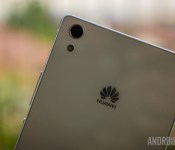
Around back, the simplistic Honor logo can be found under the dual camera setup in the corner. While some users would prefer to have no branding on the device whatsoever, having the word Honor on the back really isn’t a big deal and arguably adds to the phone’s style. The back also holds the single rear-facing speaker on the bottom-left corner.
A 5.5-inch display might be too big for some users, but we didn’t really run into any trouble handling the device. The bezels and flat sides help with the handling, and the thin profile makes it easy to hold as well. The Honor 6 Plus isn’t the most original handset, but it does take design influences from some of the most well-designed phones on the market.
Display

The 5.5 inch display provides 1080p resolution with 401 pixels per inch, but what makes this screen stand out is its screen to body ratio, which comes in at around 73%. A handset that has a 5.5-inch screen or greater almost has to have a high screen to body ratio, otherwise handling and one-handed use can easily suffer. The IPS display offers a super high level of brightness to the device, even outdoors. The viewing angles are great and outdoor color visibility barely suffers at all.
Huawei prides itself on the company’s colorful Emotion UI, which really pops with the high-quality display. The saturation levels may be a little high on the 6 Plus, but text is sharp and contrast is spot-on. Even with difficulties reaching to the top of the display with one hand, the Honor 6 Plus manages a very enjoyable display experience for work and for play.
Performance

As has become customary for Huawei smartphones, the Honor 6 Plus does not use a conventional chipset you would find in many of its competitors – instead, Huawei constructs their own processing packages and since the Mate 7 we’ve been pretty impressed with what they put out. The HiSilicon 925 makes a return here offering high-end performance, mainly providing a very smooth and speedy experience in the Emotion UI. Scrolling through all of the various elements yielded no problems and the 3GB of RAM allowed for a great multitasking experience.
Overall, we barely experienced any hiccups or stutters with the Honor, and that performance quality translated to gaming as well. The recently released WWE Immortals moved along smoothly and without incident, giving the Mali-T628 MP4 a few points in Huawei’s architecture. During our recent tour of Huawei’s offices, we learned that the company is focused on creating a great-performing processor for all of their devices across the board. And if the Mate 7 and now the Honor 6 Plus are any indication, HiSilicon is fulfilling that goal.
Read more: Huawei – Past, Present and Future
Hardware

The Honor 6 Plus is one of the more simply-designed phones we’ve seen, so you won’t see many more features than the essentials. Remember, the Honor line is meant to appeal to a younger crowd with lower-budgets, and phones that carry the Huawei name (like the Ascent Mate 7) are more geared towards the high-end market.
We didn’t experience any call quality problems with the Honor 6, though the volume was a bit low for our taste. When it comes to connection, we weren’t surprised to see that the Chinese phone wouldn’t connect to any US LTE networks. With that said, AT&T’s HSPA+ network connection didn’t give us any problems, and was actually very reliable from day-to-day.

Moving around to the rear-facing speaker, you already know what we’re going to say. We would have liked to see the speaker on the front of the device. Also, the speaker is very narrow, so the sound wasn’t as loud as we would have liked it to be. Nowadays, NFC comes standard on almost every Android handset. Unfortunately, the Honor 6 Plus doesn’t have NFC capabilities. It’s a feature we’ve gotten used to over the years, so to see a smartphone without NFC is a little unfortunate.
The 6 Plus has a non-removable 3600mAh battery which gave us around a full day of use. With sporadic usage, the device may even be able to last up to a day and a half.
Camera
 [/aa_full_width][/aa_full_width]
The Honor 6 Plus’ main claim to fame is the dual camera setup, made in a similar fashion to the Duo Camera from the HTC One M8. Just like HTC’s handset, the optics are supposed to retrieve depth information in a scene and provide the ability to set a focal point. Both rear cameras on this handset are 8MP shooters. When they work together, it results in a number of different exposures for each scene, making it a very fast HDR performer.

Much like other camera apps on Huawei devices, choosing different modes is possible by swiping on the viewfinder, while other modes can be found via a button on the side of the app. All of the standard modes are present, including HDR, Panorama, and even a Super Night mode that really helps out with dark shots. Despite the graininess and loss in quality that you’d expect, this mode works wonders during nighttime shots. However, since Super Night mode is basically just a slow shutter mode, you’ll have to hold the device very still or even use a tripod. HDR did a good job enhancing a scene as well, owing to the benefit to different exposures being captured simultaneously from the second camera.

This device doesn’t have optical image stabilization (OIS), so video recording is a little shaky. However, if you have steady hands, you can produce really high quality full HD shots.
In general, picture quality is quite good. Saturation levels and a good amount of detail were captured by using the main auto mode. The camera is quick to take pictures, so this is a great device for an everyday camera companion.
While these effects mimic the same procedures on DSLRs, one big reason for choosing low aperture lenses isn’t found here: low light performance
The main problem we found, however, has to do with the dual camera setup. When in the ‘wide aperture’ mode, you can tap on a focal point and adjust the aperture, which is the term that they are using for what is otherwise a defocusing mode. Depth of field is done on the software side, which gives you the ability to refocus photos from the gallery. When used on a certain point, you can blur out the rest of the image other than the particular selected area. While these effects mimic the same procedures on DSLRs, one big reason for choosing low aperture lenses isn’t found here: low light performance.


As you can see from a few of these pictures, the focus point is very finely chosen but the picture retains the same lackluster low-light quality. The issue is with the usage of the term ‘aperture’ – sure, it is a catch-all term for what the company is trying to do, and the resulting stylized photos will please those who want the effect – but it’s only about half of the truth behind its usage in the Honor 6 Plus.
Software

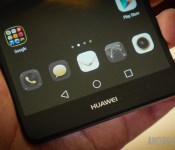
Emotion UI is the OS of choice for Huawei, and as far as Asian operating systems go, it’s a sleek and good looking one in comparison. Its highly colorful and clean aesthetic make homescreens easy to navigate through, though folders and some organization will be needed due to the lack of an app drawer. Additionally, the softkeys on the bottom of the 6 Plus are customizable and can be swiped away if you want to open up some real estate. Huawei makes it easy to customize the software thanks to the built-in theme engine. Not only can you customize the UI experience, but lock screen gestures can be assigned in order to access certain parts of the phone with ease. The notification dropdown shows your notifications in a reverse chronological timeline, and nice transitions in and out of applications are present thanks to the HiSilicon processor.

Since we’re using the Chinese variant of this device, the main gripe we have is the lack of Google services. It’s easy enough to search Baidu for applications and install the Google Play Store, but without Services syncing contacts to the device, that meant extracting them from another phone via Bluetooth. Also, we couldn’t sync our Google Play Music library with the device, which is an important feature we’ve grown to love on most other Android handsets. The combination of smooth performance and a lovely screen help elevate what is already a nice interface in the Emotion UI. But without Google Play Services, it’s tough for a Westerner to fully convert to the OS without making sacrifices.
Gallery
Pricing and final thoughts

The Honor 6 Plus is available in China and parts of Europe for a price that converts to around $400. That’s a pretty great price for a high end device, though plenty of other Chinese-based manufacturers have been able to meet or even surpass this price point. There are also some competitors that offer extra features like the rotating camera of the Oppo N3 or the fast charging capabilities found on plenty of its other rivals.

Fixating on the word ‘honor’ seems to imply simplicity. And if nothing else, the Honor 6 Plus succeeds at bringing the essentials in a simplistically elegant design. On its aesthetic and performance, you can mostly justify the price point. But claims about the camera were the focus – no pun intended – and the dual camera setup proves to be more of a gimmick than a game changer. A dual camera setup is nothing new at this point, and while the so-called ‘wide aperture’ mode is functional and arguably useful, the camera does nothing else to differentiate itself from the competition. The Honor 6 Plus lays in the cut, providing the Huawei flavor of what we may otherwise already expect from high end devices. If there were more compelling features like the fingerprint scanner and battery life of the Ascend Mate 7, the sum of its parts might make this a standout winner. But instead, what we have is another admittedly great entry point into the high end market, where there happens to be quite a few filling that space already.
Huawei – Past, Present, and Future

Chances are good that you’ve heard of Huawei by now. In case you’re wondering, it’s pronounced wah-way and, according to IDC, the Chinese company is the fourth largest smartphone manufacturer in the world by shipments, claiming a 6.25% share in the fourth quarter of 2014.
Expanding from a solid base built on telecommunications and networking equipment, Huawei has been successfully breaking into the consumer market and expanding beyond Chinese borders.
Sales of budget and mid-range Android smartphones are booming in emerging markets. The Ascend brand is gathering pace as Huawei builds relationships with carriers. Meanwhile Huawei’s Honor line is all about direct online sales to consumers. All of this is underpinned by a solid position selling network infrastructure where Huawei has been locked in battle with Ericsson for years now.
<!–
–>
<!–
By use of this code snippet, I agree to the Brightcove Publisher T and C
found at http://corp.brightcove.com/legal/terms_publisher.cfm.
–>
“Splendid achievement” or “action for China”
Both of our sub-headings are possible translations of the Chinese characters that make up the Huawei name. And they’re both fitting, though the multinational company would rather focus on the first one.
Huawei was founded in 1987 by Ren Zhengfei. He studied civil engineering at Chongqing University in the 60’s before serving in the Chinese army as an engineer. Just $5,000 got Huawei off the ground in Shenzhen selling telephone exchange equipment imported from Hong Kong, which was still under British governance back then.
Heavy investment in research and development enabled Huawei to start producing its own switches instead of importing. The C&C08 digital telephone switch in 1993 was a major breakthrough and key contract awards soon followed. It was politically desirable for the Chinese government to work with a native organization, something which would become official policy in 1996.
Focusing on the B2B market, Huawei showed considerable talent in building telecommunications networks and services at competitive prices. In the enterprise market it soon carved a niche providing equipment, software, and services. In manufacturing white label modems and routers gave way to set-top boxes and mobile phones.
Expanding internationally

Huawei dipped a toe in international waters in the late 90’s, but it wasn’t until after the millennium, in 2000, that it really ramped up its overseas efforts. Sales soared by over 500% in two years, as Huawei opened R&D centers and signed partnerships with major players like IBM.
A simple policy of undercutting the competition opened a lot of doors. By 2005 it was earning more from the international market than the domestic market and it made the Fortune 500 in 2010 with net profit of $2.67 billion. Last year Huawei made around $5.5 billion.
Expansion in the consumer smartphone market has been swift. Huawei may still be fighting for brand recognition Stateside, but growth is steady elsewhere.
“In 2014 we have seen sales in Europe double, a 700% increase in the Middle East, and a 200% increase in Latin America,” Kevin Ho, President of Huawei’s Handset Product Line told us, “We need to give consumers the perfect product, and give them some time to experience them and see how good these smartphones are.”
Huawei was a comfortable third in the worldwide smartphone market with a 4% share in 2012, which grew to 4.8% in 2013, according to Gartner. It was only Lenovo’s successful acquisition of Motorola that saw it leapfrog its compatriot, but Huawei has been looking over its shoulder too.
Honoring the e-commerce trend

Xiaomi is behind Huawei in fifth place in the worldwide smartphone manufacturer charts. It has built a successful business that’s largely based on listening to consumers and engaging marketing, combined with high-quality devices at lower prices driven by reduced overheads thanks to direct online sales.
“We see e-commerce as a worldwide trend, at around 10% of smartphone sales, but increasing every year. The Honor brand is an online only brand,” explained Mr Ho, “We are focused on the consumers.”
It appears to be working because the Honor brand went from sales of 1 million in 2013 to 20 million last year. There are plans to bring the Honor line to the States this year. Cutting out the carrier allows manufacturers to sell devices a lot more cheaply, but profit margins are still tight.
Ascending to greatness

While the Honor brand has been capturing the imagination of a younger audience and helping Huawei compete with the disruptive Xiaomi, the Ascend brand has helped it build relationships with carriers across Europe and other markets, though a deal with a US carrier remains elusive. The Ascend flagships also show a gradual shift towards the premium end of the market. We were very impressed by the Huawei Ascend Mate 7.
“The Ascend P7 is selling very well worldwide,” according to Ho, and “…the Ascend Mate 7 outsold the Galaxy Note 4 in China in November and December.”
The fact that the Ascend P8 will launch in London this April shows how important the European market is becoming for Huawei.
Conquering new markets

There are still a few stumbling blocks for Huawei to overcome. It has been dogged by allegations of IP theft, its internal structure and management have been questioned, and the US Government even described the company as a national security risk. None of these things can be confined to Huawei, and naturally the company refutes them.
Accusations like this are relatively commonplace, and there isn’t much transparency when it comes to national governments and their relationships with native technology companies. It’s not clear whether this has had any real impact on consumers, but you suspect it has something to do with Huawei’s difficulty in establishing a deal with a US carrier. It’s worth remembering that the company doesn’t need the U.S. to succeed, but it’s such a lucrative market that everyone wants a slice of it.
Continued expansion seems likely when you consider that Huawei still spends big on R&D to the tune of more than $6 billion a year. It also owns HiSilicon, but runs it as a separate semiconductor company licensing from ARM and designing chipsets for devices. That doesn’t mean it plans to handle the whole manufacturing side itself. R&D may lead to patents, but Kevin Ho makes it clear that Huawei will continue to partner with display manufacturers and other suppliers where it discerns the most value.
It will be interesting to see what Lenovo makes of Motorola, whether Samsung’s slide continues, and what Xiaomi can make of its alternative approach. Whatever way you slice it, Huawei’s prospects still look bright and it’s not fixed on the competition.
“There are lots of competitors, but there is no one we want to directly fight with,” explains Ho, “It is about getting the consumer to love our products. It is about giving consumers the best product. There is plenty of room for us to do our own thing.”
ARM’s latest IP could be another boon for China

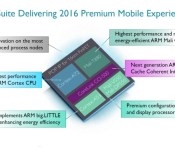
ARM’s newly announced Cortex-A72 CPU and Mali-T800 GPU IPs are clearly exciting prospects for us consumers, but new technologies also create plenty of business opportunities.
At the top of the list of likely beneficiaries is TSMC, the Chinese chip fabrication company that ARM has been optimising its new physical IP with. TSMC’s 16nm FinFET+ process will be the first foundry to support these new IPs, which will give TSMC a head start over its rivals. Even over those with smaller manufacturing nodes on the way. Support for other foundries will come in time, but the first batch of smartphones powered by these chips will likely contain parts produced by TSMC and are expected to arrive sometime in 2016. Even further into the future, ARM and TSMC have already announced a roadmap to reach 10nm optimized designs.
ARM has hinted that “more than ten partners” are already licensing the Cortex-A72 processor design, three of which are China-based HiSilicon and Rockchip, as well as Taiwan’s MediaTek. Each of these companies will likely be using the new IP for their own line-up of mobile application processors. While Apple, Samsung and Qualcomm leverage ARM’s IP for their own custom SoC designs, Huawei’s HiSilicon and MediaTek traditionally stick closers to ARM’s reference designs, which may allow them to ship products to market in a shorter time frame.

HiSilicon leverages ARM’s IP and TSMC’s foundry to produce a range of SoCs.
Importantly, it is these local SoC designers and manufacturers which power a large percentage of China’s gigantic smartphone and tablet market. Although Western markets still make use of PCs for some of their internet access, a large percentage of China’s growing online population are connecting to the internet entirely through mobile. A Chinese government report counted 649 million internet users by the end of 2014, with 557 million using handsets to go online.
Part of ARM’s approach with this latest generation is too scale performance between low and high power devices. In China, where mobile is much larger market than the West, ARM’s new IP will enable local development and production of more powerful mobile devices, to fill in existing gaps in the market. There are a lot of potential consumers, and the first to market with new and improved technologies will likely secure significant sales figures.

ARM’s Ian Ferguson expects that smartphones will move closer to becoming “primary computing platforms” in 2016, and China’s consumer and manufacturing bases are likely to be at the forefront this movement.
Huawei’s focus on design, making great products & ‘true value’ – Interview with VP of Mobile Design, Joonsuh Kim

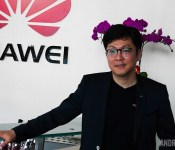
The smartphone market is congested no matter where you look – China, Europe, the US – the list goes on. So how do device manufacturers stick out of the crowd? Specifications and internal components can only get a smartphone so far. With that said, we sat down with Huawei’s Mobile Design Vice President Joonsuh Kim, and he spoke to us about Huawei’s vision, inspiration and what the company has planned for the future. Kim isn’t just in charge of design. He overlooks every product that the company sells, whether it’s the Huawei or their Honor brand.
Kim joined the company in late 2012, prior to holding the position of Design Director at Samsung Mobile for the majority of the late 2000’s. He holds a Master’s Degree in Industrial Design from the Pratt Institute in New York, and achieved his Bachelor’s Degree in Industrial Design from Hongik University in Seoul, Korea.
VISION

“Two years before Huawei, many people might have laughed at our vision. It was aggressive, and forced us to make big changes very quickly in the company.” This is a quote from Kim, and it’s an ongoing theme that he touches on throughout his entire presentation.
Two years before Huawei, many people might have laughed at our vision. It was aggressive, and forced us to make big changes very quickly in the company.
Huawei’s vision is to create genuinely great-performing products that not only satisfy the user from a performance and design standpoint, but smartphones that can be offered at an affordable price point. They call this mindset true value, and it’s another theme you’ll be hearing quite a bit from the company going forward.
INSPIRATION

Simply put, Huawei strives to be a smartphone manufacturer that can sell their products globally without a problem. They don’t want to be marketed as a manufacturer that represents China. Not because they’re ashamed for any reason, but because they want to appeal to the rest of the world as an OEM from China, not a Chinese OEM. To accomplish this, Huawei has set up offices around the world that aim to draw inspiration from different regions. They have offices in China, Korea, Western Europe and in emerging markets to draw inspiration. In terms of marketshare, the company is relatively unknown in the US. They are, however, working with certain US carriers to bring more innovative products to the United States, so it’s clear that Huawei is active in their global design research.

They also have an office in Paris which they refer to as their “aesthetic design center”, where they consult with the design and fashion industries and follow trends in the fashion world. Based on their feedback, they develop new goals every year to work towards in the design space.
Kim explains where the inspiration comes from for the company’s P Series:
When you see a car passing by out of the corner of your eye, you can easily recognize that it was either a BMW or a Mercedes. In a way, that’s what we’re attempting to do with our devices.
He goes on to say that these days, so many companies are incorporating metal materials into their designs. While it’s important to incorporate new materials into design, they’re still thinking of ways to innovate with plastic, and how it can be more functional and beautiful.
For the company’s flagship line, they tend to use neutral colors – something that will be inviting to the user – but still built in a way that stands out. Relating to users is what the company is all about. Building an emotional connection with the user will help build the consumer base faster than anything.
TRUE VALUE

Perhaps the most prominent aspect of the presentation is the ‘true value’ theme. Huawei’s constantly thinking of how exactly they can build beautiful devices and still keep them at affordable price points, which is what true value is all about. Building a smartphone with the best specifications on the market isn’t what they’re striving for. Building a quality smartphone with an astounding user experience, while still being offered at an aggressive price point is the main focus.
In our interview with Mr. Shao Yang, Huawei’s Vice President of Marketing, he explains this in greater detail. When asked about Apple’s rise in the Chinese market and how Huawei will rival them, Yang explains:
Huawei isn’t solely a low-cost device company. With that said, we put a lot of research into making our product the best, rather than the ‘most premium’. If we go head-on with a company like that in the high-end market, we will lose… What kind of quality do consumers expect for a certain price point? That’s a question we ask ourselves often.
This mindset is how the company plans to differentiate themselves from the other OEMs on the market. They obviously don’t have as much money as Apple or Samsung, so they focus on other aspects that are important to users. One example is that they focus on closing the gap between themselves and consumers by offering inexpensive devices directly through their online store. If Huawei can dial in on this idea, they believe that they can truly go far in the global market.
HUAWEI IN THE FUTURE

Aside from focusing on online sales and true value, Huawei aims to bring a certain design language to their upcoming flagship devices, while still differentiating between the two brands that they’ve worked so hard to build up.
Kim tells us that smartphones under the name Huawei are meant to act as the company’s flagship products. Devices that have top-of-the-line specifications and are generally more premium fit into this category. On the other hand, the company’s Honor brand is meant to appeal more to young consumers. Devices that are more affordable, and therefore accessible but don’t skimp on the goods will carry the Honor brand name.

Huawei will keep these brands separate going forward. In order to stop the two brands from competing with one another, they’ll continue to differentiate these two by offering different design languages, different features and different price points.
Perhaps Huawei is on to something with their idea of true value. Shipments for the Honor brand jumped from 1 million to 20 million worldwide in 2014 alone. What’s more, the company’s overall smartphone sales grew by a massive 33% just last year. As you can see, it’s clear that the company has a good set of ideals that are already showing some positive results. And whether these standards finally break them into the US smartphone market or not, Kim’s design values and goals will keep making Huawei a big player in the global market.
Huawei P8 potentially shows up in benchmarks with Kirin 930 processor
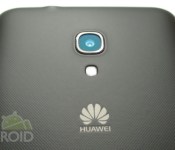
 Huawei’s upcoming flagship device, the P8, may have shown up in benchmarks, confirming some of the specs of the device. The benchmark came from a device with a model number of ML100-UL00, and it scored fairly highly, giving credibility to the rumors.
The processor in question was an unnamed octa-core CPU clocked at 1.5 GHz. The benchmark score was higher than the older Kirin 620, and it’s fairly close to the Kirin 925 in the Ascend Mate 7. If this does end up being the P8 with this particular chipset, it will be the first Kirin 930 device on the market.
Other specs of the device include Android Lollipop and 3 GB of RAM, but for everything else, we’re just going to have to wait for Huawei to make something official.
source: Geekbench
via: GizmoChina
Come comment on this article: Huawei P8 potentially shows up in benchmarks with Kirin 930 processor
Huawei P8 rumors: 16nm octa-core SoC and dual rear cameras

Some new specifications for the upcoming Huawei P8 have been leaked by the Weibo account @Ubuntu团队. Previously, little was known about the flagship P8, other than that it would be launching at an event in London on April 15th.
According to the social media post, the Huawei P8 will indeed make use of the company’s in-house Kirin 930 processor, which will be manufactured using a 16nm process. The Kirin 930 is expected to be an octa-core Cortex-A57 and A53 big.LITTLE SoC complete with LTE connectivity, which is a similar design to Samsung’s and Qualcomm’s high-end 64-bit processors. If true, Huawei looks to be the first smartphone company to market with a more efficient 16nm SoC design.

The leak also suggests that the Huawei P8 will come with a zirconium oxide porcelain uni-body design and double sided glass. The handset will also be just 6mm thick, a whole 0.5mm thinner than the Ascend P7. However, this design choice may have limited the size of the battery that can fit in the P8. The smartphone is expected to ship with a 2,600mAh battery, which is relatively small by today’s standards.
Furthermore, there is also reference to a dual-camera setup hidden within the text, which may be similar to the technology used in Huawei’s new Honor 6 Plus. Previously Huawei had stated that it was looking to bring some cutting edge camera technology to the P8, and a 13MP OIS sensor had also been mentioned in some older rumors.
Combined with previous rumors of a 5.2-inch 1080p display, 3GB of RAM and a fingerprint sensor, the Huawei P8 sounds very reasonable for a handset expected to cost just ¥2999 (around $480).
Huawei Ascend P8 to launch on April 15th in London

Not much is known about Huawei’s next Ascend P smartphone, other than a small selection of rumors, but Huawei has already set a date for its launch. The Ascend P8 will be unveiled on April 15th at an event taking place in London, according to Huawei’s director of communications, Jerry Huang.
Rather than unveiling its latest flagship smartphone at the upcoming Mobile World Congress, Huawei will again be hosting its own launch event in Europe. However, the company is said to have three wearable products planned for its event at MWC this year as well.
Previously, Huawei launched the P6 in London, followed by the P7 in Paris. The European market is becoming increasingly important for Huawei, as it attempts to shake-off lingering perceptions that it is just another Chinese brand. The company is looking to build a strong brand presence in Europe this year, particularly in the UK.
“We chose Europe because Europe is the market where we have very good sales of high-end smartphones.” – Jie Jinjin, Huawei’s vice president of handsets
Jinjin did not give away any specific details about the Ascend P8, but did hint at what the company has been focusing on for its next flagship. Another sleek, industrial design is apparently an important feature, but Huawei won’t be slimming its handset down further if it comes at the cost of other important attributes, such as battery life. Huawei has also apparently been working with partners to bring some of the industry’s best camera technology to its new smartphones.
We may still be a few months away from the Ascend P8’s launch, but do you have any specific wishes for Huawei’s next flagship smartphone?

Q4 2014 was a photo finish between Apple and Samsung

Research firms have been busy collecting data regarding smartphone shipments throughout 2014 and are finally ready to publish their findings. Although figures for Samsung vary by a tiny margin of error from firm to firm, the consensus is clear: 2014 was a tough year for Samsung, while Apple saw a surge in Q4 smartphone shipments.
Beginning with Apple, the company saw iPhone shipments soar to 74.5 million units in Q4 2014, a growth rate of 46.1 percent compared with Q4 2013, and saw a 25.6 percent increase throughout the year. The arrival of the iPhone 6 Plus as a competitor to larger Android phones is speculated as one possible reason for this uncharacteristic surge. It will be interesting to see is whether Apple can actually sustain this momentum this time around, or whether shipments will fall back towards Apple’s usual cycle.
Samsung, on the other hand, has been a little vaguer about its figures. The company stated that it has shipped around 95 million handsets in total last quarter and that smartphone sales accounted for a “high 70 percent” of that amount. Counterpoint Research has estimated Samsung’s smartphones shipments at 73.8 million, a smidgen behind Apple, while Strategy Analytics places the two companies neck and neck at 74.5 million each. Either way, there’s only a 1 percent margin of error between the figures, and both suggest that Samsung saw a slump in shipments last year.
On the positive side, the decline in Samsung’s smartphone shipments appears to be slowing. Volumes were down 14.9 percent between Q4 ’13 and Q4 ’14, but only 0.5 percent lower when comparing yearly totals.http://embed.chartblocks.com/1.0/?c=54ca26c2c9a61db46852f48e&t=e4b683fac02021bIt is probably worth mentioning that shipments aren’t quite the same thing as actual sales, especially given the usual surge in stock levels around the holiday season.
Other Android manufacturers fared much better in the fourth quarter, with both Counterpoint Research and Strategy Analytics awarding third place to Lenovo and Motorola, following the finalization of the merger. The new company secured 25.9 million shipments in Q4 2014, a gain of 43.9 percent year on year and 54.3 throughout 2014 over Lenovo alone. Huawei came in fourth with a similarly impressive 24.2 million smartphones shipped last quarter and a 47.6 percent growth rate throughout the year.http://embed.chartblocks.com/1.0/?c=54ca2962c9a61d386952f48e&t=5832926b5ab3070Xiaomi turns out to be the real success story last year though, despite landing in fifth place with 17.1 million Q4 shipments. Xiaomi’s shipments grew by an astonishing 167.2 percent over Q4 2013 and surged by a huge 227.3 percent throughout 2014, according to Counterpoint Research.
In terms of an overall market share, Samsung remains firmly out in front with 24.4 percent, followed by Apple on 14.8 percent, Lenovo and Motorola on 7.2 percent, Huawei with 5.8 percent and Xiaomi grabbing 4.7 percent of the global market.
Without a closer look at the regional figures, its difficult to say exactly what has contributed to Samsung’s slowdown and Apple’s surge. New product competition in the West and a growing Chinese presence in emerging markets are both likely to have contributed to varying extents. We’ll have to see if this is just a one off quarter or the start of a new trend.
2015 is going to be an important year for Samsung, the company clearly needs a new approach to mobile. This year will also no doubt present plenty of new opportunities for the fastest growing brands to further close the gap on the big two.

Alleged Huawei Mate 7 Compact images leak

A new season is approaching and that means new devices are to come. From Huawei, it seems as if a new device from the Mate line is coming. On Twitter, leaksfly posted two images of what is allegedly the Mate 7 Compact. It looks much like the original Mate 7 — simplistic design with on-screen buttons and camera/flash rear setup. The rear also includes the same fingerprint scanner below the camera. The original Mate 7 had a 6-inch display, so the Mate 7 Compact could have a display measuring 5.5 or 6-inches.
Hit the break for an image of the rear.

Source: @leaksfly
Come comment on this article: Alleged Huawei Mate 7 Compact images leak
Huawei to focus on higher-end smartphones this year, announces 30% YoY growth

Huawei has just released some quite promising figures regarding its performance throughout 2014. The company has seen revenues soar by an additional 30 percent between 2014 and 2013, with sales now worth USD$ 12.2 billion, the first time that Huawei has crossed the 10 billion mark.
This growth is mainly being attributed to the company’s smartphone range, which has seen a year on year shipment increase of 45 percent. Overall, Huawei’s total device shipments grew by 7.8 percent, reaching a total of 138 million in 2014, 75 million of which were smartphones.
Looking more specifically at Huawei’s smartphone line-up, the company is boasting strong growth in its mid- to high-end tier of products, shipments of which rose by 18 percent YoY. The company sold 4 million Ascend P7 flagships in the six months following its launch and 2 million Ascend Mate 7’s since its September release.

The Huawei Ascend Mate 7 was one of last year’s exemplary smartphones.
As a result, Huawei is keen to focus on this product tier going forward, leaving its spin-off Honor brand to contests the lower priced end of the market. Speaking of which, Honor shipments reached 20 million units in more than 60 countries in 2014.
The renewed premium tier focus could help perpetuate Huawei has a high-end brand of choice in its key market segments, such as Colombia, Venezuela and Pakistan, creating a strong brand for the long term as these growing markets mature. A recent survey in 32 countries showed that 65% recognized the Huawei brand in 2014, up from 52% in the previous year.
“Looking ahead, Huawei Consumer BG aims to sustain the growth momentum created in 2014 and further consolidate Huawei’s leading position in the mid- to high- end smartphone market with a 2015 shipment target of 100 million units” – Richard Yu, CEO of Huawei
Much like some other competitively priced smartphone vendors, e-commerce has become an increasingly important factor in Huawei’s business model, especially when it comes to reaching new consumers. Revenue from open-channels accounted for 41 percent of Huawei’s 2014 income.
However, Huawei is becoming increasingly sceptical about the viability of low-margin smartphone manufacturing, particularly in the low-end market. Mr Yu even speculated that a larger number of low-cost Chinese vendors may be squeezed out of the market in three to five years because they simply aren’t profitable enough. Another reason why the company is likely keen to focus on its higher-end products.
“If we sold more low-end phones, we could even double our shipments…but in the low-end market there is no margin,”
“There are too many brands in this industry,” – Richard Yu, CEO of Huawei
With a target of 25 percent further smartphone growth this year, Huawei is going to face tough competition from other growing Chinese vendors, the most notable of which is probably Xiaomi.
Were you impressed or underwhelmed by Huawei’s 2014 line-up? What would you like to see from the company in 2015?
Focus on High-end Premium Smartphone Strategy Results in 30% Y-O-Y Sales Revenue Growth to USD 12.2 Billion
27 January, 2015
[Shenzhen], 27 January, 2015: Huawei Consumer Business Group (BG) today announced its 2014 financial performance. Total sales revenue increased 30% year-on-year to USD 12.2 billion, crossing the 10 billion mark for the first time. Shipment grew by 7.8% to a total of 138 million devices in 2014, including 75 million smartphones, representing a year-on-year increase of 45%.
“Our strategy of focusing on premium mid- to high- end products has borne fruit, with 2014 resulting in significant achievements in a number of areas including product R&D, brand awareness, channel development and growth in market share which further consolidated our number three position in the global smartphone market. The global influence of our brand has continued to grow, and Huawei has become the first mainland Chinese company to successfully enter Interbrand’s Top 100 Global Brands of 2014 list,” said Mr. Richard Yu, CEO of Huawei Consumer BG.
Success of Focusing on Premium Mid- to High- End Products
One of the most notable achievements of 2014 is the shipment contribution of mid- to high- end smartphones which rose to 18%. Huawei P7, one of Huawei Consumer BG’s premium flagship products, achieved global shipment of four million units only six months after it was launched in Paris in May while Huawei Mate7 has been overwhelmingly well-received among business executives in all markets and shipped over two million units only three months since its launch in September last year.
Rapid Expansion of Open Channels
Also of note is a significant growth in revenue contribution from open channels (including E-commerce), which accounted for 41% of the total revenue. As of the end of 2014, Huawei Consumer BG has established 630 Huawei branded shops, these factors have contributed to the enhancement of the online and offline retail shopping experience for consumers.
Growing Brand Awareness Globally
The growing popularity of our mid- to high- end smartphones among consumers has been enhanced by internet marketing initiatives, enabling Huawei’s brand awareness to continue its expansion around the globe.
A recent consumer survey report from IPSOS, which covered 32 countries, found that Huawei’s brand awareness rose from 52% in 2013 to 65% in 2014, meaning that the Huawei brand is recognized by nearly two thirds of the respondents in those countries. According to IPSOS, Huawei’s Net Promoter Score (consumers who had recommended Huawei handsets to others) reached 43%, placing it among the top three brands in the report. Huawei is also among the top three brands in terms of Brand Momentum which reflect Huawei’s success in improving its brand experience for consumers and further strengthen the brand’s competitive edge on the global stage.
Dual-Huawei And Honor Brand Strategy Creates Synergy
The Honor brand unveiled by Huawei last year also delivered solid performance in 2014. Shipment of Honor devices reached 20 million units, with Honor 3C series shipping more than eight million units, Honor 3X series over four million units and Honor 6 over three million units. By the end of 2014, the Honor brand had established a presence in more than 60 countries and regions around the world.
Huawei Consumer BG has been focusing on mid- to high- end premium devices since 2012. From Huawei P1 to P7 in the P series, from Huawei Mate to Mate7 in the Mate7 series, from Honor 6 to Honor 6 Plus, all of the flagship devices of Huawei Consumer BG aim to differentiate themselves with the extraordinary user experience brought to consumers by Huawei’s core competency. P series redefines smartphone design and offers superb cameras; Mate series stands out by its large screen and strong battery life; Honor products provide consumers outstanding connectivity, quality and strong battery life.
Mr. Shao Yang, the Vice-President of Marketing, Huawei Consumer BG said, “The dual-Huawei and Honor brand strategy has proven to be highly successful, creating synergies which have resulted in raising brand awareness and market share of the Huawei Consumer BG as a whole. The Huawei brand has consolidated its leading position in mid- to high- end smartphone market while the Honor brand has established itself as a bold and popular brand among digital native consumers.”
Sustaining the Momentum in 2015
2015 will be a year of strategic deployment for Huawei Consumer BG, in which Huawei Consumer BG will leverage the opportunities in Internet, the Internet of Things and car networking to achieve breakthroughs in various business areas including products, brand, marketing, channel, retail and e-commerce. Huawei Consumer BG will focus on flagship products brand marketing to establish Huawei’s brand image as a symbol of innovation and high-quality products through its high-end products. The Honor brand will focus on internet business and to replicate its successful online business model to overseas markets.
Mr. Richard Yu, CEO of Huawei Consumer BG, concluded, “Looking ahead, Huawei Consumer BG aims to sustain the growth momentum created in 2014 and further consolidate Huawei’s leading position in the mid- to high- end smartphone market with a 2015 shipment target of 100 million units. With Huawei’s strong technical capability, Huawei Consumer BG will continue to create extraordinary brand experiences to consumers all over the world and realizing dreams for people everywhere.”
 AIVAnet