


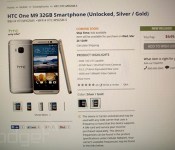
HTC One M9’s leaked price and release date will give you deja vu

If you were still picking sides following the launch of HTC’s One M9 and the Samsung Galaxy S6, there’s now a bit more to work with. Retailer B&H Electronics has (accidentally?) revealed that a 32GB flavor of the HTC One M9 will start shipping on March 25th for $649. That’s the exact same price (and release date) as last year’s look-alike model and a good chunk less than the Galaxy S6 is expected to cost. That said, you’ll also need to weigh factors like Exynos versus Snapdragon CPUs and all-metal versus glass-and-metal designs. The listing could also be inaccurate or premature, so we wouldn’t count on the pricing or date without official word from HTC.
Filed under: Cellphones, Mobile, HTC
Via: Phone Arena
Source: B&H

HTC has a plan to get you to purchase a One M9 over the iPhone

It looks like HTC has a plan to tackle the high-end smartphone market. As we all know, HTC has been working hard at building a gorgeous phone over the last few years and with general success at doing so. Even so, HTC hasn’t been able to chip into the Apple/Samsung dominated smartphone market and as such HTC must show how the One M9 differentiates itself from both Android phones and the iPhone 6. Well, HTC Americas president Jason Mackenzie seems to to know this and has hinted that HTC has a plan in place to do so.
In a Business Insider interview at MWC this year, Mackenzie teased an upcoming announcement that will come in ahead of the M9 launch later this spring that will help HTC push the One M9. It’s an announcement that we’ll get later this month. Here’s what he said.
Come comment on this article: HTC has a plan to get you to purchase a One M9 over the iPhone
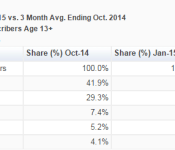
Market share numbers for January show almost no changes from last year
 ComScore has reported their numbers for the US smartphone market share for November 2014 through January 2015. The numbers are almost identical to how things looked three months ago, with Apple claiming the top spot, Samsung close at #2, and LG, Motorola, and HTC pulling up the next three places.
In total market share, Apple still held the crown, but their numbers dipped by roughly half a percent. Samsung’s market share sat at 29.3%, which was exactly the same in October of 2014, and Motorola’s market didn’t grow or shrink either. LG showed some improvement, but HTC took a slight dip.
As far as operating systems go, Android is still the top dog with over half of the market, but that’s split up among several manufacturers. These numbers look a little different globally, but in the US, Apple still holds an edge over Android OEMs.
source: ComScore
Come comment on this article: Market share numbers for January show almost no changes from last year

How serious are you about virtual reality?
 The absolute best/worst virtual reality stock photo we could find
Are you prepared to dedicate a room in your house to virtual reality? Perhaps you’re a little less crazy than me, but you’re okay with a wire running across your living room to a headset? Or maybe both of those sound crazy to you, but a headset that can plug into your phone is okay?
These are the emerging options for virtual reality: a medium finally coming into its own, that’s poised to disrupt industries and hairdos the world over.
Polygon‘s Ben Kuchera sent me this fascinating piece last week, written by Robert McGregor, which compares virtual reality to swimming pools. Stay with me. The long and short of the analogy is this: Both concepts are incredibly compelling, and both require a very serious investment for maximum impact. You can have fun with a kiddie pool (Google Cardboard), but you can have a lot more fun with a multi-level, ornate swimming pool (HTC Vive).
With VR, as it stands right now, there are distinct tiers. I’ve broken out four here, but I’d love to hear arguments for more distinct tiers. And no, I’m not including augmented reality solutions; VR and AR are, currently, distinct mediums.
TIER 1: Google Cardboard

The kiddie pool analogy with Cardboard is apt: It offers a great taste of VR, with none of the comfort, fidelity or depth that other headsets offer. It also costs next to nothing and works with nearly any phone (Android, and some apps also support iOS). The benefits of Cardboard are ease-of-use (accessibility) and price (accessibility).
It is the ultimate trade-off of low barrier to entry versus depth of experience — no one is spending more than 15 minutes in a Cardboard. Zero people. Even if you could, you wouldn’t; go figure, it’s not that comfortable pushing a piece of cardboard to your face.
Those aren’t knocks against Cardboard, but a comparative measurement. Putting someone in Cardboard remains the easiest way to give an interested person a quick VR demo. That cannot be oversold: Cardboard is very easy, and that’s a crucial component for the adoption of a new medium. It works with basically any smartphone! There aren’t any headstraps or controllers! It doesn’t cost very much money!
And hey, if you’d never experienced a pool of water, a kiddie pool is a pretty exciting first experience.
TIER 2: Gear VR
One gigantic step up from Cardboard, in both experience and cost, is Samsung’s Gear VR. The South Korean phone giant teamed with Facebook-owned Oculus VR on a phone-powered experience that offloads some functionality to the headset: a touchpad, a gyrometer and lenses (among other bits). There’s a strap, and you’ll need to do some fiddling to get it set up, but it’s mostly plug-and-play with your Galaxy Note 4 phone (and soon the Galaxy S6 and S6 edge as well).

Sure, you need to own a very expensive, brand-new phone to use Gear VR. And sure, you need to shell out another $200 to buy the headset. And yeah, after that, real games cost money in Gear VR. But the games are such a tremendous step up in depth and engagement from the experiences you get with something like Cardboard that it’s all worth it.
If we’re sticking to McGregor’s simile, Gear VR is the gym/sports club membership that grants you regular access to a swimming pool. A full, real pool! But it’s not yours and there’s limited access and other people are in it and whatever else. There’s no depth-tracking in Gear VR, and your experiences are limited by the Note 4’s processing power, but it’s a great second step in the VR continuum. And a pretty accessible one at that!
TIER 3: Morpheus
Yet another massive step up from Gear VR and similar experiences is Sony’s Project Morpheus: a highly capable VR headset with a high-res built-in screen, powered by the fairly capable PlayStation 4 game console. We’re getting into “I’m buying an out-of-ground pool” territory here.

With Morpheus, when it launches in 2016, you’ll need:
- A PlayStation 4 game console
- A PlayStation 4 camera
- A Morpheus headset
- Space to run a wire from your PlayStation 4 to the Morpheus processing box — a separate, small unit that has onboard processing and acts as a go-between from the console to the headset
- Space to run a wire from the processing box to the headset
- (Optional) PlayStation Move controllers
Ideally, you’ll also have some space to move around, and nothing getting in the way of any wires. This is a much more serious commitment to VR, and one that’s going to pay off tremendously in terms of experience.
Project Morpheus just got an update this week at the Game Developers Conference, where Sony revealed beefed-up specs and new software demos. The experiences you’re able to have in Morpheus are far deeper than in Gear VR: I ducked and dodged bullets in The London Heist, and my colleague Joseph banged his head into the wall dodging a murderous shark.
#fivemin-widget-blogsmith-image-220610display:none; .cke_show_borders #fivemin-widget-blogsmith-image-220610, #postcontentcontainer #fivemin-widget-blogsmith-image-220610width:570px;display:block;
 trydocument.getElementById(“fivemin-widget-blogsmith-image-220610″).style.display=”none”;catch(e)
Not only is it a gorgeous screen, but also the PlayStation 4 is simply capable of delivering more processor-intensive experiences. The camera tracks movement in three dimensions and Move controllers approximate hands far better than anything you can use with Gear VR. Morpheus is admittedly limited by the PlayStation 4 hardware, but that’s a pretty high limit.
TIER 4: Oculus Rift, HTC Vive and bleeding-edge VR
Call up the construction crew and go all in: It’s fantasy pool time. If you’re getting Oculus VR’s Rift or HTC and Valve’s Vive, get ready to dedicate a full room in your home to VR. Or maybe you’ve got a massive open area with a spare 15 x 15-foot chunk?
Wherever that space is, get ready to outfit it with a bleeding-edge PC. It’s not required, but why bother going this far and not all the way? The trade-off here is that every single time you use it, you’re going to be transported.

What Oculus and Valve are promising is the future of the medium: presence. I spent five minutes this week walking around and painting in three dimensions, with a virtual palette in one hand and a magical paintbrush in the other. It was an unbelievable experience, like nothing I’ve ever done before. I could have the same experience on the previously discussed VR solutions, but none would compare in depth.
Valve’s tracking solution — Lighthouse — enables an incredible ability to interact with the virtual world. While wearing HTC’s Vive, I was able to carefully articulate strokes in between a flower’s petals. It felt real. It was eerie.
For me, that is “presence.” The sense that I am actually somewhere else, not just allowing my brain to be tricked into believing I’m somewhere else. So I’m all in. I’m getting the in-ground pool. How serious are you about virtual reality?
Don’t miss out on all the latest from GDC 2015! Follow along at our events page right here.
[Image credit: Mediacolors/Alamy (stock lead image)
Filed under: Gaming, Peripherals, Wearables, Software, HD, Mobile, Samsung, Sony, HTC, Google, Facebook
More leaked photos of the HTC One M9 Plus appear sporting a… physical home button?!?!
Earlier today, we got our first look at what is tentatively being called the HTC One M9 Plus. Essentially a normal M9 with a Quad HD screen, there wasn’t much the previous photos gave us in terms of information, apart from the fact the camera module looked different. Now we’ve got yet another photo of the M9 Plus, […]
The post More leaked photos of the HTC One M9 Plus appear sporting a… physical home button?!?! appeared first on AndroidSPIN.
Robert Downey Jr returns in a HTC ad, reminds us that “We’re all One”
Remember the time HTC paid Robert Downey Jr $12 million to feature in their ad campaign? Well, looks like he still owed HTC some work, so is back to advertise HTC’s latest flagship, the HTC One M9. Unlike the first set of ads, Robert Downey Jr returns in a HTC ad titled “HTC Oneness”, narrating a […]
The post Robert Downey Jr returns in a HTC ad, reminds us that “We’re all One” appeared first on AndroidSPIN.

Get your HTC One M9 fix with two new videos
With all the excitement the new Galaxy S6 and S6 Edge seems to have brought, some people may have forgotten that HTC has unleashed its third generation HTC One on the world. While some feel the M9 is less than worthy of a generational upgrade (those same folks said the same thing about the S3 going to the S4), the phone took what users didn’t like about the M8 and refined it to make it better.
That said, we’re still waiting on the release of the phone, but in the mean time, we have Iron Man aka Robert Downey Jr. narrating a video about the new M9 and another video that’s “out of this world.” We have them for you after the break. Enjoy!
Click here to view the embedded video.
Click here to view the embedded video.
Come comment on this article: Get your HTC One M9 fix with two new videos
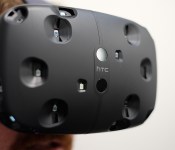
Hold the phone: MWC had more than just handsets

While the term “mobile” has always meant more than just smartphones, this year’s Mobile World Congress really highlighted how diverse the category can be. After all, the star of the show was arguably the HTC Vive, and the only mobile-related thing about it is that it’s made by a company that also makes phones. Indeed, VR headsets were the surprise hits at this year’s Mobile World Congress, as were smartwatches from the likes of LG, Pebble and, yes, even Huawei. Whether it be VR headsets, wearables, tablets or even electric vehicles, it’s clear that we can expect more than just phones from Mobile World Congress from now on. Relive some of our favorite non-phone highlights from MWC in our gallery right here.
Don’t miss out on all the latest news, photos and liveblogs from MWC 2015. Follow along at our events page.
HTC One M9 Plus allegedly poses for happy snaps in leaked photos
The conference room from the announcement of the HTC One M9 is still warm, yet we’re already hearing rumours of another HTC flagship device. The informally named “HTC One M9 Plus” has allegedly been spotted on camera, and from the sounds of it, will be an even more beastly device than the M9. Previous rumours said […]
The post HTC One M9 Plus allegedly poses for happy snaps in leaked photos appeared first on AndroidSPIN.
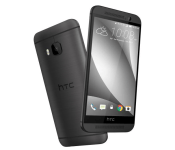
We now know why the most recent HTC One is referred to as the M9

The HTC One was unveiled a couple of years ago, and at that time, the “M” naming scheme was birthed. HTC has released the One M7, One M8, and the soon to be One M9. I often wondered what the Mx designation meant, and today we know thanks to HTC Senior Global Online Communications Manager Jeff Gordon.
If you remember, before the original One M7 was announced, it was rumored to exist under a codename of M7. Eventually when they announced the phone, that M7 name stuck with it. We don’t know where the “M” part of the equation came from, but we do know what the numbers represent.
The One M7 represented the 7th flagship phone since HTC embarked on their own brand, so that is why a “7” was placed after the “M”. I think you guys are smart enough to understand that the One M8 and One M9 are the 8th and 9th flagship phones respectively.
The complete list is as follows….
9. HTC One M9
8. HTC One M8
7. HTC One M7
6. HTC One X
5. HTC Sensation
4. HTC EVO 4G
3. HTC Hero
2. HTC Dream
1. HTC Touch
And that’s the reason why the latest HTC One is called the M9.
source: @urbanstrata (1) (2) (3)
Come comment on this article: We now know why the most recent HTC One is referred to as the M9
 AIVAnet