


This could be the HTC One M9 Plus

Images of the HTC One M9 Plus (or Ultra) has leaked again. It looks much like the basic One M9, except the camera lens is rounder. It’s also missing the Duo Camera setup that we saw in January’s leak. Sporting a 5.2-inch Quad-HD (2560 x 1440) display, it’s not much of an upgrade as one would expect. What I mean is that you would expect the display to be much bigger as in 5.5 to 6.0-inches. It’s also rumored that it will never leave China.

This image could be of a decoy unit, but based on the fact that the One M9 didn’t change all that much in terms of design, I wouldn’t expect the Plus version to look all that much different either.
source: Mobilissimo.ro
via: Phone Arena
Come comment on this article: This could be the HTC One M9 Plus

This could be the HTC One M9 Plus
Images of the HTC One M9 Plus (or Ultra) has leaked again. It looks much like the basic One M9, except the camera lens is rounder. It’s also missing the Duo Camera setup that we saw in January’s leak. Sporting a 5.2-inch Quad-HD (2560 x 1440) display, it’s not much of an upgrade as one would expect. What I mean is that you would expect the display to be much bigger as in 5.5 to 6.0-inches. It’s also rumored that it will never leave China.
This image could be of a decoy unit, but based on the fact that the One M9 didn’t change all that much in terms of design, I wouldn’t expect the Plus version to look all that much different either.
source: Mobilissimo.ro
via: Phone Arena
Come comment on this article: This could be the HTC One M9 Plus

HTC releases two One M9 teaser videos

As you might start to expect after officially announcing their latest flagship phone at MWC this week, HTC has released a couple teaser videos for the HTC One M9. One of which is narrated by the man behind the Iron Man mask himself, Robert Downey Jr.
Both videos are, as mentioned, simply teasers. The first gives a few close ups, then simply shows the new 5-inch phone floating in space. Aside from this being an official video from HTC, it feels an awful lot like the fan renders of the One M9 we saw a little while back. Just the phone without many unnecessary embellishments.
Video number two is another story. HTC worked with Robert Downey Jr. for a few pieces in the past. This time, Downey Jr. does not make an appearance, simply narrating the ideals of HTC as a brand, eluding to the benefits that an HTC phone can have on one’s life.
In the end, these are fairly benign videos from HTC, lacking some of the Androidify cartoon fun found in the recent Android commercials, or even the in-depth details of Samsung’s hands-on pieces, but is great great to see them trying.
The videos are unlisted on HTC’s YouTube account, so you’ll have to watch them here for now.
What do you say, is the HTC One M9 the phone for you?

HTC will replace Swype with TouchPal for its default keyboard engine
 HTC currently uses Swype as its input engine for its default keyboard, which has been a great engine so far. However, it looks like HTC is trying to find some greener pastures with another company, as TouchPal will be used for the input engine in the future, not Swype.
TouchPal has actually already worked with HTC for its keyboard engine in other parts of the world, including on the M8 in China, but now it’ll be the backbone for all of HTC’s current devices. Some employees of TouchPal speculate that HTC wanted to switch because of TouchPal’s better contextual predictions and wider language support, but we’ll know never for sure what causes some of these partnerships to happen.
If you’re excited to try out the new keyboard engine, the HTC One M9 will likely be the first official device to sport the change.
source: Engadget
Come comment on this article: HTC will replace Swype with TouchPal for its default keyboard engine

HTC One M9 and Samsung Galaxy S6 pricing possibly revealed

So watched the new two flagship Android smartphones announced this week and now you’re considering either the HTC One M9 or Samsung Galaxy S6 as your next handset. The only catch, as you see it, might be the price. Your decision will depend on how much each costs and whether you want to wait for it to arrive at your carrier. As it turns out, we might already know what to expect in terms of cost.
The suggested, or approximate, retail values for both smartphones may have been tipped as part of new sweepstakes promotions. HTC’s latest figures to run $599, or the same as last year’s model. And, based on the total package we saw introduced this week, we’re impressed with the pricing. At least, that’s what we’re led to believe based on the official HTC One M9 giveaway currently underway.

As for Samsung’s next big thing, well, it could carry a higher cost. According to T-Mobile, the Galaxy S6 may run $699, or $100 more than the previous generation. This means the Galaxy S6 edge may be valued at $749-$799 when it’s all said and done. This comes from T-Mobile’s contest which rewards random winners for signing up for details on the Galaxy S6.

Big picture, we might look for the HTC One M9 to run $200 with a two-year service contract or approximately $25 per month over 24 months. The Samsung Galaxy S6 may shake out to $250 with a service agreement; broken down over two years it would be roughly $29 per month.
Keep in mind this is purely conjecture on our part and is based soley on the respective sweepstakes values. In other words, this ain’t necessarily official.
The post HTC One M9 and Samsung Galaxy S6 pricing possibly revealed appeared first on AndroidGuys.
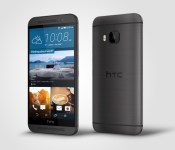
HTC’s One M9 is priced at $599 according to T&C’s of SweepStakes Promotion

The HTC One M9 was only announced a couple of days ago at MWC, so it’s pretty normal not to have pricing details available. But seeing as HTC are currently running a SweepStakes Promotion where you can win one of five One M9 handsets, a monetary value for the prize has to be included in the terms and conditions of the contest, as seen after the break.
FIVE (5) PRIZES: One (1) HTC One (M9) phone. Actual appearance of phone may differ from device depicted. The actual value of Grand Prize is subject to price fluctuations in the consumer marketplace based on, among other things, any gap in time between the date the ARV is estimated for purposes of these Official Rules and the date the prize is awarded or redeemed. Approximate Retail Value (“ARV”): $599. Odds of winning a Prize depend on the number of eligible entries received during the Promotion Period.
Granted, the $599 price tag is in no way official, but it serves as a good ballpark figure for the handset. I would be very surprised if the HTC One M9 ended up being more expensive. If you still haven’t entered the SweepStakes promotion to win a HTC One M9, you can enter right here.
This isn’t the first time we’ve seen potential price tags leak out in the terms and conditions of giveaway contests, as seen here with the Galaxy S6 being given a $699 monetary value in a T-Mobile competition. Time will tell as to whether the figures given are accurate or not.
Source: HTC
Via: PhoneArena
Come comment on this article: HTC’s One M9 is priced at $599 according to T&C’s of SweepStakes Promotion
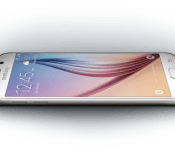
Samsung Galaxy S6, S6 Edge and HTC One M9 are all MirrorLink-enabled

Three handsets from top hardware manufacturers, each to be released over the coming months, are MirrorLink-enabled for consumers seeking a connected driving experience. The devices are the Galaxy S6 and Galaxy S6 Edge from Samsung and the HTC One M9. The Car Connectivity Consortium announced today that owners of those devices will be able to have information transferred between them and the vehicle for an optimal experience.
MirrorLink is another connected driving experience platform like Android Auto and Apple CarPlay. Many developers, such as Glympse, are making their apps compatible with MirrorLink as various automobile manufacturers have gotten behind it.
Hit the break for the full press release.
Samsung Galaxy S6 and S6 Edge are MirrorLink®–Enabled
Millions more consumers to enjoy seamless access to content from the smartphone to the dashboard
BARCELONA, Spain–(BUSINESS WIRE)–The Car Connectivity Consortium (CCC), an organization driving global technologies for smartphone-centric car connectivity solutions, today announced that the new Samsung Galaxy S6 and S6 Edge smartphones are MirrorLink®-enabled, which includes extending the Galaxy experience into the car. With millions of mass market MirrorLink-enabled vehicles rolling off assembly lines today, MirrorLink leads the way in bringing the smartphone to the dash.
“Distribution on the world’s most popular Samsung devices, including the Samsung Galaxy S5, Note 4, Note Edge, and now the Galaxy S6 and S6 Edge, reaffirm that MIrrorLink is real and in the hands of millions of consumers today,” said Alan Ewing, President and Executive Director of the CCC. “For consumers, the variety of MirrorLink-enabled handsets and vehicles has turned the promise of the connected car into a reality. And with deployments taking place on such a large scale, developers can focus on what they do best — crating innovative apps to redefine the driving experience.”
MirrorLink is the leading industry standard for car-smartphone connectivity and is designed for maximum interoperability between a wide range of smartphones and cars. MirrorLink is also the only OS- and OEM-agnostic standard for car-smartphone connectivity and the only vendor-neutral standard where no single entity has a controlling stake. MirrorLink thus offers the quickest global route to more responsible and enjoyable connected driving.
About the Car Connectivity Consortium (CCC)
The CCC is dedicated to cross-industry collaboration in developing MirrorLink® global standards and solutions for smartphone and in-vehicle connectivity. The organization’s more than 100 members represent more than 80 percent of the world’s auto market, more than 70 percent of the global smartphone market and a who’s who of aftermarket consumers electronics vendors. For further information, please visit http://www.mirrorlink.com.
Come comment on this article: Samsung Galaxy S6, S6 Edge and HTC One M9 are all MirrorLink-enabled
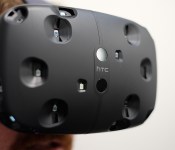
HTC’s Vive made me believe in VR

It’s almost as if I’m in the Matrix. I’m in that same expanse of infinite white space that was also Neo’s training grounds in the movie. A pattern of hexagonal tiles appears underneath me. They start to rise and fall randomly and rapidly. Hesitantly, I step forward, slowly walking across the field of unstable tiles, trying to get a feel for this strange, foreign environment. Suddenly, I encounter a gridded wall. It seems the space isn’t so infinite after all. I was, of course, not in the Matrix. Instead, I was in a stark, windowless room inside the Fira Gran Via in Barcelona. On my head was the HTC Vive. And for the next 20 minutes, I was about to have a virtual reality experience unlike any I’ve ever had.
Before we get into that, let me tell you more about the Vive. It’s a VR headset made by HTC in partnership with Valve Corporation, a company perhaps best known for the Steam PC gaming storefront and titles like Portal and Half Life 2. The hardware itself looks like something from a science fiction movie. Its dark gray, plastic faceplate is pockmarked by multiple sensors, making the whole thing look like it’s clad in deep-set digital eyes. Look behind it and you’ll find all the trademark signs of a VR headset: thick foam padding, a pair of goggle-like lenses and, of course, the straps that hold it all in place. It has two discrete 1,200 x 1,080 displays that refresh at 90 frames per second, offering 360-degree views. On the top of the hardware are an HDMI port, two USB ports and a headphone jack.
It’s worth mentioning that the HTC Vive is not a mobile solution like the Gear VR — it connects to a computer like the Oculus Rift. The Vive is part of HTC’s “Re” line of connected devices and exists as a separate division from the company’s phones. As such, the Vive is competing less against Gear VR and more against the likes of Oculus and Sony’s Project Morpheus. The key difference between the Vive and the other two? It’s that it comes with a couple of SteamVR base stations that tell the Vive headset where you are via laser position sensors, thus tracking your physical location as you walk about the room. The whole thing only works in a space up to 15 x 15 feet, so you’d encounter that aforementioned gridded wall if you hit the edge.
#fivemin-widget-blogsmith-image-679642display:none; .cke_show_borders #fivemin-widget-blogsmith-image-679642, #postcontentcontainer #fivemin-widget-blogsmith-image-679642width:570px;display:block;
 trydocument.getElementById(“fivemin-widget-blogsmith-image-679642″).style.display=”none”;catch(e)
In the room where I had the demo, the two base stations were located where the ceiling meets the wall, about 90 degrees from each other. Attached to the Vive was a slew of cords; one was to a computer located at the far end of the room, while another led to a pair of controllers that look a lot like the Wii’s nunchuks, except in place of joysticks, there are touchpads. The left and right sides of the grips are clickable and there’s also a trigger button located where your index finger would naturally rest. A small shield of sensors that look similar to the ones on the Vive’s faceplate are located in front of each controller. An HTC spokesperson tells me that the final version of the controllers should be wireless instead of wired, but for now, I had to strap on a belt full of cords as well as the Vive to prevent the headset from weighing me down.
So there I was, with a headset strapped on my face, a controller in each hand, a belt full of cords at my waist and a large pair of headphones on my head, completely blind to everything around me. I felt awkward and skeptical, completely ready to be unimpressed.
And then the software clicked into place. A welcome screen appeared, filling my field of vision. I was instantly struck by how bright and sharp everything looked. I saw the animated versions of my controllers in front of me. The HTC spokesperson instructed me to move them around and get used to the controls. He told me to hold down my left trigger button to inflate a balloon, and I did. I then used the right one to bat it away. After playing with that for a while, the scene transitioned to the Matrix-like hexagonal tile demo I mentioned earlier. This tile intro, my guide told me, is to get me used to moving around the room. My movements were a little hampered by the amount of cords that I had to walk over, but I otherwise had no problem with balance or spatial awareness. I didn’t get any kind of motion sickness at all.

Next was a demo called “The Blu Encounter” by Wemo Lab. Everything went black. Soon, I found myself underwater, standing on the deck of a shipwreck. Schools of fish swam around me and I was able to swat them away by waving my controller-filled hands. It sounds terribly cliche, but everything was incredibly lifelike. It genuinely felt like I was there. Everything from the fish to the shipwreck was sharp and detailed. I walked around the deck, absorbing everything around me. Soon, a giant humpback whale swam right next to the ship, scaring the bejeezus out of me with its presence — I’ll admit I yelped and took a step back.
I then went from the deep blue sea to a cartoon-like kitchen, where I controlled a pair of animated hands. In a demo titled “Job Simulator” by Owlchemy Labs, my task was to add a list of ingredients to the pot on the stove before time was over. Of course, instead of doing that, I explored the kitchen. I picked up the rolling pin and the mushrooms and opened the refrigerator door. The controls were responsive for the most part — I only really used the trigger button — though there were a couple of times when the accuracy seemed a little off and I picked up the wrong thing by mistake.
The scene changed again and then I was a giant looking over a miniaturized tabletop battle. Called “Quar” by Steel Wool, the demo showed tiny soldiers fighting a rather epic battle, with tiny men riding on tiny horses and brandishing their tiny swords. I was able to crouch down, move around and look at the detail of the miniature figures from all angles.
Then, the HTC spokesperson said, it was time to get creative. I was suddenly in a demo of “Tilt Brush,” a 3D painting app that has already been around for a few months for other VR environments like on the Oculus Rift and Google’s Cardboard. The difference here, however, is that you could literally use the controller as if it was a brush, painting abstract scenes of fire and light. And then when you’re done, you can walk away from your creation and view another perspective of it, giving it an almost sculptural quality.

HTC and Valve saved their best demo for last. The spokesperson told me that he would keep quiet from then on and I was to follow the instructions given. As the scene faded from black, I found myself in a very familiar environment. I could feel myself smiling, grinning from ear to ear. I couldn’t help myself. I was in an Aperture Science testing facility. Yes, I was inside the world of Portal.
It looked as if I was in some kind of repair room. A disembodied voice came over the speakers and told me to open a drawer. I looked around me, saw some built-in drawers and walked over to them. I opened a drawer, only to see blueprints and tools. The voice said I opened the wrong one, so I tried again. This time, I saw a moldy cake. Apparently that was the wrong one also, so I opened another one. It contained tiny, little cut-out people at tiny, little office desks who went berserk at the sight of me. The disembodied voice told me that I had made a mistake and that I was now their god.
Suddenly, Atlas awakened, and lumbered toward the room. It was so imposing and realistic that I backed away instinctively from the door.
Giving up on me, the voice then told me to walk across the room and pull on a lever. I did that and a giant door opened. Behind it were two of Portal 2‘s androids, Atlas and P-Body, lying on the floor broken and in disrepair. Suddenly, Atlas awakened, and lumbered toward the room. It was so imposing and realistic that I backed away instinctively from the door. The voice then told me to press on a button to expand its components so that I could repair it. I did so, pulling on its front exterior to expose its electronic guts. The next thing the voice told me to do was so complicated and full of technical jargon that I knew it was impossible. The voice told me to keep calm while also warning me with increasing urgency that if I didn’t accomplish the task in time, I would fail.
And, of course, I did. Atlas collapsed on the floor with great noise and fanfare; the floor gave way and the room started to fall apart around me. I was told in a deadpan manner that I was now not qualified to do anything. Then, a familiar voice popped up. It was GladOS, Portal’s AI antagonist, wondering out loud how a robot could possibly fail this simple mission until a camera popped by and saw me, to which she responded, “Oh.” As the room started to get rebuilt around me, she said that I had done well as far as humans go, and that I was relieved of my duties. The demo then faded out to an outro and it was over.
But I didn’t want it to be. I wanted to stay in that world. I wanted to keep playing. I wanted now, very badly, to play Portal 2 in virtual reality. It was the most immersive experience, and frankly, the most fun I’ve had with a VR headset strapped on my head. The ability to walk around the room and directly interact with objects around me makes a huge difference. It’s made me a convert to VR.

Clearly, the HTC Vive used in the demo is just a prototype. Its design simply doesn’t inspire the same reverence as the company’s smartphones. But that’s going to change. “Our goal is to design something that can live in your house or on your nice desk,” says Claude Zellweger, HTC’s chief designer. “We don’t want to think of it as a geeky gamer accessory.”
“For me, there’s a triangle of elements that make the experience: the audio, the headset, and the controllers,” says Zellweger, on what makes Vive so special. “It’s amazing. You don’t need to see your hands at all, so long as you have fully tracked controllers, you have a full sense of yourself.”
Obviously, however, HTC still has some challenges. For one, all those cords make it really difficult to walk around the room without the fear of tripping and falling over. Even if the controllers will be cordless eventually, HTC says the headset itself would still probably be tethered to a PC due to latency issues with wireless connectivity. Plus, not everyone will have the room or space to hook up two laser base stations so that the Vive will work. We also have yet to know what the minimum PC requirements are for the Vive to work as smoothly as it did. If we’re to guess, we’d surmise it’s quite demanding.
Yet, I walked away from the demo a complete believer, not just in VR, but in HTC and Valve, and I can’t wait to see what’s next. HTC has said that the developer edition of the Vive will be available later this Spring, while a commercial retail version will be in stores by the end of the year. I’m not sure if I’ll be able to afford this yet, but if I can? Sign me up.
Scouts honour: Peter Chou says HTC is still working on its HTC smartwatch
For what seems like an eternity, we have known that a HTC smartwatch is being worked on behind the Taiwanese manufacturer’s closed doors. However, HTC has probably learned from just putting out devices that everyone else is churning out, and is really taking its smartwatch project very seriously. In an interview at MWC, HTC CEO Peter […]
The post Scouts honour: Peter Chou says HTC is still working on its HTC smartwatch appeared first on AndroidSPIN.

Can HTC “sell” the M9 to casual customers?

Honesty speaking: can you actually tell which One is which?
Back in January, we asked our staff and readers about the looming realization that the HTC One M9 would look just like the M8; based on leak-after-leak, the unthinkable seemingly became more plausible. As of March 1st, it became reality. Hopes of HTC pulling the most epic case of trolling the tech world had ever seen were dashed in the presence of what looks to be the same device from last year, minus a Duo camera. In this piece, we’re going to take a look at what this means for HTC and why it’s not all bad.
The Build-Up:
As a quick refresher, leaks in earnest for the HTC One “Hima” began a short while ago via renders from case manufacturer Spigen. In the days leading up to MWC 2015, these leaks had expanded to promotional videos to carrier promotional material. Still, there was the image that so many were convinced was the real M9, or at least hopeful enough to suspect Taiwan’s most famous smartphone OEM was trolling us all by releasing the so-called “M8s” pics.
With the official unveiling now done-and-dusted, we all know the leaks were legitimate, and HTC wasn’t stoking the flames of countless potentially burned bridges in the form of businesses around the world who had bought into a fake promise.
A Costly Creation:
There is one very large problem with the M9’s existence, and arguably this isn’t so much an opinion as it is a sad reality: customer confusion and apathy. We all know the difference, granted. But think about the hundreds of millions of casual customers in the world; it could be your parents, your children’s teachers, the people who deliver your newspaper (assuming anyone reads physical paper these days), anyone really. Think of them, and then consider the following three scenarios:
A. You don’t care about phones nor do you follow them. They are a tool and nothing more. Your 4-year old model isn’t working well these days, so you go to a carrier store to get a new one.
B. Your family member needs a new phone. A casual/mainstream user at best, they don’t care about specs at all.
C. You bought a phone a few months ago and it just broke. You didn’t get insurance and are thus out the money.
Now imagine any given carrier store: The HTC One M8 is available for free on a two-year agreement. The HTC One M9 costs $199 for the same. You look at both; the cheaper One has two cameras, the other has a single One.

So you’re in the store and have both devices in hand…
Decision: Which do you chose? As much as some might deny it, the demands of life dictate that people will chose the free model, hands down, especially if the so called “new” model doesn’t look the slightest bit different. Make no mistake, this isn’t Apple wherein a casual consumer might be tempted to get the newer model just because they know Apple. This is Android, there are dozens of devices, and HTC is just one of the many companies selling one from a country far away. Money is always an issue to all but the most extreme enthusiast.
These are but three scenarios; imagine an infinite number more. Now consider what are, arguably, the only two wherein someone might actively buy an HTC One M9:
1. You love HTC. Money is irrelevant.
2. You must have the latest and greatest. Money is irrelevant.
Granted there can be numerous variations of these situations as well, but there is one key factor here: extreme minority. The specific “niche” needs of those with cash to burn don’t match those of the masses, and therein lies the problem HTC faces: it has just started to recover from a prolonged period of financial dismay, and the last thing it needs to do is alienate mainstream customers, the very individuals who can “fix” its cash flow troubles. Were the M9 to look different, it would immediately be taken as a “legitimate” new product by all those who don’t care about the difference between a Snapdragon 800 and an 810; the consumers who don’t snap photos constantly.
The Samsung Situation:

While not so different from the front, just a few seconds comparing the two will reveal night-and-day build differences.
Now on the other hand, let’s revisit the same carrier store and take a look at say, the Galaxy S5 vs the Galaxy S6. The difference is night-and-day to say the least. While one might argue the S6 isn’t as beautiful as the M8/M9, it doesn’t have to for people to notice. The fact that the S6 has a QHD SAMOLED screen is a major sales point, as could be other elements like the fingerprint sensor, bio-metric reader, and more. Even if customers don’t understand what these mean or how to use them, marketing trumps sensibility more often than not.

This post’s second riddle: try to guess *these* two apart.
Ah yes, the final thing Samsung has going for it, ironically speaking: The Galaxy S6 looks a bit like that phone. You can bet your britches that at least some mainstreamers will actively seek to purchase the S6 for its similarities.
Could-Have, Should-Have
Many of you will recall the infamous real HTC One M9 picture that @evleaks published, and which was subsequently used by case manufacturers in their own leaked renders. Here’s a reminder:

While engineering and manufacturing limits might have rendered this pair of concepts an impossible concoction, at the very least, they look different from what the real M9 ended up looking like. Heck, they arguably look different from just about anything out there, yet still have that HTC feel to them. In an effort to determine just how many people liked this (now) fake design better, I ran a small survey on Google Plus. The question: was the evleaks render preferable to the real product.
https://plus.google.com/+MatthewBenson321/posts/a8jCDy2hW4h
As of the time of publishing this story, 135 people responded and 75%, an overwhelming majority, said yes, they liked the fake render better. Is this a massive sample size? Obviously not, but at the very least it is one way of substantiating a belief that even fans aren’t necessarily happy with the design choice.
Don’t write-off HTC yet!

This dual-tone color combination definitely is eye-catching to say the least!
While this opinion has been of a largely negative tone, there are a few important things to keep in mind. For one, the M9 is by no means an ugly or underwhelming phone. The body may be recycled, but it’s still a stunning piece of design in 2015, and with the Duo Ultrapixel camera set up now gone, the phone need no longer be plagued by rampant criticism of the picture potential. In fact, here’s a checklist of just why the M9 is such a significant improvement as compared to the M8: better CPU and graphics, more RAM, better camera, bigger battery, more LTE bands, new colors, Lollipop out-of-the-box, and it’s even slightly smaller/lighter.
HTC also has the benefit of possibly drawing in customers who were on the fence about the Galaxy S6. Maybe Samsung’s decision to remove microSD support or replaceable batteries has irked them. Perhaps the S6 doesn’t look different enough from the S5. This could be said about other OEM’s offerings as well.
Truth be told, just about the only thing (arguably) not good about the HTC M9 is its reused design: with all the improvements contained inside the premium build, there is absolutely no question this is a brand new, state-of-the-art flagship that can hold its own among rival products.
For the full break-down of spec comparisons between the M8 and M9, please see our comparison coverage here.
Let us know your thoughts!
 AIVAnet