


Nearly full set of specs detailed for HTC One+ (M8)
It seems that a day can’t go by without even more details about the successor to the HTC One coming out.
The latest in the rumors suggest that the new flagship, supposedly called the HTC One+, will feature a: 5-inch 1080p display covered by Gorilla Glass 3, a Qualcomm® Snapdragon™ 805 processor, 6 MP or 8 MP rear-facing camera with UltraPixel™ technology and double lens, 2.1 MP front-facing camera, 2 GB of RAM, NFC, 2900mAh battery and a micro-SIM.
Two other rumored features that make this a very interesting device is that HTC may be going with on-screen navigation buttons and it will run Android 4.4 KitKat with HTC Sense™ 6.0.
We previously reported that it’s widely expected to launch sometime in Q1 of 2014, but we may even see this at CES 2014, who knows. If that’s the case, you will see any info here once it’s available.
The post Nearly full set of specs detailed for HTC One+ (M8) appeared first on AndroidGuys.
HTC M8 camera might feature not one, but two lenses
As we prepare to learn more about the successor to the HTC One, new details are slowly starting to appear. The latest bit of information surrounding the HTC M8 is that it will carry not one, but two different lenses. The setup is rumored to allow for better photos in both low light, and regular lightning scenarios, according to Forbes.
Each lens will be dedicated to lightning conditions, hoping to improve photos in the low light conditions that are known to result in very poor smartphone photos. It’s a weakness I, for one, welcome being addressed.
Also noted in the report is the addition of a fingerprint app, similar to what’s already found in the HTC One Max.
It’s widely expected the HTC M8 will launch sometime in Q1 of 2014. But with CES just days away, who knows what can happen. As always, more details about the M8 and its dual-lens system will be published here once they are available.
The post HTC M8 camera might feature not one, but two lenses appeared first on AndroidGuys.
HTC One 2/M8 ‘Preliminary’ Specs Leak Out

The HTC One 2, or M8, has been on us tech enthusiasts minds, simply because we want to see where HTC takes their HTC One line. Yes, HTC doesn’t make the best decisions in the world, but they do make excellent devices. Being that the HTC One is number one on most tech sites lists of best devices in 2013, the HTC One 2 should no doubt be a winner as well.
Leak king, evleaks, sent out a tweet about the HTC One 2, giving us “preliminary” specs of the new phone. Preliminary as in these specs are not official, and could change once the phone is announced.
Preliminary HTC M8 specs: Snapdragon MSM8974, 5" 1080p display, 2GB RAM, UltraPixel rear / 2.1MP front cams, 802.11a/b/g/n/ac, KK, Sense 6.0
— @evleaks (@evleaks) January 2, 2014
Sadly these specs aren’t reporting that the new HTC flagship will be running the latest Snapdragon processor. Not a huge deal, but it is nice to know that the device you purchase has the latest and greatest in technology. Other than that, the specs look pretty decent, so let us know your thoughts about the new HTC One. Once we find out more about these specs, we will let you know.
Source: @evleaks
Android 4.4.2 update for HTC One, One Max, One Mini expected by February
The HTC One, One Max and One Mini are expected to pick up Android 4.4.2 KitKat updates later this month or in next month. At least so says reputable Twitter source @LlabTooFeR. Also in the cards, the same update for the HTC One DualSIM variant.
All new devices such as One,One DualSIM, One max, One mini will get 4.4.2 update in time frame January-February…
— LlabTooFeR (@LlabTooFeR) January 2, 2014
In addition to the newest release of Android, the update is expected to deliver HTC’s Sense 5.5 UI. As for the 6.0 release, that could be a few months further off. Other mentions from the source suggest we might wait until “late Autumn” for that particular feature.
The post Android 4.4.2 update for HTC One, One Max, One Mini expected by February appeared first on AndroidGuys.
Switched On: The 2013 Switchies, Part Two
Each week Ross Rubin contributes Switched On, a column about consumer technology.

The last Switched On introduced the 2013 Switchie Awards for TV, PC and gaming products. This time, we’ll take a look at the mobile and wearable devices that made their mark in 2013.
The “Great Slate” Award for Best New Large Tablet (nine inches or larger) goes to the iPad Air. As competitors add all manner of keyboards and other accoutrements to differentiate their slates, Apple embraced the minimalism for which it is known with the iPad Air. Is it a content-creation tool? For certain kinds of content, yes. But the Air refines the essence of a pure tablet experience. Honorable Mention goes to the budget-friendly, kickstand-equipped Lenovo Yoga Tablet 10; Lenovo also snagged an Honorable Mention in the convertibles category with the Yoga 11 last year.
The “Great Slate, Smaller Plate” Award for Best New Small Tablet (8.9 inches or smaller) goes to the Amazon Kindle Fire HDX. Amazon paved the way in budget tablets, but the Kindle Fire line always matched its excellent content offerings with solid, if uninspired hardware. That has changed with the Kindle Fire HDX, which brings the online store’s strongest content package inside a speedy shell matched with a useful cover stand in the Origami case. Like the Kindle Fire HDX, the iPad mini, an Honorable Mention winner, emerged from the larger iPad’s shadow. This year, the iPad mini went from being the poorer, smaller version of its larger sibling to a powerful, if pricey, equal that trades screen size for portability.
The “Make the Call” Award for Best New Smartphone goes to the HTC One. While its features and hardware may no longer be state of the art, the One’s exquisite design turned enough heads that Google saw demand to make a pure Google version of it. Honorable Mentions go to the Moto X and LG G2 for, among other things, their clever use of sensors, and the Nokia Lumia 1520 for offering the strongest imaging experience in a 6-inch (or greater) device.
The “Make the Big Call” Award for Best New Large Smartphone (six-plus inches) goes to the Sony Xperia Z Ultra. This grip-busting, 6.4-inch, water-resistant giant among giants includes a scratchproof display and great imaging. Honorable Mention goes to the Nokia Lumia 1520 for refining the strong imaging capabilities of the Lumia 1020 in a large phone.
The “Fun on the Run” Award for Best New Mobile Product goes to the NVIDIA Shield. Enabling consumption of both souped-up Android and PC games (with some serious caveats), the Shield presents a new spin on hand-held gaming on the go or at home.
The “Ready to Pair” Award for Best New Wearables goes to the Fitbit Force. Fitbit has encountered growing competition in both the waist clip and wristband spaces. The Fitbit Force improves upon the earlier Fitbit Flex by adding a small OLED with engaging animations. Honorable Mention for this prize goes to the Pebble smartwatch, which should become more useful in 2014 due to the availability of more apps.
The “Seeing is Believing” Award for Best New Display goes to the Garmin HUD. As car navigation shifts away from dedicated devices, Garmin is catering to smartphones — at least those running its navigation apps — with one of the first heads-up displays available for less than $120. That’s a small price to pay for less clutter and a taste of the future.
The “By Any Other Name” Award for Best Pun in a Product Name goes to Porkfolio. Crowdsourced (but not crowdfunded) product-development company Quirky partnered with GE to release devices ranging from a remotely controllable version of its signature snaking Power Pivot power strip to a dubious connected egg-age tracker for your refrigerator. Somewhere between the two was an app-connected piggy bank, dubbed Porkfolio, that counts coins and alerts you when it’s jostled. Unlike the traditional piggy bank, the porcine coin container is posed lying on its back with its stomach up — a supine (or perhaps “pork-upine”) orientation.
Ross Rubin is principal analyst at Reticle Research, a research and advisory firm focusing on consumer technology adoption. He shares commentary at Techspressive and on Twitter at @rossrubin.
Filed under: Cellphones, Misc, Gaming, Tablets, Wearables, Apple, HTC, Amazon

The year in reviews: 2013’s best and worst gadgets scored and scrutinized

Fun fact: Engadget reviewed 176 products in 2013, and that’s not even counting the umpteen times we got hands-on with stuff at tradeshows and press events.
In general, we try to review just the top-tier gadgets, but even then, some of it ends up being forgettable. (Can you name-check everything we tested from memory? We can’t.) So, as the year draws to a close, we’re taking a look back at the last 12 months of reviews, and this time, we’re including only the products you’d have no trouble remembering. Across every category, we’ve noted the flagships everyone coveted — along with the duds that could’ve been so much better. Oh, and you might notice that we included some numbered scores throughout. That’s right; Engadget is bringing back numerical ratings, and they’ll follow the same format as the critic score gdgt has already been using for years. Which is to say, each rating takes into account various criteria for a given product category — things like battery life and portability. Wanna see how your favorite gadgets did? Meet us after the break for a walk down memory lane.
E-Readers
Amazon Kindle Paperwhite (2013)

Engadget Score: 93
The “all-new” Paperwhite doesn’t really offer anything all that different from last year’s edition, but an improved frontlight and some software tweaks have made an already great reading experience even better. Unless Goodreads is a must-have app for you, it’s a tempting, but largely unnecessary upgrade if you already own last year’s version.
Kobo Aura HD

Engadget Score: 83
The Aura HD is packed with features specifically aimed at the power reader, including best-in-class specs like a 6.8-inch display with blisteringly sharp text and a robust 4GB of internal storage space. Unfortunately, its niche status is further cemented by a high price and a hard-to-hold form factor that escapes easily from those with sweaty hands.
Barnes & Noble Nook GlowLight

Engadget Score: 73
Barnes & Noble giveth and taketh away with the Nook GlowLight. Sure, it’s the best Nook so far, with a better display, improved frontlight and a lighter form factor. But, all those improvements come at the cost of features like the microSD slot, physical page turn buttons and the contoured back, which all served to distinguish the line from its competition.
Gaming
Sony PlayStation 4

Engadget Score: 83
It doesn’t look like a PC, but underneath the PlayStation 4′s sleek black exterior is a powerhouse that rivals gaming PCs, with a user-friendly interface, a great controller and the ability to share your gameplay at the touch of a button. The next generation of consoles might just be getting started, but it’s one hell of a start with the PS4 at the head of the pack.
Microsoft Xbox One

Engadget Score: 81
The Xbox One may not be the prettiest belle at the next-generation ball, but with the wonders of Kinect voice control, robust media features and the ease of switching between games and apps at the drop of a hat, it certainly is vying to be the center of attention. It just needs a few more exclusives to get consumers to look past that $500 price tag.
OUYA console

Engadget Score: 66
The initial backer editions of the OUYA shipped with a flawed controller and access to a limited games selection. But even after the retail release, the OUYA’s still a system best left to hackers and developers, as it’s likely to leave most gamers disappointed by its average smartphone-level internals and rehashed games library.
NVIDIA Shield

Engadget Score: 83
The NVIDIA Shield wants to be the Swiss Army knife of hand-held game consoles, and it largely succeeds as a product — but not as a handheld. Its size and weight mean you won’t be carrying it around much, but the larger screen, great battery life and the ability to stream PC games to the Shield mean you’ll still get a lot of use out of it.
Home Entertainment
Google Chromecast

Engadget Score: 84
The Chromecast might not be as fully featured as competitors like Roku or Apple TV, but you know what? It doesn’t matter. This palm-sized dongle is easy to set up and turns any modern set into a smart TV, all for the low, low price of $35. Its app selection is still experiencing some growing pains, but even now, you’re still getting more than your money’s worth.
Roku 3

Engadget Score: 89
The newest Roku doesn’t have analog AV support like its predecessors, but it does offer incredible ease of use and a wide selection of channels, all for a nice price of $99. Even users of older Roku boxes should look into the Roku 3, whose upgraded CPU and improved UI help future-proof against new, more demanding apps.
Laptops and Hybrids
Microsoft Surface Pro 2

Engadget Score: 77
The Surface Pro 2 retains its predecessor’s durable body, but it’s equipped with a Haswell processor, boasts faster performance and has longer battery life. Microsoft has yet to find the perfect balance for a hybrid device, though — its weight and thickness make it a better notebook than a tablet, so you may want to look elsewhere for an everyday slate.
Apple MacBook Pro with Retina display

Engadget Score: 90
With a starting price that’s $400 less than the 2012 model, the new MacBook Pro with Retina display is a much better deal. In addition to its speedier SSD and better graphics, its epic battery life and thinner, lighter body might make you reconsider if you’ve been in the market for the slightly wispier MacBook Air.
Google Chromebook Pixel

Engadget Score: 79
Google infused the Chromebook Pixel with sophisticated looks and high-end specs, including a 2,560 x 1,700 touchscreen display and LTE connectivity. Even so, its $1,299 price tag might not be worth it unless you’re always connected to the web — hard to do with its poor battery life — and plan on storing huge files in the cloud.
Smartphones
MOTOROLA MOTO X

Engadget Score: 88
The Moto X doesn’t have the specs to compete with heavyweights like the Galaxy S 4 and the HTC One, especially at the same price. But, with user-friendly enhancements to the UI and the magic of customization with Moto Maker — now available for all major carriers — this truly is a phone for the people.
Apple iPhone 5s

Engadget Score: 92
Apple continues to improve on the iPhone line with the 5s, and while the phone maintains the same body as its predecessor, it packs in enough upgrades to appeal to hardcore and casual users of iOS alike. However, even with future-proofing measures like 64-bit support and the M7 coprocessor on board, only the most forward-looking Android power users will find incentive to switch.
HTC One

Engadget Score: 92
The HTC One is a top-shelf smartphone, boasting a unibody aluminum shell, a gorgeous display and a fast Snapdragon 600 processor that runs buttery smooth. The Sense 5 UI didn’t thrill us, but a solid battery and excellent call quality, among other things, made this one of the best phones to buy this year.
Samsung Galaxy S 4

Engadget Score: 88
With a familiar chassis and some impractical features, Samsung’s newest flagship isn’t exactly turning heads. Market-topping specs and minimal learning curve make this worth considering if you’re due for an upgrade from an older Samsung device, but anyone looking for something fresh would be better served by the more polished HTC One.
LG G2

Engadget Score: 87
With its bright 5.2-inch screen and phenomenal battery life, the G2 is a great phone for taking photos, watching videos or just general everyday, all-day usage. That is, if you can get used to its other standout feature — all three of its buttons are on the back, better to make room for the gorgeous screen, but not so friendly to those who like to hold their handset in a death grip.
LG Nexus 5

Engadget Score: 86
Not only is the Nexus 5 gifted with a great 1080p display and a fast quad-core processor, but it also heralds the release of a leaner and meaner iteration of Android, 4.4 KitKat. Take all that and offer it to consumers at an outstanding off-contract price of $349, and the Nexus 5 not only succeeds, but also puts rival handsets on notice to deliver more bang for your buck.
Samsung Galaxy Note 3

Engadget Score: 87
Those with small hands still need not apply, but for the third iteration of the Galaxy Note, Samsung has packed in a robust processor, a solid battery and even more useful S Pen features. The display has also gotten bigger and better, though those who want to watch videos on this thing shouldn’t depend on the built-in speakers.
BlackBerry Z30

Engadget Score: 62
The Z30 was supposed to be the phone that would make BlackBerry relevant again. And while the comfortable hold and large screen will more than please the BlackBerry faithful, an average battery, poor call quality and crash-prone software mean few, if any, will be making the switch from Android or iOS anytime soon.
LG G Flex

Engadget Score: 83
The G Flex’s top-to-bottom curve means it’s very comfortable next to your head, but not so much in your pocket. That curve comes with a chassis designed to be pretty durable, with a flexible body and screen, and a self-healing back that resists scratches. Does it work? Somewhat. Is it worth the $900 price tag? Not really.
Tablets
Google Nexus 7

Engadget Score: 90
The price may be (slightly) higher on our returning favorite tablet, but the Nexus 7 is still an obscene value. That this year’s model got a noticeable boost everywhere it counts and sells for significantly less than a comparable iPad mini is nothing short of impressive — even though Apple’s tablets still have more apps designed for bigger screens.
Amazon Kindle Fire HDX

Engadget Score: 85
The Kindle Fire HDX may be the most compelling case yet for Amazon’s tablet ecosystem. Advanced users might scoff at the device’s somewhat limited capabilities, but the display’s gorgeous color accuracy could make Bezos’ Prime directive an easy sell for just about everyone else.
Apple iPad mini

Engadget Score: 92
The iPad mini is an inexpensive way to join Apple’s tablet family, but it remains more costly than its similarly sized competition. Besides the striking Retina display, what makes the minuscule iPad so attractive this year is it’s essentially a shrunken-down version of its powerful bigger sibling. Very few sacrifices were made to accommodate the smaller stature — something the competition can’t quite claim.
Apple iPad Air

Engadget Score: 92
Tablets went mainstream thanks to the original iPad, but thanks to economies of scale and Moore’s Law, the competition’s become rather fierce — maybe unexpectedly, from Cupertino itself. The iPad Air is the best Apple tablet we’ve reviewed, but it could be hard to justify when the iPad mini now offers nearly the same experience — Retina display, similar styling, A7 64-bit processor — for less.
Microsoft Surface 2

Engadget Score: 78
If the Surface 2 existed in a world where only hardware mattered, its brawny battery and rock-solid construction might put it at the head of the tablet pack. In reality, though, Microsoft’s slate is hamstrung by the shortcomings of its OS, Windows RT, and its inability to run traditional desktop apps.
Galaxy Tab 3 10.1

Engadget Score: 65
We’re not entirely sure what Samsung’s game is with the Galaxy Tab 3 10.1. It hasn’t changed much in terms of specs from the GTab 2, packs a subpar display and severely lacks in features and power compared to the company’s line of Galaxy smartphones. Most damning? The $300 asking price.
Wearables
Samsung Galaxy Gear

Engadget Score: 65
It’s hard to justify paying $300 for the Galaxy Gear when it feels like an incomplete product and is only compatible with a handful of Samsung devices. Still, it stands out as one of the most feature-rich smartwatches we’ve tried, and as the company issues software patches and the app catalog grows, it could become better in time.
Google Glass

Engadget Score: Not Yet Scored
We’ve yet to see a consumer-facing Google Glass, but suffice to say the current version’s more of a research project — definitely not worth its $1,500 price tag for most folks. Mountain View still has to polish its features, address privacy concerns and entice developers before it hits the market. Until then, current Explorers will just have to deal with lots of confused stares when they wear it outside.
Sony SmartWatch 2

Engadget Score: 71
Unlike the Galaxy Gear, you can tell time on Sony’s SmartWatch 2 without having to interact with the screen, and it even costs $100 less. Unfortunately, few will be able to stand its buggy software and limited app selection. But, hey, at least it’s compatible with most handsets running Android 4.0 or higher.
Pebble

Engadget Score: 80
Pebble doesn’t have as many features as other smartwatches: It can only read texts, skip music tracks and tell time. Unlike its competitors, though, it costs a more reasonable $150 and offers both great battery life and an e-ink display that’s easy to read in daylight. As an added bonus, it also works with both Android and iOS devices.
Mariella Moon, Timothy J. Seppala, Kris Naudus and Dana Wollman contributed to this feature.
Filed under: Cellphones, Gaming, Laptops, Tablets, Wearables, HD, Mobile, Apple, Samsung, Sony, Microsoft, HTC, Google, Amazon, LG, NVIDIA
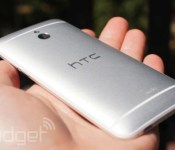
Nokia wins German injunction banning HTC Android devices

Nokia is clearly on a roll in the courtroom as of late — following lawsuit wins in the Netherlands, the US and the UK, the company has landed a German injunction banning all of HTC’s Android-based devices. The ruling lets Nokia provisionally block the sale of the One and other Google-powered hardware that allegedly infringes on a patent for peer-to-peer sharing over Bluetooth and NFC. HTC is expected to appeal the decision; Google is trying to invalidate the patent, but its move won’t come in time to avoid or delay the ban. There won’t be much else the two firms can do in the meantime. As with a similar defeat in March, HTC will have to either change features or strip them out to keep doing business.
Filed under: Cellphones, Mobile, HTC, Nokia
Source: FOSS Patents

The best cellphone deals of the week: 12.29.13
With Engadget’s new tools, you can track price drops on thousands of devices every day, and once a week we feature some of the best deals right here. But act fast! Many of these are limited-time offers, and won’t last long.

The holiday shopping rush may be winding down, but there’s still some great deals for the taking. Best Buy is currently offering stellar pricing on both the iPhone 5s and the HTC One — so long as you’re willing to opt for a two-year contract. Be sure to visit our product database to monitor prices on these gadgets and more as they move around. Join us and add the gadgets you’re shopping for to your “Want” list; every time there’s a price cut, you’ll get an email alert!

We weren’t shy about how much we loved the HTC One when it arrived back in the spring. The handset earned a 96 Engadget Global Score and now has an attractive $50 price tag from the folks in the blue shirts. Depending on your carrier choice, silver, red, black and blue models are available should you decide to splurge for the metal-clad device.

The more colorful of Apple’s two handsets that were unveiled this fall is quite the value at no cost with a two-year agreement. According to our Price Drop tool, this is the lowest the multi-hued gadget has been since mid-October. Of course, the choice of color is yours once more here.
Filed under: Cellphones

Daily Roundup: Snapchat security exploit, judge okays NSA spying and more!

You might say the day is never really done in consumer technology news. Your workday, however, hopefully draws to a close at some point. This is the Daily Roundup on Engadget, a quick peek back at the top headlines for the past 24 hours — all handpicked by the editors here at the site. Click on through the break, and enjoy.

Judge okays NSA spying
A US District judge in Manhattan deemed the NSA’s telephone data collection legal, as he saw no evidence was being used in any way other than attempting to foil terrorist plots. Click through for the ruling.

Reported Snapchat security exploits
Researchers from Gibson Security discovered a pair of Snapchat security exploits that could reveal private user data. The team claims they originally approached the startup with concerns last August and were ignored. Follow the link for the rest of the story.

HTC’s Thomas Chien saga concluded
Taipei District Prosecutor’s Office concluded its investigation regarding HTC’s ex-lead designer Thomas Chien. Click on through for the saga’s final details.

CyanogenMod ROM available for the Oppo N1
Oppo N1 owners can now swap its ColorOS for Android, courtesy of CyanogenMod. Click through for more information.
Filed under: Misc

Taiwan officially prosecutes HTC’s ex-lead designer for fraud and leak

Earlier today, the Taipei District Prosecutors Office concluded its investigation on the HTC saga that mainly involved ex-lead designer Thomas Chien (pictured above). The report indicts the ex-VP for leaking HTC’s upcoming icon designs — likely from the yet-to-be-released Sense 6.0 — by way of a presentation, which was shown to his then future business partners for a new company they were forming together. There’s no mention on whether the other party was tied to the Chinese government, as previously rumored, but the meeting was known to have taken place in Beijing back in June.
The investigation also confirmed that Chien’s naughty crew managed to rake in NT$33,566,000 or about US$1.12 million, in the form of false expense claims plus rebates from a supplier. In case you forgot, about a quarter of that cash was found inside Chien’s Audi, with another quarter confiscated from him separately earlier.
The prosecutors said while most other perpetrators have admitted to their wrongdoings, Chien continued to defend himself and remained in denial of some of his crimes. The court is therefore advised by the report to offer a heavy sentence for the traitor’s “malignant” behavior.
 AIVAnet