


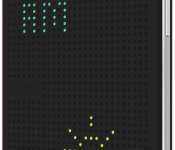
Accessory of the Day: HTC M8 Dot View Case (43% OFF)

Looking to protect that beautiful new HTC One M8 you recently picked up? Why not wrap that sweet little thing in the official Dot View Case? Not only does it cover the front and backside of your handset it also allows for some handy functionality as well. Indeed, you can get some quick at-a-glance information… Read more »
The post Accessory of the Day: HTC M8 Dot View Case (43% OFF) appeared first on AndroidGuys.
.CPlase_panel display:none;

A new HTC One M8 may be announced on August 19th, but it might not be the phone you’re Expecting
 It became known earlier this week that HTC has scheduled an event in New York City that sounds a lot like an announcement for a new device. We’ve heard very little about new devices that might be coming from HTC so soon after the mid-year, but that hasn’t stopped people speculating that HTC could be announcing the rumoured HTC Nexus 8 tablet. Despite the fact that Google Nexus devices have more recently been announced by Google themselves, a leaked image from Verizon‘s website might hold a more substantial answer to that mystery: a HTC One M8 running Windows.
 HTC hasn’t dabbled in Windows Phones for some time now, but it has a long association with the mobile platform. And with the HTC One M8 spearheading the way back into the black for the Taiwanese manufacturer, it’s almost a win-win for HTC and Microsoft to be releasing one of the best and most popular phones on the market with the fledgling operating system onboard. It’s expected that this Windows One M8 will make its appearance at the aforementioned HTC event, and we’d be surprised to see any Android announcements at the event.
What do you think about a HTC One M8 running Windows? Do you think this will be announced on August 19th, or something else will be? Let us know your thoughts.
Source: PCMag via TechCrunch
//<![CDATA[
ord = window.ord || Math.floor(Math.random()*1E16);
document.write('’);
//]]>
The post A new HTC One M8 may be announced on August 19th, but it might not be the phone you’re Expecting appeared first on AndroidSPIN.
.CPlase_panel display:none;
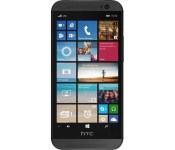
HTC One with Windows Phone shows up on Verizon’s site

The cat’s out of the bag, it seems. Just days after we received leaked details of HTC’s One (M8) for Windows, Verizon has posted a picture on its web servers (still available as I write) that confirms the smartphone’s existence. The device is largely what we expected; it’s a straightforward adaptation of the Android-based One for Windows Phone 8.1, complete with custom camera features and TV remote control. There aren’t many other clues, although WPCentral has heard that Verizon will carry the handset on August 21st following an already announced HTC event on August 19th. That makes sense, especially since the image not-so-coincidentally shows Friday the 22nd on the calendar — a day after the rumored release.
Filed under: Cellphones, Mobile, HTC, Verizon
Via: PCMag, WPCentral (1), (2)
Source: Verizon
.CPlase_panel display:none;

Engadget Daily: HTC Desire 816 review, the perks of being verified and more!

Today, we investigate the perks of being verified on social media, review the HTC Desire 816, look at Distiller’s new social network for whiskey lovers and learn about the NFL’s next-gen stat technology. Read on for Engadget’s news highlights from the last 24 hours.

The perks of being ‘somebody’ online
Being verified on social media isn’t just about proving your identity; it’s also a status symbol. And while the perks of that blue check mark beside your name could be considered trivial, they’re one of many indicators of online inequality.

Distiller builds a social network for whiskey lovers
Distiller’s whiskey recommendation service just went social. With its brand-new iOS and Android app, you can enlist help from your friends while you search for the perfect bottle of spirits.

HTC Desire 816 review: A mid-range M8 let down by sluggish cameras
HTC’s Desire 816 is almost a perfect mid-range LTE phablet, only to be let down by its erratically sluggish cameras. Otherwise, this $390 handset features a nicely curved metal body, beautiful display and plenty of power under the hood.

NFL players to wear shoulder pad RFIDs for on-field stats tracking
Get ready sports fans. The NFL is teaming up with Zebra Technologies for the “Next Gen Stats” initiative. Seventeen different stadiums will be outfitted with RFID receivers that track tags inside the shoulder pads of athletes, recording speed, acceleration and more.
You also might like:
.CPlase_panel display:none;

HTC to face a tough time in Q3 considering other big players are about to showcase their smartphone offerings

HTC really can’t catch a break. They’ve been facing financial loses for a long time now and have finally managed to turn profit in Q2 this year, their first profit since Q2 2013. It seemed like their financial situation is getting better, but that doesn’t seem to be the case. HTC One (M8) boosted their… Read more »
The post HTC to face a tough time in Q3 considering other big players are about to showcase their smartphone offerings appeared first on AndroidGuys.
.CPlase_panel display:none;
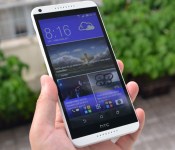
HTC Desire 816 review: A mid-range M8 let down by sluggish cameras

HTC may have some problems behind closed doors, but outside, it’s still widely regarded as one of the world’s top phone makers. We already gave this year’s One M8 flagship a rather jolly review, and now it’s time to see if the same qualities are preserved in its mid-range counterpart, the Desire 816. Indeed, back at Mobile World Congress, HTC called this $390 LTE phablet the “flagship mid-range” to emphasize its competitiveness. But has it lived up to its name? Or is it too little, too late in a world full of affordable options? Let’s find out.
Hardware

Where the One M8 features a nicely curved metal body, the Desire 816 takes the form of a flat plastic slab with rounded corners. What’s more, unlike the One X and the more recent E8, there’s no fancy plastic unibody construction on the Desire 816, which allows it to flex ever so slightly. Then there’s the size. At 156.6mm tall and 78.7mm wide, this gigantic phone certainly won’t be everyone’s cup of tea, but for HTC, it’s a much-needed weapon to suit the Asian market’s peculiar tastes. On a more positive note, the combination of the width and the matte finish allows for a sturdy single-hand grip. Even so, with that 5.5-inch display, you’ll definitely need your other hand for tapping and typing.
With the metallic power and volume buttons placed on the left, your left hand will quickly become the default choice for holding the phone, which I’m fine with. What I do find annoying is that the buttons rattle slightly when the phone is shaken, and it’s the same story with the volume keys on the M8. The other side of the phone is occupied by a long flap door, which reveals the nano-SIM slot (or slots, if it’s the dual-SIM 3G version) and the microSD reader, which supports cards as large as 128GB. Isn’t it great when you can swap out SIMs and memory cards without having to use a pin?

As with most recent HTC phones, the Desire 816 features front-facing stereo loudspeakers, each of which has its own amplifier to boost the volume — thankfully not to the point of distortion. Of course, you shouldn’t expect these speakers to replace your traditional ones, but having them facing toward you provides a better multimedia experience — complemented, of course, by that massive, high-quality IPS screen.
Unlike the matte front face and bezel, the back is coated in a glossy finish that helps highlight the curved edges and — though it was certainly unintentional — the plastic panel’s unevenness. As you’d expect, the gloss has a tendency to attract hand grease and scratches, but you can always slap on a case to solve that problem; and it still wouldn’t be too bulky, given the phone’s reasonable 7.9mm thickness and 165g weight.
For a while, I actually forgot that I was using a mid-range phone instead of a flagship.
There’s nothing really surprising about the internals: They’re perfectly adequate for general tasks. Having used the Desire 816 as my main phone for weeks, I can safely say that the 1.6GHz quad-core Snapdragon 400 SoC and 1.5GB of RAM let me browse the internet, watch videos and look at photos without many hiccups. Oh, and the LTE speed comes in handy as well. For a while, I actually forgot that I was using a mid-range phone instead of a flagship, and the generally smooth performance, plus the great multimedia experience, played a big part in this, despite the LCD’s relatively lower pixel density of 267 ppi. And even that I eventually got used to.

There were a few things I did miss. First of all, my UK edition Desire 816 lacks an NFC radio, meaning I couldn’t enjoy the convenience of sharing content using Android Beam, in which you place two NFC-enabled Android phones back to back, and then tap the content on the host device to initiate the direct data transfer. The lucky folks in Asia can get a Desire 816 with NFC, but only if it’s the LTE version.
My other gripe is HTC’s removal of the physical Android keys. Yes, I know, it’s been like this since the M8 (which I’m still a fan of), but I’m going to say this again: Why make me tap the screen twice — once to make the virtual keys appear, and again to pick the key — when I could just tap once? And no, forcing the virtual keys to remain on screen would be a waste of pixels. The right thing for HTC to do is to take a page out of OnePlus’ book: Let the user toggle between virtual and physical keys (though I insist the latter makes more sense). Help me, Peter Chou; you’re my only hope.
Last, but not least: I miss my speedy cameras. That’s right, while on paper the 13MP/5MP shooters sound generous, they’re simply not for the impatient. More on that later, though.
| HTC Desire 816 | |
|---|---|
| Price | £299.99; about $390 on Amazon |
| Dimensions | 156.6 x 78.7 x 7.9 mm (6.17 x 3.1 x 0.31 in.) |
| Weight | 165 g (5.82 oz) |
| Screen size | 5.5 inches |
| Screen resolution | 1,280 x 720 (267 ppi) |
| Screen type | IPS LCD |
| Battery | 2,600mAh |
| Internal storage | 8GB |
| External storage | microSD up to 128GB |
| Rear camera | 13MP, BSI sensor, f/2.2, 28mm lens |
| Front-facing cam | 5MP, BSI sensor |
| Video capture | 1080p |
| NFC | Depends on region |
| Radios | 2G: (850/900/1800/1900) 3G: (850/900/2100) with HSPA+ up to 42 Mbps LTE (EMEA): (800/900/1800/2600) LTE (Asia): (900/1800/2100/2600) (700 MHz for Taiwan, Australia) |
| Bluetooth | v4.0 with aptX |
| SoC | Qualcomm Snapdragon 400 |
| CPU | 1.6GHz quad-core |
| GPU | Adreno 305 |
| RAM | 1.5GB |
| Multimedia | DLNA |
| WiFi | 802.11b/g/n |
| Wireless Charging | N/A |
| Operating system | Android 4.4.2 (Sense 6.0) |
Software

Much like HTC’s other recent devices, the Desire 816 comes with the company’s Sense 6.0 UI, which is built on top of Android 4.4.2. You’ll find a thorough walkthrough of the software in our M8 review, but in summary, I find this to be an intuitive custom skin that also happens to be stylish. Sense UI has come a long way since the Windows Mobile days (we made a nice gallery covering its evolution), and version 6.0 is easily its best iteration — with much to offer.
Before we recap the phone’s various software features, I want to bring up a few handy setup tools that are often overlooked. For those migrating from an iPhone, you can use HTC’s Sync Manager desktop app to transfer your contacts, calendar, messages, photos, iTunes playlists, wallpaper, bookmarks and even apps to your new HTC phone, provided you have an iPhone backup file (generated by syncing with iTunes) on your computer. It’s even easier if you’re switching from another Android device: Just install the HTC Transfer Tool app, launch it on both devices and you’ll be able to transfer pretty much everything to your HTC phone, multimedia files included. If your old phone doesn’t use either OS, then you can try Bluetooth, but there’s no guarantee given the messy nature of Bluetooth on older devices.
Afterward, you can use the HTC Get Started tool to wirelessly set up your phone’s BlinkFeed news feeds, apps, sounds, bookmarks and wallpaper from the comfort of your computer screen, as pictured above.

Most of the M8′s essential software features are present here, including the BlinkFeed content aggregator on the leftmost home screen (you can disable this, but I personally use it every day), the integrated Video Highlights editing tool (with slick effects and soundtracks), the photo-editing tools, the bundled music player’s cool visualizer plus lyrics viewer, the self-explanatory Kid Mode and UI color themes. It’s definitely still a fun system to play with, and it shouldn’t intimidate the less technically minded, either.
Due to the lack of processing power and certain sensors, among other reasons, the Desire 816 misses out on Motion Launch, Fitbit integration, the Dot View case and some camera features (more on that in a moment). I can understand the technical limitations for those features, but not letting us set different wallpapers for the lock screen and the home screen is certainly a weird one (same goes for the One mini 2). Having said that, I’ve been pleased with how smooth and stable the system’s been running. You’d only notice the slower speed if you’re also coming from a recent flagship device — namely, those powered by a Snapdragon 800 or 801 chip.
Camera

I’ve generally been quite content with the Desire 816, but its cameras can be real nuisances. Don’t get me wrong: The 13-megapixel, f/2.2 main camera and the 5-megapixel front-facer deliver great detail. For both stills and videos, the main shooter does a decent job in well-lit indoor scenarios, but it has a tendency to underexpose when used in bright outdoor environments, and the dark spots are even darker as a result. It’s worth noting, though, that you should be able to fix that somewhat by manually choosing a different focal point. Normally I’d try HDR as well for taking stills in this kind of situation, but on my Desire 816, it was often more of a gamble with the vibrance you’d end up getting. In my outdoor comparison HDR shots, the Desire 816 did an obviously dull job, whereas the M8 yielded a faithful reproduction, and the OnePlus One only had a slightly green bias. At night, some HDR shots taken with the Desire 816 appeared washed out.
The cameras’ focusing or shutter response can be hilariously sluggish.
But HDR isn’t the biggest problem on the Desire 816. What annoys me the most is the cameras’ temperamental behavior: Their focusing or shutter response can be hilariously sluggish, to the point that it makes me wonder if there’s a bug. Either that or the phone really has a bad attitude (which means we’re one step closer to being overruled by artificial intelligence). On top of that, the shutter speed can be laggy even in slightly dimmer environments, so you might end up having to make multiple attempts, thus prolonging your suffering, before you eventually feel the urge to throw the phone across the room.

Funnily enough, both my colleague Jamie and I saw the same issue on the One mini 2, which has the same camera and produces similar images. It appears that HTC simply took away that fancy ImageChip 2 — the speedy image signal processor used by the M8, the M7 and even the original One mini. Worse yet, the front-facing cameras are inconsistent across different HTC models. At night, my selfies taken with the One mini 2 appeared much redder than their counterparts from the Desire 816 and the M8. On the flip side, during the daytime, the same phone managed to produce the most accurate selfies among the three, with the Desire 816 taking a slightly cooler tone, and the M8 pushing the contrast up a bit too much. Never mind that the M8 still beats them all with its wide-angle lens; I’m still baffled by how HTC could let the image quality vary so much across its phone lineup.
In terms of tools, all the basics are there: You get the same set of scenes (Night, HDR, Sweep panorama, Anti-shake, Portrait, Landscape, Macro and more) except for the M8′s Manual mode. All the fun filters are present, along with ISO settings, exposure compensation, aspect ratios and 10 levels of skin beautification. Sadly, you don’t get dual-capture or spherical-panorama modes, though the latter is probably for the best — it would be too painful to use with the Desire 816′s sluggish main camera. In short: You might want to look into other options if you’re used to a speedy camera.
Performance and battery life
| HTC Desire 816 | HTC One mini 2 | Sony Xperia T3 | OnePlus One | |
|---|---|---|---|---|
| Quadrant 2.0 | 13,172 | 10,141 | 10,495 | 25,306 |
| Vellamo 2.0 | 2,421 | 2,124 | 1,875 | 2,821 |
| 3DMark IS Unlimited | 4,830 | 4,695 | 4,766 | 19,474 |
| SunSpider 1.0.2 (ms) | 1,137.4 | 1,559.7 | 1,324.4 | 831.9 |
| GFXBench 3.0 Manhattan Offscreen(fps) | 1.7 | 1.7 | 1.8 | 11.9 |
| CF-Bench | 19,593 | 15,064 | 18,149 | 36,218 |
|
SunSpider: Lower scores are better; results compiled on Chrome. |
||||
As I mentioned earlier, HTC’s done a good job keeping the Desire 816 running smoothly most of the time (with the exception of that poky camera). Thanks to a 1.6GHz quad-core Snapdragon 400 chip and 1.5GB of RAM under the hood, the phone has no problem handling basic tasks, as I’ve confirmed with my few weeks of usage, and the benchmarks above agree as well. Of course, the Desire 816 is no 3D beast, but like the One mini 2, it still runs Asphalt 8: Airborne and Real Racing 3 smoothly even on the highest graphics settings. I should also add that those front-facing stereo speakers make for a great gaming experience.
The advantage of mid-range processors is that they sip much less power than their flagship counterparts, and this is certainly the case with the Desire 816. While 2,600mAh may seem like a small cell for such a big phone, it often lasts the entire day with at least 20 percent of juice remaining, and that’s with LTE radio connected most of the time to fuel my social networking and BlinkFeed addiction, as well as the occasional YouTube or Bluetooth music-streaming session. This gives me some leeway for using the phone as a WiFi hotspot. For the sake of benchmarking, I ran our standard battery-rundown test (video looping with WiFi enabled, and screen brightness set to 50 percent) and managed to squeeze out nine hours and 39 minutes of life. Not bad at all.
The competition

There are actually very few 5-plus-inch LTE phablets in this price tier, and they might not even be available in your area. For those residing in parts of Europe and Asia, the first one that comes to mind is Sony’s similarly priced Xperia T3 (pictured above). It’s slimmer and lighter, at 7mm thick and 148g, and it has similar specs as the Desire 816, except most are downsized a little: There’s a slightly smaller 5.3-inch IPS screen with the same 720p resolution. It’s also powered by a Snapdragon 400 chip, but clocked at 1.4GHz, not 1.6GHz. Then again, that might make up for the smaller 2,500mAh battery. The cameras are the ones that really let this Sony device down: On paper, the 8MP/1.1MP combo instantly loses appeal when compared to the Desire 816′s 13MP/5MP counterparts; plus based on our quick comparison, the Xperia T3′s cameras suffer from a lot of compression, noise and even slower capture speeds, albeit sometimes producing more vibrant colors. No thanks.
Another similarly priced and specced device is Samsung’s 5.25-inch Galaxy Grand 2. Don’t be mistaken: Instead of the original specs from November, I’m referring to the upgraded variant with a 720p screen instead of a WVGA one, and it also packs an LTE radio this time. Alas, the 8.95mm body is a tad thicker due to the removable 2,600mAh battery (a potential hazard for others, given the recent reports of Samsung battery fires), but that’s no worse than the quad-core chip being clocked at just 1.2GHz. Also, the phone only has 8MP/1.9MP cameras, though I’ve yet to test their quality.
Of course, if you can manage to get your hands on it, there’s always the OnePlus One, which offers flagship specs for the same price. The 5.5-inch screen comes with a much higher 1080p resolution, and the 13MP/5MP cameras are more responsive with better image performance. The obvious trade-off is that you’ll miss out on HTC’s Sense UI, but then again, some people may prefer CyanogenMod’s more basic Android interface.
Wrap-up

HTC deserves some credit for finding a niche space to compete in, and it’s done so with some success. In general, the Desire 816 came out as the most ideal choice among similarly specced Android phablets: It has better camera specs, front-facing speakers and a slick UI. It’s even a better deal than the One mini 2, which is essentially a slower Desire 816 with a smaller screen, plus a smaller battery, in a metallic chassis — the part that HTC’s charging you the premium for, yet it’s not quite the same smooth finish as the M8′s.
Of course, the Desire 816 isn’t perfect. As on the One mini 2, the cameras are sluggish and sometimes unpredictable, but when they do work, the photos come out nicely. That’s pretty much the only thing that’s stopping me from totally falling in love with the phone. The Desire 816′s only real threat is the OnePlus One (and eventually the Xiaomi Mi 4 in select regions), but given that it’s still a rare item, HTC should seize the moment, put up a good fight and fix those camera bugs.
Filed under: Cellphones, Mobile, HTC
.CPlase_panel display:none;
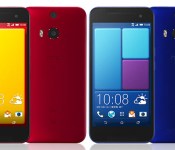
HTC’s latest J Butterfly is a supercharged One M8 in a waterproof body

Japanese carrier KDDI has just announced a new HTC J Butterfly, a handset which resembles the HTC One in specs but with features aimed at its home market. Like a lot of other Japanese devices, the 5-inch, full HD handset is waterproof, for starters, in case you feel like taking fish photos. For that, HTC has brand new cameras: a 13-megapixel rear dual-camera model, with a selfie-friendly 5-megapixel front shooter. That differs from the One M8′s 4-megapixel Duo “Ultrapixel” camera; KDDI instead calls it a “Duo Effect” camera with features like depth-of-field adjustment. Filling out the spec sheet are a Snapdragon 801, 802.11ac WiFi, LTE-Advanced, 150Mbps 4g, 2GB of RAM and Android 4.4 KitKat. All of that sounds pretty nice, but will it come to US shores? Hard to say, but the last J Butterfly model did eventually arrive as the Droid DNA (to Verizon), so we wouldn’t be surprised to see the new model here too.
Filed under: Cellphones, Mobile, HTC
Source: KDDI (translated)
.CPlase_panel display:none;
HTC’s upcoming Windows Phone is coming to Verizon with an awkward name

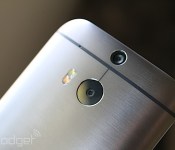
More than a few eyebrows were raised when talk surfaced of an HTC One for Windows Phone. How close would it be to the Android original? Would it bring anything new to the table? And what’s the name, for that matter? Thankfully, sources for Engadget are happy to answer a few questions. For a start, they tell us that the device is tentatively called the “One (M8) for Windows.” Yeah, that’s not exactly going to roll off the tongue — the device’s codename, W8, is considerably more elegant.
Other details we’ve received mostly corroborate what we’ve seen from @evleaks, with one surprise. In addition to the previously hinted-at presence of features from the Android-based One, like BoomSound speakers and the depth-sensing Duo camera, the One for Windows will also support voice over LTE — Windows Phone users shouldn’t have to wait long to try high-quality calls for themselves. It’s not clear whether or not the device will ship with VoLTE out of the box, but Windows Phone 8.1′s GDR1 revision (aka Update 1) should add support if it’s not ready on launch. The release isn’t far away, either. Our tipsters back earlier claims that the Microsoft-powered One is expected to reach at least Verizon during the third quarter, or no later than the end of September.
Filed under: Cellphones, Mobile, HTC, Verizon
Windows Phone’s next update will support smart cases and giant devices

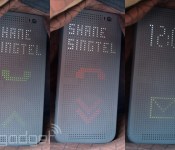
Windows Phone 8.1 may have only just reached the general public, but it’s already in line for a surprisingly large update. Microsoft has posted developer documents (sign-in required) for Windows Phone 8.1 GDR1, a tweak that fills in a few key hardware and software gaps. Aside from previously revealed folder support, the upgrade will allow for smart cases akin to HTC’s Dot View or LG’s QuickCircle. Phone makers will get to run special apps when the cover is closed, and specify what happens when it’s open. This seemingly simple addition could be important, since The Verge claims that HTC is preparing a Windows Phone version of the new One — such a device would need smart cover features to perform the same tricks as its Android counterpart.
The revision should also enable more of the tablet-sized phones that are all the rage in some corners of the globe. It’ll support a 1,280 x 768 resolution on screens as large as 7 inches, and there’s a new 1,280 x 800 option useful for larger devices that use software navigation buttons. Other upgrades are smaller, but should be important in the long run — the update should bring high-quality voice over LTE, higher-quality Bluetooth music (through aptX) and manufacturer-defined custom lock screens. There’s no confirmed schedule for when GDR1 would arrive, but Microsoft is clearly getting close. It won’t be surprising if the next big wave of Windows Phones ships with the new features built in.
Filed under: Cellphones, Mobile, Microsoft, HTC, Nokia
Via: NokiaPowerUser, WPCentral
Source: Microsoft (1), (2)

HTC Desire 610 gets launched by AT&T

First we heard rumors that AT&T will release the HTC Desire 610, and then they confirmed the availability of it just a few days ago. Now AT&T has officially launched the HTC Desire 610, you can grab it for just 99 cents with a 2-year contract, and if you are interested in getting it without… Read more »
The post HTC Desire 610 gets launched by AT&T appeared first on AndroidGuys.

