


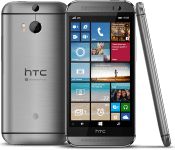
AT&T plans to sell the HTC One M8 for Windows soon

Feeling blue that the HTC One M8 for Windows is exclusive to Big Red? Good news: AT&T just confirmed that it’ll carry the flagship Windows Phone… eventually. The carrier can’t openly discuss details like pricing or availability yet — likely because it can’t sell the phone until the terms of the exclusive contract expire — but at least we can rest a little more easily knowing that this top-of-the-line Windows Phone will expand its reach to more than just one carrier. Who knows: Since a GSM version will be available, that may open the door for the device to go to other parts of the world as well. While you wait, check out our hands-on coverage of the device here.
Filed under: Cellphones, Wireless, Mobile, Microsoft, HTC, AT&T
.CPlase_panel display:none;

HTC’s One M8 now available with Windows Phone, but only on Verizon

In case you’ve wondered what a flagship Android phone would look like if it ran Windows Phone, it looks like you’ll get your chance to find out. This morning, HTC officially announced that the One M8 is getting a twin brother, complete with Microsoft’s OS. Make that identical twin: The Windows Phone M8 has the same smooth aluminum shell, same rounded corners, same 5-inch, 1080p display. Same Dot View Case. It even has the same camera setup, as well as the same Snapdragon 801 chip on the inside. The main difference — aside from the fact that it runs Windows Phone 8.1 — is that it’s exclusive to Verizon here in the US, where it will go on sale today at noon for $99 on-contract. (Ed. note: not bad!) On the software side, BlinkFeed is much subtler than on the Android M8 — it’s just an app here, making it much easier to ignore if you’re not into it. We’ll be back soon with a hands-on post, so sit tight. And if you’ve always wanted an M8 running Windows Phone, well, only an hour and 20 minutes until you can pull the trigger.
Edgar Alvarez contributed to this report.
Filed under: Cellphones, Wireless, Mobile, HTC, Verizon
.CPlase_panel display:none;
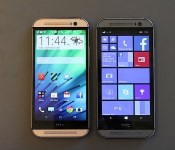
Meet the HTC One M8’s Windows Phone twin brother

The above picture isn’t Photoshopped — what you’re seeing really is the HTC One M8 with Windows Phone, and it’s available today as a Verizon exclusive. Thanks to Microsoft’s latest update, it’s now possible to put the third-place smartphone OS on existing Android hardware, and HTC is the first mainstream manufacturer to take advantage of the opportunity. Spoiler alert: The hardware of the Windows Phone-equipped One M8 is completely identical to that of the Android version launched earlier this year, aside from gratuitous Verizon and Microsoft logos. What makes this new variant so special is on the software side.
Microsoft views the new One M8 as a marketing flagship; it’s collaborating with HTC and Verizon on a nationwide ad campaign, so it appears that all three companies are committed to this device’s success. Of course, this isn’t the first time Microsoft has made these kinds of promises to HTC; a very similar thing happened with the HTC Windows Phone 8X, but that effort didn’t seem to do too well. Given the company’s acquisition of Nokia’s Devices division, it makes sense that Microsoft doesn’t want to alienate many of its long-time partners. What better way to share the love with other phone makers than to bring HTC on board?
On the hardware side, this One M8 is exactly the same 5-inch 1080p aluminum tank we’ve used for the past five months. In fact, if it weren’t for the Windows Phone logo on the back (alongside HTC’s and Verizon’s logos, making it a rather noisy affair), you wouldn’t be able to tell that anything is different until you boot it up. It comes with on-screen buttons, built-in infrared, the same Snapdragon 801 quad-core chipset and duo-camera setup on the back — and yes, it uses an UltraPixel sensor with a resolution of 4MP, as well as a 5MP camera on the front. The height, thickness and weight are all exactly alike, too.

It’ll also come with 32GB internal storage and microSD slot for up to 128GB, as well as a 2,600mAh battery (also identical), though we’re assuming overall battery life will differ from one OS to another. Windows Phone has a good reputation for maintaining power efficiency, so I”m looking forward to testing it out to see what difference the OS truly makes. The device only comes in gunmetal grey, so silver or gold fans will have to stick with Android for now. (HTC wouldn’t say if it plans to add more colors down the road, though we wouldn’t hate a red-colored exclusive for Verizon employees at some point.)
It’s all about what’s on the inside that counts this time — the firmware will be the make-or-break factor here. It comes with the first update to Windows Phone 8.1, so fans of the OS won’t have any problems getting around. Cortana, folders, quick access panel… they’re all present, but they’re not alone.
That’s because HTC’s brought over several of the One M8′s defining features. BlinkFeed is included, but you can’t get to it by swiping to the right; here, it’s presented as a separate app. I found it a little funny that it actually looks like it belongs on Windows Phone, primarily because of its tile-based setup. Additionally, video highlights are included as a separate app, so you can still put together fun 30-second clips using whatever theme and music you want. Sense TV is also here, and most of the duo camera effects made the cut as well. Note that I said most; a few effects, such as seasons and stickers, aren’t available. (The options I use the most, such as foregrounder, Ufocus and Dimension Plus, are all there.)

Because the stock Windows Phone camera isn’t designed to handle HTC’s duo camera customizations, the company added its own default app. The UI is nearly identical to what you’d find on the Android version, although Zoe functionality and dual-capture mode are missing. (The brand new Zoe app won’t make it to Windows Phone, either.) You can download other lenses, however, so hopefully HTC offers these modes as downloadable options at some point. You’ll still be able to save your manual settings though, so there’s still plenty of the same functionality you’ve enjoyed on Android. It’s reassuring to see that the company’s engineers were able to recreate many of its best features for Windows Phone, so it’s an indication that the OS is able to handle most manufacturer-specific needs.
As a Verizon exclusive, it’ll come with dual-band LTE (bands 4 and 13) along with quadband HSPA+ (850/900/1900/2100), quadband GSM/EDGE (850/900/1800/1900) and dual-band CDMA. This means it’ll work internationally, though I’d prefer to see some extra LTE bands for other countries. The device will be $99 with a two-year contract ($600 at full retail) and is available starting today.
Filed under: Cellphones, Wireless, Mobile, Microsoft, HTC, Verizon
.CPlase_panel display:none;
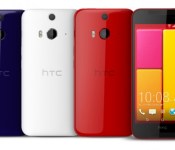
HTC officially announces the HTC Butterfly 2, a HTC One M8 with plastic surgery
 Imagine a HTC One M8, and now cover it in plastic instead of aluminium. Voila: you now have the freshly announced HTC Butterfly 2. While this might well seem like an over-exaggeration, this is actually literally the case. Like the One M8, the Butterfly 2 has a 5-inch 1080p display, a Snapdragon 801 processor clocked at 2.5GHz, 2GB RAM and available in 16GB and 32GB variants. The Butterfly 2 even incorporates the One M8′s iconic Duo Camera which enables users to create some striking – and adjustable – snaps with HTC‘s latest gimmick.
In fact, apart from the plastic exterior, the only other differentiating factor of the Butterfly 2 is that it has only been announced for the South Asia region; the last time a Butterfly device was sold elsewhere, it was known as the HTC Droid DNA. There’s no word on how much the Butterfly 2 will end up costing, but presumably trading in aluminium for plastic would cut down the costs marginally. Perhaps interestingly, HTC has specified that the Butterfly 2 is IPX5 and IPX7 water resistant, something I believe was absent from the One M8′s official stat sheet (although it showed itself to have some native water resistance anyway).
What do you think about the HTC Butterfly 2? Is this a device that you would be interested in? Let us know your thoughts.
Source: HTC Blog (1), (2)
//<![CDATA[
ord = window.ord || Math.floor(Math.random()*1E16);
document.write('‘);
//]]>
The post HTC officially announces the HTC Butterfly 2, a HTC One M8 with plastic surgery appeared first on AndroidSPIN.
.CPlase_panel display:none;
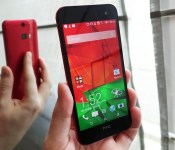
Handling HTC’s Butterfly 2: the flagship phone you might never see

HTC has its metallic-hewn, well-received One smartphone series. Oh, and its cheaper Desire collection, which has also hit a creative groove of late. But then there’s the company’s Butterfly phones: high-spec Android devices that rarely make it out of Asia. (We say rarely because one snuck into the US under Verizon: remember the Droid DNA?) Now, in Tokyo, HTC has announced the Butterfly 2 — the practically-identical, globetrotting version of Japan’s HTC J. The company hasn’t confirmed whether the model will leave Asia, but it could be a real shame this time around, because going on our early impressions, the Buttterfly 2 could well be better than the HTC One M8. Yeah, we said it.
Let’s get the major similarities out of the way — before we touch on some major changes to the camera. Both 2014′s HTC One and the Butterfly 2 (B2) have a full HD 5-inch, Super-LCD and it’s still great. There’s the same high-end Snapdragon 801 processor, the same flattened, simpler Sense 6 software UI, compatibility with those curious Dot View cases and capacitive Android buttons are now part of the screen — and there’s three of them, like most Google-powered smartphones. Oh, there’s still a pair of BoomSound speakers on front too, although this time they’re plastic panels almost camouflaged into the black screen.

The differences are found around the back. And the sides. And… the front. Not only is the Butterfy 2 made of a shiny, uniformly curved polycarbonate shell, but the entirety of it is water resistant and IP57-rated. This means it’ll survive a 30-minute dip at depths up to 1 meter, but almost as importantly, HTC has ensured its aqua protection forgoes any fiddly flaps to cover up power sockets and such. HTC isn’t elaborating whether its rubber seals or a nano-coating that’s keeping the phone working.
Alongside similar lines of simplicity, trays for both the nano-SIM and micro-SD card don’t require a pin to spring them open: they’re now (satisfyingly solid) pull-out trays. Other minor upgrades include an incrementally larger battery (2,700mAh vs. 2,600mAh on this year’s One), and a trio of shimmery, bold-colored models to choose from. Well, Blue, Red — and a White option. (HTC’s told Engadget that the white model here has a special stain resistance treatment now, which sounds like a detergent ad, but means it’ll stop scratches and mishaps from tainting the white finish). The plastic finish is a divisive one, but in real life, both the red and blue finishes ares luminous and quite attractive. For those that liked HTC’s metal unibodies, however, you’re likely to be a little disappointed. It’s difficult to determine whether the phone will be repurposed outside of Asia: for 4G band nerds, it packs FDD bands 1,3,7, 8, 28 and TDD bands 38, 40 and 41. In short, this smartphone doesn’t click with any of the major US carriers. At least, not this particular model.

HTC has been pushing its camera skills for a few years. More recently that’s involved bowing out of the megapixel-count with a 4-megapixel ‘UltraPixel‘ camera sensor and offering some very impressive low-light performance with it. Well, things have changed on this phone — and we’re not sure what to make of it just yet.
First up, the secondary depth sensor first seen on this year’s HTC One is very much here, adding improvements to autofocus speed as well as the ability to add a bit of post-processing magic to your shots based on depth info. But the main shooter itself is no longer an UltraPixel camera — it’s now a 13-megapixel sensor with, we guess, just normal pixels. It’s a double-edged sword: HTC’s philosophy with the camera sensors in its One series were refined and focused on offering up high performance photos in low light. Pixels were given room to bathe in more light, but that came with a trade-off in the sheer number of pixels. On the front, you’ll still get a wide-angled 5-megapixel front-facing sensor to keep that selfie habit going strong.
With the Butterfly 2, HTC has cranked the resolution up substantially on the front-facing camera, meaning you could now crop and zoom, and your photos (if you need it) are simply more detailed, given the wider canvas. During our early tests, the difference in detail is noticeable once you pinch-and-zoom a little. However, we’re still waiting to test the Butterfly 2′s camera in less favorable lighting settings to see how it handles it. HTC’s spokespeople reiterated that it’ll continue with its UltraPixel cameras, but that the Butterfly 2 offered a different kind of camera sensor. Fortunately for us, and you, we’ve taken possession of a review sample. Expect our verdict in the coming weeks.
Filed under: Cellphones, Mobile, HTC
.CPlase_panel display:none;
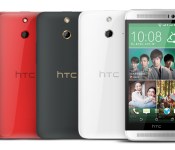
HTC One E8 soon expected at Sprint

Sprint should soon make an announcement regarding the upcoming availability of the lower-price HTC One E8. How do we know? Easy, a video posted on the carrier’s YouTube account has tipped their plans. The plastic-clad smartphone features still-reputable specifications but should command a budget-friendly sticker. Hardware includes a 5-inch 1080p display, a 2.3GHz quad-core Qualcomm Snapdragon 801… Read more »
The post HTC One E8 soon expected at Sprint appeared first on AndroidGuys.
.CPlase_panel display:none;
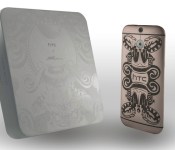
This tattooed HTC One M8 is the company’s latest Limited Edition

Of the many phone makers in the world, HTC is one of the best (if not the best) at churning out Limited Edition collector’s items that focus on unique design and features. The latest in a long series of such products (most of which are highlighted in the gallery below) is a collaborative effort with Singapore-based design collective Phunk Studios, in which the group made a specially designed HTC One M8 with its own unique packaging. Only 64 of them were created (32 in gold, 32 in silver), and they’re being used as a sneak preview of the collective’s upcoming Wonderment exhibition. As you might expect, these unique devices won’t be for sale, but HTC will be providing Engadget with one of them to give away to a lucky reader. That giveaway will take place in the coming weeks, so keep an eye out for it!
Filed under: Cellphones, Wireless, Mobile, HTC
.CPlase_panel display:none;
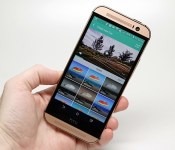
HTC’s Zoe app is a social network that uses highlight reels

HTC’s days of acting like a wallflower at the school dance are over — the company’s ready to explore its social side. Its first attempt is to turn Zoe, one of its most creative software features, into a social network that not only lets you share photos and videos with your friends, but allows them to pitch in and edit them as well. Known simply as the Zoe app, the new program launches in open beta today and will be available on several Samsung, LG and other Google devices. Finally, HTC is looking outside of its own user base and reaching out to those who may never have touched any of its products before.
The Zoe app was created by a new HTC division called Creative Labs, which is led by Sense UI head Drew Bamford. It’s the first of several projects the team has in the works, and is the only publicly known project so far. The app has been in limbo as a mere placeholder for the last five months, and the service won’t graduate to final status until sometime this fall.

It’s a logical step for Zoe, which started out as a photography feature on the HTC One M7. Named after an old-fashioned zoetrope which spun around and around to create a short movie, the feature fit the description. It recorded a few seconds of video and a burst of 20 images and turned it into a Harry Potter-esque moving picture. This breathed life into photo galleries and added flash to Video Highlights, a feature which stitched up to 16 Zoes, stills and video clips of your choice and mashed them into a cool 30-second highlight montage. These reels are set to whatever music you want and you can even select one of several different themes to ensure each reel portrays the right mood. They’re both utilized in the new app, and are certainly more entertaining than the traditional family vacation slideshow.
As neat as Zoe and Video Highlights were, there wasn’t much you could do with them aside from uploading them to YouTube or generating a unique URL to show off your content. To share a prized reel with friends and family required effort and, unless loved ones subscribed to (and actively visited) your YouTube account, an easier way for them to view your stuff. You don’t have to worry about this when using Facebook and Instagram; take a picture, do a bit of editing and within seconds your memory will be uploaded and viewed by everyone you’ve ever known.

The Zoe app isn’t quite that quick and easy yet, but it’s definitely an improvement over how it was before. Just like other social networks, there’s a feed comprised of your followers, as well as a “discover” feed in case you want to explore a bit (although there’s no way to specific searches for people or topics). You find friends using your Google or Facebook account, but unfortunately there isn’t a way to search for specific people who may not be in your personal rolodex. (HTC says it’ll be included in the final release.) Similar to Instagram, your feed is a vertically scrolling page that consists of your friends’ montages, and you can like or comment on each one.
So far it sounds like your average social network but with 30-second highlight reels instead of pictures or 15-second videos. One unique benefit to Zoe, however, is the ability to collaborate and edit any montage you want by “remixing” it. The app grabs all of the shots used in that clip and gives you the chance to remove whichever ones you want and add a few photos of your own, change the theme and the music, and presto — you’ve just remixed your friend’s vacation reel. Of course, you can even do it to your own clips, and remixing can be as simple as rearranging the order in which those shots are displayed in the clip, so it’s up to you to determine how deep you want to dive into the editing process.
I haven’t decided yet if this is really cool or really creepy; perhaps it’s a little bit of both. Say you go on a trip with friends and you want to pool your photos and videos together to make an epic montage. Done. It’s so much easier to do it this way than getting them all onto the same desktop computer and sideloading them into one HTC device. Now, it’s all cloud-based. It even works if you use more than one phone (or hopefully a tablet, once Zoe is out of beta) and you want to bundle two different albums together. On the creepy side, there’s something weird about the idea of a follower doing whatever they want with my own content. At least HTC has safety measures in place, should you choose to use them: If you only want certain folks seeing and editing your clips, you can add them to a whitelist so only they can see it.

Finally, when you’re done picking out the pictures and videos you want, selecting the right theme and song to go with it (you can use your own tunes and select whatever 30-second segment you want) and you’re ready to send it off, you have the choice of making it public or private, inviting specific people to do a remix or sharing it as a URL through other apps (Gmail, messaging, Twitter and so on).
I’m impressed with the app so far, even though there’s plenty of room for improvement and more features (it’s only in beta, after all). But I’m happy to see a once-exclusive HTC feature now spreading its wings to other Android devices. It gives HTC more exposure to people who normally choose other phone brands, not to mention that it stands a more realistic chance of attracting a decent number of active users. There are two challenges that Zoe will need to address. First is the massive popularity of other social networks; HTC may not be trying to compete with Instagram and others on a direct level, but most people don’t want to add yet another social network to their already large arsenal. The other challenge is visibility: Will Zoe get top billing (or anywhere close to the top) on the Google Play Store? That alone could be a make-or-break factor for HTC’s success.
The beta program will roll out today to several devices, including any device with HTC Sense 6, as well as the Nexus 5, LG G2 and G2 Pro, Samsung Galaxy S4, Galaxy S5 and Note 3. According to HTC, Zoe should be compatible with Android 4.4 smartphones when it leaves beta this fall.
Filed under: Cellphones, Wireless, Mobile, HTC
.CPlase_panel display:none;
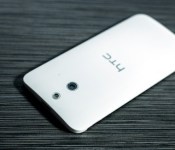
HTC is releasing its proprietary apps for non-HTC phones, starting with HTC Zoe
 HTC has previously promised that it would release its proprietary apps for non-HTC phones in the near future, and it appears that time is almost upon us. Later this week, a beta of the HTC Zoe app is going to be released. Debuted on the HTC One M7, HTC Zoe is a photo/video capture app that allows 3 second clips to be taken and when viewed as a gallery create a unique visual experience. It’s definitely a brave move for HTC to launch such an app among all its countless other competitors, but this is presumably just the start of an exodus for all HTC apps.
HTC executive, Drew Bamford, is leading the effort comprised of a 260-strong team, so it’s definitely an effort that HTC isn’t shying away from, and one that it looks committed to following through with given its devotion of resources. Other HTC apps are sure to follow, including BlinkFeed. It’s good to see a manufacturer branch out and bring its proprietary apps to the Google Play Store for all the try; it’s definitely something that might even sway potential buyers towards their own devices.
What do you think about HTC releasing its proprietary apps for non-HTC phones? Let us know your thoughts.
//<![CDATA[
ord = window.ord || Math.floor(Math.random()*1E16);
document.write('’);
//]]>
The post HTC is releasing its proprietary apps for non-HTC phones, starting with HTC Zoe appeared first on AndroidSPIN.
.CPlase_panel display:none;
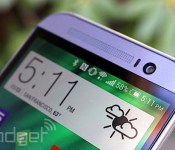
HTC is bringing its in-house apps to the rest of Android

HTC’s been making Android skins and apps for a long time, but now the company wants its home-grown software to conquer more devices — even those made by other manufacturers. According to Recode, the Taiwanese phonemaker has started developing apps for Android phones in general, courtesy of a new business unit called HTC Creative Labs. The Creative Labs team’s first product is called Zoe (originally available on the One M7), which has the power to stitch together up to 16 videos or images. You merely need to select a theme along with the images/videos, as well as a soundtrack, and it can automatically create a highlight reel.
HTC also developed Zoe to be able to share creations, so friends and family can tweak them, perhaps in an effort to come up with an Instagram or Vine of its own. Still, the app’s pretty basic at this point, and while it’ll be available to competitors like Samsung and LG, it can only be installed on high-end devices loaded with Android 4.4. HTC has plans to help boost Zoe’s presence despite those limitations, though, including forging partnerships with music and sports companies. The new Zoe will come out later this week, with more to follow, as the Creative Labs team plans to release other HTC apps from its own phones’ confines in the future.
Filed under: Cellphones, Mobile, HTC
Source: Recode
.CPlase_panel display:none;

