


Google working on smart contact lens to aide diabetics
At Google X, the Internet giant’s secret facility, Googlers are working on projects out of the norm, like Google Glass, to make the world a better place.
Today Google introduced one of its projects that aims to help people with diabetes, smart contact lenses.
Before you start imagining tiny devices able to place notifications literally in your eye or to be able to watch YouTube videos, these are strictly to help manage diabetes, which Google says is “affecting one in 19 people on the planet.”
You may have heard about diabetes, but if you’re not completely sure what it is, someone that has diabetes is not able to keep their blood sugar levels under control.
Since diabetics usually need to usually wear some sort of sensor or need to prick their finger and test drops of blood throughout the day to manage their glucose levels, Google X set out to make it less painful though computer ”chips and sensors so small they look like bits of glitter, and an antenna thinner than a human hair”.
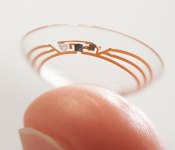
What the smart contact lenses will do is check the glucose in tears thanks to a tiny wireless chip and miniaturized glucose sensor that are embedded between two layers of soft contact lens material.
The prototypes are able to generate one reading per second and Google may eventually integrate tiny LEDs into the lenses as an indicator for dramatic changes in glucose levels.
Google X’s smart lenses are still in the very early stages, but there have ready been multiple clinical research studies and discussions with the FDA. Google is also currently looking for partners to help develop apps to make the measurements available to the wearer and their doctor. So depending on how long these take to come to market. you may be able to get this information on your smartphone, smartwatch, Google, Glass, smart glasses, etc.?
With projects like this, it seems anything is possible thanks to tech. So, what are your thoughts on the smart contact lenses? Do you think they will catch on or are they too strange?
The post Google working on smart contact lens to aide diabetics appeared first on AndroidGuys.
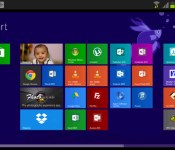
Google’s Chrome remote desktop app will come to iOS as well as Android

The desktop versions of Chrome make it easy to access remote PCs (and Chromebooks) linked together by your Google account, but this feature hasn’t yet made the trek across to Chrome’s mobile manifestations. We know that an official Android “Chromoting” app (an early build of which is shown in the screenshot above) has been in the works for a while, and now there’s evidence it’ll come to iOS too. Radio chatter between Chromium developers reveals that the iOS version is still at an “unpolished” design stage, but it also suggests that a good few devs have it on their to-do lists — and although we have very little detail about how the final Chromoting app will work, these folks must believe that it’ll do something different (or better, or easier) than the hoards of existing alternatives.
[Image courtesy of Chrome Story]
Filed under: Internet, Software, Mobile, Google
Via: 9to5mac
Source: Chromium

Motorola expands Moto X wood finish options, drops the price premium to $25

If you’ve wanted a Moto X with a wood finish, but didn’t like bamboo or the $100 price premium over a regular model, we have good news: Motorola has just made the option a lot more appealing. Starting January 21st, you’ll get to customize the Android smartphone with an ebony, teak or walnut backing (rosewood isn’t an option, alas). That astronomical price has come down to Earth, too, as the wood option now costs a more reasonable $25. We can’t imagine that many prospective Moto X buyers have been waiting for a device that matches their coffee table, but those particularly demanding customers should be very happy after next week.
Filed under: Cellphones, Mobile, Google
Source: Official Motorola Blog

Sacramento Kings set to broadcast using Google Glass, accept Bitcoins

Watching hoops from the stands or on TV is great, but have you ever wanted to see an NBA game from the perspective of a coach, cheerleader or broadcaster? That’s going to happen on January 24th during a Sacramento Kings broadcast vs. the Indiana Pacers, as select players and staff will be decked out in Google Glass — along with the team’s mascot, announcers, dancers and others. All that will be coordinated by a company called CrowdOptic, which will analyze in real time where all the devices are aimed and distill everything to a manageable feed for broadcast. At the same time, the Kings have announced that it’ll be the first pro sports franchise to accept Bitcoins, letting fans purchase merchandise and tickets by March 1st using the virtual currency. There’s a video after the break to give you a sneak peak at the players-eye-view — we’ll have to see if they’re smiling as much after the game.
Filed under: Home Entertainment, Wearables, HD, Google
The Engadget Show 49: CES 2014 wrapup

Grab a wearable, switch on the ‘ole curved TV and fire up your favorite 3D printer. We came, we saw, we conquered and now we’re ready to distill it all for you in the form of some high-quality video content. We’re not going to suggest that it’ll replace the seemingly endless stream of posts we’ve churned out over the past week or so, but if you’ve got a cocktail party full of guests you need to impress tonight, it’ll help you drop some serious CES 2014 tech news knowledge on their collective heads.
We’ve pulled together some top editors to offer up an abbreviated view of tech’s biggest show of the year, charting trends in old standby categories like HDTV, mobile, tablets and cars, to emerging spaces set to define the changing face of the show for years to come. Oh, and we’ve also tossed in some fun video of the show’s gadgets, because, well, it wouldn’t be much of an Engadget Show without that sort of thing, now would it? Toss in a bit of video of your long-time host getting a bit welled up the end, and you’ve got yourself a little thing we like to call The Engadget Show 49.
‘Til we meet again, Engadgeteers.
Filed under: Announcements, Cellphones, Desktops, Cameras, Displays, Misc, Gaming, GPS, Handhelds, Home Entertainment, Household, Laptops, Meta, Peripherals, Podcasts, Portable Audio/Video, Robots, Tablets, Transportation, Wearables, Wireless, Storage, Networking, Science, Internet, Software, HD, Mobile, Alt, Apple, Samsung, Sony, Microsoft, HTC, Nokia, ASUS, Google, Amazon, Verizon, Sprint, AT&T, LG, AMD, Intel, Blackberry, T-Mobile, HP, Dell, Acer, NVIDIA, Nikon, Canon, Facebook, Nintendo
Google’s new wearable project is a smart contact lens with medical uses

Google loves wearables and this time it’s getting even closer to your body with a developmental smart contact lens. Through miniaturized electronics, it can apparently measure the levels of glucose in your tears, offering diabetics an easier way to monitor their condition without the needles and the blood — something we’ve reported on before. A tiny (really tiny) wireless chip and glucose sensor are wedged between two layers of “biocompatible” contact lens material, and Google is saying that it’s already working on embedding tiny LED lights for notifications, too. There’s been no shortage of developmental contact lens tech over the last few years, but the clout of Google means this could well be the most realistic mainstream offering, in addition to its very practical use cases. Google is currently angling for partners with more expertise in the medical market to help make it happen and is “in discussions with the FDA” to ensure the tech ticks all the right healthcare boxes before it progresses further.
Recode‘s got a deep dive on the make-up of the smart contact: we’ve added their science textbook-grade diagram right after the break.

Filed under: Wearables, Google
Source: Google (Google+), (2)
Code hints that Google may bake fitness sensor support into Android

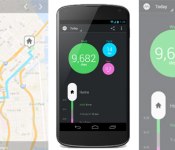
KitKat brought pedometer functions to Android, but that’s not necessarily enough for smartphone owners who want to track their fitness routines. Google may be aware of that desire for more athletic info, though. Google Operating System has discovered code (shown below) for a future “Fitness API” that would supply apps with activity data from an Android device’s sensors. We don’t know much more than that, however. There aren’t any clues as to when (or if) the API would be ready, and it’s uncertain whether the software is tied to either a new OS revision or a Google Play Services update. Still, don’t be surprised if your favorite Android fitness app becomes much more sophisticated in the near future.

Filed under: Cellphones, Mobile, Google
Via: Droid-Life
Source: Google Operating System
Google Drive dev tools promise better and more powerful apps (video)

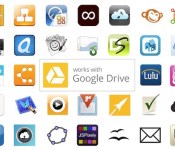
If you’re an Android user, there’s little doubt that you’re familiar with Google Drive, Mountain View’s preferred cloud storage service that competes with the Dropboxes, SkyDrives and iClouds of the world. Of course, Drive can also be used by developers to build better apps, and today Google has rolled out a new Drive Android API to make devs’ jobs even easier — and provide us all with better app experiences. The main attraction is a feature called transparent offline syncing, which, for users, means that cloud storage is treated the same way as local storage.
So, you get the benefits of massive amounts of storage provided by GDrive, without needing to spend on more storage in your phone. And, should you not have a good enough connection to the cloud, the API automatically shifts to storing your data locally until it has good enough reception to send it to the servers. Because of this, developers can design more capable, powerful and generally better app user experiences for less endowed (read: cheaper) and flagship handsets alike. Speaking of which, Google says these features will work on 98 percent of all Androids, so most of us will reap their benefits.
Additionally, the API integrates tightly with Google Play Services, which reduces apps’ download size (making for faster downloads) and means fewer updates are needed down the road. Well, developers, what are you waiting for? Watch the video above for a full description of the API’s capabilities and get to making us all better apps!
Filed under: Storage, Internet, Mobile, Google
Source: Google Developers blog
Traffic ticket for driving with Google Glass gets dismissed in court

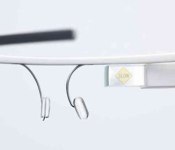
Pay attention to the road. At least, until the cars are able to drive themselves. That’s the rule, and it was probably one of the reasons why Google Glass early-adopter Cecilia Abadie got ticketed for donning the wearable at the wheel. It was a second citation, alongside speeding, although it was dismissed by San Diego Court Commissioner John Blair, noting that: “There is no testimony it was operating or in use while Ms. Abadie was driving.” However, he did say earlier that Google’s wearable did however, fall “within the purview and intent” of the state’s ban on driving with a monitor. This particular case might have been dismissed on lack of evidence, but we reckon those wider implications (and resultant legal tussles) are far from over.
Filed under: Cellphones, Transportation, Wearables, Google
Source: Reuters
Google Now comes to Chrome on the desktop in experimental form

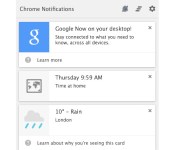
You may not have to reach for your phone to check Google Now in the near future. The latest build of Google’s experimental Chrome Canary browser introduces the context-aware notifications to the desktop; toggle a flag and you’ll get alerts from the menu bar (Mac) or taskbar (Windows). Google Operating System notes that it’s not quite a seamless experience. You’ll have to use Google Now on your mobile device first, and location-sensitive cards like weather are tied to that device’s location, not your computer. Even with those caveats in mind, it may be worth downloading the unfinished software for the added convenience.
Filed under: Internet, Software, Google
Via: The Next Web
Source: Google, Google Operating System

