



Google wants you to know what you’re clicking on

Google knows a lot, both about its users and about the internet in general. Today, the team in Mountain View has found a new way to share more of its vast knowledge of the web with us by providing background info on sites that show up in search results. You see, site information is gleaned from Google’s Knowledge Graph, and for every site we’ve checked thus far, that means the data’s coming from Wikipedia — so don’t go thinking that this new cursory background check is 100-percent accurate. Google’s not providing the extra info about all sites, either, just those that are “widely recognized as notable online” according to the company’s blog post announcing the new capability. Still, it’s a nifty addition that should give netizens some peace of mind before clicking search-provided links, and Google’s promising that as the Knowledge Graph grows, so too will the amount of information this new feature can provide.
Via: The Next Web
Source: Inside Search

Daily Roundup: Snapchat’s adorable captcha, T-Mo’s ‘Mobile Money’ and more!

You might say the day is never really done in consumer technology news. Your workday, however, hopefully draws to a close at some point. This is the Daily Roundup on Engadget, a quick peek back at the top headlines for the past 24 hours — all handpicked by the editors here at the site. Click on through the break, and enjoy.

Snapchat battles dummy accounts with a captcha
Snapchat’s been in some hot water lately, what, with that security vulnerability and all. Thankfully, the company put a captcha-like security measure in place to prevent dummy accounts. Click the link for more information.

T-Mo’s ‘Mobile Money’
T-Mobile’s latest endeavor is a personal finance product called “Mobile Money” that combines a smartphone app and branded prepaid Visa card. Best of all: you don’t even have to be a customer to sign up for it. Click on through for details. Click on through for details.

Judge voids two Samsung claims
Judge Lucy Koh shot down two Samsung patent claims today, one of which may affect the entire Android ecosystem. Click through for the story.

New SteamOS beta
Valve released a new SteamOS beta that features support for older PCs and dual-booting. Though, it’s still not ready for the masses. Follow the link for the deets.
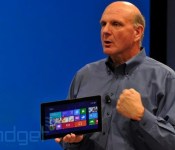
In a bid to regain trust, Microsoft okays storage of foreign users’ data overseas

In the wake of recent NSA leaks, Microsoft’s taking the tech road less traveled and committing to protecting foreign users’ data by storing it overseas. The controversial move, as reported by the Financial Times, would place that data out of the NSA’s legal reach by moving it off US soil and under the protection of local laws. It also pits Microsoft against a bevy of the US internet companies, like Google, which have staunchly opposed any such requirement for offshore data-hosting, citing concerns such as increased costs for that build-out.
There’s also the possibility that such policies, if adopted or enforced by countries like Brazil, would cut off foreign citizens from the use of American online services should those companies choose not to comply. For Microsoft’s part, the company deems the decision a necessary one to reinstall faith in the quality and security of its services. Brad Smith, the company’s general counsel, told the Financial Times that despite the inherent costs in moving hosted data offshore, Microsoft believes this to be the right course of action to restore the trust of foreign users. He went on to say, “People should have the ability … to make an informed choice of where their data resides.” Smith is even advocating for a joint US-EU agreement that would put an end to the abuse of tech companies’ data for the purposes of foreign espionage.
Filed under: Internet, Microsoft, Google
Source: Financial Times
Google offering 25% discount on accessories in Play Store
Looking to pick up some accessories for that new Nexus 5 smartphone or Nexus 7 tablet? Swing by the Google Play Store today and you’ll find Google is offering discounts on a number of products.
We know you love your Nexus devices, so keep them safe, stylish and functioning at their best. Dress up your phone or tablet with our selection of custom-built cases made to fit your mobile lifestyle.
It’s not clear how long these deals will last nor whether Google will add in products for other devices. Our advice is to buy while you can.
The post Google offering 25% discount on accessories in Play Store appeared first on AndroidGuys.

Google Chrome can listen in on your conversations (but it probably isn’t)

Google Chrome users are no strangers to speech recognition software — heck, the internet browser has “Ok Google!” voice recognition built right into its URL navigation bar. But that recognition is triggered to “listen” only when you’ve opened a new tab or navigate to Google’s homepage, and the expectation is that the browser isn’t able to listen in otherwise. Not so, says speech recognition program developer Tal Ater, who discovered an exploit in Chrome’s speech recognition that enabled unscrupulous websites with speech recognition software to listen in when users aren’t expecting.
First, you have to give permission to a website to allow speech recognition to work. After that, however, the website may open a pop-under window with the intent of secretly continuing to listen — even if you’ve closed the tab and moved on. Google Chrome must remain running, and you have to miss seeing the pop-under, but it’s certainly an issue.
Moreover, Google knows of the problem and has yet to fix it…despite a fix existing. Ater describes reporting the issue to Google, finding out it was fixed by the company soon after, and that fix not being implemented in subsequent updates. Google confirmed that to Engadget with the following statement:
“The security of our users is a top priority, and this feature was designed with security and privacy in mind. We’ve re-investigated and this is not eligible for a reward, since a user must first enable speech recognition for each site that requests it. The feature is in compliance with the current W3C specification, and we continue to work on improvements.”
Given Google’s compliance with speech recognition standards, it sounds like Mountain View isn’t changing the way Chrome’s speech software works just yet, though we’d be surprised if some form of visual indication of recording wasn’t included in a future build. A video of Ater demonstrating the exploit is just below.
Filed under: Internet, Software, Google
Source: Tal Ater

Motorola brings Prip’s push-to-talk service to the iPhone

Sprint’s iDEN network shutdown may have quashed hopes for an iPhone with native push-to-talk support, but that won’t matter much now that Motorola has brought Prip’s service to iOS. The new app lets American iOS 7 users instantly speak to both fellow Prip members as well as Nextel subscribers in Latin America. Many of the features will be familiar to those who tried the Android version, although the cross-platform launch introduces universal sign-ins and web-based account control; you’re no longer tied to Google Play. Whether you’re chatting with a friend or a whole company, you can grab Prip from the App Store today.
Filed under: Cellphones, Software, Mobile, Google
Via: Prip Blog
Source: App Store
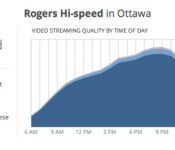
Google can now say if your internet connection is quick enough for YouTube

Many are tempted to blame stuttering YouTube streams on our internet providers, but who’s really at fault? Google may shed some light on the subject now that it has launched a Video Quality Report. The tool tells surfers how well their providers typically handle YouTube in a given region, breaking reliability down by the feed quality and time of day. Services that properly load at least 90 percent of 720p videos get a “YouTube HD Verified” badge, while those that tend to choke wind up in standard definition and lower definition categories. Only Canadians have access to the report at the moment, although it should reach other countries in time. Wherever it goes, it should help viewers decide whether or not it’s time to switch networks — and it just might spur some companies into making much-needed upgrades.
Filed under: Networking, Internet, Google
Via: 9to5 Google

[RUMOUR] Is Google readying a Nexus 8 made by ASUS?
 Late last year, a lot of noise was made when a suspicious looking tablet appeared on Google‘s own website. While the tablet did somewhat resemble the 2013 Nexus 7, the bezel width suggested that the screen of that tablet was closer to 8 inches. And so began the rumour of the Nexus 8, for which we’ve really not had any evidence to believe it even exists. Until now…
According to DigiTimes, the 2013 Nexus 7 has not been performing as well as its predecessor, the original 2012 model, which has caused Google to change tack and instead move to developing an 8-inch Nexus tablet, aimed at release in mid-2014, which will presumably be called the Nexus 8.
And the rumoured manufacturer of this mysterious Nexus 8? Why none other than Nexus 7 manufacturer ASUS. It makes sense considering the Google and ASUS partnership has already had two successful outings to date. The source of the rumour also suggests that Google may be looking at Intel‘s Bay Trail-T platform to power the tablet.
That’s definitely an interesting rumour to digest: would you be willing to get an ASUS-made Nexus 8 if it were ever released? Let us know what you think.
Note: There is a poll embedded within this post, please visit the site to participate in this post’s poll.
Source: DigiTimes via CNET Australia
Google Glass wearer removed from AMC theater under suspicion of recording

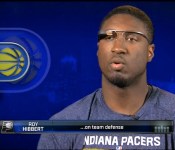
Despite the many uses for Google Glass, this new class of wearable devices is inevitably meeting some growing pains (pictured above is 7’3″ Indiana Pacers center Roy Hibbert, a Glass wearer who has experienced some growing pains) as the world gets used to them. One wearer successfully fought a traffic ticket recently and now another early adopter suffered the “embarrassing” experience of being removed from a movie theater for bringing the accessory. In a story originally posted on The Gadgeteer, the unnamed individual stopped by the AMC Easton 30 in Columbus to watch Jack Ryan: Shadow Recruit, wearing Google Glass attached to his prescription lenses, something he says he’d done before without any trouble.
Where the story takes a twist however, is when officers moved in an hour into the movie, yanked the Glass from his face, and brought the man and his wife to separate interrogation rooms for over three hours. Apparently unfamiliar with the device and already on alert for piracy at that theater — most pirates using this technique bring camouflaged hand-held cameras — it took quite some time before they eventually (with the owner’s permission/at the owner’s insistence) plugged Glass into a computer, reviewed the stored images and determined he had not been recording the movie. U.S. Immigration and Customs Enforcement Khaalid Wells confirmed the January 18th incident calling it a “brief interview.”
AMC released a statement to Engadget (available in full after the break) which says theater owners contact the MPAA when suspected recording takes place, in this case prompting an investigation and resulting in contact with Homeland Security. AMC feels like wearing devices with recording capabilities “is not appropriate at the movie theatre,” a position that will be hard to hold as movie viewers arrive with their Glass, Gear and other camera-equipped wearable tech, and sticks out here because they were attached to prescription lenses. The initial rollout of camera-equipped phones led to similar awkward interactions, although being arrested certainly takes things to another level. The wearer reports his Glass was returned, undamaged, but at last update he’d received only a few free movie passes for his troubles.
AMC:
Movie theft is something we take very seriously, and our theater managers contact the Motion Picture Association of America anytime it’s suspected that someone may be illegally recording content on screen. While we’re huge fans of technology and innovation, wearing a device that has the capability to record video is not appropriate at the movie theatre. At AMC Easton 30 last weekend, a guest was questioned for possible movie theft after he was identified wearing a recording device during a film. The presence of this recording device prompted an investigation by the MPAA, which was on site. The MPAA then contacted Homeland Security, which oversees movie theft. The investigation determined the guest was not recording content.
Roy Hibbert w/ @googleglass (per @IkeMoses request) pic.twitter.com/CSknyZbuc5
– jose3030 (@jose3030) January 21, 2014
Filed under: Home Entertainment, Wearables, HD, Mobile, Google
Source: The Gadgeteer, Phandroid

Firefighter developing Google Glass apps to help with response and rescue

For all the potential of Google’s face-based hardware, we haven’t seen many uses beyond the cool and novel that are any more than noble ideas. Not for firefighter Patrick Jackson, though, who’s combined his talents for programming and winning wearables to create apps that help him and others out on the job. At this point, his software can push emergency calls to Glass and direct responders to its location and nearby hydrants with Google Maps. Currently, he’s working on being able to pull up floor plans and other relevant information about buildings before entry, as well as vehicle diagrams and instructions for aiding in-car rescues. Jackson’s #ifihadglass application also outlines the many benefits of streaming live video from an incident, so all he appears to have overlooked thus far is a warning system for Kurt Russell’s worst enemy.
Filed under: Wearables, Software, Google
Source: Google Glass (Google+)
 AIVAnet