


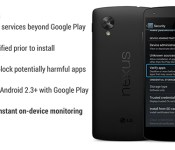
Google will protect your phone by looking for sketchy apps you’ve already installed

Got an Android device with access to Google’s Play Store? Congratulations: it’s about to become even more resistant to malware, and you’ll barely have to lift a finger. You see, for around two years now the folks in Mountain View have been able to throw up red flags when users try to install apps of questionable provenance on their devices. Now they’re taking it a step further — Google will soon be able to check up on your apps after you’ve already installed them.
Why? Well, it’s possible that you downloaded some sketchy apps before Google’s verification feature went live in 2012. A bad app that previously managed to fly under the radar could also be rooted out as Google continues to learn more about mobile malware. Those situations may seem a mite outlandish, and Android Security Engineer Rich Cannings admits that most people won’t ever see one of those notifications. Still, there’s no denying this is a solid tool to have in the ol’ arsenal, and ComputerWorld previously reported that it’ll come in the form of an update to Google’s Play Services so devices running Android versions as old as 2.3 should get that added security without a headache.
Filed under: Mobile
Source: Official Android Blog
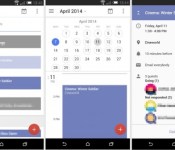
A new Google Calendar for Android could be on the cards, with new UI and social Integration
 The Google Calendar for Android app is one that’s seen quite a few integrations, and it looks like it could be in for one more big change in the near future. According to some leaked screenshots, Google may be currently testing a new version of the Calendar app that incorporates a new, minimalistic user interface as well as some very useful Google+ integration. It’s definitely a less cluttered approach, and much less colourful than some of Google’s other core apps. All the same, it’s a nice change of pace for a calendar app that currently doesn’t really offer anything that other apps don’t already.
Some of the features that have been spotted in the screenshots include a daily agenda screen which summarizes all the day’s events including birthday information courtesy of Google+; upcoming birthdays can also be viewed in a separate calendar. Although the app in the screenshots looks ready for everyday consumption, there’s no telling if Google is going to release this any time soon, if ever, but we can always hope.
What do you think about the leaked screenshots of the Google Calendar for Android? Let us know what your opinion is in the comments.
Source: Geek.com via TalkAndroid
//<![CDATA[
ord = window.ord || Math.floor(Math.random()*1E16);
document.write('’);
//]]>
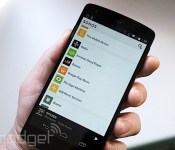
Google Play Music can now stream direct to Sonos on Android

Let’s face it, as cool as Sonos is, that Android app is ugly. You should definitely be rolling with the beta version. The new (and much cleaner, and less blue) look isn’t the big news though. That honor goes to the addition of Google Play Music to the list of streaming options you can enjoy from the Android app. Starting today, you’ll be able to access any music you’ve added to Google’s cloud service, plus all the music in the world (well, not quite, but a lot of it) if you’re fully paid up with All Access. There’s one more significant change to the world of Sonos today, and that’s the ability to stream music directly within the Play app to your hardware. The option will be under the same streaming button as if you were sending it to a Chromecast. So you might find yourself skipping that new slick controller app altogether. We’re no clairvoyants, but expect to see even more music services getting the same native support in the very near future.

Filed under: Home Entertainment, Internet
Source: Sonos

How to avoid heartburn, err, Heartbleed

Don’t change your password. It’s strange advice to hear when the so-called Heartbleed bug is leaving databases all over the web open and exposed, but it’s applicable. Yes, security has been compromised for many of your favorite websites and services (including Google, Flickr and Steam, at least initially) but protecting yourself isn’t quite as easy as changing your password. Unlike past exploits, Heartbleed isn’t a database leak or a list of plaintext logins; it’s a flaw in one of the web’s most prevalent security protocols — and until its fixed, updating your login information won’t do a darn thing to protect you. What, then, can you do to protect yourself? Wait, watch and verify.
Updating your password is a must, but only after your favorite services have patched their servers to block the Heartbleed exploit. Fortunately that’s relatively easy — the open-source SSL encryption software the bug affects has already been updated with a new, secure version. Vulnerable sites need only to upgrade to the latest version of Open-SSL to protect their users. Although some companies will notify users that their services have been patched (like Google did), not all of them have or will. That means you need to be aware of which websites were vulnerable to the bug and routinely check them to see if they’re back on track. Don’t worry, that’s not too difficult either. Sites like GitHub and Mashable have already compiled lists of popular websites, services and social networks, noting if they were affected at the time of Heartbleed’s discovery, and in some cases, if they’ve been patched. You can check manually, too: concerned coders and even some companies have made tools available to help you suss out sites that are open to attack. Coder Filippo Valsorda has created a Heartbleed checker and the folks at LastPass have a similar tool — either or both will update you on the status of a site’s security certificate. If it comes up clean, you’re safe to change your password.
Of all the exploits we’ve seen over the past few years, Heartbleed is certainly the biggest nuisance. Not only is it widespread enough to worm its way into some forgotten nook of your digital past, but it’s been lying under our noses for two years. Still, there’s no need to panic: just wait for your favorites services to patch the bug, watch for announcements from sites you might use and verify their security using freely available tools. Once that’s all done, change your password, write it down and breathe easy.
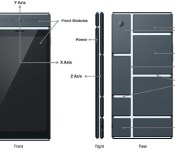
Google’s modular phones: hot-swapping batteries is just the beginning

Google teased us with a behind-the-scenes look at Project Ara’s progress last week, and now it’s giving would-be module makers some meat to dig into with its new Module Developers Kit. As the name implies, this release really isn’t meant for laymen: it’s a set of guidelines for how those bits should look and interact with the endo (Google’s pet name for the phone skeletons you pop those modules into), along with schematics and code samples to play with.
That said, there still a few neat morsels worth noting! Google has some awfully flexible plans for how future Ara phones will handle battery modules, for instance:
Users of an Ara phone will be able to power their device with one or multiple batteries; they will be able to swap a depleted battery with a fresh one, without powering off their phone; they will be able to charge one or more batteries in their phone from one or multiple charging devices.
We already knew that there would be three different-sized endos, but Google’s also cool with modules that stick out from the bottom or back of the phone, like the pulse oximeter (below) the company’s been mentioning for months. It seems a little odd that Google doesn’t want manufacturers crafting modules that could stick out of an Ara’s phone side, but we’re guessing that’s a concession made for grippability.

Then there’s the little matter of how we the people will actually be able to order our phone parts. Google’s guidelines make mention of an online marketplace (somewhere in the Play Store, probably) where we’ll be able to pick parts and configure our dream devices. The sales bit of this equation hasn’t been totally fleshed out yet, but the folks in Mountain View still have time to iron it out. The full document is 81 pages long and just a little more accessible than you’d think — you can download the full package here in case you’re curious. The first of three Ara developer conferences will kick off next week too, so fear not: the best is surely yet to come.
Filed under: Cellphones, Mobile, Google
Source: Project Ara, Project Ara (G+)
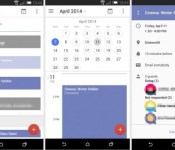
Here’s look at the future of Google Calendar for Android

See those images above? Those could become a familiar sight in the future if you religiously use Google’s Calendar app for Android. This crisper, cleaner Google Calendar was recently spotted by Geek.com (which also spilled the deets on a test version of Gmail) on a phone loaded with unreleased features. If you notice, the new interface gets rid of the app’s busy grids and lines, relying instead on blocks of color to distinguish one entry from the other.
What’s more intriguing, however, is a new feature called daily agenda, which automatically emails you the day’s full schedule. Since the updated calendar will also come with Google+ integration, or so the source claims, daily agenda emails will also include birthdays, giving you no excuse to forget anybody’s special day. Other than these changes, you’ll also reportedly see a parallax scrolling effect while flipping through months. Of course, the final product could be wildly different from what we’re seeing here. We might have to wait a few more months to find out, though — Geek.com believes Google will launch the redesigned calendar at the I/O conference in June.

Filed under: Cellphones, Tablets, Mobile, Google
Source: Geek

Under Lenovo, Motorola picks a new but familiar leader

Motorola may have had to shuffle executives following Lenovo’s acquisition plans, but the phone maker isn’t straying far from its previous course. It just named company veteran Rick Osterloh as its President and COO, effective immediately. He’ll provide the “business continuity” that Motorola needs right now, according to outgoing leader Jonathan Rosenberg.
Recent history suggests as much. While many focused on ex-CEO Dennis Woodside as the face of the Google-era Motorola, Osterloh led product development during that period — he can take at least some credit for attention-getting projects like the Moto X and Moto 360. He’s also responsible for getting the ball rolling on Android at the company, having created the team that launched early efforts like the CLIQ and Droid.
There isn’t much in his background outside of Motorola to hint at a break from existing strategy. Beyond his most recent stint, Osterloh is best known for leading product management at Skype at a time when its mobile clients were becoming important. He also performed a similar role at Good Technology, a pioneer in enterprise smartphone use that Motorola bought in 2006 and sold three years later after getting little out of the deal. A brief position at Amazon in 1999 isn’t likely to have much influence given how much Amazon has changed since its storefront-only days.
Really, Osterloh has already been doing what you’d expect him to do in his new position: releasing products that revolve around strong mobile software. We wouldn’t rule out a change in strategy in the long term, especially since Motorola has been bleeding cash. For now, though, Osterloh’s appointment shows that the company is satisfied with how its recent devices have panned out — and it’s betting that you feel the same way.
Filed under: Cellphones, Mobile, Google, Lenovo
Source: Official Motorola Blog

Comcast’s merger makes big cable bigger, but not better or cheaper

In a three hour hearing today (watch it here or embedded after the break, read the statements here), executives for Comcast and Time Warner Cable joined a few others taking questions about their proposed $45 billion merger. Unfortunately, after pushing a 180-page explanation of how great an idea the merger is to the FCC yesterday, Comcast’s David Cohen and Time Warner Cable’s Arthur Minson didn’t have much new to say. Senators including Al Franken, Amy Klobuchar and Mike Lee grilled the execs with questions about rising cable rates, channel bundles and network neutrality, mostly garnering the same answers we’ve heard before. Franken’s questioning stood out, pointing out comments Comcast made during its acquisition of NBCUniversal citing Time Warner Cable as a competitor that could help keep it in check, even though now it says they don’t compete for customers.
The prospect of the two companies joining to create one vertically integrated giant controlling both content and means of access to content for millions of people loomed over the proceedings. Comcast took the opportunity to announce higher speeds on two of its internet tiers in the northeast, and call out its growing network of WiFi hotspots for customers, while once again promising new features and better tech for TWC areas. Still, with so many networks and access for 30 million customers potentially under one brand, Comcast/TWC’s arguments about competition from Google Fiber, Netflix (which Comcast said it didn’t fear in 2011), telcos and satellite didn’t seem to hit the right notes.
Consumer advocate and CEO of Public Knowledge Gene Kimmelman, who opposes the merger, was also on the panel and calling out the potential threat of the market being concentrated at a single point of connection. While he said that they’re not necessarily doing it now, Kimmelman said the merged Comcast/TWC would have more power “to favor one product over another if it’s financially advantageous.” The cable companies were also taken to task for their poor customer service reputations, an area where Cohen admitted perhaps they needed a kick to do better. On on the other hand, despite insisting that there’s no evidence a merger would raise customer’s rates and reduce choice, he also said they didn’t expect to see lower customer prices.
Options some customers are looking for like a la carte programming or internet streaming to other devices were also left out of Comcast’s reasoning. Cohen pointed to programming rights issues for some of these issues, which makes sense after Time Warner Cable faced a Viacom lawsuit over its TWC TV service. Still, as Franken put it, faced with over 100 lobbyists arguing for the merger to happen, and signatures from over 100,000 customers against it, there’s wide concern it will lead to higher prices and worse service. There’s still likely months of push and pull ahead over the potential deal, and we’ll be interested to see if Comcast makes it happen with a series of concessions
Filed under: Home Entertainment, Internet, HD, Google

Google is testing new calendar and Gmail features

Calendars are a dime a dozen and lets face it, how much can you really do to a calendar app to make it stand out from the pack. Well recent leaks from Geek.com have shown us that Google is working on a slew of new features including a UI overhaul, daily agenda feature, and social integration from Google+. Hopefully we see something come of this.
Google is also looking into refreshing their Gmail app by adding more UI features, a pinning feature, and a snooze function. Nothing is set in stone, but with Google I/O around the corner, I am sure alot of Google’s apps are going to be seeing some refreshes as well.


Source: Geek
The post Google is testing new calendar and Gmail features appeared first on AndroidGuys.
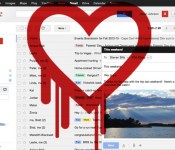
Google has patched most of its major services from the ‘Heartbleed’ security bug

Now that we know about the Heartbleed bug that allows access to sensitive internet data usually locked down by OpenSSL encryption, Google is of course one of the internet services hard at work applying fixes. The folks in Mountain View announced today that main services like Apps, App Engine, Gmail, Play, Search, Wallet and YouTube are already patched. There’s no need to worry about Chrome or Chrome OS, as those two bits of software aren’t affected by the vulnerability. Android is almost there, as all versions of the mobile operating system are immune to the security flaw save for 4.1.1. For that lone exception, Google says patching details are being sent to its partners for distribution. While the key bits have been secured, there’s on-going work to update other services like Cloud SQL, Google Compute Engine and others.
Filed under: Internet, Software, Google
Source: Google

