


Search in private on your Android with Disconnect Search [App of the Day]

Sometimes it’s nice to be off the grid for awhile. What if you need to look something up, but don’t want it to be recorded everywhere? Now there is an app out there for your incognito needs.
Disconnect Search lets you search on Google, Yahoo, Bing, blekko, or DuckDuckGo, completely untraceably. It stops search engines and ISPs from tracking your searches and IP address by anonymizing the search through Disconnect. It also stays away from recording personal info from your device, allowing for complete anonymity.

It’s a bit more secure than using something like Incognito Mode on Chrome, and it’s way easier to use. It comes with a nice widget, and is super simple to use.
If you’d like to be a bit more secure when you browse, head to the Play Store to download Disconnect Search today.
The post Search in private on your Android with Disconnect Search [App of the Day] appeared first on AndroidGuys.
Starwood’s app for Google Glass will let you search and book hotels

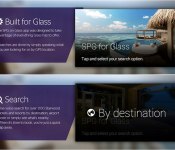
Imagine walking into a hotel lobby and telling the wearable on your face to pull up your reservation details. Starwood, the company behind properties from the Aloft to the W to the St. Regis, is hoping to up its hospitality game with an app tailor-made for Google Glass. Currently in beta, the upcoming SPG app for Glass will let guests search Starwood properties around the world, get turn-by-turn directions to a particular hotel and explore room photos, amenities, dining options and more. It looks like you’ll also be able to book a reservation directly from the Glass app and — importantly — call a hotel if you get lost.
This isn’t the first time Starwood’s demonstrated an interest in bringing tech to its properties. This year it announced plans to swap out room keys for a mobile app, so its interest in Mountain View’s wearable is no surprise. Google has long touted how useful Glass can be when it comes to travel with apps such as Field Trip, so bringing those geolocation and search capabilities to your hotel stay is a logical next step. And Google Glass may not be the only wearable device SPG has its sights on; in a statement it explained, “[Our] goal with Glass and other wearable technologies is to explore what kinds of new features and services are possible, and to learn from guests.”
Filed under: Wearables, Google
Source: SPG for Glass

Project Tango teardown reveals the wonders of the phone’s 3D sensing tech

Want to get a better understanding of Google’s 3D-sensing Project Tango smartphone beyond the usual promo videos? iFixit is more than happy to show you now that it has torn down the device for itself. The close-up identifies many of the depth mapping components in the experimental handset, including the infrared and fisheye cameras (both made by OmniVision), motion tracking (from InvenSense) and dual vision processors (from Movidius).
However, the real centerpiece is the infrared projector. As you can see from the pretty light show pictured here, Project Tango maps the environment in much the same way as the original Kinect: it’s creating a grid of dots that it measures to calculate distance. Other parts are relatively pedestrian, such as the Snapdragon 800 processor and 5-inch display, but it’s clear from the teardown that they play second fiddle here — this is an imaging device that just happens to double as a phone. You can see this for yourself at the source link.
Filed under: Cellphones, Mobile, Google
Source: iFixit

How Google’s internet-balloon idea got off the ground

On paper, the notion of balloon-provided internet sounds more than a little ridiculous, but that’s just how Google X rolls. Mountain View’s far-off research division has recently spilled (some of) its guts to Fast Company, detailing the process for bringing something like Project Loon from concept to reality. To start, every X project must address a problem that affects possibly billions of people and it has to use a radical solution that resembles sci-fi to do so. Oh, and it needs to utilize tech that’s “very nearly” obtainable, if it already isn’t available, too.
Loon began as an idea concerning device-to-device connections, but in June 2011 it was shifted to boosting internet access in rural areas. The team then riffed on Lockheed’s plans for a high-altitude, stationary comms airship idea to come up with balloons for the delivery method. From there, the group cobbled together radio transmitters, cardboard boxes and weather balloons, launched the prototype and drove under it to test the gizmo’s mettle. Google X execs commissioned the experiment as an official project that August, and then a small house was built in the lab to test antenna designs. Almost two years later, Project Loon went for an official test run over New Zealand in June 2013. Today, the search giant is weighing what types of business models could work best for the service, from a number of telco suitors. Fast Company‘s lengthy feature offers a pretty fascinating look inside Google’s secretive lab — including why X abandoned its space elevator and teleportater projects (yes, really) — so be sure to check it out.
Filed under: Wireless, Internet, Google
Source: Fast Company
Moto X+1 Back Covers Revealed! Download the Rumored New Google App Icons! – ManDroid Quickie

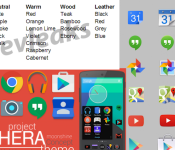
Time for some quick Android news that will be in and out of your face before you know it. Evleaks gave us a nice little list of custom back covers for the Moto X+1 that show us the Moto Maker will have a ton of choices for the new device. New Google app icons rumored to be hitting our devices soon, and you can already download them courtesy of the awesome developers in our community. Enjoy the vid!
News Topics
Moto X+1 back covers show up in new list
T-Mobile wants to stop overages
Rumored new Google app icons
Download the new Project Hera Google app icons
//<![CDATA[
ord = window.ord || Math.floor(Math.random()*1E16);
document.write('’);
//]]>

Apple, Samsung and more to adopt anti-theft smartphone kill switch

Apple and Samsung are duking it out in court yet again, but there’s at least one thing they (and a host of their smartphone making rivals) agree on: users shouldn’t be helpless when their phones are stolen. That’s why, starting in July 2015, all of the smartphones those companies sell in the United States will come with an anti-theft tool meant to help keep your data out of the wrong hands. The full list of backers includes the usual heavyweights: besides Apple and Samsung, there’s Google, HTC, Huawei, Microsoft, Motorola, Nokia, along with the country’s biggest wireless carriers. Those parties in total represent a tremendous chunk of the American wireless industry, so your next (or next next) smartphone will almost certainly let you stick it to the sticky-fingered.
And what, pray tell, would such tools do? According to the CTIA, users will be able to remotely wipe and restore their devices (say, from a cloud backup), and prevent them from being reactivated or used by unsavory types. That seemingly simple move wouldn’t just save us all anguish, it could save us a collective total of $2.5 billion a year in replacement costs and insurance fees. It sure sounds like a win for consumers, but some — like Senator Mark Leno, who sponsored a bill to create a kill-switch for connected gadgets in the Golden State — think such tools should be on by default rather than requiring users to opt-in. He’s probably on to something, but at least all these companies have a few months to iron out the details.
Filed under: Mobile
Source: CTIA
Daily Roundup: Amazon’s first phone, Project Ara developer conference and more!

You might say the day is never really done in consumer technology news. Your workday, however, hopefully draws to a close at some point. This is the Daily Roundup on Engadget, a quick peek back at the top headlines for the past 24 hours — all handpicked by the editors here at the site. Click on through the break, and enjoy.

Here’s Amazon’s phone: six cameras and a 4.7-inch screen
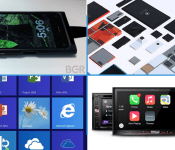
We’ve all heard the rumors, but BGR claims it’s gotten hold of Amazon’s first phone — and it has six cameras. The 4.7-inch handset (shown above) might not appear very sleek or attractive. But don’t worry, that’s just an enclosure.

Apple CarPlay coming to Pioneer’s in-dash systems this summer
Pioneer’s NEX line of five in-dash entertainment systems will get Apple’s CarPlay support through a firmware update set to arrive this summer. Owners with an iPhone 5, 5c or 5s will be able to take advantage of Apple Maps, Siri and more!

Office 365 Personal now available for $7 per month
Microsoft’s hoping to reel in new Office 365 subscribers by offering a cheaper, leaner iteration for only $7 a month or $70 annually. There isn’t an exact launch date yet, but remember, it’ll be just $3 cheaper (per month) than the full version.

Google’s Project Ara developer conference is live, watch it here
Day one of the Project Ara developer conference has begun. Needless to say, most people probably can’t catch a flight to Mountain View. Thankfully, though, anyone can keep up with Google’s modular phone because the entire event is being streamed live.
You also might like:
Filed under: Misc
[Download] Google Play Services v4.3.25 is pushed out to address stability Issues
 About a month ago, Google Play Services was updated to version 4.3.26 which promised to improve on all the cool new inclusions Google had added to version v4.3, like new APIs and some really cool Play Games functionality. Unfortunately, it seems that despite all the good it had planned to integrate, v4.3.26 has caused some people quite a lot of grief with reports of force closing and abnormal memory loads that cause devices to operate sub-optimally. Thankfully, Google looks like it has moved to rectify this by pushing out Google Play Services v4.3.25 today.
The ‘downgrade’ is likely to fix the stability issues that some users and developers have been seeing. Although it probably also removes some features, it’s likely not to affect the average Joe like you and me. You should be getting a notification to update today, but if you aren’t getting it quite yet and really need the new Play Services, we’ve got the APK available for download below:
Google Play Services v4.3.25 apk download
Were you suffering any issues with that last Google Play Services version? Let us know if you were and if this version has made things better.
//<![CDATA[
ord = window.ord || Math.floor(Math.random()*1E16);
document.write('’);
//]]>

Google built a machine to test the speediness of laptop trackpads

An unresponsive trackpad can ruin a laptop. But how do you test for that without having access to ready-made equipment? If you’re Google, you build your own machine. The company’s Chrome OS team has created the Quickstep, a USB add-on that uses a laser to gauge trackpad latency on Chromebooks. Whenever you break the laser’s beam with your finger, Quickstep measures the delay between that and the registered touch input. The device only looks for drag activity, but it’s simple — you can even build it yourself, if you’re handy with electronics. Whether or not you’re that interested, Google’s project should take some of the frustration out of future Chrome hardware.
Source: Francois Beaufort (Google+), Google Docs
Google’s Helpouts service now offers expertise on your iPhone

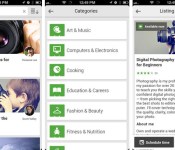
Need to brush up on your cooking skills, but only have your iPhone close at hand? Don’t panic: Google has quietly brought its Helpouts service to iOS. Much like the existing Android software, the iPhone-sized app (sorry, no iPad version) lets you schedule video chats with experts on topics ranging from baking to bike repair. Just be prepared to limit yourself to free advice — Google isn’t offering paid Helpouts in the iOS app. You’ll also need to go to the web if you want to create listings for your own instructional sessions. If neither of those limitations is a deal-breaker, though, you can start taking lessons today.
Filed under: Cellphones, Internet, Mobile, Google
Via: 9to5 Mac
Source: App Store

