


Download and install Android L’s “Heads up!” notifications on any Android 4.3+ device

It’s quite obvious Google I/O is Google’s biggest event of the year and one of the biggest tech events in general. This year Google had lots to say, they announced a bunch of stuff, but Andorid “L” preview was one of the biggest, definitely. Developers are apparently working 24/7 in order to bring some of that “L” preview to users which don’t own a Nexus 5 or 7, in other words those who can’t install Android “L” developers preview or don’t want to bother doing that.
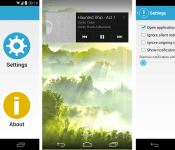
Android “L” keyboard landed in the Google Play Store yesterday and now we get “Heads up!” notifications the same way. This app is brought to you by a developer called “Woodblock without Co.” and was first announced on XDA, where you can still preview it and download it for free. If you don’t want that hastle, you can get it directly via Google Play Store, though it will cost you $1 to get it from there. This is a small price to pay, plus you’d be supporting the developer.
There are lots of options within the app, you can whitelist/blacklist apps and even set the app to show you heads up notification while you’re in fullscreen mode within a certain app. This application is really packed as we said, but don’t take our word for it, if you want some of that Android L goodness, follow the links and see for yourself!
Source & download 1: XDA
Download 2: Google Play Store
The post Download and install Android L’s “Heads up!” notifications on any Android 4.3+ device appeared first on AndroidGuys.

Feedback Loop: It’s Google all the way down!

This week’s edition of Feedback Loop is nearly all Google. We dish on Android “L,” debate whether smartwatches are even useful, wonder if Android TV will save smart televisions, fondly remember our friend Aereo and talk about the games we’ve picked up during Steam’s Summer Sale. Head past the break to talk about all this and more with Engadget readers like you.
Let’s talk about Android ‘L’
Google showed off a preview of its new mobile operating system, Android L. With a new, unified design language, deeper ties into web applications and new ways to manage things like battery life, it’s a pretty exciting time to be an Android user. Have you had a chance to install “L” yet? Head over to the Engadget Forums and share your impressions!
Legitimate uses for smartwatches
One of the big things Google pushed during this year’s Google I/O was its Android Wear initiative, which encompasses everything from fitness trackers to smartwatches. With so many major hardware manufacturers making wearables, this prompted us to ask: What are some legitimate uses for smartwatches?
Will Android TV make smart televisions actually usable?
Nearly every HDTV on the market today has some sort of “smart” feature built in. This includes things like YouTube, Netflix and ESPN apps. The problem? These embedded features are often slow, clunky and never updated. This is why some of us are pretty excited about Android TV. What does Google’s latest attempt at conquering our living room mean for the future of TV?
Aereo deemed illegal by the US Supreme Court
Speaking of television, earlier in the week the United States Supreme Court ruled that Aereo was in violation of the 1976 Copyright Act, forcing the service to shut down. It’s a disappointing decision for those of us who’ve wanted to see a viable competitor to traditional cable television cartels companies. Sadly, this looks like the end of Aereo as we know it. Do you think the Supreme Court made the right decision?
Get anything good during Steam’s Summer Sale?
Steam’s annual Summer Sale wraps up soon. There’s a ridiculous number of great games that can be yours for super cheap! It’s something we find ourselves getting excited about each year. Have you picked up anything good? Or maybe you’re looking to meet some new people to do battle with? Head over to the Engadget forums and share which games you’ve added to your library (but probably won’t play).
Other discussions you may also like:
- Share your thoughts on the Google I/O keynote!
- Are we too connected to the internet?
- Surface Pro 3 issues with some AC wireless routers.
- Halt and Catch Fire: Sweet dreams are made out of PC clones and threats of litigation, apparently
That’s all this week! Want to talk about your favorite gadget or have a burning question about technology? Register for an Engadget account today, visit the Engadget forums and start a new discussion!
LG and Google partnering up in order to bring us Project Tango

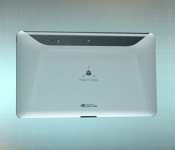
Google’s Project Tango is certainly an impressive concept, and that is set to be made a reality with LG announcing a partnership with Google to bring Project Tango hardware to life.
Project Tango is unique because the idea allows 3D mapping of your environment through a variety of sensors and cameras. Now imagine this on a tablet, and better yet seeing it on shelves as soon as next year.
Google and LG have worked on hardware in the past, and the partnership definitely yields some impressive results at low costs. A Project Tango tablet and an affordable price would definitely be revolutionary, especially when you can 3D scan yourself and see you running around in a FPS on a tablet.
The dream is almost a reality.
SOURCE: The Verge
The post LG and Google partnering up in order to bring us Project Tango appeared first on AndroidGuys.
Get the new Android “L” keyboard on your Android 4.0+ device (root NOT required)

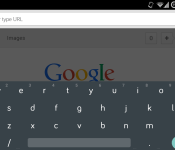
Earlier today Thomas already explained how you can get the new Material Design keyboard from Android “L” to your device. You could do that for any device but you couldn’t do it without root privileges, we’re going to try to change that if you’re amongst those who have a non-rooted Android 4.0+ device and want to try this keyboard out.
Let me first tell you that it won’t work on any device. I can tell you right from the start that it definitely won’t work on (a non-rooted) Nexus devices because in order to get it to work you have to get rid of Android Keyboard and you can’t do that on Nexus devices because you can’t uninstall it, it’s a default app over there. I personally wasn’t able to test it out because I’m all in on Nexus devices.
The app was tested on a non-rooted Moto G by and it worked just fine. You can thank for all this to XDA developers user “asdfzz” who modded the .apk and posted it to XDA forums. How can you try it out? Follow these steps:
- Go to Settings/Security on your phone and make sure “Unknown sources” is checked
- Follow this link and get the .apk file
- If you have Android Keyboard installed, uninstall it.
- Go to Android L keyboard settings
- Open “Advanced settings”
- Select color scheme “Material”
Let us know if it works, which device you’re using and if you like it (in case it works of course). Consider this an optional step number 7.
Source: XDA
The post Get the new Android “L” keyboard on your Android 4.0+ device (root NOT required) appeared first on AndroidGuys.
Engadget Daily: the evolution of Second Life, taxi-hailing apps and more!

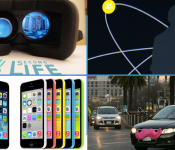
Today, we take an in-depth look at taxi-hailing apps like Uber and Lyft, explore the world of Android Wear, ponder the evolution of Second Life and investigate Aaron Swartz’s path from internet activist to martyr. Read on for Engadget’s news highlights from the last 24 hours.

What you need to know about Uber, Lyft and other app-based car services
Most of us are probably familiar with Lyft and its furry pink mustaches, but there’s much more to app-based car services than meets the eye. Read on as Steve Dent investigates the legal frustrations surrounding taxi-hailing apps and what they mean for you.

Second Life’s second act will be a social network for virtual reality
Linden Labs, the studio behind Second Life, is preparing a sequel, and it’s going to be a social network for virtual reality. Read on as Sean Buckley sits down with CEO Ebbe Altberg to discuss the game’s evolution and collaboration with Oculus VR.

Android Wear brings Google to life
Besides the smartwatch form-factor itself, what makes an Android Wear-powered device so important to Google’s ecosystem? According to David Singleton, director of engineering, Wear is key to unlocking Android’s full potential.

Walmart dropping iPhone 5c to $29, 5s to $99
Want to save $50 dollars on an iPhone 5c or 5s? Well, starting today, Walmart’s offering the 16GB version of each with a two-year contract for $29 and $99, respectively.
You also might like:
Filed under: Misc

Google strikes back at the big screen with Android TV

Google announced its plan to take on the billions of TV viewers in the world with a groundbreaking product that would blur the lines between internet and broadcast — four years ago. Executives from Dish Network, Best Buy, Sony, Logitech, Sony and Intel joined the stage with Google’s then-CEO Eric Schmidt to herald the coming of a new era — which never came. Several generations of Google TV devices failed to catch on and it was eventually squeezed out by set-top boxes, game consoles and other “smart TV” platforms.
The idea seemed to come right on time; according to market research firm Strategy Analytics as many as 76 million smart TVs shipped last year, and companies like Apple and Roku have sold millions of connected boxes. So why didn’t Google TV get a major piece of that action? And what makes Google’s latest initiative, Android TV, any different?
Out with the old

To start with, the concept has been reimagined, with Android TV coming in as a one size fits all platform through devices people actually want — not what Google thinks they want. The large QWERTY-keyboard remote combos are nowhere to be seen, gone in favor of traditional remotes and actual gamepads for gaming. Where Google TV sought to dominate your home TV ecosystem with passthroughs and overlays, its successor is ready to fit in. It could solve problems for those who want a cheap streaming box, a game console or even (maybe) a DVR, with apps that work everywhere and add features as easily and frequently as our phones do.

The original Google TV demo focused on showing how good it was at bringing the web to TV, highlighting a picture-in-picture letting you browse or tweet with TV in a small window. The plan was to make a platform that could play any web video easily without requiring custom apps, at least until Hulu and the rest blocked it. Now? Google’s own developer site includes this passage:
We discourage including web browsing in games for Android TV. The television set is not well-suited for browsing, either in terms of display or control scheme.
What Google TV product manager Rishi Chandra said on stage then about the existing pay-TV experience and its terrible guides is still mostly true, and years of cord cutting / cord never behavior has even more viewers looking for an alternative. The internet TV market is still fragmented between services (Netflix, Amazon, Hulu) and hardware manufacturers are all desperately pushing their own platform, with varying levels of success. While the reality of Apple TV has seen slight upgrades, the rumors are as loud and unfounded as ever, so there’s plenty of time for Google to turn back the clock and just try again.
In with the new
What is truly different about this push starts with Google and Android. Google TV was a team separated from Android, with its own developer tools, software that wasn’t the same version and even an odd set of mismatched features (like shipping with the Chrome browser before Android even had it). Android L is one platform that pulls both sides forward together all at once. That’s good for developers and ultimately good for anyone using Android TV, with apps and a UI that can (theoretically) stretch across platforms, and work together as easily as Chromecasting. Its ability to work as a Cast receiver makes using one easier than the old version. The same goes for a revamped remote app, which isn’t any prettier than the one it’s replacing, but is much simpler.
Voice search and personalized recommendations that came later to the Google TV platform, combined with Google Now, can change TV viewing in a way that wasn’t possible in 2010. Google’s Dave Burke was able to ask a natural question “Who played Katniss in The Hunger Games” to his phone, and get an immediate response on the TV that I can see actually cutting down the amount of time spent figuring out what to watch, and just jumping into watch. As far as availability, Android TV will have better hardware support from just Sony (probably more than willing to offload R&D costs from its freshly independent TV division) next year than Google TV ever did, not to mention others like Razer, Asus and Sharp. I’ll need some hands-on time — and actual retail devices — to tell for sure, but on paper the hardware requirements (2GB of RAM, 8GB of flash storage, WiFi and/or Ethernet, Bluetooth) seem ready to avoid the combination of overpriced and underpowered that doomed the first attempt.

Google TV seemed so concerned about trying to partner with traditional TV providers — which never took off in the US — that it wasn’t ready for cord cutters or people without a standard cable box. This time around that’s changed. The suite of potential video apps for viewers to go streaming-only has grown drastically, however the list announced onstage was disappointingly short with YouTube, Netflix and Showtime Anytime at the top, but no HBO Go, Vudu, Amazon or Hulu.
It has support for PlayReady DRM, which could eventually make it a viable Windows Media Center or HTPC alternative for the enthusiasts that want that. It can tune directly into live TV broadcasts with the support of third-party hardware. SiliconDust makes TV tuners for viewers to watch TV over antenna or cable on a computer (or PS3), and that’s what provided the live feed you saw at the keynote. It has a plugin for Android TV that will let it work with the company’s current hardware, and unspecified future products. Lessons learned from Google TV and improved Android “L” support means companies like Plex are already in position with impressive media apps, and hopefully that list will grow before Android TV debuts this fall.
The competition
The four year time gap has introduced some downsides, as former friends and enemies alike have found new partners or built formidable setups of their own. Logitech is apparently no longer interested in building a TV box, LG released multiple Google TV devices but has turned its attention (fully) to webOS and HTML5 apps, and Vizio ditched Android for its recent products as well. Samsung never came through with the Google TV hardware it reluctantly demonstrated, now it seems poised for a Tizen-based approach and has even acquired the team and tech behind Boxee.
Comcast’s march to world domination is coming with a juiced up cable box platform called X1 that has internet access, cloud-powered apps and voice search (also, maybe games), while TiVo has a much improved follow-up to the Premiere DVR and cloud-based plans of its own. Microsoft left Media Center behind, but its Xbox One is a living room trojan horse in the way Google always wanted to be, and Amazon has seemingly beaten Google to the punch with its own TV box based on Android.

The bottom line
Despite all of those attempts, and even Google’s patchy track record (Chromecast good, Nexus Q so, so bad), no one company or platform is ready to dominate the internet-connected TV future yet. The new Android TV effort seems ready to just make popular internet features better on the big screen, instead of dominating all living room media as the price of entry. That’s probably not enough to justify any more lofty predictions from Eric Schmidt (he said Google TV would be in most TVs by mid-2012), but I expect it will be enough to keep Google in the game this time.
Filed under: Home Entertainment, HD, Google
Source: Android (G+), Android TV

Google chief believes he can save ‘100,000 lives’ a year with access to medical records

If you think that Google has got enough of your personal data, think again. In an interview with the New York Times, Larry Page has said that he wants access to your medical records, but don’t worry, it’s all for your own good. In describing how Google’s services frequently outrage privacy advocates before their potential (and usefulness) is known, the company chief said that regulations surrounding patient data is harming people. In fact, Page makes the bold claim that if Google was given the right to mine healthcare data, it’d “probably save 100,000 lives next year.” It’s a bold claim, but isn’t it the same line that the NSA has taken over the last few months?
Filed under: Internet
Via: The Guardian
Source: NYT
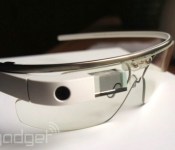
Google Glass gets no special treatment under UK data collection laws

Google Glass is now available for general consumption in the UK, which means us Brits can start debating all the privacy and legal issues associated with people carting around cameras on their face. In reaction to the wearable’s launch, The Information Commissioner’s Office — the independent regulator of data protection, privacy and freedom of information rights — has decided to clarify exactly how Glass fits into current legislation. And, quite understandably, the spectacles don’t have their own set of special rules. Anything you record through Glass for personal, non-commercial use complies with the Data Protection Act, just like using a regular camcorder or taking a picture with your smartphone in a public place. Similarly, companies and other organisations need to comply with all the same rules governing the collection and processing of images and video they do currently.
It makes sense that Glass be treated like any other camera in the eyes of the law, but it’ll be an ongoing discussion as to whether the device and ones like it do need special treatment. Some businesses might considering making their own rules, too, as is becoming more common in the US. The UK has also yet to come to a conclusion on the Glassing while driving issue, although previous experience tells us more of a grey area than you might think.
Android L developer preview live now!

Android L was announced yesterday at Google I/O without a code name and without a version number. What was announced was a developer preview to be released the following day, which is today! The downloads are now available here. The downside is, you must have a developer device meaning you must have a Nexus 5 (hammerhead) or the Nexus 7 WiFi (razor). There is not a developer preview for the Nexus 4 or any other Nexus device.
This is a developer preview, so bugs are expected. Remember, ART is now full time and the only runtime on Android L. Dalvik is no longer an option, and some apps still do not work on ART. If you are okay with a few bugs and are determined to have bleeding edge technology, head on over to http://developer.android.com/preview/setup-sdk.html and download the system image now! Instructions to install the preview are available here.
An in-depth look at Android L will be coming in a few days after I have had some time to test it out on my Nexus 7 for those of you who do not have either Nexus device.
The post Android L developer preview live now! appeared first on AndroidGuys.

Black HTC One M8, yellow Nexus 5 on the horizon

OK, call me boring but I like my smartphones to look understated and elegant. So when it comes to choosing what colour I want my hardware to be I will always go for the black option, but lately we are seeing many manufactures turning towards bold or fancy colour schemes for their devices.
@eveleaks has uncovered some pic’s of a what could be a black HTC One M8 lurking out there, although no details of a black M8 have been leaked as yet. The photo shows the back of the One M8 with what looks like a metallic black finish which really works well with the silver HTC logo.

Following on from the release of a very Red Nexus 5 handset, Google may have let slip that their flagship Nexus phone could be making an appearance in yellow soon. Google already have a yellow bumper case so this could be the same colour yellow that we see the Nexus 5 sporting, as we saw with the red Nexus.

Could a yellow Nexus 5 be related to the possible name of “Lemon Pie” for the next version of Android, or am I just thinking too much into this !
Anyway, what’s your thoughts on the colours of these two phones ? let know us know in the comments below.
Source: @eveleaks Android Police
The post Black HTC One M8, yellow Nexus 5 on the horizon appeared first on AndroidGuys.

