



Engadget Daily: ditching social media, sharpshooting with HUD goggles and more!

Today, we review Garmin’s new Forerunner 15 sports watch, learn how to escape social media, watch a sniper hit his target while looking in another direction and hear what our readers have to say about the new HTC One. Read on for Engadget’s news highlights from the last 24 hours.

How to Disappear (almost) Completely: a practical guide
Ever thought of dumping social media for a more private life? In this week’s installment of How to Disappear, Dan Cooper discusses some practical first steps toward going completely off the grid. Disclaimer: it’s incredibly difficult. You can find part one here.

Watch a sniper nail his target from 500 yards without even ‘looking’ at it
What’s scarier than a regular ole’ sniper? One who doesn’t have to see the target. Armed with a futuristic targeting system and Smith Optics I/O Recon Goggles, this sharpshooter nails a target 500 yards away… while looking in another direction.

Google will have sole control over the interfaces of Android Auto, Wear and TV
Google’s engineering director David Burke told Ars Technica that the company will retain official control of its new platforms: Android Auto, Wear and TV. Besides providing a consistent experience, this move allows for a much more streamlined update process.

Garmin Forerunner 15 review: sports watch first, fitness tracker second
If you’re already an athlete or active jogger, Garmin’s new Forerunner 15 might be the fitness accessory you’ve been looking for. At $170 ($200 with the heart rate monitor), this somewhat bulky device combines the functionality of a sports watch with fitness tracking basics.
You also might like:
Filed under: Misc

Google kills Orkut to focus on YouTube, Blogger and Google+

Google’s long suggested that Orkut, its other social network, was living on borrowed time, but today it’s finally confirmed that the end is coming. The search giant said today that it’ll shut down the service on September 30th in order to shift its focus to bigger projects like YouTube, Blogger and Google+. Although users in the US never really took to it, Orkut remained popular in Brazil and India for the better part of a decade (it’s been maintained by Google Brazil since 2008). However, with Facebook and Google+ continuing to enjoy global growth, Google’s decided the time is right to pull the plug on the service that was originally built as a “20 percent” project. While the company is now blocking new signups, current users can continue to contribute to the site until October. Once the deadline passes, they’ll be able to export their profile data, community posts and photos using Google’s Takeout tool for up to a year after it closes its doors.
[Image credit: coletivomambembe, Flickr]
Source: Orkut Blog
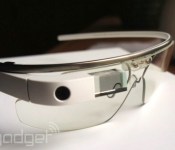
UK cinemas to ban Google Glass over piracy fears

The UK’s data regulator may have clarified that Google Glass shouldn’t be singled out for special measures over personal use, but that isn’t stopping domestic companies from enforcing their own rules. The Independent reports that just a week after the Google wearable finally went on sale in Britain for a hefty £1,000, UK cinemas are banning it over fears that “Explorers” could use them to pirate movies. “Customers will be requested not to wear these into cinema auditoriums, whether the film is playing or not,” says Phil Clapp, chief executive of the Cinema Exhibitors’ Association (CEA), which offers guidance to 90 percent of the UK’s cinema providers. Movie chain Vue is enforcing a ban, asking users to remove their eyewear “as soon as the lights dim,” while Odeon requests that “guests and employees do not wear Google Glasses […] capable of recording images and video within the cinema auditorium.”
The decision shouldn’t come as too much of a surprise: across the Atlantic, wearers have been thrown out of viewings, and a theatre chain won’t allow moviegoers to wear Glass during screenings. Meanwhile, Google believes cinema companies should “treat the device as they treat similar devices like mobile phones” by asking wearers to turn it off before the film starts (similar to what Vue is doing). Unlike smartphones, Glass is limited in its ability to capture a whole film, mainly because it can only sustain 45 minutes of continuous recording, features a tiny imaging sensor and has minimal storage. Because it’s worn above the eyes and the screen lights up when it’s in use, the search giant admits Glass is “a fairly lousy device for recording things secretly.”
Filed under: Wearables, Google
Source: The Independent
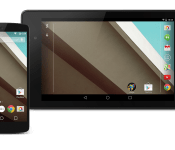
Download all the Android L Apps [APK]

We’ve already seen a lot of Android L goodness, from wallpapers to keyboards, but now thanks to the guys over at XDA, you can download all the apps that come with Android L all at once.
The list is pretty extensive and contains all the Android L app .APK’s, some of which will be more useful to you than others.
Nonetheless, hit the link here to download them all in bulk, or here to download each app individually.
The post Download all the Android L Apps [APK] appeared first on AndroidGuys.

Google drops Quickoffice now that its own apps can handle your work

Google bought Quickoffice to boost the productivity of its Apps suite, and it clearly accomplished that mission when it released a slew of mobile editing tools that merge Quickoffice’s file tech with Google Drive. Accordingly, the search firm is pulling the plug on the earlier software; it’s going to remove Quickoffice from both Apple’s App Store and Google Play “in the coming weeks.” You can still download it after that if you’re an existing fan, but newcomers will have no choice but to use either Google’s apps or their rough equivalents.
The move isn’t surprising, since there’s no need for Google to keep a redundant app hanging around. However, it marks the end to a long, long chapter in cellphone history. Quickoffice was a mainstay of mobile workers before smartphones took off, and it has run on most major (and not-so-major) platforms over the span of roughly 12 years — it’s sad to see the name go, even if the technology will live on.
Filed under: Cellphones, Mobile, Google
Source: Google Apps

HTC Volantis Nexus 9 “Flounder” leaks yet again

Having seen no reference of a new Nexus tablet mentioned at Google I/O, hope was deflated that the various leaks we’d seen about the Nexus 9, or even the Nexus 6 and Nexus 8, were false claims.
However, it seems the codename of what is believed to be the Nexus 9 is still cropping up. Courtesy of @evleaks, a document has been leaked showing off the codename “Flounder”. Unfortunately, much of the screenshot is blurred out, presumably hiding information which is too revealing about the Nexus 9.
Previous leaks have indicated that the Nexus 9 will feature a 8.9-inch display running a 2048 x 1440 (281ppi) resolution, powered by a Tegra K1 64-bit processor with 2GB of RAM.
Although the leaked screenshot doesn’t give much away, it could be summarised that so much information being blocked out means some pretty juicy details under there, indicating that the Nexus 9 and Flounder does exist; the question is more a matter of when than if.
The post HTC Volantis Nexus 9 “Flounder” leaks yet again appeared first on AndroidGuys.
Google Voice plans to make transcriptions better with your help

What’s the silliest Google Voice transcription you’ve gotten? That question might have come up during a meet-up with tech-loving friends before — after all, you’re not the only user who’s ever received garbled voicemail-to-text messages. In fact, even Google Tech Lead Manager Alex Wiesen admits they can be “unintentionally hilarious,” to the point that the company’s now asking for your help to make transcriptions better. Now, when you log into Google Voice on the web, you’ll be given the choice to share your voicemail messages (anonymously, thank goodness) to be analyzed for accuracy by automated systems. While you can already submit individual messages for analysis, you’ll automatically be sending the system all your messages, all the time, if you decide to participate in this project. Don’t worry, though: you can always disable it through Google Voice’s settings page in case you change your mind later on.
Source: Alex Wiesen (Google+)
Weekends with Engadget: Google I/O 2014, Aereo loses and more!

This week, we went hands-on with Google’s Android L developer preview and Android wear, watched the US Supreme Court rule against Aereo, learned how to escape the clutches of the internet and more! Read on for Engadget’s news highlights from the last seven days. Oh, and be sure to subscribe to our Flipboard magazine!

We just played with Android’s L Developer Preview
Android L is just a developer preview for now, but it’s a forthright indicator of the OS’ uber-connected future. With over 5,000 APIs, a new set of guidelines called Material Design and 64-bit support, Google’s provided a great education of its next mobile OS update.

US Supreme Court rules Aereo’s streaming service is illegal under copyright law
Aereo’s been fighting an uphill battle for a while, but it looks like the final judgement has passed. This week, the US Supreme Court ruled that this live TV-streaming internet service was indeed illegal under copyright law.

What you need to know about Uber, Lyft and other app-based car services
Most of us are probably familiar with Lyft and its furry pink mustaches, but there’s much more to app-based car services than meets the eye. Read on as Steve Dent investigates the legal frustrations surrounding taxi-hailing apps and what they mean for you.

Second Life’s second act will be a social network for virtual reality
Linden Labs, the studio behind Second Life, is preparing a sequel, and it’s going to be a social network for virtual reality. Read on as Sean Buckley sits down with CEO Ebbe Altberg to discuss the game’s evolution and collaboration with Oculus VR.

How to Disappear (almost) Completely: the illusion of privacy
You could toss your laptop, tablet and your phone, but is that enough to escape the clutches of the internet? Read on as Dan Cooper investigates the illusion of privacy in part one of How To Disappear.

What you need to know about 3D printing
3D printers: they’re invading our workplaces, schools and homes, but what exactly are these DIY factories capable of? Read on as Jennifer Williams-Alvarez explores the world of 3D printing and what it means to you.

The three faces of Android Wear, compared
Android Wear is making waves this summer in the form of three new smartwatches: the LG G Watch, Samsung Gear Live and Motorola Moto 360. Read on for our breakdown of each wrist-worn device and its implementation of Google’s wearable platform.

Samsung Galaxy Tab S review: slim design, long battery life, stunning screen
Say hello to Samsung’s latest slate, the Galaxy Tab S. Besides having a beautiful, crisp display and great battery life, this incredibly thin tablet matches the iPad Air nearly spec for spec. Available in 8- and 10-inch versions, the Tab S is up for pre-order at $400 and $500 respectively.

Android Wear brings Google to life
Besides the smartwatch form-factor itself, what makes an Android Wear-powered device so important to Google’s ecosystem? According to David Singleton, director of engineering, Wear is key to unlocking Android’s full potential.

Google gives us a simulated ride with Android Auto
This week at Google I/O, the Open Automotive Alliance announce Android Auto: a completely voice-enabled, contextually based system that projects your phone’s OS and apps onto your vehicle’s screen. What’s more, its APIs are shared by Google’s Android Wear platform.
Filed under: Misc
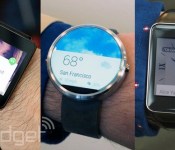
Google will have sole control over the interfaces of Android Auto, Wear and TV

You’d better get used to the interfaces you saw for Android Auto, Wear and TV at the Google I/O conference this past week — you’re going to be seeing them a lot. Google tells Ars Technica that it will maintain sole (official) control over the interface for all three new platforms, rather than give that power to manufacturers. While companies will be allowed branding and extra services, they won’t get to modify the core experience. You won’t see a Gear Live sequel with the Gear 2′s front end, for example, or find your way around town with a Honda-exclusive take on Android Auto.
Engineering director David Burke says this requirement is meant to provide a “very consistent” experience; you won’t have to grapple with different controls just because you’re watching TV in your bedroom instead of the living room. The shift in policy also lets Google manage the update process, which should be as “automatic and seamless” as the company’s Chrome browser. Theoretically, you won’t see the haphazard upgrade process common to non-Nexus Android devices, where updates sometimes arrive months after their official launches, if they arrive at all.
The move is likely to please fans of Google’s approach to interface design, or those who simply want to try new features as soon as possible. However, it’s a sharp break from Google’s mostly laissez-faire attitude to Android on phones and tablets — car, TV and wearable makers will primarily have to distinguish themselves through hardware if they want to use the bulk of Google’s services. If they insist on their own control layouts, they’ll have to take an Amazon-like approach and build (or find) replacement technology. The strategy likely won’t preclude you from loading custom software after the sale, but the Android you see in stores won’t be quite as diverse as it once was.
Filed under: Home Entertainment, Transportation, Wearables, HD, Mobile, Google
Source: Ars Technica
Google and MediaTek to work together on Android One project

During the Google I/O 2014, Google introduced the Android One series. The devices under it will be released in developing nations, and this is actually Google’s move to take a huge chunk out of the low-end smartphone market. There was a time when Nokia conquered it, now as Google Android powered smartphones are on top when we talk about high-end smartphones, they are also joining hands with different companies to manufacture low-cost phones under the Android One banner.
According to DigiTimes, MediaTek is now Google’s strategic solution partner for the development of the Android One initiative, which will enable smartphone makers to build low-cost smartphones that will target at least 1 billion customers.
At the I/O, Google showcased the first ever Android One smartphone, it was made by an Indian company Micromax and it was running on MediaTek MT6575 SoC as well.
Android One should be under the price tag of $150-100 if Google wants it to be a success in the developing smartphone markets. Do you think Android one will be a success for Google?
Source: DiGiTImes
The post Google and MediaTek to work together on Android One project appeared first on AndroidGuys.
 AIVAnet