


Google teases Android L in latest YouTube video

Google has just published a short, “Sweeeeet” video on its official YouTube channel teasing the release of the next big update of its mobile operating system. Although the specific dessert name is still tightly under wraps, the search engine giant did confirm that “L” will be “Android 5.0″ and gave us the names of a few contestants who auditioned for the role — Lemon Meringue Pie, Lava Cake, Lady Finger, Lemon Drop and Oreo. But, of course, they’re wasn’t a Lollipop in sight.
Hit the break below for the full teaser.
Click here to view the embedded video.
What do you think the next build of Android will be called? Be sure to let us know your thoughts in the comments section down below.
Come comment on this article: Google teases Android L in latest YouTube video
New Android ad campaign hints at upcoming Nexus devices

The inexorable announcement of the next round of Nexus devices and Android L is drawing ever nearer, as Google has released a slew of new ads promoting Android.
This video above shows an animated version of the rumored Nexus 6. It seems to look like a Moto X (2014) and is obviously quite large. Google is seemingly saying that it doesn’t matter if it’s large, hence “be together. not the same.”
It’s hard to notice, but it’s possible that this video shows the Nexus 9, held by one of the people on the left.
This video doesn’t show any devices explicitly, but it’s the third ad in this series.
The trend in the past few years has been for Google to announce the next Nexus and version of Android in October, so we can say pretty firmly that an announcement is imminent. Whether it’s October 15 (tomorrow) or later in the month can’t be for sure, though rumors seem to be pointing to the former.
We also have a gallery of the Nexus 6 here, and earlier this morning we reported on another render from the supposedly retired (though I’m not complaining) @evleaks here.
Are you excited for this eminent announcement? I definitely am!
via AndroidAuthority
 |
The post New Android ad campaign hints at upcoming Nexus devices appeared first on AndroidGuys.

Smartphones in one year: Project Ara (Opinion)

Smartphones have come a long way since their inception; though the idea of a portable device with internet connectivity and calling features has been around since the 1980s, it was not well received until 2006, with Blackberry’s new devices such as the Curve and Pearl. It revolutionised the way mainstream society viewed portable electronic devices and our uses for mobile phones. However, Blackberry did not enjoy this success for long, with the launch of the revolutionary iPhone, from Apple. It incorporated a touchscreen, and only 4 buttons. People were amazed by the fluidity of a device which essentially had nothing but screen on the front face. Apple’s market share grew rapidly, for example, increasing 626% globally in the smartphone sector, between the last quarter of 2008 and the first quarter of 2009.
The smartphone industry proved itself unpredictable once more in 2010, with Android’s new ‘Gingerbread’ overtaking iOS in the US, having already overtaken iOS in markets such as South Korea in 2009. With this saw the rise of OEMs such as Samsung, LG and HTC. Apple released the iPhone 4, a beautifully designed phone with ‘Retina display’ which yielded a positive response from the consumer market. Blackberry’s RIM was still going strong, however, failing to generate sales. 2010 also saw Microsoft’s attempt to tap into the smartphone market with Windows Phone, which did not meet good reception.

The home interface of Android gingerbread – image source: http://developer.android.com/about/versions/android-2.3-highlights.html
In 2011, with the release of Android 4.0.4, or ‘Ice Cream Sandwich’, Android phones finally started to be perceived as high-end, mainly due to the refreshed, sleeker interface Ice Cream Sandwich brought, and the smoother user experience, thanks to ‘Project Butter’, in Jelly Bean, 4.1. Android’s market share grew further to 36% in the US, placing them in a comfortable first position in terms of market share. Samsung also released the hugely popular Galaxy S2, and Apple released the iPhone 4S, which brought in Siri, a voice controlled assistant. By this point, Blackberry’s market share in the US decreased to less than that of Android and iOS.

The home interface of Android Ice Cream Sandwich – image source: http://developer.android.com/about/versions/android-4.0-highlights.html
Fast forward to 2014, where 80% of the world’s smartphones run on Android, and where Samsung is the biggest producer of smartphones internationally. Android Kit Kat brought performance and aesthetic improvements to Android, and Apple’s iOS got its long-awaited makeover in iOS 7 – which produced mixed opinions. HTC and LG gained a significant amount of market share, with the One M8 and G3 respectively, in markets such as the US, Europe, South Korea and Australia. However, it came as a shock that less popular manufacturers such as Huawei, Lenovo and Xiaomi had superceded manufacturers such as LG, Sony and HTC in the global market. This reiterated the influence that the Chinese market had on global business, and its sheer size.
The sudden entry of China into the smartphone market was expected, but not to the scale which it has. Not only have the consumers in China played a huge role in the global market share of OEMs, but their manufacturers such as Huawei, Xiaomi, Lenovo, Oppo, and more recently, OnePlus, have given the traditional smartphone manufacturers such as Samsung a real dilemma. Samsung is rapidly losing profits; quarterly projections going down by numbers such as 40% and 60%, and LG and HTC are struggling to keep their heads above the water. Chinese manufacturers are beginning to build great devices such as the OnePlus One, or the Xiaomi Mi3, with high-end specs, but sell for half the price of their counterparts of traditional OEMs.

The ‘flagship killer’ OnePlus One, from OnePlus – image source: http://oneplus.net/
I believe that next year will be pivotal in the smartphone industry; due mainly to the speculated release of the modular phone; Project Ara.
Project Ara will be the ‘next big thing’. It can be tailored to the needs of the individual, therefore, has the capacity to be a high-end or mid-range device. The concept of not having to buy a new handset every time a new chipset comes out, or when the screen is cracked, is intriguing. If marketed and manufactured well by Google, it will cause the idea of the ‘complete handset’ totally redundant. Consumers will only buy a new processing package, insert it into their modular phone, at only a fraction of the cost of buying a totally new handset.
This will pose a serious concern for current manufacturers. Instead of building complete handsets, companies will look for ways to monopolise the industry for a certain part of the modular phone. For example, Samsung and LG may both aim to control the displays of Project Ara, while Qualcomm with the chipsets. Unless the business can achieve a monopoly or duopoly of such industries, they will experience severe losses, provided that Project Ara is successful.
What must also be considered is the third-party, non-authorised manufacturers. These will be extremely popular in markets such as China, which, as proven before, is a market crucial to the survival of a consumer-oriented business. These ‘pirate’ manufacturers will provide parts of lesser quality, however, cheaper price, and can cause a formidable dent in the income of respective manufacturers.
The potential repercussions of the launch of the Project Ara platform to the smartphone industry are concerning. If it is as popular as it is believed it will be, it will result in the complete monopolisation of the smartphone market with Android, and with only one handset. It will minimise variation, innovation, originality and creativity; the smartphone industry will be extremely static. Therefore, I can hope another company will reciprocate Project Ara in an equally fantastic product, in order not to let Google singularly rule the industry, and maintain the dynamic, multifaceted environment of the smartphone industry, which is ultimately what renders the sector as stimulating as it is.
|
The post Smartphones in one year: Project Ara (Opinion) appeared first on AndroidGuys.

Google developer posts Android L screenshot, hints at “Lollipop”

There is much speculation as to what Google will be calling Android L. Some of the possible names are Licorice, Lemon Meringue Pie, Lava Cake, and Lemon Drop. Today, the selected name has seemingly been revealed. A developer on the Chromium issue tracker posted a screenshot from a device running Android L (seen above). In the status bar, you will see a tasty treat. What is it? A lollipop.
While we do not know the exact version number Google is going with, it is a safe bet that Android Lollipop is coming soon.
Come comment on this article: Google developer posts Android L screenshot, hints at “Lollipop”

What you need to know about Google’s battle with Oracle over Android

Two of the world’s most powerful companies are engaged in a legal battle that has its roots in the world’s most popular mobile operating system: Android. Google is playing defendant, while Oracle is laying claim to a crucial set of code in the foundation of Android. Doesn’t ring any bells? That’s likely due to the fact that this dispute goes back four years. Just this week, Google filed a petition with the United States Supreme Court to decide once and for all which company is in the right.
So, what are these two internet giants fighting about? The short answer is Java, which Oracle owns. The real answer, of course, is far more complex
Oracle is a seriously big company. Google is similarly huge. They’ve both got tremendous cash reserves (tens of billions of dollars), enormous profits each year and — most importantly — the will to see this dispute through. That’s evident from the past four years of shots from both sides.
Here’s a breakdown of the past four years, in short:
- Oracle files suit with Google (August 2010)
- Google hires Java founder James Gosling (March 2011)
- Jury finds that Google didn’t infringe patents, did infringe patents (May 2012)
- Judge William Aslup overturns copyright claim, says APIs aren’t copyrightable (May 2012)
- Oracle appeals to US Court of Appeals for the Federal Circuit (October 2012)
- Which finds APIs copyrightable (May 2014)
- Google appeals to SCOTUS to hear the case (October 2014)
That brings us to this week.
WHAT IS IT?

Okay, so we know that Oracle is suing Google, and we know that it has to do with Java and Android. The long and short is this: Making applications for Android and Java is very similar, and that similarity was on purpose. Google wanted it to be easy for developers who already used Java to make applications for Android. Google knew this, but didn’t want to license Java — owned by Oracle — for its big mobile OS.
Put more simply: Google didn’t want to pay Oracle for software, so it made its own, similar version of that software. Where things get messy is whether Google’s code, and the way that code is arranged, violates Oracle’s copyright. Is the code even copyrightable?
WHAT’S THE ARGUMENT?
US District Court Judge William Aslup didn’t think so when he mooted a jury ruling in May 2012. “To accept Oracle’s claim would be to allow anyone to copyright one version of code to carry out a system of commands and thereby bar all others from writing their own different versions to carry out all or part of the same commands. No holding has ever endorsed such a sweeping proposition,” he declared in a May 31st, 2012, ruling.
Aslup actually learned how to code in Java for the trial — there’s an amazing back-and-forth transcript at Groklaw that illustrates how deep he got (search for “We heard the testimony of Mr. Bloch…”).
The United States Court of Appeals for the Federal Circuit later overturned Aslup’s ruling, which resulted in Google appealing to the highest court in the US. “Because we conclude that the declaring code and the structure, sequence and organization of the API packages are entitled to copyright protection, we reverse the district court’s copyrightability determination with instructions to reinstate the jury’s infringement finding as to the 37 Java packages,” Circuit Judges Kathleen O’Malley, S. Jay Plager and Richard Taranto wrote in May 2014.
The important sticking point there is whether or not “the declaring code and the structure, sequence and organization of API packages” is entitled to copyright. Thus far, we’ve got two different courts with two differing opinions on the matter.
WHAT DOES EACH SIDE HAVE TO LOSE?

Each side has a lot to lose should their argument prove unsuccessful; it’s not about money as much as it is about precedent. Should Oracle win, it’s setting a much bigger precedent in the technology business: Certain types of code, and specifically API packages, may be copyrightable. If so, that could mean a lot more copyright infringement lawsuits.
For Google, it could mean a big payout to Oracle. Not so much that Google would really feel it, but that’s up in the air; Oracle originally demanded several billion, but that was significantly reduced over time. It was originally rumored that Oracle wanted royalties for every Android device out there, and that may still be the case. Time will tell.
WHY SHOULD I CARE?

Google’s argument is essential to why this matters to you. In its Supreme Court filing, Google said, “Early computer companies could have blocked vast amounts of technological development by claiming 95-year copyright monopolies over the basic building blocks of computer design and programming.” Because Google was built on computer technology fundamentals from decades earlier (before 1978), copyright extends for 95 years. Such copyright claims would’ve impeded the progress of modern computing technology — that’s Google’s argument, anyway.
Oracle’s argument is such that functional code is on par with that of creative works. Oracle actually cites Harry Potter specifically. Here’s Oracle’s opening argument to the US Court of Appeals:
“Ann Droid wants to publish a bestseller. So she sits down with an advance copy of Harry Potter and the Order of the Phoenix — the fifth book — and proceeds to transcribe. She verbatim copies all the chapter titles — from Chapter 1 (“Dudley Demented”) to Chapter 38 (“The Second War Begins”). She copies verbatim the topic sentences of each paragraph, starting from the first (highly descriptive) one and continuing, in order, to the last, simple one (“Harry nodded.”). She then paraphrases the rest of each paragraph. She rushes the competing version to press before the original under the title: Ann Droid’s Harry Potter 5.0. The knockoff flies off the shelves. J.K. Rowling sues for copyright infringement. Ann’s defenses: “But I wrote most of the words from scratch. Besides, this was fair use, because I copied only the portions necessary to tap into the Harry Potter fan base.” Obviously, the defenses would fail.
Defendant Google Inc. has copied a blockbuster literary work just as surely, and as improperly, as Ann Droid — and has offered the same defenses.”
WHAT’S NEXT?

That is, unfortunately, anyone’s guess. The US Supreme Court might take Google’s case (“Google Inc. vs. Oracle America Inc., 14-410″), and it might not. We’re not in the business of offering conjecture as to whether or not the Supreme Court accepts cases, but we sure are hoping it’ll take this one. If for nothing else, to hear the assuredly hilarious back-and-forth oral arguments over specific programming functions. There’s nothing quite like hearing Supreme Court justices grapple with technological jargon. It’s a delight!
WANT EVEN MORE?
Here’s hoping you do, because there’s a tremendous amount of writing about Oracle v. Google out there. Even just on Engadget, check out this tag. Groklaw was a vital resource throughout the research of this piece, as was Villanova law professor Michael Risch‘s writing at the Madisonian. The San Francisco Chronicle also published an explainer back in 2012 that helps to further elucidate the code dispute at the heart of Oracle and Google’s battle.
[Image credits: CSA Images/Getty Images (boxing robots), KIVILCIM PINAR/Getty Images (generic Java code), Wikimedia Commons (Oracle headquarters), AFP/Getty Images (Harry Potter books), Getty Images/Flickr RF (Supreme Court of the United States)]
Filed under: Cellphones, Handhelds, Tablets, Internet, Software, Google

Here’s what Google’s giant Nexus 6 phone (probably) looks like

You may have already seen concepts and sketchy photos of Google’s long-fabled 6-inch Nexus, but it now looks like the final veil of secrecy has been removed from this future Android flagship. Evan Blass (aka @evleaks) has posted an apparent leaked press image for the new smartphone that supports many of the existing rumors. The massive screen full of Android L imagery is likely the biggest giveaway, but the device also has the Moto X-style grilles and side trim that many have been expecting from the reportedly Motorola-made device. There aren’t any new hints as to when this supersized hardware would arrive, and it’s still not completely certain that this is what you’ll eventually hold in your hands. However, Google’s tendency to unveil new Nexus gear around October or November suggests that you won’t have very long to wait.
Filed under: Cellphones, Mobile, Google
Source: Evan Blass (Twitter)
Teenagers use voice commands most often and really want to order pizza

Teenagers use voice commands a lot and they really want to order pizza. That is just some of what Google found from its Mobile Voice Study. Google looked at 1,400 smartphone users and how they use voice commands from Google Search, Apple’s Siri, and Microsoft’s Cortana. Teenagers (ages 13-18) use voice commands every day while adults are more inclined to “feel tech savvy” because of it.
Here are some notes from the Mobile Voice Study:
- 55% of teenagers in the United States use voice commands every day
- 45% of adults feel geeky when using voice commands
- 89% of teenagers and 85% of adults believe that voice commands will be “very common” in the future
- 22% of teenagers use voice commands in the bathroom
- 45% of teenagers selected “send me pizza” when told to “pick one thing you wish you could ask your phone to do for you”
- Northeasterners are the most active group to use voice commands — 50% use it at least once per day
Teens Use Voice Search Most, Even in Bathroom, Google’s Mobile Voice Study Finds
Study of 1400 smartphone users reveals American teens embracing hands-free search — 45% wish they could use voice search to have pizza delivered
MOUNTAIN VIEW, Calif., Oct. 14, 2014 /PRNewswire/ — Google Inc. (NASDAQ: GOOG, GOOGL) today released the results of the Mobile Voice Study, a look at voice search habits among American smartphone users across different age ranges. Among teens 13-18, 55% use voice search every day, 56% of adults said it makes them “feel tech savvy,” and both age groups are talking to their phones while watching TV (38%) — and wish voice search could help them find the remote control (41%).
“Voice search is a key feature of the Google app that’s becoming ever more important as people spend more time on their mobile phones,” said Scott Huffman, Google’s Vice President for Conversational Search. “We wanted to learn more about how people of all ages use Google hands-free on their phones. We found that for teens, voice search comes as naturally as checking social media and they’re getting very creative about how (and where) they use it. The study gives us great ideas about new ways we could help people — maybe even help them find their keys and other elusive objects.”
The Mobile Voice Study asked participants to articulate their opinions about voice search (the most popular examples of which are Google, Siri and Cortana), and to explain how, where and why they use the mobile feature. Respondents prioritize voice search for activities that require safety and efficiency. For example:
- 40% use voice search to ask for directions.
- 39% use the feature to dictate a text message.
- 32% do so to make a phone call.
- 23% of adult Americans use voice search “when I’m cooking.”
- 51% of teens (and 32% of adults) use voice search “just for fun.”
- 27% use voice search to check the weather.
Teens Most Active Users of Hands-Free Search (Even in the Bathroom)
The majority of U.S. teens (55%) use hands-free search every day, and that figure rises to 75% among teens who are wedded to their smartphones (using it 11+ hours per day). While hands-free search is growing more common across all age groups, some self-consciousness remains: 45% of adult Americans admit to “feeling like a geek” when they talk to their smartphone. Despite this, all age groups agree that voice search will be “very common” in the future (89% of teens and 85% of adults agree).
76% of all Americans think voice search is great for multitasking. 59% of teens and 36% of adults use the their phone’s voice search while watching TV and 22% of teens claim to use it “when I’m in the bathroom”. Overall, two-thirds (64%) think voice search is cool and nearly as many (58%) say they feel tech savvy.
U.S. Teens: I Want My Phone to Send Me Pizza
When asked to “pick one thing you wish you could ask your phone to do for you,” 45% of American teens selected “send me a pizza.” More pragmatic adults wished they could ask their phone to “tell me where my keys are,” though “send me a pizza” was also popular among 36% of adults. A nearly equal number of teens and adults (34% and 33%, respectively) want their smartphones to one day tell them where to find their TV’s remote control. With Oct. 31 just a few weeks away, 16% of teens wish their phone could tell them what costume to wear on Halloween.
New Yorkers embrace voice search most; multi-taskers talk to phones while cooking
Google’s Mobile Voice Study also found that:
- Among Americans of all ages, Northeasterners are the nation’s most active voice searchers, with 50% using it at least once per day.
- New Yorkers are the likeliest Americans to use voice search to ask about the weather (43% do so).
- Northeasterners (28%) and Westerners (26%) are the likeliest to use voice search while cooking.
- New Yorkers (35%) also lead the nation in this regard.
The study was commissioned by Google and executed by Northstar Research, a global consulting firm. It examined the smartphone voice search habits of 1,400 Americans, 13 years of age and older (400 ages 13-17 and 1,000 adults ages 18+).
About the Google App
The Google app is available on iOS and Android devices and is the best way to access Google for helpful assistance throughout your day. With it, you can talk to Google to find local information, take actions (like send text messages or set reminders), fetch your stuff (like flight or package details) and get the right information when you need it.
Some of the Google app’s newest features include:
- Restaurant reservation in one easy step by voice
- When trip planning, ask for restaurants or bars near your hotel
- Alternate flight suggestions when your flight is cancelled or delayed
Learn more about the free Google app at http://www.google.com/search/about/trytheapp/
About Northstar
NORTHSTAR is a strategic marketing insights and consulting firm that aligns leading edge, customized research techniques and cultural context with proprietary and proven strategic marketing frameworks and models to drive insights to impact. Northstar’s suite of services relate to the most critical elements of brand, customer and marketing strategy, with sector expertise in travel and tourism, retail, automotive, CPG, food & beverage, financial services, pharma / health care, transportation and fashion / luxury. For more information, please go to http://www.northstarhub.com.
Come comment on this article: Teenagers use voice commands most often and really want to order pizza

Second source claims Google to launch Nexus 9 running Android L on October 15th

An unnamed source described as “close” to Google indicates the company plans to officially announce the Nexus 9 tablet and a new Nexus smartphone on Wednesday, October 15th. The source says Google will make the announcement via a blog post instead of doing it via a big, splashy event. The source indicates the reason for the lack of a “big reveal” was to give programmers more time to iron out some final tweaks in Android L. It is worth noting though that Apple has an event scheduled for Thursday when it is thought updates to their tablet lineup will be revealed, so Google may be trying to get a jump on the press and make sure consumers have something to compare any new iPad devices against.
The new Nexus 9 tablet, built by HTC, will be available for pre-orders starting on the 17th of October with a projected delivery date of November 3rd. At least two versions are expected, a 16GB WiFi-only version that will retail for $399 and a 32GB LTE version selling for $499. According to the source, the new tablet will have an 8.9-inch display running at 2048 x 1440 resolution, it will have a 64-bit dual-core processor, an NVIDIA Kepler graphics chip, and will feature HTC’s dual front-facing boom sound speakers similar to the HTC One (M8).
The October 15th announcement date, if it occurs, is pretty close to the projected date reported last month and coincides with leaked information that surfaced a few days ago.
source: Forbes
Come comment on this article: Second source claims Google to launch Nexus 9 running Android L on October 15th

Google finds that teens use voice search more than grownups

Want to do what all the cool kids do? Talk to your smartphone, apparently. Google has commissioned a study showing that American teens are considerably more likely to use voice search on their devices than adults. About 55 percent of the 18-and-under crowd uses Cortana, Google Voice Search or Siri more than once a day, while 41 percent of grownups do the same. That number climbs to an even higher 75 percent for teens glued to their phones 11-plus hours a day. Younger users aren’t worried about social stigmas, either — they’re far more likely to use voice commands when friends are around (57 percent versus 24 percent). About 45 percent of adults, meanwhile, are self-conscious about their geekiness when they speak to their devices.
As for how people use voice? Teens are more likely to rely on it when they want to call someone, and they naturally use it for youthful tasks like homework advice, playing music and checking movie showtimes. Their boring parents tend to use these commands more often for directions and text messages. The findings aren’t completely surprising — as a general rule, the younger crowd tends to embrace new technology more quickly — but they do suggest that voice is only going to play a bigger role in smartphones going forward.
Filed under: Cellphones, Internet, Mobile, Google
Source: Google (PR Newswire)
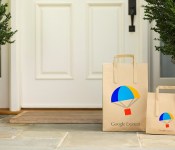
Google Shopping Express shortens name and launches in three more cities with more retailers

Today Google announced that Google Express (formerly known as Google Shopping Express) has launced in Boston, Chicago and Washington, D.C. bringing a ton of new retailers with it. For those unfamiliar with the service, it is a same-day delivery service that lets you order from multiple local retailers and have the products delivered by Google themselves. The service does not mark-up any of the products but does require a membership fee of $95/year or $10/month. There is also a $4.99 per-order pay-as-you-go option, and a three-month trial for new users.

As mentioned before, Google added 16 new stores which you can see in the above photo. Google claims that with today’s expansion over 7 million people have access to same-day delivery and 12 million Californians have access to next-day services. Google Express seems like a great service, do any of you use it? Let us know in the comments below!
Source: Google
Come comment on this article: Google Shopping Express shortens name and launches in three more cities with more retailers

