



Get in the fall spirit with Google Calendar’s new seasonal wallpapers

The Google Calendar app is probably one of the last places you’d expect to get some extremely attractive wallpapers, but Google’s most recent update for the application changes that. The update includes twelve very elegant backgrounds, each representing a different month, and therefore each only visible for a month at a time. Luckily these wallpapers have been extracted from the app and can be downloaded and enjoyed at anytime. Hit the break for the full gallery.


Source: AmongTech
Via: Android Authority
Come comment on this article: Get in the fall spirit with Google Calendar’s new seasonal wallpapers

Root in Android Lollipop may be a little more difficult to get, says Chainfire
 Android Lollipop is currently the toast of the Android community – its overhauled UI and expansive improvements already have many of us salivating. However, while it looks sweet, literally and figuratively, it might not be the best for developers after renowned Android developer, Chainfire, said that root in Android Lollipop could possibly become a rarity due to increased security measures that Google has implemented this time around. In fact, Chainfire has been warning about this day for a long time, and it appears, unfortunately, that he is absolutely correct. In a nutshell, Android Lollipop “breaks” root, and not in the conventional way that can be overcome – for more specifics about the new changes, read Chainfire’s explanation here.
Chainfire’s own root solution requires a custom kernel in order to gain root, however often you require root before being able to flash a custom recovery, and that in itself can only be done with an unlocked bootloader. In the event that a manufacturer locks the bootloader, this will essentially mean the device is rendered a stock device until someone figures out how to circumvent this scenario and enable root. Of course, this fate will never befall the Nexus line with their unlocked bootloaders, but it presents the situation where developers may have to become a little choosier with which manufacturer they buy from.
What do you think about root in Android Lollipop potentially being harder to come by? Let us know your thoughts in the comments.
Source: +Chainfire via XDA, Phone Arena
//<![CDATA[
ord = window.ord || Math.floor(Math.random()*1E16);
document.write('‘);
//]]>
The post Root in Android Lollipop may be a little more difficult to get, says Chainfire appeared first on AndroidSPIN.

Google Earth for Android receive its biggest update

Google has decided to update the famous Google Earth for Android. The app has been around for a long time, and it is one of the most famous applications on the Google Play Store. The latest update is the biggest one so far, as it brings better and smoother 3D rendering technology.
“Starting today, you’ll see faster, smoother, and crisper transitions as you’re zooming into your dream destination in Google Earth. Thanks to a new 3D rendering technology—the first major 3D overhaul since Earth launched more than 10 years ago—sharper views of mountains and cities are just a virtual skydive away.”
 Roads and labels are also improved, and it will gets same updates as Google Maps in future. Google Earth will now also allow you to open your KML files as well.
If you love exploring the planet without even moving from your bed, you should definitely check out the latest version of Google Earth. Check it out and let us know in the comment box below.
Source: Google Maps
 |
The post Google Earth for Android receive its biggest update appeared first on AndroidGuys.
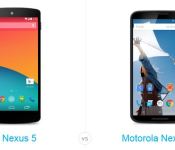
Nexus 6 vs Nexus 5: A civil war within Google

Ever since the announcement of the Nexus 6, we’ve been dying to know how it will stack up against other devices. While we won’t know for sure until we have our hands on one, we can at least look at the various specs. Lets take a look at the Nexus 6 vs the Nexus 5!
Motorola Nexus 6 vs LG Nexus 5
Display
Let’s start with the Display. The Nexus 6 has a gorgeous display with a pixel density of 493 ppi, while the Nexus 5 isn’t bad either with a 445 ppi. However, considering the Nexus 6 is a full inch bigger than the Nexus 5, the Nexus 6 is a clear winner in the display quality. Motorola’s device has an AMOLED screen while LG’s offering has an IPS screen, so that’s a matter of preference. Is also worth noting that the Nexus 5 is still a regular phone with its size, whereas the Nexus 6 places itself well into the “phablet” category.
Battery
With the battery, the Nexus 6 has another clear advantage with a 3,220 mAh battery, while the Nexus 5 has a 2,300 mAh battery. While the Nexus 6 has much more pixels to push, the Nexus 6 site still claims you can get 24 hours of talk time, with the Nexus 5 getting 17.
Processing
When it comes to the processors, they come pretty close. The Nexus 5 has a Qualcomm Snapdragon 800 clocked at 2.26 GHz, while Motorola’s offering has a Snapdragon 805 clocked at 2.7 GHz. While the Nexus 5 technically has a year old processor, it is no slouch. Technically, the Nexus 6 wins, but when it comes down to it they are pretty close. However, the Nexus 6 has 3 GB of RAM while the Nexus 5 has 2 GB. This should give the Nexus 6 more multi-tasking power.
Camera
The Nexus 6 has a better camera, with a 13 MP rear shooter and a 2 MP front shooter, while the Nexus 5 has a 8MP and 1.3 MP. The Nexus 6 also has the ability to shoot video in 4K, while the Nexus 5 is behind at 1080p.
Storage
The Nexus 5 starts at 16 GB of memory, while the Nexus 6 starts at 32 GB. Neither have expandable memory.
All in all, both devices have great specs. Google truly has done well in designing both of these Even the Nexus 5 which came out last year holds its ground well, but the Nexus 6 has been updated immensely, so in terms of specs the Nexus 6 is the clear winner.
However there are two things to consider: the Nexus 6 is quite large with its 5.96″ screen. One will have to get used to the size of the Nexus 6. Otherwise, some people are simply not going to want a phone that large and will want to get the Nexus 5. The other thing to consider is the price. What makes the Nexus 5 so great is all the great specs you get for the price: $349 off contract. The Nexus 6, however, will be $649 off contract. While the Nexus 6 will be available through carriers for cheaper, you’ll likely need to lock into a 2-year contract to get that price, which to many is not preferable.
So, when it comes to specs, the Nexus 6 is a winner. When it comes to size preference and price, the Nexus 5 is the winner. Which do you think is the better device? If you’re planning on getting a Nexus this year, which will you get?
|
The post Nexus 6 vs Nexus 5: A civil war within Google appeared first on AndroidGuys.
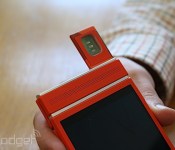
Google plans to make a component store for its modular phone

Project Ara is surely one of the most exciting things Google is working on right now — at least from the ones we’re aware of. Better yet, given how young it is, chances are it will only keep getting better and more interesting. While speaking at a Purdue University event, Google’s Paul Eremenko, director of Project Ara, recently revealed that the company will be taking a cue from the Play store to create a similar shopping experience for its modular smartphone. What this means, essentially, is you’d be able to buy or sell different components from a single hub, just as is the case now with apps, music, books and more on Google Play — and it would also include reviews and recommendations. Eremenko didn’t mention any details related to the status of Project Ara, but you can check out the full talk after the break.
Filed under: Cellphones, Misc, Mobile, Google
Via: Android Central
Source: YouTube (Purdue Convocations)
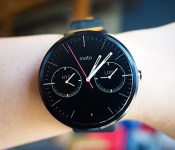
Android Wear’s latest update adds GPS support and offline music playback

Android Wear, Google’s four-month-old wearables platform, is off to a good start. But like all nascent systems, there are still plenty of areas that need some TLC. It’s got a lot of features and developer support, but it’s practically useless if you want to use your smartwatch as a fitness tracker and leave your phone at home. Over the next few days, Google will push a new update to the LG G Watch, Moto 360 and Samsung Gear Live that will make your smart timepiece more useful when it’s not tethered to your handset.
The new update comes with two major features. The first is GPS support, which makes it possible for Wear apps to track distance, routes, elevation and speed without having a phone nearby. This is a welcome feature for runners, hikers and bicyclists who don’t like exercising or training with armband cases or handling extra baggage during their workouts. Sadly, this doesn’t do any good for existing Wear users whose devices don’t come with built-in GPS sensors; the first one to get this feature will be the Sony SmartWatch 3, which is now ready for pre-order on Verizon’s website and coming soon to the Play Store.
Fortunately, every Wear watch will receive the new update’s second main feature: Direct Bluetooth pairing. You can connect Bluetooth headphones directly to your watch, which means you’ll now be able to store music on your watch and listen to your playlists offline, even when your Android phone isn’t within range. Granted, every existing Wear smartwatch comes with a mere 4GB, so you won’t be able to store your vast library until new models with more storage are released, but it should at least get you through a few workouts before it’s time to switch out your tunes.
Lastly, Google hasn’t given any official word on how many Wear-enabled apps are in the Play Store, but it mentioned today that it’s somewhere in the “tens of thousands” — not too shabby in four months time, and it’s large enough to be a pain to search through all of them. But the company has organized this ever-growing list into eight collections to assist you in your quest for the perfect watch app: Health and Fitness, Travel, Social, Tools, Productivity, Communication, Featured and miscellaneous.
This update, which rolls out to existing Wear devices over the next few days, is admittedly small. However, it’s a solid indication that Google understands that its wearables need to be able to work independently and still be functional without having to be tethered to a smartphone all the time. And for potential buyers trying to find the perfect blend of fitness band and smartwatch, updates like this are absolutely essential to even consider it.
Filed under: Wearables, Wireless, Mobile, Google
Source: Android blog

Watch an episode of ‘MST3k,’ with or without the jokes explained

Ordinarily, people talking during a movie is our idea of hell, but in Mystery Science Theater 3000‘s case, we’re more than happy to allow it. The thing is, unless you’ve got a pop culture brain that’d make Tarantino blush, you’re not going to know enough to get the joke. That’s why a group calling themselves The Annotated MST have been painstakingly researching and explaining every single gag from the show so you don’t feel left out. Thankfully, the group has teamed up with Shout! Factory, MST3k’s DVD label, to release a fully-amended and legitimate copy of Mitchell onto YouTube (after the break) that you can switch on and off depending on if you need a joke explained. Just be glad they don’t have this sort of thing in real life, or else no-one would go to the cinema ever again.
Via: The AV Club

Google is partnering with Oxford University to improve its A.I.

Google is assembling a team comprising some of the world’s most renowned artificial intelligence researchers to create… something? Back in January, Google bought A.I. company DeepMind for a reported $400 million, and no one really knew why. Now, it’s announcing a partnership with the Oxford University to further its research into image and language recognition. As part of the partnership, Google has acqui-hired two companies born from the renowned university. They are Dark Blue Labs, a startup focused on natural language understanding, and Vision Factory, which describes itself as offering “world-class, scientifically-proven object recognition and text recognition systems.” All seven founders of the two companies will be joining Google, which is hoping the move will accelerate efforts to improve speech and image recognition through “deep learning,” a type of artificial intelligence that mirrors biological neural networks.
DeepMind was founded by Demis Hassabis, a British scientist who, among other things, co-designed and lead programmed Theme Park at age 17. After releasing a pair of games under his own studio, Hassabis left the video game industry to undertake research in cognitive neuroscience, and has since taken that knowledge to work on developing the next generation of artificial intelligence. There was much speculation as to why Google had purchased DeepMind, but although the true aim of the acquisition remains unknown, one thing is clear: Google is serious about improving its artificial intelligence.
Filed under: Google
Source: Google

Google Now wants to help protect your eyes from eclipses

Google Now has just added more cards to its ever-increasing arsenal, and this time, they’ll help you prepare for eclipses and possibly dangerous situations. The new eclipse card lists almost everything you need to know about the phenomenon, including what it is, how to make a pinhole projector to view it and how to photograph it safely. If you can see the card right now, then you’re most likely somewhere in North America, and the partial solar eclipse tomorrow will be visible where you live, weather permitting. The second card, on the other hand, shows you any police activity happening in your area and nearby places, though an Android Police commenter suggests the card isn’t exactly new, just rare. Sure, getting one of these cards might be a bit stressful, since nobody wants to hear that there are bad guys prowling around their neighborhood. But at least it can let you know when to be extra careful or to avoid places where there’s trouble.
[Image credit: Zhan Tian/Getty]
Source: Android Police, Jonathan Berry (Google+)
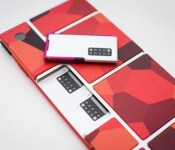
Google may sell Project Ara modules in a Play Store type marketplace
 Google’s Project Ara is one of the most highly anticipated developments in the modern smartphone world, assuming it gains traction with developers, manufacturers, and consumers. We know the basic idea behind it, but one thing that Google has never truly clarified was how potential customers could purchase smartphone “modules” for their devices. Thanks to a new interview at a Purdue Presidential Lecture, the head of Project Ara, Paul Eremenko, talked a bit about how the modules would be sold, and it’s shaping up to be pretty interesting.
Google wants to invest in a marketplace not unlike the Play Store where customers can buy different modules. This marketplace would sell directly to customers, so there wouldn’t be any middle-man retail stores to go to. Buyers would also be able to comment and review all of the different hardware available, which would help other customers make informed decisions. That function is pretty similar to every other major online retailer today.
A big point of interest, though, is how Google will test and certify modules to be sold. They want to allow developers to create and sell their own modules on the marketplace, but Google is also responsible for making sure that the modules don’t blow up anyone’s device, which is a tricky thing to tackle. Looking at how loosely Google polices the Play Store, that may or may not end well.
If you’re interested, you can find the full video below. It’s a pretty long clip, but it’s entertaining and interesting, especially if you’re eager for Project Ara smartphones.
source: Android Headlines
Click here to view the embedded video.
Come comment on this article: Google may sell Project Ara modules in a Play Store type marketplace

