


Vimeo plans to offer video subscriptions

You’d think that YouTube would launch a subscription video service ahead of its rivals given its love of original content, but someone might just beat it to the punch. Vimeo’s Kerry Trainor tells Recode that his company already has a subscription option in development. He’s not providing details of how it will work, but it would be a logical extension of Vimeo’s successful On Demand option. Viewers want to pay for a “whole world of content” that wouldn’t reach them any other way, he says. However it pans out, Vimeo might want to hurry — YouTube is openly toying with the idea of its own subscription service, and it could easily steal the thunder from competitors if it’s first out of the gate.
[Image credit: Brian Crano, Vimeo]
Source: Recode (1), (2)

An FCC rule change could put internet TV on a level playing field with cable

Right now internet services don’t always have the opportunity to show the same content as traditional TV, but the FCC might be about to change that. Chairman Tom Wheeler described in his blog post “Tech Transitions, Video, and the Future” the “first step” to open cable programs and local TV to internet services, by giving them the same classification that cable and satellite providers have. That wouldn’t apply to Netflix or Amazon (as they currently exist), but anyone streaming live TV channels over the internet — like Sony, Verizon and Dish are planning, Intel tried before selling to Verizon, and Apple’s TV project has been rumored to include — would be covered.
Wheeler notes that a similar move in 1992 helped competition from satellite TV companies flourish, and sees the same potential for internet providers. Another company stuck in the current hole between being too much like a cable provider and not enough like one is Aereo, and its CEO Chet Kanojia said “By clarifying these rules, the FCC is taking a real and meaningful step forward for competition in the video market.” Until now, owning a delivery method has been required for a company to be classified as a “multichannel video programming distributor,” but Wheeler is asking the commission to create rules to cut that out. He also says changing the rules would make sure cable systems remain regulated as able, even if they switch to all-IP delivery, as some have been rumored to do.
He also claims it will let internet-based providers offer smaller channel bundles than what currently exists, giving customers more choices, and encourage the creation of broadband competitors that don’t feel the need to bundle TV service. It will take some time to see how much, if any, of this comes true, but in the future companies like Apple, Google and Microsoft could jump in to compete with Comcast and its ilk right away, offering customers a way to switch providers without losing access to the stuff they want to watch.
[Image credit: Photo by Mark Wilson/Getty Images]
Filed under: Home Entertainment, Internet, HD, Apple, Google
Source: FCC, Aereo (Facebook)

Google+ Photos will Halloweenify uploads with spooky or fun looks

With Halloween coming up on Friday, Google wants to make sure you have a way to show some holiday spirit online. Through Google+ Photos, you can Halloweenify your photographs. There are options for “spooky” or “fun” looks. The image above is a sample of what Google can do with the Halloweenify feature. With group photos, it can add the effect to a maximum of four people.
Here is how you can do it:
- Go to photos.google.com
- Select a look
- Select your photo and upload it
Simple enough, right? Now go Halloweenify every selfie you have!
Via: +John Nack
Come comment on this article: Google+ Photos will Halloweenify uploads with spooky or fun looks
Nexus 6 vs Droid Turbo: Another civil war within Motorola

For weeks we heard rumors and picked up leaks about the DROID Turbo, and now it’s finally here. Like a souped up Moto X (2014), the DROID Turbo has a lot to offer. However, the new Nexus 6 also is a monster of a phone, both in specs and in size. Motorola has been hard at work this year developing its own flagship, and a flagship for Google, and a flagship for Verizon’s DROID line. So, which of these two newest ones are better? Let’s get down to brass tacks.
Motorola Nexus 6 vs Motorola DROID Turbo
Display
Lets start with what users first experience on a device, the display. Both of these phones have a QHD resolution (2560 x 1440), but the Nexus 6 has a 5.96″ screen while the DROID Turbo has a 5.2″ screen, making the pixel density of the former 493 ppi, and the latter a phenomenal 565 ppi, which Motorola says is the most pixel dense smartphone out there. Due to these screen sizes however, they will be very different experiences with the Nexus 6 being a “phablet” while the Droid Turbo might be more comfortable with its smaller screen size. This is a matter of preference though. So while both have very good screens, the DROID Turbo comes out on top with its denser screen.
Battery
The battery is another very interesting part of this spec war. The Nexus 6 has a fairly big 3,220 mAh battery, while the DROID Turbo has a massive 3,900 mAh battery, with Motorola claiming you’ll get 48 hours of mixed usage with this phone. Also, since the Nexus 6 has a larger screen, it will suck more battery. Both of these phones take advantage of Motorola’s will take advantage of the turbo charging technology, where 15 minutes of charging gives you 8 hours of usage. Because the DROID Turbo has a much bigger battery and smaller screen however, the DROID Turbo wins this battle.
Processing
When it comes to processing, these two devices are actually exactly the same. They both have a Qualcomm Snapdragon 805 processor clocked at 2.7 GHz, with an Adreno 420, and 3 GB of RAM. Where the Nexus 6 will have the advantage is in two ways: it will have vanilla Android, which is known to be snappier and more responsive, and will have the latest version of Android, 5.0 Lollipop, when it releases. The DROID Turbo will launch with Android 4.4.4, and likely will upgrade to Android 5 soon, but it still won’t have vanilla Android, with Verizon’s bloatware layered on top. How well they respond won’t be known until some interaction is given, however, so for now I’m giving this one a tie.
Camera
Here is another interesting battle. The Nexus 6 has a 13 MP rear camera with OIS, and the DROID Turbo has a 21 MP rear camera, while both have 2 MP front-facing shooters. The DROID Turbo camera has more pixels, but seemingly no mention of OIS. Also, the newest version of Android will give the camera capabilities a significant boost, allowing RAW formats. Again, the DROID Turbo will likely have Android 5.0 at some point, but won’t at first. These capabilities of Android 5.0 camera processing remains to be seen however, so I’ll give this round to the DROID Turbo.
Storage
What needs to be noted here is that there will be three different versions of the DROID Turbo. A Metallic Red, a metallic black, and a Black Ballistic Nylon. 32 GB will be available among each version, but only the Black Ballistic Nylon will have a 64 GB version. While the Nexus 6 has two colors (midnight blue, cloud white), there will be 32 GB and 64 GB available in both colors. Nevertheless, there are options for 32 GB and 64 GB in both models, so we have another tie.
Verizon’s latest DROID is a beast of a device, with a lot crammed into one package. Its worth mentioning that the DROID Turbo will have the latest Moto suite of services (Moto display, Moto Voice, etc.). However, the Nexus 6 will have Android Lollipop which has a bunch of new goodies, with its own version of Moto display and Moto Voice. The Nexus 6 will be available to all major carriers, while the DROID Turbo will be unique to Verizon. Also, we have yet to see if the Nexus 6′ size will be comfortable and likeable by people. All in all, I think this war goes to DROID Turbo. The collaboration of Motorola and Verizon is intense, and I can’t wait to hear how it runs.
Which do you think is the better device? Do you think the Nexus 6 deserves more recognition here?
The post Nexus 6 vs Droid Turbo: Another civil war within Motorola appeared first on AndroidGuys.
Google files trademark application for “ARA”

A new trademark application with the U.S. Patent & Trademark Office was filed by Google to get protection for the ARA name for their forthcoming modular smartphone. Project ARA is Google’s project to produce a smartphone that has hot-swappable components that plug into a frame. This would allow users to upgrade certain components or add new features without having to purchase a whole new phone. We anticipate Google having a fully functional prototype available at the Ara Developer Conference coming up in December. This will be followed by an expected market launch in 2015.
The application for trademark protection is a strong indication that ARA is the name that Google will use to market the device when it is made available for the general public.
source: USPTO
via: phoneArena
Come comment on this article: Google files trademark application for “ARA”
YouTube wants Android apps to use its live-streaming tool

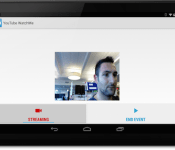
It may seem as if YouTube Live is still a work in progress for Google, and in many ways that continues to be the case. That’s far from being a bad thing, though. Over the course of the past couple of years, YouTube’s live-streaming feature has become available to an increasing number of people on both ends of the camera, by way of different devices and platforms. Soon, with a new open-source project called YouTube WatchMe for Android, the video service is hoping that developers will start integrating its real-time broadcasting capabilities to their apps. Google says the tool is only an experiment right now, but it wouldn’t surprise us to see it become more than that in the not-so-distant future. If you’re interested in digging a little deeper, or contributing your wisdom to the project, be sure to take a gander at the GitHub repository right here.

Filed under: Misc, Home Entertainment, Software, HD, Mobile, Google
Via: TechCrunch
Source: YouTube
Google releases Google Fit SDK for developers

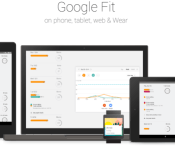
As we reported earlier today, the long-awaited Google Fit app is now available in the Play Store, and as with most Google Services, the SDK is now available to download for developers. Any developer interested can grab the APIs at the source link and start building apps that take full advantage of the exciting new platform. The SDK allows for full access to all information stored inside Google Fit, opening the door for a plethora of fitness based apps.
Google has already partnered up with multiple companies to bring you applications and services that take full advantage of Google’s new service including: Nike+ Running, Withings HealthMate, Runkeeper, Runtastic, Noom Coach, Strava, MapMyRun, LynxFit, LifeSum, FatSecret, and Azumio. Quite a list, and with the new APIs available to developers, the amount of available Google Fit-powered apps will only grow. For those who’ve tried it, let us know what you think of Google’s new service in the comments below.
Source: Google Developers
Come comment on this article: Google releases Google Fit SDK for developers

Google is tackling cancer diagnosis next, with magnetic nanoparticles

Google X is always looking for the next moonshot. The semi-secretive lab where the company has tested everything from self-driving cars, to internet broadcasting balloons has had a real fixation on health and longevity recently. The latest project involves using tiny nanoparticles that patrol the body looking for early signs of cancer or other diseases. Basically the particles, which would be just a thousandth of the size of a red blood cell, would be designed to bind to specific cells or proteins. A magnetic wearable would then attract and count the particles, hopefully delivering an early warning to doctors. Andrew Conrad, head of the Life Sciences team at the Google X, revealed the project at The Wall Street Journal’s WSJD Live conference. He said that he hopes this will provide a one-stop-shop for medical testing eventually, but acknowledged that we’re probably about five years off from any serious implementation.
There are obvious technological hurdles to overcome — finding the right coatings to bond with cells, finding an appropriate delivery method, and building a wearable with long enough battery life — but the social challenges might be even larger. The public is already wary of providing any more information than necessary to large companies, especially ones like Google that rely on collecting data about its users to make money. Conrad says that Google wouldn’t directly collect or store the medical data. Instead it would license the technology to third parties, but that may not be enough to ease the minds of an understandably paranoid public.
Filed under: Wearables, Science, Google
Source: Wall Street Journal
Google Fit launches in the Play Store with seamless device syncing
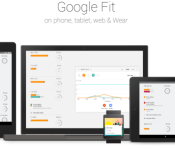
There is another option when it comes activity tracking. Google Fit is now live in the Play Store for anyone with a device running Android 4.0 Ice Cream Sandwich and above. It operates with phones, tablets, the web, and Android Wear devices. This means that Google Fit really goes with you everywhere. The app takes advantage of existing sensors within your device to track activity.
Google Fit does go beyond just activity tracking. Users build a profile, based on things like gender and height/weight, with goals being uniquely made. Google does not mind if you use other services for activity tracking. Apps including Strava, Withings, Runtastic, Runkeeper, and Noom Coach can all work with Google Fit to sync with your profile. Google Fit will be a hub for everything to work together.
Hit the break for the gallery and download links.


Source: Official Android Blog
Come comment on this article: Google Fit launches in the Play Store with seamless device syncing

Google Fit app launches in the Play store

Today, Google officially released the Google Fit app which turns your Android device into a fitness tracker.
According the the Android Official Blog,
Google Fit uses sensors already built in to your Android phone to automatically detect walking, biking and running. And you can set and monitor your fitness goals based on your activity levels. It’s a great tool to discover how active you are and check in on your progress as you work on your fitness goals. In fact, you can check in just about anywhere, including your phone, the web, tablet and Android Wear devices.

Download the app, link it to your Google account, and BOOM; instant fitness tracker with real-time monitoring. You can then use any device, including the web, to look at your fitness data.
Google Fit also links up to your other fitness apps/devices. So, you can wear your fitness band while working out and your Android Wear smartwatch the rest of the time, and still have all your fitness data in one place.
What do you think? Are you ready for Google to own another set of your personal data?
via [TNW]
Source [Android Official Blog]
The post Google Fit app launches in the Play store appeared first on AndroidGuys.

