


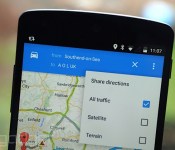
Google Maps for Android now lets you easily share directions

While you’ve been able to share specific places you’ve located in the Google Maps app for some time, pinging directions over to your friends and family hasn’t been so simple. With today’s Android update, however, the company has finally done something about it. Now, when you load a navigation route inside the app, you’ll notice a new “Share directions” option appear in the menu. The feature automatically creates a numbered list of text directions and attaches a link, which can then be shared via any compatible app on your Android device. WhatsApp and Facebook are probably the most logical destinations, letting the recipient load the link and see the same route on their device. Although Android users are currently only able to send routes using this new option, iPhone owners can receive load shared directions inside the Maps iOS app (if they have it installed) — useful if you’re the one having to constantly help someone operate their new smartphone.
Filed under: Cellphones, Tablets, Internet, Software, Mobile, Google
Via: Android Police
Source: Google Maps (Play Store)
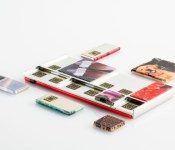
Ara Configurator: the app for building your Project Ara modular smartphone

Google created quite the news day today with regard to Project Ara. Talk Android had previously discussed some of the information released today when Google released the Project Ara MDK 0.2 a few days ago. We knew the new prototype would be called the Spiral 2, that there would be an Ara Manager app, the Greybus protocol was mentioned briefly, and we talked about the Ara module marketplace.
Today, Google branded the module marketplace as Ara Configurator, which will be your one-stop shop for customizing and purchasing your Spiral device’s modules. Additionally, this will be the location for customizing the modules’ shells, which are the plastic covering the back of said modules. The shells feature all those pretty designs on the modules’ backside that you see in the Project Ara photos.
Very similar to Motorola’s Moto Maker (or Nike’s NikeID, whichever you have more experience with), the Ara Configurator will feature a step-by-step process for customizing your Ara device. It will not be limited just to the modules, though, as you will be able to select from an assortment of chassis (dubbed as endoskeleton). And if you’re wanting to skip getting your hands too dirty with all of this customization, Ara Configurator will feature pre-assembled devices based on what activity you plan on associating the device with most (i.e. gaming or photography).
You can read more about the latest news surrounding Project Ara by checking out these stories on Talk Android: Project Ara team shares more details about Spiral 2 modular smartphone and Google to bring Project Ara devices to Puerto Rico first.
Source: The Verge
Come comment on this article: Ara Configurator: the app for building your Project Ara modular smartphone

Google beefs up Translate app with Word Lens real-time translation

Google on Wednesday announced a new version of its Translate app for Android and iOS. Rolling out over the next few days, the app brings about some handy real-time translation capabilities. With the update it is no longer required to snap a photo for translation. Indeed, users can get real-time translation just by simply pointing the camera at text. And, as if that weren’t cool enough, this feature works whether there’s a data connection or not.
Additionally, Google Translate also provides much quicker translation via voice.
Starting today, simply tap the mic to start speaking in a selected language, then tap the mic again, and the Google Translate app will automatically recognize which of the two languages are being spoken, letting you have a more fluid conversation. For the rest of the conversation, you won’t need to tap the mic again—it’ll be ready as you need it.
Look for the new version of Google Translate on both Android and iOS in the coming days.
The post Google beefs up Translate app with Word Lens real-time translation appeared first on AndroidGuys.
Google adds a snooze button to Inbox emails

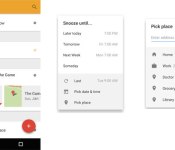
No, you don’t need to reply to that email immediately in the middle of dinner. Now Google’s trying to help that happen, with Snooze. A new addition to its Gmail Inbox app, users can “snooze” emails with automatic quick settings or their own customized reminders. You can delay a message for later the same day, tomorrow or even a week from now. There’s also the hilarious someday option — we’re going to assume it’ll reappear later in the week, but don’t hold us to that. You can even “geo-snooze” a message to remind you when you’re at a place, rather than a prescribed time. You can still access any reminders or snoozed messages if you manage to make time and adjust reminders if needed. Inbox zero could be within in your grasp in 2015. Well, kind of.
Source: Gmail blog
Update to Google Maps Android app allows you to share directions [APK Download]

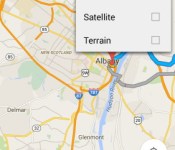
Google Maps was updated today to version 9.3. You won’t find too many new things, but one notable is the ability to share your directions with others. Just search for a place or address, then select the type of navigation, followed by your route selection. Then hit the three dot menu at the top right, and you will see the Share Directions option.
Tapping on Share Directions will open the normal Android Share Menu, allowing you to share the complete text and Google Maps link to apps such as Gmail, Hangouts, Facebook, or whatever shows up in your Share Menu.
The update won’t hit all devices for several days so we have the APK download link, as well as the Google Play link after the break.
Come comment on this article: Update to Google Maps Android app allows you to share directions [APK Download]
Project Ara team shares more details about Spiral 2 modular smartphone

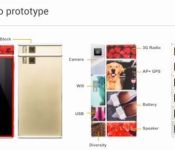
During the second developer conference for Project Ara that is underway, we already learned that the team has dubbed the second iteration of the modular smartphone as “Spiral 2″ and plans to use Puerto Rico as a test market later this year. We now know a little bit more about what has changed in the Spiral 2 compared to previous versions of the device.
Probably the biggest change that has been made in response to developer feedback is to move the electro-permanent magnets from the modules to the chassis, or endoskeleton, of the device itself. According to the ATAP team, developers indicated the magnets were consuming as much as 40% of the useable space on their modules.
Another change that was made was to place the 3G antenna in its own module. Down the road this will make it easier for consumer to select the kind of antenna they want to include when 4G antenna modules hit production.
Some of the other hardware included in the Spiral 2 includes a 1280 x 720 resolution display, a Wi-Fi and Bluetooth module, a Receiver module with light and proximity sensors, a 5 MP camera module, the 3G antenna module previously mentioned, a Band 5 antenna module, and a processor module. Currently the processor module can include either an NVIDIA Tegra K1 or a Marvell PXA1928 chip.
Looking ahead to the Sprial 3, which is the device expected to be used for market testing in Puerto Rico, Google anticipates having a 4G LTE module available, inductive connections for modules, and a Rockchip AP reference design. If sales commence, even on a test basis, Google also anticipates having a marketplace setup and available for buyers to purchase modules from.
One other bit of news that surfaced is that Google has determined they will not be able to utilize 3D printing of the modules, at least not for the next iteration or two of Project Ara devices. This will likely result in some limitations to the level of customization available for buyers. Google sounds like they are still planning to implement 3D printing at some point though.
Click here to view the embedded video.
Come comment on this article: Project Ara team shares more details about Spiral 2 modular smartphone

Google partners with car manufacturers to create self driving cars

Google has just announced its partnership with a handful of car manufacturers to expedite production on their self-driving car concept. Last month, Google unveiled their first working prototype of the self-driving car. Though the search giant could make a single prototype, it was manufactured in Detroit by an engineering and speciality manufacturing company called Roush, not a major car company. Now, they’re partnering with top auto makers like General Motors, Ford, Toyota, Daimler AG and Volkswagen to speed up the process.
Chris Urmson, director of Google’s self-driving car project, told Reuters in an interview that with the addition of top auto manufacturers, Google plans to have self-driving cars on the road by 2020. He also explains that Google does not see any particular regulatory hurdles that may delay the cars’ availability within 5 years.
Though many believe that self-driving cars are a gigantic safety hazard on the road, Urmson remains confident in his vision. He explains:
You’re really changing the relationship you have with transportation. You’re changing what it means to get around… You look at a car … and people forget just how much magic there is in that thing.
We can expect to see prototypes hit the road relatively soon, but Google won’t have a product for average consumers in a few years’ time.
Google wants to help you customize your Project Ara device with the Ara Configurator app

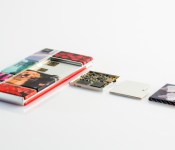
Earlier today, Google held their second developer conference for Project Ara. During the keynote, the company made available the Modular Developer’s Kit v.2 which includes update framework, software and firmware for the Spiral 2 prototype device. Over the past few months, we’ve heard that Ara will be sold in an online marketplace where users will go to assemble their own Ara smartphones. During the tail end of the conference today, Google’s Jason Chua demoed the Ara Configurator app which will allow users to customize their modules, much like we’ve seen with Moto Maker.
The marketplace will make three components available: the endoskeleton, modules and external shells. Users will be eventually be able to find modules they’re fond of, and save them to their online ‘Stashes’. If you want Google to customize your phone for you, there’s an option called ‘simple phone maker’, that will one day create a device specifically tailored to your likes. Chua explains that we may be able to eventually connect the app to social networks, which will allow the Ara Configurator to analyze your social network feeds and recommend different modules to you based on your interests. And yes, you’ll also be able to customize the looks of modules themselves by adding custom images or colors to them. I think we can all agree that a Moto Maker-style website is the best way to sell modules for Ara.
If those updates weren’t enough for the Project so far, Google has also released a new promotional video showing what the final product may look like. Take a look below:
Google Chrome update now enables Guest Browsing and easy switching of accounts

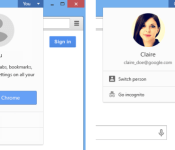
Google appears to have updated the Chrome browser for desktops with the ability to switch profiles right from the top right corner of your window. This feature was originally announced on Chrome Beta back in August, but has now made its way to the standard Chrome as well.
There’s also a new Guest Mode feature, which will open a new browser window with no access to history, which is ideal if you don’t want guests to snoop on your browsing history. This can be easily turned on from the Switch Person option which appears when you click on your name (located on the top right corner).
To add or remove people from Chrome, you can head over to the browser settings and make the necessary changes under the People section. It is important to note that Chrome will not use the browsing history of one user when browsing from another account, which is a very handy security feature.
So if you have two accounts on the browser, your browsing history will not be visible to the other person and vice versa. The browsing history and bookmarks available on your account will be accessible on connected devices as usual.
Overall, it’s a very neat addition to Chrome on desktops. Chromebooks are yet to receive the update apparently, but we’re certain that an update is on the horizon. Make sure you give this feature a try if you happen to use the Chrome browser on your computer.
Via: Unofficial Google OS Blog
Come comment on this article: Google Chrome update now enables Guest Browsing and easy switching of accounts

Google has some new friends working on its self-driving car

Apparently following the adage about keeping your friends close and (potential) enemies closer, the Automotive News World Congress in Detroit hosted Elon Musk last night and followed up today with Chris Urmson of Google. He’s the director of its self-driving car project, and while there are no big name car manufacturers lined up as partners yet, he did call out seven particular industry friends providing various parts for the latest prototypes. That includes LG (battery), Bosch (LIDAR), ZF Lenksysteme (steering gear), RCO, Continental, FRIMO, while Roush is helping to actually put it together here in the Detroit area. There are also NVIDIA chips inside, which Urmson said run mostly Linux software “with some other stuff happening.” He confirmed that Google has talked to the usual list of big names (GM, Ford, Toyota, Daimler, etc.), and hopes cars are ready to go by 2020.
Interestingly, in opposition to what most automakers have said about autonomous vehicles, Urmson stated that he did not anticipate regulatory hurdles to their introduction and is focused on making sure they are socially accepted. He feels that NHTSA does not consider itself a “permission-granting” authority — with a former Deputy Administrator on the team, we guess he’d know — but couldn’t speak in detail about the legal wranglings or how self-driving cars are insured. Still, the exec is confident that self-driving cars could start rolling out in places in the US once they’re safe enough. Those places probably won’t include cold-weather climates, at least at first, since in response to a question he mentioned they haven’t been tested in snowy environments yet.
When the prototypes roll out though, there will always be a driver in them, although it’s testing empty vehicles at its facility, they’re not ready to hit public roads yet. Another element is the LIDAR unit used to keep a 360-view of what’s around the car, but Urmson said Google does not consider that a big hurdle, and is already testing cheaper, more capable prototype units than the usual $75,000 roof-mounted racks we’ve seen so far.

That also plays into the current design of the prototypes, which he said isn’t final, but is friendlier than seeing the first self-driving car in your neighborhood appears as a big SUV. In a Q&A with reporters after his talk, Urmson said the test cars had racked up over 700,000 miles without an at fault accident. That’s despite being side-swiped on the freeway and a much publicized rear-ending that happened while an engineer (in control of the car) was distracted by someone taking a picture and rear-ended another car. The plan for the prototypes is to start testing in Northern California “later this year” and run small pilot tests over the next couple of year. Before that happens though, the leader of Google’s self-driving car project said he is going to hit the Auto Show floor to check out the new Ford GT.
Filed under: Transportation, Google

