


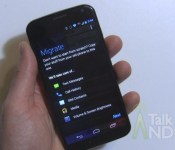
Motorola Migrate gets updated with Material Design

Motorola is currently in the midst of pushing out an update for its official Migrate application via the Play Store. This upgrade doesn’t transport much with regards to new features, but it does bring support for contact transfers from non-smartphones and an appearance transformation that complies with Google’s recently-announced Material Design guidelines.
Hit the break for the full changelog.
- Android: Contacts transfer from old phone’s memory to new phone’s memory
- iOS: Support iCloud Two Factor Authentication (2FA)
- Android 5.0 Lollipop material design changes
- Non-smartphone: Contact transfers for Motorola TracPhone w418, w419 and Motorola iDEN i296, i418, i420, i460,i475,i485, i485w
- Bug fixes
To install the update, simply open up the Play Store on your device, toggle the hamburger menu by swiping in from the left-hand side of the screen, select ‘My Apps’ and click on ‘Motorola Migrate. Next, hit the update button, and the application will instantly start to download and install the upgrade from the Google Play servers. Alternatively, you can scan the QR code below to initiate the procedure.
Come comment on this article: Motorola Migrate gets updated with Material Design

Google rumored to be purchasing Softcard

Paying for merchandise using your smartphone via Near Field Communication (NFC) is all the buzz these days since Apple Pay was launched. A lot of people in the media gloss over the fact that Google’s Wallet app on Android has given us this capability for quite a while now, though. Despite this oversight in media coverage, one beneficial thing does come out of it: the momentum generated by Apple Pay should help Google with retailers that were initially hesitant in supporting mobile-based payments.
Apple Pay and Google Wallet aren’t the only products on the field, however. One company that is also offering the same NFC payment services is Softcard, formerly branded as Isis Mobile Wallet. (The name change was due to the company not wanting to be even remotely associated with the militant terror organization named ISIS.) Similar to Google Wallet, Softcard has been struggling to make headway in the payment sector, but unlike Wallet, Softcard has lacked the financial backing needed to keep it afloat while it waits for retailers to catch up.
Google, who has not really put a lot of work into making Wallet a bigger game-changer, is rumored to be eyeing Softcard for acquisition in an attempt to bolster Wallet’s weak offering to Android consumers. Softcard does have a few perks in its portfolio, which Google may find appetizing.
Softcard is a joint venture project by mobile carriers T-Mobile, Verizon, and AT&T. The company also has strong relationships with Visa, MasterCard, Discover, and American Express, who have helped Softcard butter-up quite a few retailers in recent years to accept its mobile payment product. Google may find these joint ventures especially enticing because, up until now, it really has been going it alone in the mobile payments space. Notably, American Express has expressed that it will not participate in Google Wallet.
TechCrunch has reported that Softcard also possesses approximately 120 patents and pending patent applications. Similar to the reason behind Google’s acquisition of Motorola, there may be a Softcard patent that Google feels like it can’t live without.
When Google was approached by TechCrunch for a comment on the Softcard talks, the Mountain View search giant gave a rather humorous reply: “We don’t have a comment, background, deep background, off the record steer, nod, wink or any other verbal or non-verbal response to these sorts of rumors.”
Google hasn’t been the only company that is rumored to be approaching Softcard. The joint venture companies AT&T and Verizon have been named as possible buyers, as well as a familiar name in the payments sector: PayPal. Even Microsoft has been rumored to have approached Softcard. I also would not be surprised to hear that Samsung is keeping a close watch on Softcard, as previous reports have indicated that Samsung is looking to create its own NFC payment competitor.
So as Apple builds up a juggernaut with Apple Pay, will we see Google Wallet rise to challenge the competition? Or will it need to at all? Time will tell.
Source: TechCrunch
Come comment on this article: Google rumored to be purchasing Softcard

YouTube Music Key not playing nice with Google Play Music

Subscribers of Google Play Music have access to YouTube Music Key at no additional cost. So it makes sense that users put them to work to see which works better for them in different situations. However, be careful when switching between the two because one user reported on Reddit that Play Music will experience technical difficulties if the YouTube Music Key tab is left open on a web browser. Play Music would not work properly and notified the user that another person was on the account. In the end, the user said “PSA – close that tab.”
Be sure to read our review of YouTube Music Key.
Source: /r/Android
Come comment on this article: YouTube Music Key not playing nice with Google Play Music
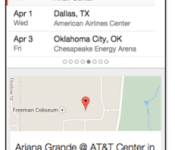
Google search results are packed with event information including tickets

Need Ariana Grande tickets and need them fast? Google will help you get the job done. Event information is the latest addition to Google search. Now, the search engine will return expanded results for specific events and venues. Whether it is a musician or a comedian, Google will offer a link to quickly purchase tickets. This is just another way that Google is cutting out the need to hit multiple links before finding what a user was on the lookout for.
Source: Official Google Webmaster Central Blog
Come comment on this article: Google search results are packed with event information including tickets

Android 5.0.2 factory images for Nexus 7 (2013) and Nexus 10 available for download

On Thursday, Jan 15th, Google released the factory images for the latest Nexus 7 (2013 edition), as well as the Nexus 10.
They both are shown with a build LRX22G, which is the same build number as the Nexus 7 (2012).
You can use these images for a fresh build of Android 5.0.2 Lollipop for your Nexus 7 (2013) and Nexus 10 and can be grabbed from here. For those who want to just update OTA then Google will begin issuing these shortly.
The post Android 5.0.2 factory images for Nexus 7 (2013) and Nexus 10 available for download appeared first on AndroidGuys.

Google puts Nest boss Tony Fadell in charge of Glass, halts sales for now

Almost two years after the Glass Explorer program first made Google’s head mounted computer available to enthusiasts and developers, Glass is “graduating” from the Google [X] labs to become a real commercial project.
That sounds like great news, but with this graduation (“put on our big kid shoes and learn how to run,” said the Glass team) comes the end of the Glass Explorer program, and with it, Glass sales to the public:
Since we first met, interest in wearables has exploded and today it’s one of the most exciting areas in technology. Glass at Work has been growing and we’re seeing incredible developments with Glass in the workplace. As we look to the road ahead, we realize that we’ve outgrown the lab and so we’re officially “graduating” from Google[x] to be our own team here at Google. We’re thrilled to be moving even more from concept to reality.
As part of this transition, we’re closing the Explorer Program so we can focus on what’s coming next. January 19 will be the last day to get the Glass Explorer Edition. In the meantime, we’re continuing to build for the future, and you’ll start to see future versions of Glass when they’re ready. (For now, no peeking.)
Google is basically ending its public experiment with Glass and turning it into a commercial project, with the implied goal to bring Glass to market as a real product, rather than a “beta.”

Google co-founder Sergey Brin has been one of the most vocal advocates of Glass
There’s no official word from Google about it, but the WSJ reports that the new Glass team will be under the supervision of Tony Fadell, head of Google’s Nest Labs smart home division. Google’s Ivy Ross will be the exec directly in charge with the project, but she will report to Fadell, who will provide oversight and “strategic guidance.”

Tony Fadell
Fadell, a former Apple exec who led the development of the original iPod, joined Google a year ago through the $3.2 billion acquisition of Nest Labs. Soon after the acquisition, sources claimed that Fadell’s role would extend to include oversight of all of Google’s hardware projects. Fadell refuted the rumors, but looking at the addition of Glass to his portfolio, it seems that the executive is indeed turning into a hardware tsar at the Mountain View company.
“Early Glass efforts have broken ground and allowed us to learn what’s important to consumers and enterprises alike,” Fadell said in a statement. “I’m excited to be working with Ivy to provide direction and support as she leads the team and we work together to integrate those learnings into future products. I remain fully committed to Nest and am equally excited about our work there, which continues to accelerate.”
While sales to the public will end January 19, Google will continue to provide Glass to companies and developers looking to develop applications for it, reports WSJ, and a new version of Glass is coming this year.
Today’s news is a mixed bag for Glass enthusiasts, some of whom have suffered ridicule or even outright harassment by angry bar patrons, movie theaters employees, or hostile restaurant owners. The closing of the Explorer program without a clear replacement suggests Google realized that selling the $1500 Glass to the public wasn’t a good idea in the first place.
On the flip side, with a hardware heavyweight like Tony Fadell at the helm, Glass has better chances of becoming a real product.
It’s fairly safe to assume that Google will pitch the new Glass, whenever it’s coming, mainly for workplace applications. The public’s hostility towards Glass has not translated to the enterprise sector, where Glass has been explored for a number of interesting applications, including feeding info to doctors, pilots, or even soldiers.
Android 5.0.2 factory images available for 2013 Nexus 7 Wi-Fi and Nexus 10
After the original Nexus 7 received in update to Android 5.0.2, we were left wondering whether any other devices would be updated to the elusive software version, or indeed, what it actually fixed. Google has today released more Android 5.0.2 factory images for the 2013 Nexus 7 Wi-Fi and Nexus 10 which leaves the Nexus 9 […]
The post Android 5.0.2 factory images available for 2013 Nexus 7 Wi-Fi and Nexus 10 appeared first on AndroidSPIN.
Android customization – how to use Android Device Manager to find your lost phone

Last week on our Android customization series, we went a little crazy with device security, rigging things up using Tasker to take a photo of anyone accessing your device. We were sure to save the device’s current GPS coordinates as a part of the file name of the photo, making it as likely as possible you can recover a lost device.
We want to tackle a similar task here today, using Google’s own tool, Android Device Manager.
Android Device Manager comes in two parts, first, there is an app that installs on your device providing access to your device through a web interface.
Before we get started
 To proceed today, you will need to have Android Device Manager installed on your Android 2.3+ device. This may sound strange to some, but you will also need to have an active Google account set on the device. Android Device Manager is free in the Google Play Store, but many manufacturers have included the app by default. Follow the set up instructions below to see if you have Android Device Manager installed before you go to install it again.
Set up Android Device Manager
Google has been careful not to step on your toes when it comes to your privacy, as such, you will need to manually grant the Android Device Manager the required access to perform its powerful tasks on your device. There is a good chance that you said ‘yes’ to a system prompt already, but you can both verify the status and get started from scratch the simple steps below:

Head into your main system Settings.
Choose Security.
Choose Device Administrators.
Hit the check box to grant Android Device Manager access to your device.
Go ahead and exit. Believe it or not, that is all there is too it.
How to use Android Device Manager to find your phone
It should go without saying that you do not need your device at hand to use Android Device Manager, once the app is installed and set up, of course. Google has built everything you need into a handy web interface, and if you haven’t stumbled across it yet, you’ll find the link in the settings of the Google Play Store. Hit the link to get started.

First off, you will need to have a Google account to proceed, and you are going to need to use the same account as is set up on your Android device.
Warning: Android Device Manager can only operate if your device has battery life
remaining and is turned on. Limited functionality is available if your device is
turned off, and some features will perform the next time your device turns on.
As you may already know, Android Device Manager is capable of performing a few different actions on your device. Primarily, you will use it to simply pinpoint the location of your missing phone. The other features vary by device, but include the ability to Ring, Lock and Erase. Let’s look at each quickly.
Using GPS to locate your device
Locating your device using Android Device Manager is almost as simple as opening the web page. It will immediately provide you the last known coordinates of your device, assuming you have not completely disabled Location Services on your gear.
To update the location, simply tap the GPS crosshairs icon and hang on a minute.

You will also find that the GPS location is not as pinpoint as you might like. Android Device Manager’s location service may not be able to tell you if your phone is in your couch cushions, under the bed or on the roof, but at least it will show you if your device is close to home, or at your school or workplace.

Please, I beg of you, if you find your phone is at a random location, take precautions in recovering your device from a stranger.
Use Ring to locate your device
You know how I said that the GPS locator may not be able to help you find your phone within your home? That’s OK, that is why there is a Ring feature.

No surprises here, simply tap the Ring button and prepare to go rummaging through that laundry pile. Your device will begin to blare, even if you had it set to silent mode.
Use Lock to protect your data
Often times, your missing device will turn up at school, work, at a restaurant or in your car. It may even end up with a stranger that has contacted you (because you have your contact info on your lock screen.) No matter where your device is, if you are certain of recovery, but are not certain you can trust the person currently holding your phone, you can lock them out.
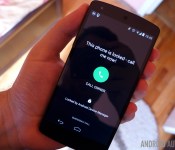
The Lock feature of Android Device Manager is also fairly simple. Tap Lock in the web interface and your device will go into lock down.

You will be asked to apply a new password for your device, you get to write a short message that will display on the lock screen and, best of all, you can supply a phone number that the holder of the phone can easily tap to give you a shout. Not half bad.
Use Erase to say good bye to your lost device
Sometimes there is no hope of recovering your lost device. This is sad, but your private data does not have to be compromised just because you now need to go phone shopping. For this, Android Device Manager provides the Erase option, which simply triggers a full device reset.
Before you trigger Erase on your device, do keep in mind that this will not clear the data on your external microSD card. For this, there are apps like Airdroid and more than can remotely control your device, allowing you to download or wipe the data from the external memory card. You best look into those apps now though, as they can be a nuisance to set up without having your hands on the device.

Confirm your choice, and the next time your device connects to Google servers, BAM! No more data.
What’s next
I wish I could tell you that there was more we can do with Android Device Manager to control and recover your missing device, but I am afraid that is about it, officially speaking.
When it comes to using Android Device Manager, remember that there is a Guest Mode that you can use, if you have to borrow a friend’s device for your tracking efforts.
Next week
I hope that you’ve been able to follow along, maybe even locate a missing device thanks to today’ s Android customization post. Next week, we take a step away from security, we would like to show you how to push notifications to your computer using one of our favorite productivity apps, Pushbullet.
Has Android Device Manager ever saved you from a loss?

Google Glass promoted from Google[x], Explorer program shutting down

The Google Glass team announced today that they are moving on from Google[x] labs and will become their own business unit. The new Google Glass unit will be assigned to Tony Fadell who currently heads up Nest Labs for Google. The Glass team itself will continue to be run by Ivy Ross who will now report to Fadell. As part of the new direction for Glass, Google will stop selling the Explorer Edition of Google Glass after January 19th, although some units will continue to be made available to developers and companies working on specific applications.
Google strongly hinted that they already have plans for the next version of Google Glass and although no timelines were provided, it is anticipated the next update will be released in 2015.
Some sources indicate this change in direction for Google Glass also signals a change in how Google develops products for the market. Glass was probably the most ambitious “beta” program the company engaged in, thanks in no part to the $1,500 cost of Glass for anyone who wanted to volunteer to be a beta tester. This move could signal a transition to a more traditional path to product development, similar to what Nest and Apple have used, where products are developed in secret an only released when considered “fully finished.”
In the Glass announcement today, Google makes specific mention of their Glass at Work initiative. Many industry watchers see the future of Glass as being brightest in workplace applications. However, Ms. Ross comes from a consumer-oriented background and Google’s Nest is also a strong consumer-oriented platform. Despite the slow sales after the program was opened up earlier this year and persistent criticism over privacy issues and technical shortcomings, Google does seem to see potential for the wearable device in both the business and consumer markets.
source: +Google Glass
Come comment on this article: Google Glass promoted from Google[x], Explorer program shutting down
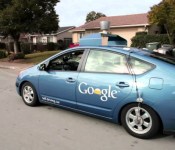
Google partners with automobile suppliers to prepare for self-driving cars
 Google has reportedly been in talks with several major automobile manufacturers in an effort to get their self-driving cars ready for sale by 2020. Some of these manufacturers and suppliers include major players in the space such as Ford, Toyota, and General Motors.
Chris Urmson, director of the self-driving project, cleverly noted that Google likely wouldn’t be able to manufacturer a vehicle better than automobile makers can, so it makes more sense to work with, rather than against, established companies. GM has gone on record saying they would be open to the idea of working with Google, too. Despite getting these partnerships ready, Google still may decide to just create the automated systems instead of manufacturing the entire vehicle.
With these partnerships, Google hopes it can have the cars ready for production within the next five years, assuming no legal regulations create obstacles. The search giant has been working on these vehicles and systems since 2012.
Early prototypes of Google’s self-driving cars apparently look very much like concept designs, but Urmson said the designs of the vehicles will change gradually over time, much like how the cars we use today have.
source: Reuters
Come comment on this article: Google partners with automobile suppliers to prepare for self-driving cars

