



Report: Google to launch Android Pay at I/O

Google has been trying to push its mobile and online payment options over the past couple of years, but still hasn’t implemented a universal payment mechanism for Android users. However, that could be about to change this year, as sources are suggesting that Google will announce a new payment API, named Android Pay, at its I/O conference in May.
Unlike Google Wallet, the Android Pay API will be “built from the group up” for Android. It will apparently allow developers to easily integrate mobile payment options into their apps, which users can pay for through registered credit or debit cards. The aim seems to be to create a simple one-tap payment option for Android developers and customers. The API will be based on Google’s Host Card Emulation (HCE) technology, which is linked to your smartphone’s NFC chip.
Less than a week ago, we also heard similar rumors regarding a revamped Google Wallet service, to also be unveiled at I/O later this year. According to the report, Google is attempting to bring device manufacturers, carriers, banks and payment networks together to support its payment platform.
Interestingly, the source states that Android Pay and Google Wallet APIs will continue to co-exist side by side, but that Wallet will be supported by Android Pay. Google Wallet’s existing “Instant Buy API”, for example, already allows for app developers to implement a “Buy with Google” button, but this could be integrated to receive payments from both of Google’s services.
True or not, Google definitely appears to be stepping up its efforts in the mobile payments space this year. Third party developers, such as WePay, continue to integrate its APIs, Google is reportedly working on a Bluetooth based mobile payment service and also recently acquired Softcard (formerly Isis).
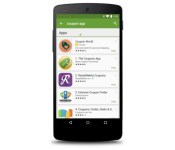
Google is bringing sponsored app search results to the Play Store

Google is making a lot of money from its bread and butter business, showing ads against search results. Now the tech giant is bringing ads for apps to the Play Store.
Here’s how it works – search for a term like “travel apps” or “fitness” and the first app shown in the search results page could be a paid listing by Expedia or Endomondo. Just like on Google.com, the Play Store will show you relevant results from developers who are willing to pay for the privilege.
“Search ads on Google Play will enable developers to drive more awareness of their apps and provide consumers new ways to discover apps that they otherwise might have missed,” said Michael Siliski, Product Management Director for Google Play.

Google will pilot the new feature with a select number of users over the following weeks. The first developers to gain access to paid app listings will be those who are already paying for ads for their apps on Google.com. Google has not specified it, but it looks likely that both the app and the web version of the Play Store will display the new ads.
The addition of paid search results in the Play Store could be a good way for developers to raise awareness of their applications, especially for new products. With that said, deep-pocketed developers could use ads to gain an advantage over smaller competitors, so it remains to be seen how beneficial the feature will be overall.
In general, Google could do much more to improve the quality of its search results. For a company that has so much expertise in search, the results shown in the Play Store are often a mess, with spam or unrelated results drowning out legitimate results. Our Joe Hindy will surely touch on the issue on a future installment of his series dedicated to the Play Store. Check out the first part here.

Google’s bringing sponsored app placements to the Play Store

Google is about to allow software companies to promote their apps on the Android Play Store, a space that was previously off-limits for advertising. That means alongside regular search results, you’ll soon see apps from companies with the biggest marketing budgets. The search giant has pitched it as a way to “provide consumers new ways to discover apps that they otherwise might have missed” while letting vendors raise the profile of apps that’d normally get buried. As the WSJ put it, however, the new tactic is also a way for Google to sell more advertising in the face of slowing sales.
The feature will launch to a “limited set of users… from a pilot group of advertisers” in order to gauge feedback from the ads. Promoted apps will be clearly labeled as such, just as they are in regular search results. So far, Google Play’s apps search has only used algorithms and human intervention, so the changes could have a substantial impact on results.
Google may have decided to monetize Play with ads since Facebook now vacuums in a large amount of ad revenue for apps from the likes of King — which spent almost $400 million marketing Candy Crush Saga and other games. Google took in around $10 billion in revenue from Play last year, and paid nearly $7 billion of that to developers.

Filed under: Cellphones, Tablets, Software, Google
Source: Google

Google’s newest AI can beat your Atari high-scores

Most people’s anxieties about AI concern computers realizing they don’t need humans and wiping us out. It probably never occurred to anyone that, as soon as they discovered beer, Netflix and video games, that computers would ditch plans for world domination, drop out and get a job at the local gas station. It’s a lesson that Google-owned startup DeepMind has learned the hard way after it got its thinking computer hooked on retro computer games.
The London-based startup, founded by Theme Park programmer Demis Hassabis, wondered if an AI could learn how to play computer games all on its own. It hooked the AI up to a series of Atari 2600 titles, but provided it with no specific instructions on what it should do. The team was looking into “reinforcement learning,” whereby you get a little reward whenever you do something good. When the computer started earning points, it received the digital equivalent of a dog treat. After a while, it stopped stumbling around and started to get pretty good at beating the arcade classics of yesteryear.
It’s a big departure from rigid games like Chess, since it’s a lot harder to “solve” a game like Pong with brute-force calculations. Here, the AI has to adapt, learn on its feet and device a rudimentary strategy in order to be successful and earn its little jolt of praise. The team admits that it’s not yet at the point where the system can beat more strategic titles like Ms. Pac-Man or Private Eye, but DeepMind is hoping that it won’t be long before it can. After that, the team is planning to turn its thinking computer into a StarCraft expert — and if it gets hooked on that, there’s no way it’s ever going to take out the garbage, or develop a way to subjugate humanity.
Filed under: Science, Software
Via: The New Yorker
Source: Nature

Smartphone chips are about to get better at Gaming, Twitter and Netflix

There’s been a lot of talk about how phones from certain manufacturers can sense when you’re running benchmarking software and will artificially inflate its performance accordingly. It’s been a problem for some time now, but the industry appears to be finding its own ways of dealing with the issue. ARM, the outfit that designs the bulk of the smartphone industry’s chips, has teamed up with British startup GameBench to make benchmarks not only more honest, but also a lot more understandable.
When we talk about benchmarks, we usually mean an arbitrary number that’s been cranked out by Vellamo or SunSpider. This number has some value when you’re comparing two devices against each other, but tells you very little about how a specific device would run, say, Asphalt 8 in the real world. GameBench’s approach is to benchmark devices around real-world scenarios, like the frames-per-second you’ll get on the aforementioned title, or how many hours of Netflix you’ll get before you need a recharge.
Now that ARM has licensed GameBench’s source code it, along with its partners, can use the information to make chips more efficient. The hope being that future handsets can be tweaked to perform these common, real world tasks better and avoid the need to cheat a benchmark. Hell, maybe we can even imagine a world in which mobile benchmarks and hardware specs are replaced with more meaningful information. Maybe we’re but a few years away from a day when you’ll decide your next purchase based on how many episodes of House of Cards you can watch in a single sitting.
Filed under: Cellphones, Tablets, Google
Source: GameBench

WSJ: YouTube isn’t making money, even with a billion viewers

Despite “Gangnam Style” having over two billion views, hosting countless other viral clips and netting over a billion users per-month, YouTube can’t seem to turn a profit. How’s that? Well, after paying for the infrastructure that makes Google’s video empire possible (and its content partners), The Wall Street Journal says that YouTube didn’t contribute to Mountain View’s earnings. The culprit, apparently, is that most users arrive at videos via links, rather than daily visits to the YouTube homepage where Google could charge a premium for ads. WSJ also reports that the site’s reach isn’t very wide either, with one source’s estimate that nine percent of viewers account for a whopping 85 percent of online-video views. That makes it a much less appealing audience for advertisers than traditional TV programming, despite the outfit’s increasing investment in original content.
Google’s hoping that the Music Key subscription service, among other ideas, can hold the tide of red ink back and turn that sea black. Another method is with targeted ads, so you can get inundated with sales pitches for stuff you’ve recently browsed on Amazon. WSJ‘s sources say that those might be a bit harder to add than Google previously expected, though, and thankfully could take some time to roll out. At least there’s some form of silver lining here.
Filed under: Home Entertainment, Internet, HD, Google
Source: The Wall Street Journal
Revamped Android Pay will be announced at Google I/O
 With Apple Pay off to a solid start and Samsung working on a better competitor to the service, it would make sense for Google to push their own mobile payment system front and center to stay competitive, and some rumors are pointing at that happening at I/O later this year.
This new service, called Android Pay, will actually be separate from Google Wallet. Android Pay will supposedly allow vendors to integrate the service into their Android apps so customers can quickly buy things without having to put in their debit or credit card information over and over. On top of that, retailers will also be able to set up tap-to-pay transactions in physical locations using Android Pay.
Sound similar to Google Wallet? In some ways, it is. It does have some differences in how open it is, since retailers will be able to use a completely open tool to set up payments instead of specifically having to go through Google Wallet. Currently you’d have to put your debit card info into Wallet, then the app would have to support Google Wallet checkout. Android Pay cuts out that middleman, which may or may not make a huge difference.
However Google plans to spin this, we’ll know more when I/O rolls around.
source: Ars Technica
Come comment on this article: Revamped Android Pay will be announced at Google I/O

Google Classroom introduces themes and mobile app improvements

Making the Classroom experience more unique, Google has provided themes for teachers and their students. Teachers can go ahead and upload personal images as themes. Google Classroom will offer cropping options for perfect dimensions so nothing is cutoff or distorted. In the event that a personal image is not available or needed, Google has nearly fifty options to use as a theme. Classroom matches relevant themes with class titles when a teachers cannot decide upon themes for themselves.
Hit the break to see what Google has going on with the mobile side of Classroom.
Here are the new features included in the mobile app update:
- Student and teachers can now view the About page in the mobile app for quick access to their class materials and resources
- On iOS, students can now add images, videos, and any other files to assignments from other apps
- Your favorite emoji are now available on the Android app [insert smiley face here]
- We’ve made overall changes that will increase the speed of the app’s performance, so you can get your work done even faster

Source: Google for Education
Come comment on this article: Google Classroom introduces themes and mobile app improvements
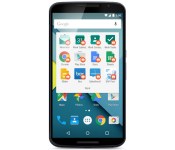
Android for Work is ready to make your phone office-friendly

Remember Android for Work, Google’s big effort to make your smartphone safe for business? It’s finally ready for prime time. The officially launched initiative lets you keep work-related accounts and app info separate from personal affairs while maintaining security — you don’t have to worry that higher-ups will peek at (or worse, delete) your vacation photos. You’ll only get full flexibility if you’re using Android 5.0 Lollipop, which lets you create work profiles, but an app will grant you access to corporate-approved tools if you’re running Android 4.0 or later.
The launch is getting help from a mix of app and hardware providers, including Box, Citrix, VMware, HTC, LG and Sony. Even BlackBerry is helping out with Android for Work support in its latest management tools. Developers of paid apps can even get in the mix, by opting-in to make their apps available for bulk purchase. However, Samsung isn’t pitching in to the same degree that was promised last year. While Samsung is still a partner, Google tells Recode that it didn’t end up using the Korean tech firm’s Knox technology to lock things down. Whatever’s under the hood, you now have a better chance of using your personal phone for office duties without enduring the hassles and security risks of the past.
Filed under: Cellphones, Internet, Mobile, Samsung, Google, Blackberry
Source: Android Official Blog, BlackBerry

Google Play Music now lets you upload 50,000 of your favorite songs

Google on Wednesday announced that its Google Play Music service will now let users upload up to 50,000 personal songs. Up 250% from its previous allotment of 20,000, the feature works for both paid and free accounts. Indeed, you can take all of that music you’ve got on CD’s and hard drives and put them in the Google cloud. Once there, you can access them from a variety of platforms including Android, iOS, PC, and Mac. What’s more, you can also stream your songs to a Chromecast.
Here’s how you can store your music online today:
- Sign in to Google Play Music – Go to your computer and visit play.google.com/music. Sign in with your Google account if needed.
- Claim your free storage – If you’d like to try our subscription service too, click “Get Started.” Otherwise, click “No Thanks” to continue with the free storage.
- Add your music collection – The setup process will guide you through adding our Chrome app, which provides seamless uploading. You can choose to simply upload your entire iTunes library or select other music folders.
- Access your music everywhere – You can stream or download music to your Android, iPhone or iPad for easy offline listening. It’s also all available on the web when you’re on your computer. And best of all, when you upgrade to a new computer or phone, your music comes along, too.
The post Google Play Music now lets you upload 50,000 of your favorite songs appeared first on AndroidGuys.

