



Xbox One exclusively debuts FX animated series ‘Chozen’ for some cable customers

Now that Eastbound & Down is over, the creative team behind that show is launching a new animated series on FX called Chozen. Microsoft has snagged an exclusive for the premiere episode, so owners of the Xbox One can load up their FXNow app January 6th and watch a week before it airs on TV. We don’t expect the cable companies to be too upset though, since, like the Fox Sports Go NFL Playoffs streaming setup you’ll need a subscription with participating TV providers to actually view the episode. AT&T U-Verse, Comcast, Cablevision, Suddenlink and WOW are all on the list, while everyone else will have to wait until the 13th when it comes on after a new episode of Archer.
This could be a sign of the growing relationship between Microsoft and traditional TV providers, or it could just be Fox snagging some extra promotion before its new show hits. The title character Chozen is a fresh-out-of-prison gay white rapper voiced by SNL’s Bobby Moynihan, taking on the music industry, while other characters are voiced by the likes of Method Man, Hannibal Buress, Michael Peña, and Nick Swardson. Either way, we’ll see how close the two sides are after Microsoft debuts its own original content later this year.
Filed under: Gaming, Home Entertainment, HD, Microsoft
Source: Xbox Wire

Wikipad breaks off controls into mobile Gamevice gamepad

In its ongoing effort to announce products people may not want long before said products are available to buy, Wikipad today unveiled its Gamevice tablet game controller. The mockup above is an example of what the Gamevice might look like when we get our hands on it sometime later in 2014 — it won’t be at CES next week and it doesn’t have a projected price or release window (other than this calendar year). Rather than focus on the larger tablet form factor, the Gamevice adapts the 7-inch Wikipad’s controls for — the company’s hoping — a variety of Android and Windows 8 devices. It sounds like iOS support is also in the works, but there’s nothing officially confirmed just yet.
Whether there’s a market for Wikipad’s Gamevice is another question altogether. There’s no shortage of mobile gamepads out there, and it’s not clear that Gamevice is any better than the competition. If anything, based on previous experience with the Wikipad’s controls, we’re a bit skeptical.
The company also announced an OTA update for the 7-inch Wikipad that adds Jelly Bean 4.2 and mappable controls. It should be available today.
Filed under: Gaming, Handhelds, Peripherals, Software, Mobile

Engadget’s CES 2014 preview

CES isn’t what it used to be. That’s a mantra we’ve heard year after year. With major players like Google, Apple and Microsoft choosing to throw their own lavish product launches and specialized events like Mobile World Congress vying for our attention, it’s hard to argue that things haven’t changed. However, come Monday, that mantra will fade to a quiet whisper as the onslaught of new releases and product demos flood the pages of Engadget. The formula may have shifted, but there is still plenty to see. In an attempt to prepare you for the next seven days, here’s a primer on what we’re likely to see at CES 2014.
Audio
 When it comes to audio at CES, it’s truly a broad-reaching category. Bluetooth speakers, headphones, soundbars, home entertainment systems and personal audio devices all seek to tickle our ears. What can we expect this year? We already know that synth-maker Korg is releasing a USB DAC, taking a step into the consumer audio side of things and hoping to make your digital music sound better at the same time. We’re also hearing word of exciting new products and collaborations coming from 50 Cent’s SMS headphone brand. Based on previous CES form, and the fact it’s throwing a rock-heavy party for the show, we can divine that Harman Kardon (which also means JBL and AKG) will likely be releasing a bevy of new products, too. Brands like LG, Samsung and Sony are also fond of releasing new home/personal audio gear at CES, so don’t be surprised if there’s a new valve amp, soundbar or a slew of Bluetooth accessories from the big boys. Other audio players to watch include Sennheiser, Blue Microphones, IK Multimedia and Skullcandy — all of which have existing product lines currently ripe for a refresh.
If there are going to be any trends, we’re guessing the onward march toward everything wireless will continue to gain momentum.
If there are going to be any trends, we’re guessing the onward march toward everything wireless will continue to gain momentum. In real terms, this could mean more networked home audio, plus Bluetooth 4.0 and aptX (a codec that delivers better audio over Bluetooth) support finding their way into an ever-increasing number of products. There’s another wireless-audio technology that we’ll hopefully see more of as well. WiSA broke commercial cover recently with Bang & Olufsen, and thanks to its high resolution (24-bit, 96kHz) will be a favorite with audiophiles. Lastly, 2014 could also be the year that bone conduction finally crosses over into the mainstream. It’s been around for a while, and isn’t a stranger to CES, but with Google Glass using the technology, it’s increasingly likely to trickle down into even more mainstream devices over the next 12 months. – James Trew
Auto
 As the concept of a connected car has quickly morphed from exception to the norm in the last few years, so too has their presence at CES. Last year saw QNX showing off a seriously tricked-out Bentley with some of the best uses of displays and audio gear we’ve ever seen anywhere near a car. Audi’s self-parking and piloted-driving demos were equally amazing, and for eager development houses, both GM and Ford showed off platforms for app creation.
CES 2014 is being touted as a record year for automotive tech demonstrations with nine manufacturers grabbing a combined 140,000 square feet of floor space — up 25 percent from last year.
CES 2014 is being touted as a record year for automotive tech demonstrations with nine manufacturers grabbing a combined 140,000 square feet of floor space — up 25 percent from last year. The CEA estimates that factory-installed extras alone will amount to $11 billion getting stuffed into the pockets of the auto industry in 2014. This year’s show will undoubtedly feature piles of the traditional auto-entertainment kit from notables like Pioneer and JVC Kenwood, but what we’re more excited about is the next wave of auto infotainment. For example, Audi and Google are expected to announce an in-car partnership spun around a built-in Android platform rather than your existing phone. We’ll also be on the lookout for in-car connectivity enhancements and, of course, as much autonomous stuff as we can get our cameras behind. – Sean Cooper
Cameras
 Trade shows like CP+ in Japan, Photokina in Germany and even NAB in Las Vegas have a heavier digital imaging focus than the electronics smorgasbord that is CES, but if you’re after a new point-and-shoot or a refreshed mid-range camcorder, you’re going to want to tune in next week. CES 2014 is sure to bring a bounty of new pocket cameras — from $99 kid-friendly shooters to video cams with top-notch image stabilization, there’s going to be a lot of fresh gear on the floor. As always, some manufacturers will boast about megapixel counts while others will focus on advanced optics, WiFi, portable designs and other perks like built-in apps and an Android OS, so be on the lookout for the features that matter most to you. Keep in mind that image quality can vary dramatically, even between two cameras with the same size sensors and identical pixel counts, so you’ll want to dive beyond the camera’s resolution and really get a feel for what’s under the hood before you pull the trigger.
Don’t be surprised if camcorders and action cams steal the spotlight at this year’s show.
Don’t be surprised if camcorders and action cams steal the spotlight at this year’s show. With a bigger-than-ever push for 4K TVs, electronics makers that dabble in multiple product categories — Panasonic, Samsung, Sony — will likely peddle a new generation of 4K-capable video cameras. We expect to see dozens, if not hundreds of new ruggedized models this month, too, from industry leaders like GoPro and smaller Chinese manufacturers alike. It’s important to keep in mind that CES is very much a consumer-focused event, so don’t be discouraged if you don’t see a full suite of high-end mirrorless cameras and DSLRs — those will likely debut at imaging events later in the year. And, with the Winter Olympics just around the corner, you may even catch photographers using 2014 flagships before they’re formally introduced. – Zach Honig
Gaming
 Let’s not kid ourselves: CES — at this point, anyway — is basically a trade show for new televisions. New phones are unveiled at their own events or at Mobile World Congress, as are tablets; and gaming waits for E3. One of last year’s biggest stories was — no joke — a smart fork. Yes, the thing you eat food with. That kind of fork.
Amazingly, another one of the biggest stories from last year came from a long-established player in the gaming industry that hadn’t shown up at CES in years past: Valve. The Half-Life maker’s new project, “Steam Machines,” still didn’t have a name at CES 2013, but we did get to see some prototypes of Valve’s vision for PC gaming in the living room. If you were into that, you’ll be glad to hear that Valve’s returning to CES in 2014. The company has big plans to show off the first wave of third-party Steam Machines arriving in the coming year. We’ve already had a taste of what’s in store, and the future looks delightfully subdued. No neon underglow! Hooray!
Color us unsurprised if something PlayStation-related is announced next week.
Another recent entrant to CES (and to gaming in general) is the Oculus Rift, and 2014′s CES has the folks from Oculus showing off the latest iteration of their completely insane virtual reality headset. We’re told that what’s being shown isn’t quite the final model, but it’ll have a heckuva lot more bells and whistles than the current dev kit (depth tracking, anyone?). It’s likely that the latest iteration of the dev kit will also sport the HD resolution we tried at E3.
You’ll notice we haven’t mentioned Nintendo, Sony or Microsoft just yet, and that’s because all three regularly skip CES in terms of gaming announcements. This year may be different, with Sony CEO (and former PlayStation head) Kaz Hirai giving the big keynote. And hey, wouldn’t you know it; the PlayStation 4 just came out a few months ago. Color us unsurprised if something PlayStation-related is announced next week. The other two major console players, though? It looks like they’re both saving up for GDC in March and E3 in June.
And of course, companies like NVIDIA, Mad Catz and Razer will have new wares to show off. Of those three — from what we’re hearing — it sounds like Razer has the most surprises up its sleeve. We’ll all know much, much more come Monday. – Ben Gilbert
Home Theater
 CES 2014 for home theater and HDTV can likely be summed up in just two characters: 4K. Any manufacturer that wasn’t pushing Ultra HD televisions will be, and the ones that were will have many new models to show. Samsung, LG and Sony have led the way with high-res TV displays over the last year, and we’re anticipating that this year, many considering a mid-range or high-end HDTV will have to seriously consider Ultra HD options as their prices continue to fall. Second to price, the biggest remaining question for the Ultra HD push is content, and so far, we haven’t heard much from the Blu-ray camp, broadcasters and many streamers. Netflix is expected to launch streaming in 4K via embedded apps — who else is on board, and when, is something we hope to have answered next week.
Any manufacturer that wasn’t pushing Ultra HD televisions will be, and the ones that were will have many new models to show.
Of course, HDTV tech favorites of the past, like 3D and smart TV, will also be around, with the former possibly boosted by new high-res TVs, and the latter at a crossroads. Despite Apple’s traditional CES absence, rumors it will make a full assault on the living room cast a large shadow, while industry players like Amazon are also reportedly prepping entries, and new versions of the Xbox and PlayStation have already arrived. The Google TV platform is dead as a brand, meaning we’ll find out if “Android with Google Services” can thrive, or if the smart TV vision will be reshaped around mobile-first tech like Chromecast and AirPlay.
The other display technology with something to prove is OLED. The first large OLED TVs arrived last year, promising better image quality than LCD or plasma could provide, but we still haven’t seen them on sale in sizes other than 55-inches or at a reasonable price. Now that OLED is here, can/will it become a mainstream option? If 2014 is the year, we’ll know very soon. – Richard Lawler
Household
 Last year’s CES was a relatively quiet one for household upgrades, but a new alliance announced in the run-up to CES might blow open the world of connected white goods, ambient lights and… that router over there in the corner. The AllSeen Alliance includes LG, Panasonic and Qualcomm, all companies that are attending this year’s Vegas show. There will also be a lot of smaller outfits showing off chipsets and systems that hope to build a bridge between your wireless network, TV and smart devices. Smart security hub maker (and recent crowdfunding success story) Canary will be showing off its very latest model — and we could well see other companies looking to offer cheaper security and smart home hubs, up against pricier systems from multinational corporations. Things could get interesting… and hopefully cheaper.
Both Samsung and LG continue to forge ahead with their smart appliances, even if most customers aren’t biting just yet.
Both Samsung and LG continue to forge ahead with their smart appliances, even if most customers aren’t biting just yet. In a recent briefing, Samsung cited the rise in smart appliances and smart homes as another factor in its push for a unified “Samsung sound.” So, perhaps it will have something to surprise us with again. We saw the surprisingly well-envisioned Evernote fridge last time around — what could the next team-up be? Well, rival LG has already announced that it’s teamed up with Line for its incoming 2014 range of home appliances. In HomeChat, you’ll even be able to use Siri-esque natural language within the messaging app to schedule and adjust settings, for example, ordering your fridge into power-saving mode when you’re on vacation. Or attending a weeklong trade show. – Mat Smith
Laptops and Hybrids
 It’s only so often that laptops have their moment at CES. Back in 2009, we saw a glut of netbooks, and then, in 2012, Ultrabooks stole the show. By all accounts, it looks like 2014 will be another in-between year, with many existing machines receiving modest design tweaks and fresh processors (that’s right, some models still haven’t been updated with Haswell). And of the laptops that are coming out, many of them don’t even look like laptops! Expect to see even more notebook/tablet hybrids, some with low-power Atom processors that would be more at home inside a tablet than a proper PC. In some cases, the term “PC” isn’t even appropriate: One manufacturer is releasing just a single Chromebook, and nothing else.
By all accounts, it looks like 2014 will be another in-between year, with many existing machines receiving modest design tweaks and fresh processors.
Strangest of all, many of the laptops being announced at CES aren’t even for consumers, but rather, business users. One major player is announcing all enterprise products, while another is planning to unveil a new business Ultrabook. To the extent that we now get to bring our own devices to the IT guys, this stuff matters. We can’t guarantee a business notebook will ever win our Best in Show award, but we’ll be reporting live nonetheless, getting hands-on as soon as we can. – Dana Wollman
Smartphones and Wearables
 With Mobile World Congress around the corner, several manufacturers choose not to release their latest flagships in the midst of the CES chaos. We don’t plan on seeing much (if anything) from big companies like Samsung, Nokia, Motorola, BlackBerry, Apple (obviously) and HTC. Samsung will probably be more focused on tablets than phones, but we wouldn’t be shocked if it shows a mid-range (or low-end) Galaxy or two in its booth. Sony usually brings a decent showing to CES, and we’ve heard rumors that we’ll see the international Z1 mini (Amani) and a special version of the Z1 on T-Mobile. LG’s reportedly brewing up a 4.7-inch G2 mini, but we’re not clear if we should expect it in Vegas next week or at MWC next month. However, we’re pretty confident that LG’s curved device, the G Flex, will be announced for at least three US carriers (AT&T, T-Mobile and Sprint) at CES.
Speaking of which, AT&T’s annual Developer Summit happens to begin two days before CES in Las Vegas, so we can expect to see some new handsets there. T-Mobile will also show up in a big way by unveiling its newest UnCarrier initiative. We haven’t heard any whispers coming out of Verizon’s or Sprint’s camps, although we wouldn’t be overly surprised to see the latter introduce more phones (in addition to the G Flex) compatible with the network’s tri-band LTE service, Spark. You’ll also see Meizu’s intro into the US market, which hopefully means we’ll be able to purchase a 128GB MX3 flagship device with US-friendly frequencies. Lastly, we’re hoping to gaze upon some new smartphones with 2K resolution and prototype devices with bendable or foldable displays.
In contrast to smartphones, wearables will likely make a huge showing at CES.
On the processor front, be on the lookout for more chipset manufacturers (such as Qualcomm and Broadcom) introducing products with 64-bit support. Qualcomm’s already taken the initiative with the Snapdragon 410, an SoC destined for low-cost Android and Windows Phone devices, but this is likely just foreshadowing of higher-end chips with 64-bit support. We’re hoping Samsung will show off next-gen Exynos SoCs that are more efficient than the current Octa-core models, as well as its recently announced DDR4 chip. Sources have also told Engadget that we should expect to see Tegra 5/Project Logan next week.
In contrast to smartphones, wearables will likely make a huge showing at CES. Pebble teased that it has something exciting planned for the show, although it didn’t offer up any specifics. Epson’s expected to unveil new products in the wearables space, Archos has confirmed that it’ll be showing off a series of “Pebble-like” watches and ZTE just announced the “BlueWatch,” which will offer fitness features as well as standard phone controls. These are just the big names, but countless other exhibitors are expected to show off their latest wearables at the show: Neptune, Cookoo, Burg, Dennco and Kronoz are just a few examples of newer players hoping to make a big splash next week. It’s not all just watches though — be on the lookout for the latest from Oculus and similar virtual reality gaming wearables like the Avegant Glyph. – Brad Molen
Tablets
 Not everyone needs a 4K tablet. And by that, we mean pretty much only graphic designers and architects have probable use cases for it. As shocking and welcome a surprise as Panasonic’s 20-inch stunner was last year, it’s not really a mass-market product — the Toughpad‘s size alone makes that point all too evident. That doesn’t mean we won’t see a few more of these pricey, Ultra High-Definition tablets crop up at CES 2014. With 4K growing ever closer to becoming a commercial reality and not just a trade show buzzword, compatible devices are becoming more and more prevalent. So, it’s entirely possible manufacturers will want to get their own 4K tablets out there just to say “me too.” But that’s not where you should be realistically focusing your attention or dollars for now.
If any company’s poised to dazzle us with an unexpected whizz-bang tablet announcement, our money’s on Samsung.
As past shows have proven, CES isn’t much of a showcase for groundbreaking tablet tech, thus our expectations for any big reveals from major players on the Android and Windows fronts are meager at best. That said, you’re likely to see manufacturers experimenting more with hybridized tablet designs and detachables. The bulk of that will probably come from the Windows 8.1 portfolio, seeing as how manufacturers don’t seem to take as many risks with Android slates, screen size excepted. And what of Android? Well, with Google’s latest version of Android focused on scaling down for lesser-specced devices, there could be a cavalcade of actually usable, no-name slates running the OS that redefines our perception of low-cost tablets.
Of course, there’s always the element of surprise. If any company’s poised to dazzle us with an unexpected whizz-bang tablet announcement, our money’s on Samsung. How that could “play” out, we’re not entirely sure, but we direct you to accessories like Samsung’s GamePad as a possible wink and nod to the company’s future direction. Galaxy Game, anyone? Or, we could simply be in store for more iterations of its Galaxy Tab and Note lines. With Samsung’s shotgun spray approach to gadgets, you never know. – Joseph Volpe
Filed under: Cellphones, Cameras, Gaming, Home Entertainment, Household, Laptops, Tablets, Transportation, Wearables, Wireless, HD, Mobile

Tobii and SteelSeries team up to launch eye-tracking game controller

After spending the better part of a year fine-tuning its technology for Windows 8 machines, eye-tracking specialist Tobii is looking to conquer new market: gaming. With CES just days away, the Swedish company announced today that it has partnered with gaming accessory maker SteelSeries to launch what both companies call “the world’s first mass-market consumer eye-tracking device for gamers.” SteelSeries doesn’t have anything to show us just yet, but tells us that its new gaming gear will let players signal their intent, aim and express emotions inside supported games. In the meantime, we hope to catch up with Tobii when it takes to the CES floor with its EyeX Controller, giving us an insight into what its partner has in store when it launches its first eye-tracking gaming products in mid-2014.
Filed under: Gaming
Source: Tobii (Businesswire)
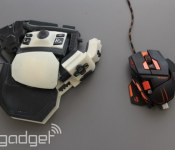
Sinister gamepad hopes to replace PC gamers’ keyboards, leaves the mouse (hands-on)

Putting aside arguments over platform exclusives, graphical output and the convenience of gaming from the couch, one element separates console and PC gamers more than any other: control. Those parked in front of a television have an all-in-one gamepad with analog nubs, clicky buttons and smooth triggers, while those who bask in the glow of a monitor boast wield a high-accuracy mouse and and full QWERTY keyboard. While trying to jump from one platform to the other, inventor Chris Zhao-Holland found the differences frustrating. Sure, games on the PC benefited from mouse control, but the stiff inputs of the keyboard lost the built-in sensitivity of the console’s dual-analog joysticks. It didn’t take long for him to cook up the idea for Sinister, a modular PC keypad that hopes to take the best from both worlds.
Zhao-Holland dropped by Engadget’s West Coast office with an early prototype, presenting us with a 3D-printed palm-rest adorned with Xbox 360 buttons and a single analog nub. These buttons are modular, and can be rearranged mid-game without forgetting their function. The contraption looks a little like a mash up between one of Razer’s keypad peripherals and a Splitfish controller, and oddly, functions like both. A pair of switches on the unit’s side decide if the PC will recognize it as an Xinput device (like an Xbox 360 controller), a mouse and DirectInput device (with keys that need to be assigned through a companion program) or a mixture of both. These disparate modes give lend the device compatibility, but each comes with its own caveats.
In the default Xinput mode, Sinister is immediately usable with any game that supports the Xbox 360 controller, but, it also means that the device acts like an Xbox 360 controller. This specifically becomes an issue while using the mouse, which emulates the gamepad’s right analog stick while in this mode. Games that normally display a cursor won’t, and first person shooter titles will react to mouse movements differently than with native mouse control. Gamers used to precision mouse control might find it a little off putting. Tweaking in-game sensitivity settings can help, but the experience will vary from title to title. To combat this, the device has a hybrid mode, allowing the gamepad to function like an Xbox Controller, while leaving the mouse (attached through a USB passthrough port) to function in its native mode — the only problem here is not every game supports using both devices simultaneously. Finally, Sinister has a DirectInput mode, which allows users to map the gamepad’s buttons to keyboard commands manually while still enjoying full native mouse control.
We spent a few minutes exploring Crysis 3′s tutorial with the gamepad, and while it showed some potential, there’s definitely a learning curve. Sinister’s mishmash of console and PC control schemes often left us confused, performing the wrong action or misinterpreting on-screen prompts. Its creator admitted to us that it takes some getting used to, but mentioned that its gamepad roots help it in one other area: haptics. Hidden under the device’s palm rest are Vivitouch electroactive polymers, which lend Sinister a more precise haptic response than most gamepads. Indeed, the keypad’s rumblings were subtler than most — like our previous experiences with the haptic technology it felt more delicate and detailed, but not quite as forceful.
Before Zhao-Holland left, he showed us a video of what the final product would be able to do. In addition to emulating controllers, swapping buttons and trying to bridge a gap between two gaming worlds, the keypad element also transforms to match a players hand– adjusting in height for players who grip their keyboard like a “claw” and those who lay their hand relatively flat. The stiff, printed prototype we handled wasn’t quite capable of these adjustments just yet, but the creator told us his team is hoping to refine it before CES 2014. In fact, the entire project is on the fast track: later this month, Tivitas Interactive will be launching a Kickstarter campaign to bring the product to market, and plans to ship its first units before the summer.

Sinister is an interesting proposition — it stands to offer a degree of analog control that otherwise escapes PC gamers, but it faces some limitations by leaning on Xinput for its primary input mode. At this point in time, it’s difficult to say if it’s a knockout device that will cater to a small niche or a transitional idea that came too late, but it has potential, and we’re looking forward to see if it lives up to it. Besides, it’s hard not to love nerdy, modular devices.
Filed under: Gaming

Battlefield 4 won’t get AMD-powered frame rate boost until later in January

The company known affectionately as Advanced Micro Delays has just confirmed something we already knew: the intriguing Mantle update for Battlefield 4, which promises a “significant” frame rate bonus for PC gamers running AMD hardware, has been postponed. It didn’t arrive in December like it was supposed to, but is now officially meant to be on track for release sometime in January. The gossip is that the source of the delay isn’t actually on AMD’s side, but rather on EA DICE’s, since the game developer has been swamped with bug-fixing chores and hasn’t had time to focus on luxuries. Meanwhile, other developers tell us that they’re getting on well with Mantle, thanks to its ability to circumvent DirectX and make better use of AMD’s Graphics Core Next and octa-core CPU designs — and that’s something that we expect to be able to prove, one way or another, in the next few days.
Filed under: Desktops, Gaming, Laptops, AMD
Via: Anandtech

Wii Fit U hits retail January 10th, still won’t work unless you use it

Come January 10th, Nintendo’s tardy Wii Fit U will hit store shelves at a handful of price points and configurations — all with the intent of making both you and your wallet lighter. If you missed out on last generation’s fitness-game craze, a bundle with the software, a Wii Balance Board and Fit Meter fitness tracker will cost you $90. Just need the new game and a Fit Meter? That’ll set you back $50, while individual Fit Meters go for $20 each. Luckily, if your pocketbook is already thin, The Big N is still running its trial-to-full-game-conversion promo if you download Wii Fit U from the eShop and sync a Fit Meter. That $30 discount only lasts through January though, so running to the store might be a good idea.
Filed under: Gaming, Home Entertainment, HD, Nintendo
Via: Joystiq
Source: Nintendo
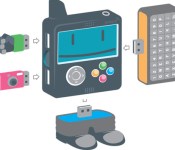
Switched On: The 2013 Switchies, Part Two
Each week Ross Rubin contributes Switched On, a column about consumer technology.

The last Switched On introduced the 2013 Switchie Awards for TV, PC and gaming products. This time, we’ll take a look at the mobile and wearable devices that made their mark in 2013.
The “Great Slate” Award for Best New Large Tablet (nine inches or larger) goes to the iPad Air. As competitors add all manner of keyboards and other accoutrements to differentiate their slates, Apple embraced the minimalism for which it is known with the iPad Air. Is it a content-creation tool? For certain kinds of content, yes. But the Air refines the essence of a pure tablet experience. Honorable Mention goes to the budget-friendly, kickstand-equipped Lenovo Yoga Tablet 10; Lenovo also snagged an Honorable Mention in the convertibles category with the Yoga 11 last year.
The “Great Slate, Smaller Plate” Award for Best New Small Tablet (8.9 inches or smaller) goes to the Amazon Kindle Fire HDX. Amazon paved the way in budget tablets, but the Kindle Fire line always matched its excellent content offerings with solid, if uninspired hardware. That has changed with the Kindle Fire HDX, which brings the online store’s strongest content package inside a speedy shell matched with a useful cover stand in the Origami case. Like the Kindle Fire HDX, the iPad mini, an Honorable Mention winner, emerged from the larger iPad’s shadow. This year, the iPad mini went from being the poorer, smaller version of its larger sibling to a powerful, if pricey, equal that trades screen size for portability.
The “Make the Call” Award for Best New Smartphone goes to the HTC One. While its features and hardware may no longer be state of the art, the One’s exquisite design turned enough heads that Google saw demand to make a pure Google version of it. Honorable Mentions go to the Moto X and LG G2 for, among other things, their clever use of sensors, and the Nokia Lumia 1520 for offering the strongest imaging experience in a 6-inch (or greater) device.
The “Make the Big Call” Award for Best New Large Smartphone (six-plus inches) goes to the Sony Xperia Z Ultra. This grip-busting, 6.4-inch, water-resistant giant among giants includes a scratchproof display and great imaging. Honorable Mention goes to the Nokia Lumia 1520 for refining the strong imaging capabilities of the Lumia 1020 in a large phone.
The “Fun on the Run” Award for Best New Mobile Product goes to the NVIDIA Shield. Enabling consumption of both souped-up Android and PC games (with some serious caveats), the Shield presents a new spin on hand-held gaming on the go or at home.
The “Ready to Pair” Award for Best New Wearables goes to the Fitbit Force. Fitbit has encountered growing competition in both the waist clip and wristband spaces. The Fitbit Force improves upon the earlier Fitbit Flex by adding a small OLED with engaging animations. Honorable Mention for this prize goes to the Pebble smartwatch, which should become more useful in 2014 due to the availability of more apps.
The “Seeing is Believing” Award for Best New Display goes to the Garmin HUD. As car navigation shifts away from dedicated devices, Garmin is catering to smartphones — at least those running its navigation apps — with one of the first heads-up displays available for less than $120. That’s a small price to pay for less clutter and a taste of the future.
The “By Any Other Name” Award for Best Pun in a Product Name goes to Porkfolio. Crowdsourced (but not crowdfunded) product-development company Quirky partnered with GE to release devices ranging from a remotely controllable version of its signature snaking Power Pivot power strip to a dubious connected egg-age tracker for your refrigerator. Somewhere between the two was an app-connected piggy bank, dubbed Porkfolio, that counts coins and alerts you when it’s jostled. Unlike the traditional piggy bank, the porcine coin container is posed lying on its back with its stomach up — a supine (or perhaps “pork-upine”) orientation.
Ross Rubin is principal analyst at Reticle Research, a research and advisory firm focusing on consumer technology adoption. He shares commentary at Techspressive and on Twitter at @rossrubin.
Filed under: Cellphones, Misc, Gaming, Tablets, Wearables, Apple, HTC, Amazon
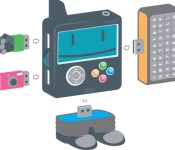
Switched On: The 2013 Switchies, Part One
Each week Ross Rubin contributes Switched On, a column about consumer technology.

It’s that special time of year between holiday sales and the pre-CES hype cycle that presents an opportunity to consider some of the most innovative devices of the year. Switched On is proud to present the 2013 Saluting Wares Improving Technology’s Contribution to Humanity awards, also known as The Switchies.
This installment marks the eighth annual Switchies, which are decided based on a rigorous examination of the opinion of me, and do not reflect the opinion of Engadget or its editors. For that latter honor, nominees will need to win an Engadget Award. Now, then, let’s stroll past the red carpet and tear open those envelopes.
This column will focus on TV, PC and gaming products while the next installment will focus on mobile and wearable devices.
The “Big Screen Scene” Award for Best New Video Device goes to the Google Chromecast. Taking an app-by-app approach, Google’s cheap stream-redirecting HDMI dongle took everyone by pleasant surprise with its small size and ease of use. It also helped Google show the power of bridging the assets of Android and Chrome and built momentum in a frustrating race for the living room. It’s now rapidly adding new content sources.
Honorable Mention for Best New Video Device goes to the Xbox One. Microsoft’s latest home console is not only a powerful game system, but also a living room experience that incorporates many leading-edge technologies, including speech control, gesture control, video chat and an expanding array of over-the-top entertainment. Honorable Mention also goes to the TiVo Roamio Pro, the latest generation of the venerable CableCARD DVR that can support up to six tuners and offers improved streaming and offload to mobile devices.
The “Play’s the Thing” Award for Best New Gaming Device goes to Sony’s PlayStation 4. By casting off much of the corporate baggage of the PlayStation 3, like in-house chips, 3D and expensive novel optical formats, Sony finds itself in the enviable sweet spot of offering top-notch performance without occupying the top end of the market. Sony’s simpler development proposition should also help enable a stronger flow of game titles coming into 2014.
The “Convertible Bonds” Award for Best New Hybrid Computing Device goes to Microsoft’s Surface Pro 2. Still a study in contrasts, the second generation of Microsoft’s Intel-based tablet combines high performance and dramatically improved battery life, but you’ll be spending most of your time in desktop mode to tap its potential. Honorable Mention goes to Nokia’s cellular-equipped, outdoor-optimized, Windows RT-based Lumia 2520 and HP’s Android-based Slatebook x2 “2-in-1″ detachable.
The “Guess We Just Click” Award for Best New Input Peripheral goes to the Leap Motion controller. While we continue to see many companies focus on bringing down the cost of gesture control at the expense of a rich experience, Leap Motion presented a new 10-inch paradigm that won it a partnership with HP. Leap Motion wrests this award from Microsoft, which won it for the past three years.
The “Critical Bits” Award for Best New OS goes to OS X Mavericks. In a year where Apple, Microsoft and Google all unveiled new versions of their operating systems for tablets, Mavericks was left virtually unchallenged to pursue improvements for the desktop paradigm and Apple delivered with better battery life through superior memory management and its best multiple-monitor support yet.
Ross Rubin is principal analyst at Reticle Research, a research and advisory firm focusing on consumer technology adoption. He shares commentary at Techspressive and on Twitter at @rossrubin.
Filed under: Gaming, Home Entertainment, Peripherals, Software, Apple, Sony, Microsoft, Google

Sony’s first PlayStation 4 ad for Japan teases the Japanese with everyone’s joy

Japan, you’ll get the PlayStation 4 soon. Promise. For now, look at everyone else enjoying it. Don’t they look happy? That could be you on February 22nd!
Source: YouTube

