


OUYA’s new matte black console offers twice the storage for $130

If you were jonesing for a 16GB OUYA console but didn’t snag the limited white edition, we have good news: you just got a second chance at buying your dream Android gaming system. The company plans to launch a standard 16GB model in matte black (aka “anthracite”) that throws in a handful of important tweaks. It includes the refined gamepad, with higher-quality buttons and a more responsive Bluetooth connection; it also boasts stronger WiFi performance and more recent firmware. Should the color, capacity and tweaks be enough to seal the deal, you can buy the black variant starting today from Amazon or OUYA for $130.
Filed under: Gaming
Source: OUYA
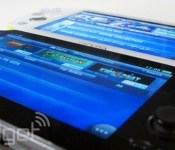
Should Brits buy the new, slimmer and pricier PlayStation Vita?

Decisions, decisions, decisions. Saying it three times won’t make things any easier, but that’s where we come in. Sony’s latest iteration of the PlayStation Vita handheld, which we’re going to call the Vita Slim from now on (as seems to be the fashion), is coming to the UK, having previously only been available in Asia. It’s up for pre-order right now and will launch a week from today — so, do you want one? The choice is ultimately yours, of course, and it’s a delicate one, but if the pressure is too much to bear then head past the break where we explore how the Slim stacks up against the Vita of old, and whether it’s really worth the extra £50 for a console that delivers essentially the same experience.
Hardware
Now, we’re not here to tell you that the PS Vita is an essential purchase — whichever version you’re looking at. If you’re unfamiliar with the handheld, or perhaps the PlayStation brand as a whole, then it’s really a matter of how you like to game on the go. Are you more Killzone than Brain Training, more Need for Speed than Mario Kart, or maybe you’re happy killing commute time with a bit of Angry Birds and don’t need another device at all? If you’re going in blind, then it’s probably best to start with a quick browse of the Vita’s game catalog, and check out our full reviews of the original and Slim models to get acquainted.
The Vita, in general, is serious and well-built hardware. Dual thumbsticks, a 5-inch touchscreen display, another touch panel on the rear, stereo speakers and two cameras facing forward and back. Most importantly, it delivers the best graphics of any handheld, verging on last-gen console territory.
As the Vita Slim isn’t a sequel, you’ll find everything mentioned across both iterations, so what’s the hook? As you’ve probably guessed, the Vita Slim is everything the Vita is, but in a smaller package: 20 percent thinner and 15 percent lighter, to be exact. At 15mm thick and weighing 219g, it’s still not pocket-sized by any means, but the nip and tuck’s welcome nonetheless, alongside a few other minor revisions that make it more comfortable to hold.

(Note: The white model in the comparison shot above is available in Japan only. The UK Slim model is black.)
This is one of the main draws of the Vita Slim — it’s just that bit more portable. Beyond aesthetic changes, there’s a far more important improvement to battery life. Instead of 3-5 hours game time on the original Vita, you’re looking at around 8 hours with the Slim. Forgetting price difference, it’s hard to recommend the old Vita on that stat alone. If a portable console can’t manage a decent-length plane ride without needing a recharge, then we should revisit the definition of portable.
How did Sony achieve this with less space to work with? Well, that’s the one drawback of the Vita Slim. It’s dropped the OLED display of the OG Vita for an LCD panel, which is where much of the power savings come from. There’s no getting around it: the OLED panel is better. Color representation and viewing angles trump those of the LCD screen, but unless you’re a huge videophile, you’ll likely appreciate the extra battery life way more. The screen may’ve been downgraded, but that’s not to say it’s of poor quality.

The Vita Slim is different in two other respects: it’s equipped with WiFi only, whereas the older model has a 3G option, and it has 1GB of internal storage where the other has none. We can’t imagine the lack of 3G is a deal-breaker for anyone, which is probably why Sony couldn’t be bothered with a cellular variant. A gig of storage might not sound like much, it won’t go a long way, and you can pick up a 4GB Vita-specific memory card (thanks, Sony) for under a tenner. Getting 1GB free, though, is just one less thing to think about when you tear it from the box and wanna dive right in. In a pure hardware match-up, we’d have to put our money on the Vita Slim, but how much money are we talking about exactly?
Price
A number of sites have now opened up pre-orders for the Vita Slim, and although it’s more expensive than the older model, it’s still a significant saving over the WiFi-only OG model that launched in 2012 for £230. Yes, it’s still way more expensive in the UK than in its home country of Japan, but you’re British and should be used to paying more for everything, so suck it up. A couple of retailers — Amazon, Game, Simply Games and ShopTo, for example — have stuck to Sony’s RRP of £180 for the console alone. (There are other sites asking as much as £200, but let’s ignore those.) The latter two retailers are also plugging bundles that add just a fiver to the price of the handheld alone. ShopTo has the greatest selection, bundling the Vita Slim with a number of single, high-profile titles, or download vouchers and memory cards. The best deal seems to be the Slim with ten-game download voucher plus a 16GB memory card, which you’ll need to store those voucher titles on anyway. Sure, most are old, but there are a few gems such as WipeOut, and that 16GB card is worth around the price of Vita game itself.
Currently, ShopTo also appears to have the best deal on the original Vita, with the WiFi and 3G model priced at only £130. This appears to be a transient deal, however, and most other retailers have the same model on offer for £140 to £150. At this point, we wouldn’t entertain the thought of getting an OG Vita bundle as their prices haven’t reacted to the Slim’s impending arrival. Game is selling the same £185 Slim bundle we listed above with the old Vita for £155, but even this deal should see a reduction when the Slim’s launch has had a chance to impact retailer pricing.

Wrap-Up
We’re sure OG Vita bundles will be revised in due course, but for early Slim adopters, those with a refreshed interest in the Vita, or those thinking about upgrading, this is how things stand at the moment. Some PS fans will no doubt jump at the Slim due to the “shiny factor” (it’s new, gotta have it), but unless you can trade in or sell your current Vita for a fair price, we wouldn’t bother upgrading. Definitely not before the price of the Slim comes down, anyway. If you’re sure now is the time to get Vita’d up, then ShopTo’s £130 offer for the original model is certainly tempting. If you can stretch to £185 though, go for one of the Slim bundles with a 16GB memory card thrown in. Any console is an investment, however late you are to the party, and due solely to the portability improvements the Slim boasts, we’d call it the smarter one.

Apple bombarded with candy-themed games in protest at the word ‘candy’ being trademarked

Such sweet, sweet revenge. After the maker of the hugely popular Candy Crush series of games on the App Store somehow managed to trademark the word “candy” in Europe, other developers have started to fight back by blitzing Apple with an insulin-inducing array of Candy-themed game submissions. Over 100 hastily prepared titles have already been put forward as part of an organized “Candy Jam” protest against the trademarking of common words, including such gobstoppers such as CAN D, ThisGameIsNotAboutCandy, CanDieCanDieCanDie and the inimitable Candy_Game (“Press to hear Candy.”)
In the meantime, the developer at the center of the controversy, King.com, continues to pursue legal action against those who use any of words in its arsenal of trademarks, even those that have nothing to do with sugar. This apparently includes one poor dev who had the cheek to use the word “saga” in a Norse mythology-themed game called The Banner Saga – a title that treads too closely to Candy Crush Saga, according to legal documents filed by King. What’s more, now that King has also filed for new trademarks in the US, this whole saga (eek) could be about to get even more sickly.
Filed under: Cellphones, Gaming, Mobile
Via: Slate, Pocket-lint
Source: Candy Jam

PlayStation 4 companion app update highlights live game broadcasts

The latest update for Sony’s PlayStation mobile app is out for Android and iOS, and it’s surprisingly video-focused. Thanks to the new Live from PlayStation section, available game streams can be browsed directly from your device — although they won’t open in the app itself. Ustream feeds open in the service’s own application (at least on Android), while Twitch.tv streams are relegated to your mobile device’s browser. The change log also notes that video notifications from the PS Store are supported, and you’ll find them under the What’s New section on the home screen. Additionally, the update promises to not pull your PS4 out of sleep mode when you open the app to, say, accept a friend request or queue a game download — perfect if you’re looking to conserve a little electricity.
Filed under: Cellphones, Gaming, Home Entertainment, HD, Mobile, Sony
Via: Wario64 (Twitter)
Source: Google Play, iTunes
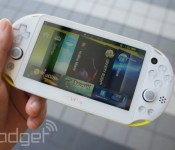
Sony’s slimmer PlayStation Vita coming to the UK for around £180, pre-orders start today

Alright, so perhaps we took Sony’s invite to its London PlayStation event a little too seriously when we speculated Vita TV news was on the agenda. Although it’s not technically the “slimmest” PS device, Sony’s brought us here to welcome the late-2013 PlayStation Vita iteration (aka the PCH-2000) to UK shores. Thinner, lighter and generally better than it’s predecessor, this is the first trip for the new Vita outside of Asia. That plane ride ain’t free, though, as the circa £180 price tag (around $300) is a significant mark-up on the cost of the handheld in its homeland (18,980 yen; around $185). Pre-orders for the device start today, with the proper launch penned in for February 7th.
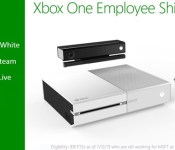
White Xbox One and an all-digital, less expensive console reportedly coming fall 2014

Microsoft’s white employee-only Xbox One could become a little less exclusive. The snow-colored console is rumored to appear alongside the cartoony shooter Sunset Overdrive this October, and a 1TB version of the hardware might release in November according to a NeoGAF thread that’s been confirmed by The Verge‘s sources. What’s more, Microsoft’s latest console may also see worldwide release this year sans Blu-ray drive for $399. With the annual DICE Summit and Game Developers Conference not far off on the horizon, it might not be long before we see these rumors publicly confirmed. We’ve reached out to Redmond and will update this post if we hear back.
Filed under: Gaming, Home Entertainment, HD, Microsoft
Via: The Verge
Source: NeoGAF

Nintendo’s strategy to save its gaming kingdom: DS virtual console on Wii U, GamePad focus, on-demand service

It’s been tough times for Nintendo. Its Wii U console has sold, in a year, 5 million units. Sounds decent enough, until you realize that’s roughly the same number as both the PS4 and the Xbox One — both on sale for mere months. Nintendo kicked off a business strategy briefing today in Tokyo, but it won’t involve playing Nintendo titles elsewhere. The CEO announced at the start of the presentation that he wasn’t pessimistic about the future of the company, reiterating that Nintendo would not be giving up the hardware side of the business. So what’s stopped the Wii U from succeeding so far?
Nintendo’s CEO announced at the start of the presentation that he wasn’t pessimistic about the future of the company, and that they would not be giving up on hardware
The Nintendo boss admits that recognition of the GamePad’s role has been difficult, and that many people view it as an accessory for the console. Most interestingly, however, was the mention of an on-demand gaming service across games consoles, with the service based on your Nintendo ID rather than a device you owned. Bigger news still, is that you will see Nintendo DS games appear on the Wii U, via virtual console. Iwata added that the team will seek a partner to increase exposure for games and hardware — it will even, gasp, license character rights to other companies.
When it comes to gaming on the Wii U, the CEO said they will focus on games that make the most the tablet-esque GamePad, especially titles with NFC — expect to see announcements on this at E3 2014. Mario Kart 8 will also launch in May, and will apparently make strong use of the GamePad. At the same time, Nintendo is working on ensuring a faster start time when its used without a TV.
He said that Nintendo needed to identify new markets and opportunities. According to David Gibson, senior research analyst at Macquarie Securities in Tokyo, Iwata added that it “doesn’t make sense for Nintendo to do business on smartphones.” More nebulously, the company will, however, “actively” use smart devices to connect with customers, making the approach sound more like an app than playable game demo. Nintendo’s Iwata added that simple advertising wasn’t enough, and that the company needed any smartphone presence to be fun and engaging.
Finally, the Nintendo CEO said he wants to find Nintendo’s next “blue ocean”, and thinks that it could be health. He reckons entertainment is tied to quality of life (Vitality Sensor anyone?) — the games maker will continue developing its health and fitness software, but without getting into the current scrum of wearables. No Nintendo GameBand, then.
Source: NIntendo, David Gibson (Twitter), WSJ

Hands-on with Sixense’s MakeVR, a motion controlled 3D modeling suite bound for Kickstarter (video)

The last time we saw Sixense’s Stem motion controller, it was little more than a collection of prototypes. The company showed us a gaggle of plexiglass boxes containing reference hardware and a 3D printed shell representing the final product’s design. A more functional third unit (a developer kit, actually) allowed us to play with the controller’s electromagnetic tracking technology, but the overall experience was fragmented and incomplete. Now the company has finally pulled these disparate elements together, revealing the final Sixense Stem System at CES earlier this month.
We caught up with the company earlier this month to take a look at the revised controller, and found a solid, lightweight controller modeled very closely after the 3D printed mockup we saw last year. In fact, the only major difference we found was the revised button layout: we were originally told the device would utilize a modular faceplate system, but the final version wears a symmetrical button configuration reminiscent of the Razer Hydra. Sixense hadn’t met up with us merely to show us the completed Stem System, however — it was rearing to show us MakeVR, the firm’s homegrown virtual reality 3D modeling software.
The MakeVR project has actually been around about as long as the Stem, but its development hasn’t been nearly as public. Sixense sells the program as an evolution in 3D modeling interfaces, a chance to step back from the complicated, menu-laden CAD programs modelers use today and replace them with a more natural interface. By casting the modeling program in a virtual environment with 1:1 motion controls (provided by Sixense’s own Stem, naturally), MakeVR hopes to make digital modeling as easy as playing with Legos, shallowing the learning curve to make it palatable to a consumer market.
Picking up the Stem System for the first time, we saw first hand how easy it was to manipulate shapes and objects. By mirroring the position of the user’s hands, MakeVR creates a workspace that’s more like working on a shop bench than in a CAD program. Objects can be lifted, twisted and observed as if they were held in your palm, lending a tactile element to a digital experience. The program even attempts to integrate its option menus in a natural way, placing settings, import, export and data saving options on a virtual tablet. On a computer monitor, this seems a little strange, but it’s the kind of interface that shines in virtual reality. In fact, it meshes quite well with Oculus’ best practices documentation.

This much we already knew — Sixense has been quietly shopping around the modeling interface for awhile now — but the company did have a few new things to show us. The latest build of the program features a collaborative mode, a multiplayer workspace that allows up to five modelers or observers to interact in the same virtual environment. Users can pass objects between each other, work on the same model simultaneously, or simply observe, point, gesture or talk to each other as if they were in the same room. This collaborative modeling experience is designed to foster a more personal work environment, allowing partners to work together in a virtual space over the internet or through locally connected machines. Sixense’s demo setup also showed off one of the Stem System’s more convenient features: base sharing. Two PCs, each using their a pair of Stem controllers were able to use the same Stem System base unit as the reference point for tracking motion, meaning that offices using MakeVR and Stem controllers would need to invest in fewer bases than workstations.
Although MakeVR has the precision tools and ability to build high resolution models, Sixense told us that it’s geared more for consumers and hobbyist makers than the professional arena — but why would the average consumer want to fiddle around in 3D modeling software? Well, it turns out the company has an answer for that too: 3D printing. Sixense has partnered with Shapeways to allow the users to export their work to the 3D printing service from within MakeVR, providing consumers with an easy to use, streamlined suite for visualizing, creating and ordering objects of their own design. Sending objects off to the printer is easy too; MakeVR provides a trio of cubes recommending 12cm, 6cm and 3cm. Fit your object in the desired box, and you’re ready to print. As we watched our hosts create a toy fire hydrant and a coffee mug in mere minutes and send them to the printer, it was easy to visualize the utility of the integration. Can’t find the perfect gift for your Grandmother’s birthday? Just make it.

MakeVR might not be the perfect program for everybody, but the shallow learning curve and stellar 1:1 motion control integration certainly makes it appealing to anyone picking up Sixense’s Stem system. The early build we saw wasn’t quite ready for primetime, but the potential for a creative virtual reality playground is certainly there. Unfortunately, Sixense hasn’t announced the software’s price or release date, and only told Engadget to stay tuned — a Kickstarter campaign for the program is launching on February 5th.
Filed under: Gaming, Peripherals, Software

Google hacked together some pretty underwhelming games for Glass (video)

While Google Glass may still be in its infancy, gaming on the wearable is practically in the zygote stages. To help change that, developers at the search giant have cobbled together some games in an effort to “inspire” developers. That said, what Google is offering doesn’t seem too different from what we’ve seen out of other teams. There are five diversions in total (including a Fruit Ninja clone, as well as tennis and a matching game), but there isn’t anything particularly exciting about them. For example, Balance tasks you with keeping a stack of shapes from falling off of your skull via Glass’ baked-in accelerometer. Clay Shooter, on the other hand, has you yelling “pull!” to line up the target with your eyepiece’s crosshairs, and shouting “bang!” to shoot the pigeon — sure to be a big hit in crowded areas. Still, if you’re curious what official Glass games look like, we’ve embedded video after the jump.
Filed under: Wearables, Mobile, Google
Source: Google Developers
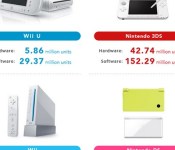
Nintendo sold fewer Wii Us in a year than Xbox Ones or PS4s sold in two months

Nintendo’s had a pretty tough year trying to push its Wii U into homes, as evidenced by the latest sales figures released today. Since this time last year, the gaming giant has just about doubled the number of Wii Us sold cumulatively, going from 3.06 million units to 5.86 million units as of December 31st. That’s right, only 2.8 million Wii Us — along with 17.68 million software titles — were sold during 2013, which is pretty worrying when compared to the 3 million Xbox Ones and the 4.2 million PS4s sold in just the first couple of months after they launched. It’s also nowhere near the 100-million-unit milestone achieved by the original Wii, which easily beat the more expensive consoles from Microsoft and Sony in the same generation.
On a brighter note, Nintendo managed to sell 12.9 million 3DSs in 2013, making it a total of 42.74 million units plus 152.29 million titles since its debut in February 2011. Alas, net income is still down by 29.9 percent year-over-year to 10.2 billion yen ($98.7 million). With no plans to offer its games on other platforms, we sure hope Nintendo’s increased R&D spending will guarantee a solid comeback this year. More details in the PDF document linked below.
Source: Nintendo (PDF), (figures)

