



A closer look at Titanfall’s not-so-secret weapon: Microsoft’s cloud

While you were busy running along walls and throwing missiles back at your opponents during the Titanfall beta, countless data centers across the world were making sure that each AI-controlled Titan bodyguard had your back. Much of the frenetic action in Respawn Entertainment’s debut game rests on one thing: Microsoft’s Azure cloud infrastructure.
Up until last November, Microsoft CEO Satya Nadella’s baby was mostly used for business applications, like virtualization and acting as an enterprise-level email host. With the Xbox One, though, the company opened up its global server farms to game developers, giving them access to more computing power than could reasonably be stuffed into a $500 game console. Since the Xbox One’s debut, Microsoft has been crowing about how Azure would let designers create gaming experiences players have never seen before. Now it’s time for the product to speak for itself.
With Tuesday’s release of the online-multiplayer-only Titanfall, Redmond’s gamble takes center stage. Players are no doubt concerned about the game’s stability at launch. With one look at the problems that plagued Diablo III, SimCity and Battlefield 4, consumer skepticism is easy to understand. The folks behind Titanfall believe they’ve got a not-so-secret weapon to circumvent the foibles those games endured, or are still enduring, in Microsoft’s server infrastructure. It’s been in place and running pretty successfully since 2011.
Respawn engineer Jon Shiring says that since the beta ended, some skeptical devs have already changed their minds about the feasibility of using Azure for the parts of a game traditionally handled by a user’s console or PC. In Titanfall‘s case, that largely includes artificial-intelligence-powered teammates.
“Back when we started talking to Microsoft about it, everyone thought it was kind of crazy and a lot of other publishers were terrified of even doing it,” Shiring says. “I’ve heard that since our beta ended, they’ve been pounding down the doors at Microsoft because they’re realizing that it really is a real thing right now.”
By eliminating the hassles of setting up a game’s cloud infrastructure, Redmond is letting developers focus on what’s important: making killer games.
Shiring has touched on what Redmond’s back-end would allow before, but even then, it wasn’t clear just how intrinsic Azure was to the game’s twitch-based multiplayer mayhem. Aside from providing dedicated servers for low-lag online matches, Azure’s remote horsepower is part of what sets Titanfall apart from contemporary first-person shooters.
To understand how Respawn ended up working with Microsoft, we have to travel back to 2007, back when Miley Cyrus was still Hannah Montana and Call of Duty wasn’t a household name.
IN THE BEGINNING
In the span of five years, Call of Duty house Infinity Ward sold millions of plastic discs and, with 2007′s Call of Duty 4: Modern Warfare, it established the prototype for current multiplayer gaming. After a very public falling out with parent company Activision three years later, key creative staff left the studio to form Respawn. While the new team was in the early stages of deciding what its first game would look like, Shiring was already pushing hard for dedicated servers. The downside, however, is that those CPU stacks and the space to house them aren’t cheap. Luckily, Respawn had friends in the right places.
“Microsoft got really interested in the idea, and that was early on,” says Shiring. “I’d say I started to nudge them in 2010, but it really was 2011 when we were coming at them like ‘What can you do? We can’t afford this.’”
This was around the time that Redmond was deciding what to do with the online service for the as-of-yet unnamed Xbox One.

“There are other games like Battlefield that have dedicated servers, but they haven’t gone the same direction that we have with them,” Shiring says.
“We knew in the early stages of developing Xbox One that we wanted to tap into the power of the cloud in a way that hadn’t been done before,” says John Bruno, Xbox Live’s lead program manager. “We were convinced that enabling dedicated servers using cloud computing presented a great opportunity to realize our vision for Xbox One.”
Microsoft is providing the garage and the tools for game developers to work with, and, perhaps most importantly, it’s keeping the rent cheap. By eliminating the hassles of setting up a game’s cloud infrastructure, Redmond is letting developers focus on what’s important: making killer games. For a startup like Respawn, that was pretty attractive and would allow the studio to achieve its vision with minimal compromise.
GOTTA KEEP IT DEDICATED
While a good number of PC games use dedicated servers, most console titles rely on a player hosting each multiplayer session. This introduced more than a few roadblocks to Respawn’s vision. For starters, it wouldn’t allow for the resource-intensive AI-controlled combatants and busy battlefields the team had in mind.
“Having these servers with a significant amount of CPU power and bandwidth available is absolutely essential to our game: Having these machines that are regional and servers that have good ping — that’s huge,” he says. “That has completely changed the way we make games.”
Many look at Titanfall as the first true next-gen game, offering an experience we haven’t seen on last-generation hardware (think: the PlayStation 3 and Xbox 360). From what Shiring says, the fact that Respawn wasn’t held back by a console’s local processing power was key to letting the studio achieve what it has.
“There are other games like Battlefield that have dedicated servers, but they haven’t gone the same direction that we have with them. We have all of this AI and things flying around in the world; that has obviously let us build a different game than we would have if we’d have gone with player-hosted,” Shiring says. “Really, the biggest thing with that is that it has uncapped our designers and let them do things that were previously impossible to do.”
Because Titanfall‘s advanced AI is handled by the Azure servers, your Xbox’s or PC’s innards can be used to achieve more detailed graphics and the game’s silky-smooth frame rate. The Titan bodyguards, dropships and legions of AI-controlled combatants are essentially free from a processing-power standpoint. Without Redmond’s cloud, it’s highly likely that Titanfall‘s six-versus-six player limit would be painfully apparent. Since these features live on remote servers, though, making sure they seamlessly appear in-game is paramount.
THE LAST MILE
As is often the case with networking, the distance between access points is where things tend to fall apart. In player-hosted gaming, it’s no different. When you start a typical multiplayer game on a console, the quality of your experience often relies on how good your connection to the host is. If someone in their house starts watching True Detective on HBO Go or, worst-case scenario, the host leaves, chances are that your experience will suffer as a result.
Shiring believes that, eventually, centralized hosting will become the new normal.
Ping — the time it takes in milliseconds to transfer data between remote machines — is the crux of multiplayer gaming. Simply put: If it’s too high, the bullets you fire at an enemy won’t hit their target because your network is running slower than the game is animating player movement.
For details on why Titanfall doesn’t feature cross-platform play, check out the full interview with Respawn’s Jon Shiring.
Azure’s regional data centers address this by providing a clean, semi-local connection point between your console and the server where it connects. Naturally, the lower your ping is, the better; most PC gamers try to select servers that have a ping of 100ms or less. Shiring tells us that when Respawn’s offices in Los Angeles connect to the Azure data center in San Francisco, the average ping is 19ms to 20ms. “We’re talking barely more than one rendering frame to get a message to the server and back again, which is outstanding,” he says.
“What I’ve found is that a lot of the latency in consumer broadband is at the edges: Getting to another user is slower than getting to a hub and back again,” Shiring says. Because the Azure data centers are regional, he says that the latency is a lot lower than what you would get if the connection was to another player. That means that every non-player-controlled character should do what it’s supposed to do, when it’s supposed to, almost anywhere on the globe.
With Azure taking care of Titanfall‘s external AI elements, the speed that they’re delivered to a game session needs to be near-seamless for a good player-experience. It has to feel like you’re fighting alongside scripted AI teammates in a single-player campaign — not like a typical, stuttery multiplayer match — for the computer-controlled characters to be valuable. After all, a robotic bodyguard is useless if it takes even a millisecond longer for your Titan to detect an enemy than it does for the enemy to kill you. If the technology hiccups because of a slow connection, the illusion breaks. At its core, Respawn’s use of Azure promises a consistently fast connection where you don’t see the stitches holding the game together.
PEAK TIME
These regional data centers also allow Respawn to keep everyone playing even if their closest server farm is overloaded. During the beta, the studio ran Titanfall on an intentionally limited number of servers to discover where the infrastructure’s weak points were when running at a full load. Some 2 million people participated in the game’s test run (across both PC and Xbox One) and at one point, a portion of Europe’s data centers were running at full player capacity and couldn’t accept more users.
Respawn had a contingency plan in place: moving the affected players over to the East Coast US data centers, behind the scenes. This meant higher ping of course, but not by a dramatic amount. “We don’t look forward to doing that at all, but if we have a bunch of people sitting unable to play the game, then we’re going to make sure that the experience is good enough — maybe not ideal — to get them playing,” Shiring says.
In a way, this was a method of answering the biggest question the developer could face during launch: What will happen if everyone tries playing the game at the same time and can’t?
An entire country will miss out on a console game because of the lack of Microsoft’s servers in the region.
“We’re trying to figure out how many people will be playing and trying to make sure the servers will be there for that,” Shiring says. Essentially, that’s where Respawn’s responsibilities end. If player experience is suffering at launch, that’s on Redmond to fix.
“One of the really nice things about it is that it isn’t my problem, right?” Shiring says. “We just say [to Microsoft], here are our estimates, aim for more than that, plan for problems and make sure there are more than enough servers available — they’ll know the whole time that they need to bring more servers online.”
Titanfall benefits from dedicated servers, but it’s dangerously dependent on them to function; there are parts of the world where Azure data centers don’t exist. Like South Africa, for instance. Because Respawn couldn’t guarantee the quality of the experience, its debut game won’t be released there. An entire country will miss out on a console game because of the lack of Microsoft’s servers in the region.
THIS IS JUST THE START
Shiring is keenly aware of the pressures on him and his coworkers to not only launch well, but also to maintain a consistent level of quality throughout Titanfall‘s lifespan. It isn’t just the first tentpole title of the current generation of gaming; it could also be the killer consumer app for Microsoft’s Azure tech.
He expects that once his team’s game ships and is complete, the studio will have more confidence that the grunt work associated with brand-new code and technology will be done. From there, other developers can build on Respawn’s foundation. Shiring believes that, eventually, centralized hosting will become the new normal. He also recognizes the risk in being first.
“Working with Microsoft is great, but we’re kind of taking a bullet with doing the pain of proving that the game will scale up, and we’re finding bugs that every system has at launch,” he says.
The only other proof that Azure actually works for gaming is Xbox One launch title Forza Motorsport 5. The game’s Drivatar system uses the cloud to catalog your racing behavior and create a virtual driver that competes in other people’s online races, earning in-game money while you’re away. Doing laps around the Indianapolis Motor Speedway, however, doesn’t have as wide an appeal as, say, operating a three-story robotic death machine. Should Titanfall and Azure live up to expectations, Shiring thinks that Redmond’s infrastructure could change how studios approach developing games. If he’s right, this could lead to much more Respawn-style experimentation from other studios and maybe create entirely new genres of games as a result.
“Suddenly, the publisher solution becomes more risky than the cloud solution,” he says. “That will be a big shift in the industry for everybody.”
Filed under: Gaming, Home Entertainment, Software, HD, Microsoft

MSI gaming laptop packs next-gen NVIDIA graphics and ‘3K’ display into Ultrabook thickness

A nice little surprise here at CeBIT: A 15.6-inch laptop from MSI that gave us an early look at one of NVIDIA’s unannounced 2014 laptop GPUs. MSI’s reps at the event wouldn’t reveal anything about the new graphics chip (which we guess is based on NVIDIA’s Maxwell architecture) except that it should be able to handle many of the latest games at high settings on their unit’s optional “3K” (2,880 x 1,620) display. The laptop itself is called the GS60 Ghost Pro and it’s a pleasure to look at and to hold — it’s just three quarters of an inch thick (19.5mm) and 4.4 pounds (1.99kg) in weight. Check out the gallery below and you’ll see that the machine has an understated design that should help it to appeal not only to gamers but also to power users looking for configurations up to Core i7, dual SSD storage (in Super RAID, if you wish) with additional HDD, plus 802.11ac WiFi. Expect units to start shipping in April priced between 1,600 and 2,000 euros ($2,200 to $2,800) depending on your spec choices.

Electronic Arts is exploring virtual reality

When you’re the CEO of the second largest video game publisher in the world, people have a tendency to take what you say seriously. Case in point, Electronic Arts’ Andrew Wilson recently revealed his company’s plans for virtual reality. At a South by Southwest panel, Wilson said that his company is less focused on the technology of VR, and more interested in exactly how people consume it. As he sees it, we interact with games in three different ways: leaning back, leaning in and looking over — relating to console, PC and mobile gaming, respectively. With VR, he thinks there will be a fourth: getting in. He says that this could happen either via a headset or even a hologram popping up from your living room floor, and he’s pushing his team to explore it.
Think of this along the lines of Amazon (hypothetically) announcing that it’d accept Bitcoin for payment and you’re on the right track; that there’s another major player in the VR space helps validate the medium. While this could all be taken as pie-in-the-sky speculation, the fact that EA is clearly invested in the virtual reality isn’t anything to write off — just look at what the company’s done with mobile gaming.
Filed under: Gaming, Home Entertainment, HD
Source: Polygon

We kick off SXSW 2014 with some real-life Mario Karting (video)

The first few days of SXSW have brought quite a bit of excitement for our team on the ground. After starting the show with a stun-copter demo, we stopped by the Palmer Events Center to play a little a live-action Mario Kart. Pennzoil has set up a go-kart track here in Austin to promote its new Platinum line of natural gas-based motor oils, though — let’s face it — we were really only here to be Mario (and Luigi, Bowser and Princess Peach) for a day.
Each of the four karts on the track were mounted with a GoPro camera to document each racer’s point of view. In addition to tracking each banana peel and speed booster we ran over, the footage apparently teases some elements from the upcoming Mario Kart 8 title. Our own Joseph Volpe also wore a GoPro of his own, so you can see just how disappointed he was when Terrence O’Brien stole the lead. Check out the video below.
Video note: Unfortunately the Karting team was unable to locate our race footage, so we’ve included a four-panel view from a similar race later in the day, as an example of the video sent to each participant following the competition. Engadget editors appear earlier in the video.
Zach Honig contributed to this report.
Filed under: Gaming, Transportation, Nintendo

Feedback Loop: Old gadgets, Android tablets, photo management and more!
Welcome to Feedback Loop, a weekly roundup of the most interesting discussions happening within the Engadget community. There’s so much technology to talk about and so little time to enjoy it, but you have a lot of great ideas and opinions that need to be shared! Join us every Saturday as we highlight some of the most interesting discussions that happened during the past week.

This week, Engadget turned 10 years old! So, we discussed what we were using way back in 2004. Also, we talked about ditching iPhoto, Android tablets and good game controllers for the iPad. Head on past the break and join the conversation.
What gadgets were you using 10 years ago?
It’s crazy to think that Engadget turned 10 years old this week! Frank, one of our product database editors, took to the forums to find out what gadgets you were using 10 years ago. Brace yourselves, there’s a whole lot of flip phones, antiquated game consoles, and devices that use something called physical media. Gross! If you can handle it, take a gander at the thread and share which pieces of technology you used a decade ago.
Ditching iPhoto for OneDrive
Managing our extensive digital photo libraries is a topic that we’ve frequently discussed in the forums. This week, TgD shares his own experience with ditching iPhoto and he’s never felt better. His solution for managing those invaluable digital memories may surprise you. Head over to the forums and tell us how you manage your photo library.
Comparing Android tablets
There’s no denying that the popularity of Android tablets is on the rise and it seems like we see interesting new tablets released every week. Will5204 is in the market for the latest and greatest Android tablet. Between the Sony Xperia Z2, Galaxy Note 10.1 and Galaxy Tab Pro 10.1, which would you choose? Let him know! Besides, it’s fun to spend other people’s money.
Game controllers for an iPad
Gaming on the go is becoming a bigger and bigger part of our lives. But sometimes, our grubby fingers get in the way of what we’re trying to do. Dogetag is looking for some advice on iOS gaming controllers that would be perfect for an iPad. Got some ideas that will help him out?
That’s all this week! Do you want to talk about your favorite gadget or have a burning question about technology? Register for an Engadget account today, visit the Engadget forums and start a new discussion!

Greetings, from Joystiq

My Dearest Friends at Engadget,
With this letter I have enclosed a large, slightly frayed chunk of styrofoam that we all thought resembled the prominent “t” in the Engadget logo – you know, the one wearing the cute Wi-Fi hat. We have no use for this item here at Joystiq, so we thought you might hoist it above your reeking desk-beds, or use it in another story about 3D printers.
Assuming this part of my missive isn’t covered in little white bits, I’d love for you to once again consider my proposal for publishing select content from Joystiq, your sibling website that covers the video game industry in a more granular fashion than your folks do. We review everything in the spectrum between indie and AAA, find the best in the worst games, stream upcoming releases twice a week, and have no qualms about making an MIT professor talk about massively multiplayer Pokémon. That does not happen twice a week, but we can work on it.
Of course, the last thing I want to do is inundate your loyal audience with gaming detritus that they already know, so we’ll pick the most relevant and comprehensive articles for Engadget. How’s this one to start? “How many megapixels was the camera in BioShock? The answer will shock you.”
Kind regards,
Ludwig Kietzmann, Editor-in-Chief of Joystiq
P.S. Please do not publish this letter verbatim.
—
Hello LUDWIG KIETZMANN,
We regret to inform you that delivery to the following recipient failed permanently:
ENGADGET STAFF
Technical details of permanent failure:
Google tried to deliver your message, but it was rejected for being “too game-y.” We recommend fewer references to goombas and headshots to avoid this error in the future. The error that the server returned was: 1UP LOL 1337 No relaying allowed – psmtp (state 13).
That said, we’d, uh, love to have you over some time. Not sure when we’re available just yet, but we’ll get back to you really soon. In the meantime, why not just drop those hot Joystiq pieces directly on Engadget so we don’t have to surf all the way over. Surfing is tiring. Uh oh … we’ve dropped the facade, haven’t we?
Filed under: Announcements, Gaming, Meta, Software, HD, Sony, Microsoft, Nintendo

Punching virtual sharks for points with the Oculus Rift and Leap Motion

“This could be a science lesson on the innards of sharks.”
Chance Ivey, game design lead for Chaotic Moon’s whimsical Oculus Rift demo SharkPunch, was only half-joking when he made that comment to me as I exploded a megalodon with my fist in virtual space. That’s because the minigame, which incorporates a visor-mounted Leap Motion controller to let users punch sharks in 3D, actually has firm roots in an educational simulator the Austin, Texas-based company’s been developing for prospective clients. Yes, that connection may be hard to swallow at first — after all, how does a frenzied, and fun, game of shark carnage assist players with learning? The simple answer is that it doesn’t, but by no means does that lessen SharkPunch’s educational origins in the slightest.
Chaotic Moon’s proper Oculus Rift education demo begins by placing a user within a virtual classroom. At the front of this room is an interactive periodic table that the “student,” acting on instructions from a nearby teacher, uses to pull elements together and create a molecule of H2O, also known as water. Once that goal’s been achieved, the molecules begin to multiply in a chain filling the room and, eventually, transforming into water; water which then floods the classroom. It’s at this point the student finds him/herself immersed in an undersea environment populated by swimming fish. Chance told us that it was this tempting virtual environment that prompted a multitude of users to wonder aloud, “Can I punch those fish?” If you’ve ever submerged yourself in the Oculus Rift’s VR world, you’d understand the impulse.
“This could be a science lesson on the innards of sharks.”
The undersea world of SharkPunch isn’t as pretty as it could be — which is to say, it’s not searing your retinas with HD eye candy. But that’s no fault on Chaotic Moon’s part. It’s because the small team of three had to make do with Dev Kit 1 of the Oculus Rift and not the more refined HD or Crystal Cove iterations. It’s a small wrinkle that’s easily overlooked considering two points: SharkPunch isn’t headed for commercial release and its core shark-punching game mechanic is pure, addictive bliss.
That said, there is a slight learning curve for the game’s gesture-based controls. Since the Leap Motion controller’s mounted to the front of the Oculus Rift, users have to hold their fists in a fighting stance higher up than feels natural so their motions can be accurately tracked. Also, it’s worth nothing that the entire rig is tethered to a system of ropes hanging from overhead, as most users will inevitably wander about the room swinging at the increasing parade of attacking sharks. The game, however, is unforgiving. One missed shot at a shark and you’re dead. Which makes the company’s current in-house high score of 26 (one point per dead shark) something to envy.
Its core shark-punching game mechanic is pure, addictive bliss.
SharkPunch may be nothing more than an endearing calling card for Chaotic Moon’s charming brand of tech innovation, but that’s not stopping the company from trotting it around as a party game. So if you happen to be down in Austin this week for SXSW and have the right RSVPs, there’s a chance your virtual fist could connect with a megalodon belly.
OUYA is coming to the M.O.J.O. Micro-Console for Android
A recent content agreement between Ouya and Mad Catz will see the service be included on the M.O.J.O. Android Micro-consoles, and in addition the price is being dropped to $199.99 in the United States, with similar discounts being applied worldwide.
OUYA on M.O.J.O is expected to appear on the Micro-Consoles later this spring, with all existing and upcoming OUYA content being made available.
“Up until now, the game console experience has been locked inside a box,” said Julie Uhrman, CEO and founder of OUYA. “Together with the hardware veterans at Mad Catz, we end that. Today’s announcement signifies the inception of a truly open platform where independent developers can bring their creations to the platforms where gamers actually play: everywhere.”
OUYA latest numbers claim more than 680 games, with more than 33,000 developers on board, so this is a huge step forward for Android gaming, and the Micro-Console M.O.J.O.
The post OUYA is coming to the M.O.J.O. Micro-Console for Android appeared first on AndroidGuys.
Sony’s turning The Last of Us into a movie with help from the game’s creators

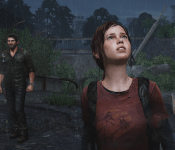
The Last of Us made its debut last year to critical (and commercial) acclaim from the gaming community, and it appears that the film industry’s just as smitten with the story it tells. Deadline Hollywood reports that Sony Pictures’ Screen Gems production company has decided to develop a “live-action adaptation” of the PS3 version of the game, and Neil Druckmann, who was The Last of Us‘ creative director, will be writing the screenplay. Evan Wells and Christophe Balestra, the co-presidents of Naughty Dog, the studio that created the game, and the game’s director, Bruce Straley will also lend their talents to the project as “creative architects,” whatever that means. Naturally, since the deal has just been done, we don’t know when to expect The Last of Us to make its way to the silver screen, but at least we know it’s coming… at some point.
Source: Deadline Hollywood

PlayStation US head Jack Tretton parts ways with Sony

Or at least, he will have done so come April 1st, no foolin‘. Sony just announced that the long time SCEA executive will be making way for his replacement Shawn Layden, current EVP and COO of Sony Network Entertainment International. According to the company, Tretton’s parting is the result of a “mutual agreement,” but naturally, neither side’s saying how that agreement was reached. The move certainly comes as a surprise, as Tretton had been with SCEA for almost 20 years, and was a part of the PlayStation team from the very beginning — most recently overseeing the successful launch of Sony’s most recent console, the PS4. Evidently, that wasn’t enough to keep him around… time will tell if Layden’s a worthy successor.
Image Credit: ROBYN BECK/AFP/Getty Images
Source: Sony Computer Entertainment

