



NASA’s game collaboration lets you steer asteroids without leaving home

Kerbal Space Program is the closest you’ll get to running a space agency. The game lets you build and launch everything from orbital stations to interplanetary explorers, all in the name of collecting scientific data. It’s only fitting, then, that the studio behind the title has teamed up with NASA to release its Asteroid Redirect Mission add-on. The patch gives you both equipment based on the Space Launch System as well as enough giant rocks to let you either mimic potential real-world missions or live out your Armageddon dreams. The KSP upgrade isn’t a completely faithful simulation by any means, but it’s realistic enough that it could help you appreciate the challenges of steering asteroids. If you’d like to see the software in action, you can check out the second video at about the 57-minute mark.
Filed under: Gaming, Science, Software
Source: Kerbal Space Program
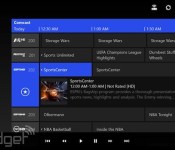
Xbox One SmartGlass beta apps bring TV controls to Android, Windows and Windows Phone

Microsoft only just revealed it would test new TV remote features on the Xbox One and its associated SmartGlass apps, and Windows Phone Central points out that right now anyone can give them a try. All you need is one of the game systems and a device running Android, Windows 8 or Windows Phone 8. We tried out the apps and they install right alongside the standard Xbox One Smartglass apps, although there are some known issues and rough edges. The smiley face button serves as a way to report any issues, but overall things worked smoothly, and we were able to navigate recordings on a standard Comcast DVR or surf through the OneGuide without a problem. Download the apps now and try them via Google Play, the Windows Store or Windows Phone Store — we haven’t spotted a beta version for iOS yet.

Filed under: Gaming, Home Entertainment, HD, Mobile, Microsoft
Via: WPCentral, Android Central
Source: Google Play, Windows Phone Store, Windows Store

On Xbox One, game broadcasters are quickly catching up to PlayStation 4

Though Xbox One sales may be slightly behind that of the PlayStation 4, it looks like game broadcasting is taking off at a much quicker pace on Microsoft’s new console. In the first week of availability, 108K Xbox One owners took to Twitch to broadcast games; the same number was reached on the PlayStation 4 after 25 days of availability. This is largely due to Twitch broadcasting launching alongside the PS4, whereas broadcasting didn’t function on the Xbox One until early last month — resultantly, millions of Xbox One consoles were already out in the wild, whereas the PS4 had to be physically purchased and brought home before users discovered the glory of … mostly safe for work broadcasts. It also didn’t hurt that the Xbox One had its first major exclusive game, Titanfall, launching alongside game broadcasting (we even got in on the fun ourselves). Regardless, it looks like game broadcasting is proving more than just a passing fad.
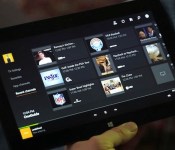
TV-focused Xbox One update tests a DVR button and OneGuide on SmartGlass

We called the Xbox One a work in progress in our initial review, and to its credit, Microsoft has been hard at work addressing various software shortcomings (party system, friend notifications, Twitch streaming and so much more) over the last few months. One aspect that’s remained mostly the same since launch — besides some tweaks and a remote control accessory — is its unique HDMI-passthrough TV experience and that’s getting some much-needed attention in a new update preview test. Microsoft may be focused on gaming under Phil Spencer, but a big part of its strategy is to win there is by controlling input 1 on your HDTV, and making the Xbox One more useful in other ways than as a Titanfall machine could help. Check after the break for a video preview of the new features plus a few more details on what they can do, and which countries are getting access to more TV listings and voice controls.

For users in the preview group, their SmartGlass second screen app on phones or tablets is ready to work as a universal remote control, with features similar to the app for Google TV. There’s also a new DVR button so owners can watch recorded shows without grabbing the old cable remote, and it can bring the full OneGuide listing of live TV and streaming options to the second screen. Finally, SmartGlass is adding a “recent channels” layout (shown above) built just for the second screen, showing you what’s on those stations now. Microsoft has already added a slew of gaming and messaging-related tweaks to SmartGlass recently, and it’s also rolling out “rent once, play anywhere” for Xbox Video across TV, PC and phone.

Until now, the Xbox One’s TV control features have been extremely focused on live TV (it already controls pause, fast forward or rewind, but it just couldn’t pull up the DVR menu) even though that’s not how we watch these days. The DVR button seems like it should be compatible with most providers but we don’t have an official list yet, and at least right now there’s no associated voice command. Also, the system still can’t see what’s recorded on your DVR or set up new recordings by itself, so there’s still going to be some adjustment if you’re switching back and forth between menus and remotes. Even when we’ve used the Xbox One’s voice controls extensively, OneGuide has been tough to dive into because of what it lacks (DVR, cable video on-demand), so we’ll need some hands-on time to see if this makes it worth using more.
Outside the US, Canada and several European countries including the UK, France and Germany will get new OneGuide and Kinect features. There Microsoft is adding live TV scheduling info to the OneGuide and Kinect voice commands to control set-top boxes and other home theater equipment (features that were already live in the US). We’ve been through the update preview process before so we’re pretty familiar with how it works, but it sounds like this one may go on a bit longer than the others. The extra time will be used to get feedback from users on how well these new features working before they roll out to everyone “later this year.” Of course, if that extra time is used to add proper surround sound passthrough or Blu-ray 3D playback, then that would be cool too Microsoft.
Filed under: Gaming, Home Entertainment, HD, Microsoft
Source: Xbox Wire, Xbox (YouTube)

April Fools’ 2014 roundup: selfie-taking drones, smartgloves and more

For the last 24 hours (and likely the next 12), excitable company execs have been barraging our inbox,YouTube and your social media networks with their best shenanigans. Love it or loathe it (and you’re probably starting to loathe it by now), the April Fools tradition continues, even stronger, in 2014. Google went a little overboard, but hopefully, after today, selfies will die a death. Hopefully.
Google has too much fun, again
Aside from its Pokemon mapping efforts, Google wants the world to see the web differently… peppered with emoji icons.
Google Japan also has a new “Magic Hand” for touchscreen text input, featuring a very necessary cat paw add-on.
Then there’s Gmail’s shareable selfie, the Shelfie and a new auto-Awesome photobomb feature, ruining your photos with David Hasselhoff.

HTC’s GLUUV lays down the gauntlet to Samsung Fingers

Who was first? We’ll call it an awkward draw, as both Samsung and HTC had largely identical ideas for AF 2014: smartgloves. HTC’s Power Glove knock-off Gluuv promises holo-calls and an 87.2-megapixel camera. Finally. We also like the companion BoomBass speaker though: “durable, humongous, and completely wireless” … and carried on your shoulder.
Samsung Fingers‘ blog post outlines a palm-based flexible screen, another mention of selfies, and in a nod to its own often superfluous software add-ons, an increasingly bizarre list of feature, showcased with sketches like these:

Sony reveals the future of gadget power sources
“Our engineers and culinary technicians have come up with a way to tap into the amazing energy of food,” says the nondescript Sony spokesman. An enzyme that transfers food energy to gadgets and it involves a “voltaic enzyme.” Sony’s planned cereals and protein bars, filled with “protein, fiber and charged lithium.”
Nokia brings the 3310 back from the dead, pumps it full of megapixels

Nokia’s most iconic phone, the 3310 is making a return. Nokia’s best-selling handset returns with Windows Phone OS, a 41-megapixel camera sensor and most importantly, preloaded with Snake 2. We almost wish it was real.
HERE maps goes back to basics (and paper)

Apparently, you can still HERE maps without a smart device. This is HERE Papyrus, and we’re particularly taken with this augmented reality trace sheet.
CERN gets serious, switches to comic sans

Truly, the thinkers’ font.
Nest / Virgin America
Total temperature control for every passenger.
Kodak Picture Kiosk Drone

We can tell it’s a fake because Kodak’s blog post mentions calling and texting a phone number. Oh and hands-free selfies. (Also, how is this any more ridiculous than Kodak’s very real nuclear reactor?)
Samsung’s Fli-Fy

Why not just utilize the rats of the skies to be your drones… and boost your WiFi.
GoPro: #STOKED, the energy drink
Has its own hashtag. Must be legit.
iFixit

iFixit gets an offer it can’t refuse.
Swiftkey Flow Hard for your physical keyboard
No touchscreen needed.
‘Make your own smartphone, piece by piece, with this magazine subscription’
In just 10 years, you can make your very own smartphone, in this tie-up between Japan’s KDDI network and magazine publisher Deagostini.
Sega returns: MEGAne DRIVE, the wearable

That should equal 32-bit gaming.
The Roku Watch

Look at the size of the remote. Coming April 31st.
TechCrunch introduces Crunchcoin

Filed under: Cellphones, Displays, Gaming, Wearables, Science, Internet, Mobile, Alt, Samsung, Sony, HTC, Google

New Xbox head Phil Spencer promises renewed focus on gaming across all Microsoft platforms

Microsoft CEO Satya Nadella announced the new head of its Xbox division this morning: Phil Spencer, longtime Microsoft Studios leader and Xbox game dude. In Spencer’s initial letter to the legions of Xbox owners the world over, his approach comes across as scattershot. See for yourself:
“This past year has been a growth experience both for me and for the entire Xbox team. We’ve taken feedback, made our products better and renewed our focus on what is most important, our customer. Our mission is to build a world-class team, work hard to meet the high expectations of a passionate fan base, create the best games and entertainment and drive technical innovation. As we continue forward, this renewed focus and mission will be a foundational part of how I lead the Xbox program.”
Given that, our first question to Spencer in a short phone interview this afternoon was one of clarification. With so many aspects of Xbox to oversee, where will he begin? “I’m gonna lead with a gaming focus and making sure that’s where we’re led. That’s the North Star for the organization,” he told us.
Beyond coming from a background at Microsoft Studios — the name for a group of internal game development groups at Microsoft — Spencer’s known for being game-focused. He reaffirmed this approach to us. “Winning with the gamer first is gonna be something that drives the organization,” Spencer said. That’s at the heart of his boss Satya Nadella’s Xbox reorganization.
With Spencer’s title change comes a heap of new responsibility (due to an internal reorg). He’s not just overseeing the Xbox One and Xbox 360, but the entire ecosystem around the greater Xbox brand. That includes the following departments: Xbox, Xbox Live, Xbox Music, Xbox Video and Microsoft Studios.

Spencer actually fought for all this oversight. In a discussion with Nadella, as well as Windows boss Terry Myerson and devices lead (former Nokia head) Stephen Elop, he had two stipulations. The first was the unification of Xbox under one umbrella; the second was a seat at the table with the likes of Myerson and Elop. “The Xbox team, the Xbox leader (me) sitting at the same leadership table as Terry (the Windows team leader, the Windows Phone OS team leader) really helps us look at gaming as that first-class citizen across all Microsoft platforms,” he said.
More tightly, intelligently integrated Xbox services across more Windows platforms is something Redmond’s struggled with for years. With Spencer, there’s hope that someone with a real sense of the game industry can bridge the longstanding divide.
The next major beat for Spencer’s Xbox will, naturally, be E3. He said we’ll hear dribs and drabs before then — some games will get launch dates, the first ID@Xbox games will arrive on the Xbox One — but expect Xbox to once again lean on the all important holiday sales season for its major game releases.
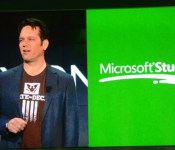
Xbox gets a new leader at Microsoft: Phil Spencer

When longtime Xbox lead Marc Whitten left for Sonos recently, Microsoft was left without an exec to lead up one of its most powerful divisions. Today, Phil Spencer is stepping in to fill that spot — not exactly a surprise given Spencer’s past role leading up the Xbox software side (specifically games). Beyond just Microsoft Studios and Xbox, Spencer says he’s, “leading the Xbox, Xbox Live, and creative teams including Xbox Music, Xbox Video and Microsoft Studios.” It also stands to reason that we’ll see a lot more of Spencer during Microsoft’s annual E3 briefing and in press interviews; what we’re trying to say is “expect to hear from him a lot more going forward.”
Not sure who Phil Spencer is? Rest assured, we’ve got more on his background below.
Phil Spencer is a longtime vet at Microsoft, with previous work going back as far as the Encarta Encyclopedia CD-ROMs. He’s been with the Xbox division in various capacities for over a decade; Spencer originally worked with the EMEA region, and eventually rose to corporate VP at Microsoft Studios. Along with Marc Whitten, Yusuf Mehdi and Phil Harrison, Spencer led the charge on launching Microsoft’s latest game console, the Xbox One. Spencer and his European counterpart, Phil Harrison, have headed up the games side of the Xbox One’s launch, though after today’s news it looks like Spencer will have a much broader spectrum of oversight.
Filed under: Gaming, Software, HD, Microsoft
Source: Microsoft (1), Microsoft (2)
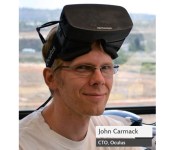
Oculus VR’s John Carmack sees bright future in Facebook deal

When Facebook said it would buy Oculus VR, many eyes turned to Oculus CTO John Carmack. Would Quake‘s co-creator be happy with the deal when Facebook sees virtual reality gaming as just the beginning? Thankfully, it looks like he’s staying put. In a response to jitters about the acquisition, Carmack says that Facebook appears to “get the Big Picture” — it understands the impact of VR and will help the technology grow. The executive also isn’t worried about the social network’s privacy issues. While he believes that privacy is important, he also sees data mining as a valuable tool for successful companies. The statements won’t completely assuage fears that the acquisition could lead Oculus astray, but Carmack clearly believes that the company is still headed in the right direction.
Filed under: Displays, Gaming, Wearables, Facebook
Via: Joystiq
Source: Peter Berkman (Tumblr 1), (2)

Jeri Ellsworth talks castAR’s accidental beginnings and its augmented reality future (video)

By now, followers of castAR already know that Jeri Ellsworth created the projected augmented reality glasses back when she worked for Valve Software. But not everybody knows that its invention was, well, an accident. “I was trying to figure out why people got sick when they wore virtual reality rigs,” said Ellsworth to us as we chatted in the tiny castAR booth tucked away in the corner of Moscone North during GDC 2014. “I put a reflector in backwards so that it wasn’t projecting into my eye … There was a piece of reflective fabric in the room, it bounced an image back to me, and it was beautiful.”
Intrigued, she started cobbling together projector headsets (she affectionately calls them “head crabs”), began analyzing and exploring the technology and slowly became a huge proponent of it within the company. “I was like, ‘Oh boy, this is really going to take off!’,” she says. Unfortunately, it didn’t quite fit within Valve’s master plan and she and her team were let go. Still, Ellsworth has fond memories of her time at the company. She tells us how she was wined and dined to join Valve’s hardware team due to her long history as a chip designer and a hardware hacker. Indeed, Gabe Newell flew down to talk to her himself, and they even brought her to the Valve office, telling her that she could build her own space however she wanted. It was a wonderful place to work, she says. “I love the folks at Valve. The team we assembled was awesome.”
The good vibes continued even after she was laid off, it turns out, as Newell happily let her keep working on the project on her own, fully divorcing the company from it. And so she did, along with former Valve engineer Rick Johnson under the company name Technical Illusions. After months of developing the castAR rig and bringing it around to trade shows, they eventually launched what turned out to be a highly successful Kickstarter campaign, and were at GDC 2014 to show off what they’ve been up to thus far.

“Now we’re heading towards manufacturing,” she says excitedly. She humorously pointed out that her new engineering partners were rather taken aback with the previous castAR rig that she built herself, and promised her they could do it much better. Indeed, Ellsworth tells us they’re just a few weeks away from getting new projectors and cameras, which are supposedly of much higher quality than what they have now. “The next step is to get the plastics built for the early dev glasses,” she says, hoping to have them done by summer of this year. She also wants the Kickstarter deliverables shipped by Q4 at the latest. But fulfilling that initial Kickstarter isn’t the end of it. “For 2015, we’re seeking out more funding through Series A, VC funding, angel investors, so that we can make it more commercial.” It’s clear, then, that even though Valve didn’t believe projected augmented reality would take off, Ellsworth and her team certainly do.
Video shot and produced by Emily Price
Filed under: Gaming

This is what Facebook could look like on Oculus Rift (video)

This week, much of the world met Oculus Rift for the very first time. And now that millions of consumers are at least somewhat familiar with the VR gadget, it’s not unreasonable to assume the device will eventually become mainstream, serving to create a much more immersive internet experience. That’s at least one theory, demonstrated today by Chaotic Moon, the Austin-based firm behind the stun copter and SharkPunch. That latter concept employs the same gear Chaotic’s using for today’s demo: the Oculus Rift Dev Kit 1, with Leap Motion mounted front and center.
With this particular third-party concept, users browse an e-tailer using the Rift. After a few moments of browsing Facebook on an iMac, an individual clicks over to a product advertised in the sidebar. He’s prompted to put on Oculus, at which point he’s able to explore a virtual Facebook marketplace, where he picks a designer bag off the shelf and turns it about as if he’s actually holding it, with Leap Motion recognizing hand movements and the software responding accordingly. It’s of course just one company’s early vision — it’s possible that Facebook hasn’t even seen this mock-up, let alone provided any input to the developers. Still, it’s a slick implementation after just a couple days’ work. Check it out in the video below.
Filed under: Displays, Gaming, Household, Peripherals, Internet, Facebook

