


NVIDIA’s got a new GPU monster, and it’s called Titan X

NVIDIA just announced the Titan X, its latest powerhouse graphics card, at Epic Game’s GDC session this morning. And boy, it sounds like a monster: According to NVIDIA CEO Jen-Hsun Huang, it’s now the world’s most powerful GPU with more than 8 billion transistors (a bit of a jump from the 7 billion in last year’s Titan Z). Titan X is powered by the company’s new Maxwell architecture, and it packs in 12 gigabytes of VRAM, just like the Titan Z. NVIDIA isn’t revealing much else about the new GPU yet — it has its own conference in a few weeks, after all — but at this point it sounds like the video card we’ll all be pining for this year.
While it may seem strange for Huang to tease the Titan X at another company’s event, he had a good reason: It’s powering a new VR experience called Thief in the Shadows, a joint effort between Epic, Oculus, and Weta Digital, which puts you in the shoes of someone exploring the dragon Smaug’s treasure-filled cave from The Hobbit.

Don’t miss out on all the latest from GDC 2015! Follow along at our events page right here.
Source: NVIDIA

NVIDIA’s got a new GPU monster, and it’s called Titan X
NVIDIA just announced the Titan X, its latest powerhouse graphics card, at Epic Game’s GDC session this morning. And boy, it sounds like a monster: According to NVIDIA CEO Jen-Hsun Huang, it’s now the world’s most powerful GPU with more than 8 billion transistors (a bit of a jump from the 7 billion in last year’s Titan Z). Titan X is powered by the company’s new Maxwell architecture, and it packs in 12 gigabytes of VRAM, just like the Titan Z. NVIDIA isn’t revealing much else about the new GPU yet — it has its own conference in a few weeks, after all — but at this point it sounds like the video card we’ll all be pining for this year.
While it may seem strange for Huang to tease the Titan X at another company’s event, he had a good reason: It’s powering a new VR experience called Thief in the Shadows, a joint effort between Epic, Oculus, and Weta Digital, which puts you in the shoes of someone exploring the dragon Smaug’s treasure-filled cave from The Hobbit.
Don’t miss out on all the latest from GDC 2015! Follow along at our events page right here.
Source: NVIDIA
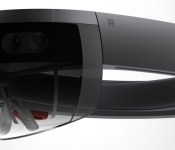
Xbox games are coming to Microsoft’s augmented reality headset

If you watched Microsoft’s announcement of its Hololens augmented reality headset and wondered if you’d play Xbox games with it, well, wonder no longer. Today at its Game Developers Conference presentation, Redmond announced that games would be en route to the device and that the APK should be available come its Build conference late April.
Developing…
Don’t miss out on all the latest from GDC 2015! Follow along at our events page right here.
Filed under: Gaming, Home Entertainment, HD, Microsoft

Microsoft bought ‘Minecraft’ after a single tweet by its creator

We’re only halfway through the decade, but it’s already obvious that Minecraft is the biggest game of the ’10s. Its creator, Markus “Notch” Persson has now been honored for his achievement with a cover story in Forbes. The piece reveals a few interesting tidbits about how he came to leave the game that made his name, including the fact that the $2.5 billion sale to Microsoft was prompted with a single tweet.
On June 6th, 2014, Persson was feeling exhausted with dealing with the Minecraft community, and ventured his frustration on Twitter. He asked if anyone would be interested in buying his share of Mojang so that he could “move on with [his] life.” According to the interview, it was mere minutes afterward that Mojang CEO Carl Manneh was being called by a Microsoft executive asking of Persson was serious. Other companies were bidding for control of Minecraft, including Activision Blizzard and Electronic Arts, although talks with the latter stalled because Persson, apparently, isn’t a fan of EA’s policies.
Anyone want to buy my share of Mojang so I can move on with my life? Getting hate for trying to do the right thing is not my gig.
– Markus Persson (@notch) June 17, 2014
Unfortunately, Persson was less happy with the way his post-Minecraft life has been portrayed by the piece. There is a suggestion that he now spends his days running up $180,000 bar bills at Swedish nightclubs.It’s something he has denied, again, using his favorite medium of Twitter. In a series of messages earlier this morning, he said that he isn’t “dedicated to partying his life away,” and it would be difficult anyway, since the interest payments on his $1.5 billion fortune are going up faster than he could spend it on fancy vodka.
Swedish newspapers copy and paste from the Forbes thing, with the headline “I’m dedicated to partying my money away”. Oh lordy.
– Markus Persson (@notch) March 4, 2015
There are good journalists out there, presumably. But a lot of them don’t give a flying duck about the truth, they just wanna sell copies.
– Markus Persson (@notch) March 4, 2015
Also, and this sounds like bragging, but I’d have to party REALLY DUCKING HARD to keep up with the interest, so it’s not a viable option.
– Markus Persson (@notch) March 4, 2015
[Image Credit: GDC / Wikimedia Commons]
Filed under: Gaming, Microsoft
Source: Forbes

HTC’s Vive made me believe in VR

It’s almost as if I’m in the Matrix. I’m in that same expanse of infinite white space that was also Neo’s training grounds in the movie. A pattern of hexagonal tiles appears underneath me. They start to rise and fall randomly and rapidly. Hesitantly, I step forward, slowly walking across the field of unstable tiles, trying to get a feel for this strange, foreign environment. Suddenly, I encounter a gridded wall. It seems the space isn’t so infinite after all. I was, of course, not in the Matrix. Instead, I was in a stark, windowless room inside the Fira Gran Via in Barcelona. On my head was the HTC Vive. And for the next 20 minutes, I was about to have a virtual reality experience unlike any I’ve ever had.
Before we get into that, let me tell you more about the Vive. It’s a VR headset made by HTC in partnership with Valve Corporation, a company perhaps best known for the Steam PC gaming storefront and titles like Portal and Half Life 2. The hardware itself looks like something from a science fiction movie. Its dark gray, plastic faceplate is pockmarked by multiple sensors, making the whole thing look like it’s clad in deep-set digital eyes. Look behind it and you’ll find all the trademark signs of a VR headset: thick foam padding, a pair of goggle-like lenses and, of course, the straps that hold it all in place. It has two discrete 1,200 x 1,080 displays that refresh at 90 frames per second, offering 360-degree views. On the top of the hardware are an HDMI port, two USB ports and a headphone jack.
It’s worth mentioning that the HTC Vive is not a mobile solution like the Gear VR — it connects to a computer like the Oculus Rift. The Vive is part of HTC’s “Re” line of connected devices and exists as a separate division from the company’s phones. As such, the Vive is competing less against Gear VR and more against the likes of Oculus and Sony’s Project Morpheus. The key difference between the Vive and the other two? It’s that it comes with a couple of SteamVR base stations that tell the Vive headset where you are via laser position sensors, thus tracking your physical location as you walk about the room. The whole thing only works in a space up to 15 x 15 feet, so you’d encounter that aforementioned gridded wall if you hit the edge.
#fivemin-widget-blogsmith-image-679642display:none; .cke_show_borders #fivemin-widget-blogsmith-image-679642, #postcontentcontainer #fivemin-widget-blogsmith-image-679642width:570px;display:block;
 trydocument.getElementById(“fivemin-widget-blogsmith-image-679642″).style.display=”none”;catch(e)
In the room where I had the demo, the two base stations were located where the ceiling meets the wall, about 90 degrees from each other. Attached to the Vive was a slew of cords; one was to a computer located at the far end of the room, while another led to a pair of controllers that look a lot like the Wii’s nunchuks, except in place of joysticks, there are touchpads. The left and right sides of the grips are clickable and there’s also a trigger button located where your index finger would naturally rest. A small shield of sensors that look similar to the ones on the Vive’s faceplate are located in front of each controller. An HTC spokesperson tells me that the final version of the controllers should be wireless instead of wired, but for now, I had to strap on a belt full of cords as well as the Vive to prevent the headset from weighing me down.
So there I was, with a headset strapped on my face, a controller in each hand, a belt full of cords at my waist and a large pair of headphones on my head, completely blind to everything around me. I felt awkward and skeptical, completely ready to be unimpressed.
And then the software clicked into place. A welcome screen appeared, filling my field of vision. I was instantly struck by how bright and sharp everything looked. I saw the animated versions of my controllers in front of me. The HTC spokesperson instructed me to move them around and get used to the controls. He told me to hold down my left trigger button to inflate a balloon, and I did. I then used the right one to bat it away. After playing with that for a while, the scene transitioned to the Matrix-like hexagonal tile demo I mentioned earlier. This tile intro, my guide told me, is to get me used to moving around the room. My movements were a little hampered by the amount of cords that I had to walk over, but I otherwise had no problem with balance or spatial awareness. I didn’t get any kind of motion sickness at all.

Next was a demo called “The Blu Encounter” by Wemo Lab. Everything went black. Soon, I found myself underwater, standing on the deck of a shipwreck. Schools of fish swam around me and I was able to swat them away by waving my controller-filled hands. It sounds terribly cliche, but everything was incredibly lifelike. It genuinely felt like I was there. Everything from the fish to the shipwreck was sharp and detailed. I walked around the deck, absorbing everything around me. Soon, a giant humpback whale swam right next to the ship, scaring the bejeezus out of me with its presence — I’ll admit I yelped and took a step back.
I then went from the deep blue sea to a cartoon-like kitchen, where I controlled a pair of animated hands. In a demo titled “Job Simulator” by Owlchemy Labs, my task was to add a list of ingredients to the pot on the stove before time was over. Of course, instead of doing that, I explored the kitchen. I picked up the rolling pin and the mushrooms and opened the refrigerator door. The controls were responsive for the most part — I only really used the trigger button — though there were a couple of times when the accuracy seemed a little off and I picked up the wrong thing by mistake.
The scene changed again and then I was a giant looking over a miniaturized tabletop battle. Called “Quar” by Steel Wool, the demo showed tiny soldiers fighting a rather epic battle, with tiny men riding on tiny horses and brandishing their tiny swords. I was able to crouch down, move around and look at the detail of the miniature figures from all angles.
Then, the HTC spokesperson said, it was time to get creative. I was suddenly in a demo of “Tilt Brush,” a 3D painting app that has already been around for a few months for other VR environments like on the Oculus Rift and Google’s Cardboard. The difference here, however, is that you could literally use the controller as if it was a brush, painting abstract scenes of fire and light. And then when you’re done, you can walk away from your creation and view another perspective of it, giving it an almost sculptural quality.

HTC and Valve saved their best demo for last. The spokesperson told me that he would keep quiet from then on and I was to follow the instructions given. As the scene faded from black, I found myself in a very familiar environment. I could feel myself smiling, grinning from ear to ear. I couldn’t help myself. I was in an Aperture Science testing facility. Yes, I was inside the world of Portal.
It looked as if I was in some kind of repair room. A disembodied voice came over the speakers and told me to open a drawer. I looked around me, saw some built-in drawers and walked over to them. I opened a drawer, only to see blueprints and tools. The voice said I opened the wrong one, so I tried again. This time, I saw a moldy cake. Apparently that was the wrong one also, so I opened another one. It contained tiny, little cut-out people at tiny, little office desks who went berserk at the sight of me. The disembodied voice told me that I had made a mistake and that I was now their god.
Suddenly, Atlas awakened, and lumbered toward the room. It was so imposing and realistic that I backed away instinctively from the door.
Giving up on me, the voice then told me to walk across the room and pull on a lever. I did that and a giant door opened. Behind it were two of Portal 2‘s androids, Atlas and P-Body, lying on the floor broken and in disrepair. Suddenly, Atlas awakened, and lumbered toward the room. It was so imposing and realistic that I backed away instinctively from the door. The voice then told me to press on a button to expand its components so that I could repair it. I did so, pulling on its front exterior to expose its electronic guts. The next thing the voice told me to do was so complicated and full of technical jargon that I knew it was impossible. The voice told me to keep calm while also warning me with increasing urgency that if I didn’t accomplish the task in time, I would fail.
And, of course, I did. Atlas collapsed on the floor with great noise and fanfare; the floor gave way and the room started to fall apart around me. I was told in a deadpan manner that I was now not qualified to do anything. Then, a familiar voice popped up. It was GladOS, Portal’s AI antagonist, wondering out loud how a robot could possibly fail this simple mission until a camera popped by and saw me, to which she responded, “Oh.” As the room started to get rebuilt around me, she said that I had done well as far as humans go, and that I was relieved of my duties. The demo then faded out to an outro and it was over.
But I didn’t want it to be. I wanted to stay in that world. I wanted to keep playing. I wanted now, very badly, to play Portal 2 in virtual reality. It was the most immersive experience, and frankly, the most fun I’ve had with a VR headset strapped on my head. The ability to walk around the room and directly interact with objects around me makes a huge difference. It’s made me a convert to VR.

Clearly, the HTC Vive used in the demo is just a prototype. Its design simply doesn’t inspire the same reverence as the company’s smartphones. But that’s going to change. “Our goal is to design something that can live in your house or on your nice desk,” says Claude Zellweger, HTC’s chief designer. “We don’t want to think of it as a geeky gamer accessory.”
“For me, there’s a triangle of elements that make the experience: the audio, the headset, and the controllers,” says Zellweger, on what makes Vive so special. “It’s amazing. You don’t need to see your hands at all, so long as you have fully tracked controllers, you have a full sense of yourself.”
Obviously, however, HTC still has some challenges. For one, all those cords make it really difficult to walk around the room without the fear of tripping and falling over. Even if the controllers will be cordless eventually, HTC says the headset itself would still probably be tethered to a PC due to latency issues with wireless connectivity. Plus, not everyone will have the room or space to hook up two laser base stations so that the Vive will work. We also have yet to know what the minimum PC requirements are for the Vive to work as smoothly as it did. If we’re to guess, we’d surmise it’s quite demanding.
Yet, I walked away from the demo a complete believer, not just in VR, but in HTC and Valve, and I can’t wait to see what’s next. HTC has said that the developer edition of the Vive will be available later this Spring, while a commercial retail version will be in stores by the end of the year. I’m not sure if I’ll be able to afford this yet, but if I can? Sign me up.

‘Metal Gear Solid V: The Phantom Pain’ sneaks out in September

Metal Gear Solid V: The Phantom Pain, the latest in Hideo Kojima’s nearly 30-year-old series of melodramatic espionage games, finally has a release date. The PlayStation 4 and Xbox One versions of will arrive on September 1st for $60, and on the PlayStation 3 and Xbox 360 for $50. PC players have to wait just a bit longer to experience the next generation of hiding from armed soldiers in cardboard boxes. Metal Gear Solid V will be available on Windows via Steam for $60 on September 15th.
The Phantom Pain has made a long, strange journey since its initial reveal. Metal Gear Solid V: Ground Zeroes, a notoriously brief prologue to the Phantom Pain released in 2014, was first announced back in 2012 but it wasn’t clear if it was going to be the proper follow-up to 2008’s Metal Gear Solid 4: Guns of the Patriots. It was technically unveiled in a trailer during the Spike Video Game Awards that same year but in a characteristically (for creator Hideo Kojima) theatrical, bizarre way. Announced without the Metal Gear name, it was credited to a fictional Swedish game maker named Joakim Mogren of Moby Dick Studios, who appeared in an interview with his head totally wrapped in bandages. It was months before The Phantom Pain was confirmed to be the full version of Metal Gear Solid V and that actor Kiefer Sutherland would be playing Snake, the main character.
Anyone excited to hop into Metal Gear Solid V‘s open-world stealth action, which includes building your own G.I. Joe-style secret base and recruiting goats, will have other purchasing options when the game releases in September. Alongside the standard editions is a $100 collector’s edition of the game that comes with a making-of documentary on Blu-ray, a replica of Snake’s bionic arm, a physical map and a host of downloadable content extras for both the single-player game and Metal Gear Online, its included multiplayer component.

Another Steam Machine is coming, this one from Maingear

If you thought the Steam Machine news would be limited to Valve’s announcement, well you’re not quite right. Maingear’s back to give the the platform another go with the Drift. What’s in the aluminum box? An Intel i7-4790K processor mated with either an NVIDIA GeForce GTX 980 or an AMD Radeon R9 290X — both of which are 4K capable. What’s more, Maingear boasts that its Steam OS machine can hold up to 16GB of DDR RAM, a pair of 1TB solid state drives and a single 6TB hard drive as well. Those options alone will almost assuredly drive the price a bit beyond the $849 (!!!) baseline Mainger’s asking.
Perhaps most interesting? It’s in the photo up above: the Drift comes with an Xbox One controller rather than the Xbox 360 controller that most manufacturers opt for. Preorders are open now, and the computers ship with-or-without an operating system this November.
Don’t miss out on all the latest from GDC 2015! Follow along at our events page right here.
Filed under: Gaming, Home Entertainment, HD

Super-efficient ‘Vulkan’ leaves your games more graphics power

Psst: the games you play might not look as good (or run as smoothly) as they could. In many cases, the overhead from graphics standards gets in the way — Apple went so far as to develop its own technology just to make sure that iPhones and iPads could live up to their potential. That bottleneck may not exist for much longer, however. The alliance behind the OpenGL video standard has given a sneak peek at Vulkan, an open standard that lets app writers take direct control of graphics chips and wring out extra performance on many devices, whether it’s your phone or a hot rod gaming PC. The software isn’t a magic bullet (developers still have to make good use of it), but it could easily lead to richer visuals and smoother frame rates without demanding beefier hardware.
Vulkan is still in a preview stage, but it already has some pretty noteworthy support. Valve sees the tech as crucial to Steam Machines, which have to produce gaming-worthy 3D graphics with modest processing power. AMD, ARM, Imagination and NVIDIA also see Vulkan doing wonders with their platforms, although Microsoft’s efforts are going towards DirectX 12. In short, you’ll probably see better graphics on many platforms — not just in a few gaming-friendly gadgets.
Don’t miss out on all the latest from GDC 2015! Follow along at our events page right here.
Filed under: Gaming, Software, Mobile
Source: Khronos Group

NVIDIA enters the streaming box market with the Android TV-powered Shield
 The set-top streaming box market is already pretty crowded, with nearly every manufacturer offering some kind of streaming dongle or device. NVIDIA has been a holdout, but now they’ve announced a new Shield device designed specifically for streaming content to your television. The company already utilizes streaming technology with their portable Shield devices, so this move makes perfect sense.
The new Shield box is obviously purposed for playing games on your television screen and packs very capable specs for an Android TV box. You’ll get NVIDIA’s latest Tegra X1 CPU paired with a speedy Maxwell GPU and 3 GB of RAM, which can output 4k at 60 FPS. That hardware combination should have no problem pushing any available Android game. The device has 16 GB of internal storage with support for up to 128 GB microSD cards, and it’s bundled with a Shield controller for playing games.
Since it’s a Shield device, you’ll be able to use NVIDIA’s Grid technology to stream controller optimized PC games to the device, which makes for a very easy way to play games from a powerful Windows computer on your television. NVIDIA GameStream should also work, but you’ll need an NVIDIA GPU in that computer, obviously, but if you’re buying the Shield, that’s likely not an issue.
NVIDIA is launching the Shield at multiple markets, trying to tackle smart TVs, streaming boxes, game consoles, and Steam boxes all in one. It’s bold, but it looks like NVIDIA is offering a fantastic product to pull it off.
Expect the Shield to launch in May for $199. It comes with the Shield, a controller, an HDMI cable, a micro USB cable, and a power cable.
Come comment on this article: NVIDIA enters the streaming box market with the Android TV-powered Shield

Valve’s new, free game engine is ‘Source 2’

Half-Life 2. Counterstrike: Source. Team Fortress 2. Left 4 Dead. Portal. Besides being developed by Valve, what else do those games share? They all run on the company’s Source Engine that’s been used since the first two released 11 years ago. Well, Valve has a new engine coming, officially, and it’s aptly dubbed Source 2. Valve says that the focus of the engine this time ’round is “increasing creator productivity.” The idea is to democratize game development and make it easier for amateurs (and budding indies) to use the toolset and enable them to, as Valve tells it, participate in the creation and development of their favorite games. In fact, the company specifically calls out the importance of user-generated content as a reason for making the engine easier to work with, which, undoubtedly plays into the millions of dollars its paying out to Steam Workshop creators.
Oh, and like Unity and Epic’s Unreal Engine, Source 2 will be free for content developers. Maybe, just maybe, Valve’s been waiting for Source 2’s debut to announce Half-Life 3. One can hope, right?
Don’t miss out on all the latest from GDC 2015! Follow along at our events page right here.
[Image credit: getaround3/Flickr]
Filed under: Gaming, Home Entertainment, HD


