


Berlin Apple Retail Store Reportedly Smashed by Car, Display Merchandise Stolen [Mac Blog]
An Apple Retail Store located in Kurfürstendamm, Berlin was the site of a smash-and-grab robbery earlier this morning, reports Bild.de [Google Translate]. At 4:15 AM, thieves reportedly crashed an Opel Corsa supermini automobile into the store and proceeded to steal display iPhones, iPads, and computers before fleeing in two Audis.

The report also notes that there have been seven such robberies in Berlin as of late, including a heist at the Alexa shopping mall located in Alexanderplatz, Berlin where theives made off with over 100,000 euros worth of goods.
With Apple gadgets fetching a high price on the secondary market, thefts of individual devices in muggings are common. However, organized robberies on Apple Retail Stores are usually uncommon.

The smash-and-grab robbery on the Kurfürstendamm Apple Store is also similar to the robbery that took place at Apple’s Promenade Temecula retail store in Temecula, California last year, where robbers also used a car to obliterate the entire front glass and security grating of the store before making off with merchandise. It is likely that the Kurfürstendamm store will close for cleanup and repair for a short while before opening to the public again.
     |

‘Evasi0n’ iOS 7 Jailbreak Controversy Surrounding Piracy and Chinese Partnership
After the Evasi0n untethered jailbreak was updated for newer iPhones, iPads, and iOS 7.x earlier today, Cydia administrator Jay Freeman noted on his Twitter that he was not informed about a new version of the jailbreak before its release. Beyond that, he also reported that the new jailbreak automatically installs a third party app store named Taig which distributes cracked apps in China.
Following Freeman’s comments, two tweets by developer i0n1c claims that the Chinese company Taig paid the Evad3rs development team “a big pile of money” to release the jailbreak in order to bundle its app store onto devices.

Now, the Evad3rs development team behind the jailbreak has posted an open letter to the jailbreak community on its website, trying to address the various concerns surrounding the method and emphasizing the safety and security of its users.
The team admitted that it was indeed approached by a company with an offer to include Taig with the jailbreak in China, feeling that it was “well-suited to meet the needs of users for the Chinese market.” The team also notes that users are not locked into Taig, with the program giving users given the ability to uninstall the Chinese app store and install Cydia.
Also addressed was the speculation concerning the possible disclosure of exploits and methods to Taig:
Taig has never asked us to disclose our exploits to them, let alone sell them. We were simply asked to bundle their third-party app store in China in a similar way we bundle and distribute Cydia around the world as an additional App Store, and in a similar way to how previous jailbreaks like blackra1n have bundled non-Cydia stores.
Furthermore, the developers also claim that they were unaware that Taig contained pirated apps upon access, and say they are removing instances of piracy and that Taig had contractually agreed not to serve pirated apps. They say they “will continue to monitor this issue and work to resolve it completely” and that Taig will be removed if it can’t be resolved.
Currently, Evasi0n is available for OS X and Windows as an untethered jailbreak.
| |

Tim Cook Sends Email to Apple Employees Reflecting on 2013, ‘Big Plans’ for 2014
 In an email sent to employees today, Apple CEO Tim Cook reflected on the company’s accomplishments throughout the past year, discussing a wide variety of subjects including product releases, humanitarian efforts, and corporate initiatives. Cook also made statements looking toward the next year, stating that Apple has “big plans“ for 2014. The full email has been posted by 9to5Mac.
Team,
This holiday season, tens of millions of people around the world, from all walks of life, are experiencing Apple products for the first time. Those moments of surprise and delight are magical, and they’re all made possible by your hard work. As many of us prepare to celebrate the holidays with our loved ones, I’d like to take a moment to reflect on what we’ve achieved together over the past year.
First and foremost, we introduced industry-leading products in each of our major categories in 2013, showing the breadth and depth of innovation at Apple. We extended our lead in the smartphone market with iPhone 5s; launched iOS 7, an extraordinarily ambitious project; released OS X Mavericks for free to our customers; introduced the iPad Air and the iPad mini with Retina display; and this week began shipping the Mac Pro from a manufacturing facility in Austin, Texas. We also marked our 50 billionth download on the App Store – a milestone no one could have predicted we would reach so quickly.
Together we’ve shown the world that innovation at Apple goes beyond our products to the way we do business and how we give back to our community. This year, Apple raised and donated tens of millions of dollars for important charities and relief efforts like Red Cross aid to typhoon victims in the Philippines, and we continue to be the largest contributor to (PRODUCT)RED, supporting the Global Fund in its fight against the spread of AIDS in Africa. Just a few weeks ago, Jony Ive led an unprecedented effort that brought money and awareness to eliminating the transmission of AIDS from mother to child.
And finally, Apple is standing up for what we believe is right. We know that equality and diversity make our company and our society stronger, so we’ve urged the U.S. Congress to support workplace protections against discrimination based on sexual orientation and gender identity. We are also laser focused on our contribution to several environmental initiatives and we will increase our efforts even more in this area in the future.
We have a lot to look forward to in 2014, including some big plans that we think customers are going to love. I am extremely proud to stand alongside you as we put innovation to work serving humankind’s deepest values and highest aspirations. I consider myself the luckiest person in the world for the opportunity to work at this amazing company with all of you.
Happy Holidays,
Tim
Apple is said to be working on a variety of new products for 2014, including both updates to existing products and new product categories. Most notably, the company is rumored to release an iPhone 6 with a larger display that is curved and a 12.9-inch iPad with an ultra high definition screen. Also rumored is an “iWatch” smart watch containing biometrics and iOS device integration, as well the release of a ultra-high definition television set. In terms of software, Apple is also expected to launch OS X 10.10 and iOS 8 in the fall, with updates to programs such as Aperture also possible.
| |
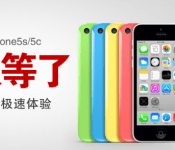
China Mobile to Officially Begin iPhone 5s and iPhone 5c Sales on January 17
Apple and China Mobile have officially announced today that the iPhone 5s and 5c will be available at the carrier’s stores as well as Apple retail stores across mainland China beginning January 17, 2014, with pre-registration for both devices beginning on December 25, 2013.

“Apple’s iPhone is very much loved by millions of customers around the world. We know there are many China Mobile customers and potential new customers who are anxiously awaiting the incredible combination of iPhone on China Mobile’s leading network. We are delighted that iPhone on China Mobile will support our 4G/TD-LTE and 3G/TD-SCDMA networks, providing customers with high-speed mobile service,” said Xi Guohua, China Mobile Chairman.
“Apple has enormous respect for China Mobile and we are excited to begin working together. China is an extremely important market for Apple and our partnership with China Mobile presents us the opportunity to bring iPhone to the customers of the world’s largest network,” said Tim Cook, Apple CEO. “iPhone customers in China are an enthusiastic and rapidly growing group, and we can’t think of a better way to welcome in the Chinese New Year than getting an iPhone into the hands of every China Mobile customer who wants one.”
China Mobile is currently the world’s largest carrier with over 760 million subscribers and is expected to bring many new customers to Apple, significantly increasing the company’s presence in China. Multiple signs of an approaching deal between the two companies have popped up during the final months of 2013, with Apple receiving licensing needed to operate on China Mobile’s TD-LTE standard in September and releasing the iPhone 5s and the iPhone 5c with TD-LTE support.
| |

‘Evasi0n’ Untethered Jailbreak Updated for Newer iPhones, iPads and iOS 7.x
The popular Evasi0n jailbreak has been today updated for iOS 7.x., marking the first time users have been able to deploy an untethered jailbreak on any device running iOS 7.0 to iOS 7.0.4, including newer devices such as the iPhone 5c, iPhone 5c, iPad mini with Retina Display, and iPad Air. The method allows for users to jailbreak their devices to make use of unauthorized like themes, tweaks, and apps from sources other than the App Store.

However, Cydia administrator Jay Freeman noted on his Twitter that he was not informed about a new version of Evasi0n before its release, also indicating that the build of Cydia installed with the new jailbreak is not official and may lead to some compatibility issues with existing downloads on the service. However, users on our forums are actively pointing out which Cydia apps are compatible with the new jailbreak, and it is recommended you look there for specific information.
Evasi0n is available now for OS X and Windows as an untethered jailbreak, with users only having to apply the method once. Tethered jailbreaks requires users to have their devices connected to a computer each time they restart.
| |

iPhone 5s and 5c to reach China Mobile on January 17th, 2014

Finally. Following a false start a couple of weeks ago, Apple has confirmed that the iPhone 5s and 5c will reach China Mobile on January 17th, 2014 as part of a multi-year deal. As hinted earlier, both smartphones will support the carrier’s TD-LTE and TD-SCDMA networks. Pricing isn’t available just yet, but customers can pre-register starting on December 25th. The partnership is Apple’s largest yet, at least in terms of sheer numbers — even if only a small fraction of China Mobile’s 700 million-plus customers buy iPhones, they’re bound to significantly improve Cupertino’s bottom line.
Filed under: Cellphones, Mobile, Apple
Source: Business Wire

iOS 7 gets its first complete jailbreak, with a big catch

You’ve mostly been out of luck if you’ve wanted to jailbreak iOS 7 so far; what options have existed have been incomplete at best. Cracking the code just got a lot easier, though, as evasi0n 7 has just arrived. The untethered jailbreak lets Mac and Windows users freely modify iOS 7 on any device that can run the software in the first place, including newer gadgets like the iPad Air and iPhone 5s. Just be prepared for a rough experience, at least with early versions. In addition to the usual risks associated with unofficial OS tweaks, Saurik (Jay Freeman) warns that he hasn’t had a real chance to test Cydia’s app distribution platform with the new evasi0n release; you’re using it at your own risk. Still, those who just have to venture beyond Apple’s prescribed boundaries can start downloading the jailbreak at the source link.
[Thanks to everyone who sent this in]
Filed under: Cellphones, Portable Audio/Video, Tablets, Mobile, Apple
Via: Redmond Pie, Evad3rs (Twitter)
Source: Evad3rs

Time Machines: Apple’s attempt to sell the future at CES
Welcome to Time Machines, where we offer up a selection of mechanical oddities, milestone gadgets and unique inventions to test out your tech-history skills. In the week’s leading up to the biggest gadget show on Earth, we’ll be offering a special look at relics from CES’ past.

In the early ’90s, Apple CEO John Sculley filled his CES keynote with a sweeping premonition on how computers and consumer electronics would soon merge into tiny, do-everything devices. When he finally took the idea to market, it was innovative, ahead of its time and ultimately disappointing. There’s more to the story, though, and it’s all waiting for you after the break.

Apple MessagePad
At the 1992 Winter CES, Sculley gave a keynote speech that delved into the future of digital devices. He offered a new theme for the ’90s that involved the “reorganization of work,” where technology would help us break old habits, increase productivity and redefine the workplace. The key to that shift? The personal digital assistant (PDA), a successor to his 1987 “knowledge navigator” concept that would combine applications, multimedia and network access, and, according to Sculley, lead to a trillion dollar market by the next decade. He didn’t reveal any Apple products matching the description that year, but he was setting the stage for the MessagePad, a device positioned as the next big thing.
Although Sculley seems to have coined the term “personal digital assistant” during that keynote, quite a few products had already tried to tackle that market. Simple “palmtops,” like Psion’s Organisers, which offered contact databases, scheduling and electronic diaries had been around for years. In 1989, Grid Systems released the rugged GRiDPAD tablet that ran MS-DOS and had a stylus for handwriting input (using software developed by Grid’s Jeff Hawkins). In 1991, Psion offered its Series 3 clamshell organizer that added a QWERTY keyboard and productivity applications to the package. All of these devices, however, fell short of the lofty goals that Apple and its Newton group had for its device.

During the mid-’80s, Sculley managed to reinvigorate sales of the Mac line and lead Apple in a mobile direction, starting with the 1987 inception of the Newton team and the release of the 1989 Macintosh Portable computer. (Although, at 16 pounds, “portable” was a bit of a stretch.) By 1990, Sculley felt that it was time to bring a Newton-based PDA device to market. Following another year’s worth of form-factor testing, he chose a nearly pocketable hand-held design and planned for a launch at the 1992 Summer CES in Chicago. The pressure was on to move this product to its final stage, but delays began to hinder progress. There were chip changes, major issues with the handwriting recognition software and ongoing hardware deals with Sharp. In the push to be innovative, success with new and untested technology was uncertain.
Despite recent success with the 1991 PowerBook laptop series, Apple’s sales figures for the next year looked grim — Sculley needed a win. He hoped that the Newton PDA he hinted at during his 1992 CES keynote would soon be at the forefront of a lucrative market. But it still didn’t have a name and was hampered by delays in development and internal reorganizations within the company. When the 1993 Winter CES rolled around, Apple had an alpha Newton device to demonstrate, but it still wasn’t ready for release, and while there were vague mentions of a summer launch and a sub-$1,000 price, nothing was confirmed.
Unfortunately for Apple, other companies had been hard at work developing PDA-style products of their own. At the 1993 CeBIT event in Germany, Tandy announced its Zoomer PDA, based on software from Palm Inc., lead by former Grid Systems exec Hawkins. With competition on the rise, Apple eventually shifted its official release date to coincide with the Macworld Expo in August that same year and settled on a name for its device: the MessagePad. It would be a $699 device with 4.5 x 7.25-inch dimensions, pressure-sensitive and monochromatic LCD screen and a stylus. The handheld would offer wireless messaging and modem options, connect to serial devices and even “beam” data to other nearby MessagePads.
 Apple managed to sell a respectable 50,000 units within the first two and a half months, but once the initial surge was over, sales stagnated. Its Calligrapher handwriting software was still problematic, often failing to accurately read input. The failure was so public, that shortly after its release, the popular comic strip Doonesbury mocked the issue, portraying a translation of the words “catching on” as “egg freckles.”
With company sales continuing to slip and the MessagePad’s failure still fresh, Apple’s board gave Sculley his walking papers. It seems that the synthesis of computers and consumer electronics that he had predicted would take longer than he thought. None of the early PDAs actually managed to gain traction in the market, all suffering from the inherent technological limitations of the time. Perseverance would pay off for Hawkins, though. He learned from the Zoomer’s failure and reworked its handwriting software into a new product called Graffiti. In 1994, he licensed it to Apple, solving many of the MessagePad’s problems. Hawkins eventually spun Graffiti into his own successful product in 1996 called the Palm Pilot. Steve Jobs discontinued the ill-fated MessagePad shortly after he returned to Apple in 1997, but it wasn’t the end of the road for Sculley’s “knowledge navigator.” After almost a decade, the idea would rematerialize, but this time it had a new name: the iPhone.
[Image credits: SSPL/Getty Images (MessagePad); Channel R/Wikipedia (Palm Pilot); Snowmanradio/Wikipedia (Psion Series 3)]

Snapchat iOS update discreetly adds replay, filters and overlays for weather, time or speed

And suddenly, moments shared over Snapchat were a little less fleeting. The service is known for only allowing you to watch a shared image or video once, and only for a second, but the app’s latest iOS update changes everything: now you can replay pictures or videos. The feature is hidden in the application’s additional services menu (and comes with no explanation of what it does, exactly), but it allows users to replay old Snaps at the rate of one a day. While this doesn’t quite make Snaps public, it does make them a bit more enduring. Users who tend to create Snaps of a more …personal nature may want to think twice before sharing.
The application’s other updates are a bit less game changing. Users can now apply “Smart Filters” to their images, which overlay your Snaps with data including current weather, time, or the speed they’re traveling, along with new visual filters (swipe from right to left to activate them) and text options. The app has even added a “front-facing flash,” but don’t get too excited — it just flashes a bright white image on your smartphone’s screen as you capture a poorly-lit selfie. Itching to update? Check out that iTunes link below.
Via: TechCrunch
Source: iTunes

Google Play Music gets a new look for iOS 7 and ‘I’m feeling lucky’ radio

If you’re an iOS user that stuck with Google Play Music past the free All Access promo, a new update brings this refreshed UI for iOS 7 and a few new features. As promised at launch, it now supports “I’m feeling lucky” radio which randomly assembles a playlist based on recent listening habits. Also new are themed auto-playlists built around tracks in your library and those you’ve given a thumbs-up to. Google’s iOS team added genre radio stations for All Access subscribers too, and the ability to search by genre for everyone, bringing this version’s features up to par with its Android counterpart. With the amount of countries where the service is now available, that shouldn’t leave many people out — unless they live in Canada, that is.
Filed under: Cellphones, Mobile, Apple, Google
Source: iTunes

