


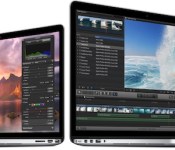
Apple Acknowledges Airplay Mirroring Issues for Late 2013 MacBook and Mac Pro on Slower Wi-Fi Networks [Mac Blog]
Apple today released a new support document that offers a solution for Late 2013 MacBook Pro and Mac Pro owners having difficulty with Airplay mirroring when connecting to an 802.11 b or g network.

The company suggests that users who are experiencing issues with dropped connections and frozen images on the television when using Airplay mirroring should turn off Bluetooth.
Turning off Bluetooth can enhance the performance of Airplay considerably. To turn off Bluetooth, locate the Bluetooth icon in the menu bar on the upper-right corner of your screen. Click the icon and choose Turn Bluetooth Off.
While it is unclear how widespread the Airplay mirroring issue is, there have been complaints about Airplay performance with the newly released MacBook Pros on both our forums and the Apple Support Communities. Users have noted both image freezing and significant lag when attempting to use Airplay mirroring.
Complaints about Airplay picked up in November, shortly after the October release of the latest Retina MacBook Pro models. Though there have been few complaints about the Mac Pro due to its limited availability, it is also displaying the same problem.
Because the issue is limited to b or g networks so another fix could include a router replacement supporting the n or ac standards.
     |
Apple Enforces Adobe Flash Player Security Upgrade with Updated Malware Definitions [Mac Blog]
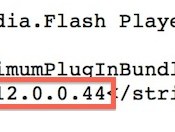
Following Adobe’s release of a “critical” update for Flash Player yesterday to address a security issue that is currently being exploited in the wild, Apple has updated its “Xprotect” anti-malware system to disable older versions of the plug-in. The move forces users to upgrade to the latest version of Flash if they wish to continue using the still-common media plug-in.
 Updated Xprotect definitions requiring new 12.0.0.44 version of Flash Player
Apple’s Xprotect for OS X was introduced as part of OS X Snow Leopard in 2009 as a rudimentary anti-malware system that allowed Apple to block installation and running of the relatively rare cases of known malware targeting Mac systems. By 2011, Apple had upgraded the system to allow users’ Macs to automatically check for updated definitions every 24 hours, ensuring up-to-date protection.
While primarily targeted specifically at malware protection, the Xprotect system also allows Apple to enforce minimum versions of plug-ins such as Flash and Java, and the company has on occasion blocked older versions of both of these plug-ins to ensure that users upgrade their systems.
Apple’s use of the Xprotect system has, however, declined in recent months, perhaps signaling a slowdown in malware and other security issues affecting Mac systems. The most recent significant update to Xprotect definitions prior to yesterday came in mid-September to address the OSX/Leverage.A malware.
| |
Apple Asks Supreme Court to Curb Patent Abuse Amid New $2 Billion Patent Lawsuit
Apple is joining Google and 13 other companies in a combined effort to curb frivolous lawsuits from patent holding companies, reports Bloomberg. Speaking to the Supreme Court justices, Apple said it has been sued 92 times by patent companies in the last two years. It currently has 228 unresolved patent claims and employs two lawyers who are dedicated to responding to royalty demands.
Google, joined by 13 other companies, told the justices that patent-assertion entities have an unfair advantage because they don’t make products of their own, leaving them effectively immune from countersuits.
Apple and the other technology companies are asking the Supreme Court to make it easier for companies to collect attorney’s fees when patent holding companies lose infringement lawsuits. This allocation of fees, they argue, would cut down on the number of frivolous suits.
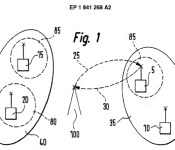
Just as Apple moves to seek judicial assistance in addressing patent abuse in the U.S., German patent holding firm IPCom has filed two patent infringement lawsuits in the German court system that accuse Apple of infringing on cellular technology it owns (via FOSS Patents). Both the European and German patents describe methods of managing priority emergency access when wireless networks are overloaded. Apple could pay more than $2 billion in damages if it loses these legal battles.

The patent asserted in case no. 2 O 53/12, in which, inter alia, a partial claim of damages amounting to 1.57 billion euros ($2.12 billion), plus prejudgment interest, has been brought, is EP1841268. This patent has recently (on January 22, 2014) been the subject of a validity decision by the European Patent Office, in the first instance.
In case no. 2 O 95/13, in which no quantified damages claims but requests for an accounting and for declaratory judgment of liability for damages have been brought so far, the patent-in-suit is DE19910239, a German patent.
IPCom obtained both patents from German automotive parts company Robert Bosch GmbH. Apple, Nokia, HTC and others asked the European Patent Office to invalidate the European patent, but the EPO denied this request.
| |
Former Sony President Recounts Steve Jobs’ Desire to Launch an OS X-Compatible VAIO [Mac Blog]
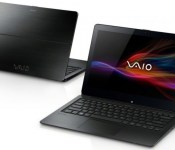
Steve Jobs had a desire to launch an OS X-compatible Sony VAIO, according to a new blog post from longtime Japanese freelance writer Nobuyuki Hayashi (via The Verge). The account comes from a 2011 interview with former Sony president Kunitake Ando, who stated Jobs and another Apple executive presented him with a VAIO running OS X during a winter golf tournament in Hawaii.

Most of Sony’s executives spends their winter vacation in Hawaii and play golf after celebrating new year. In one of those new year golf competitions back in 2001, “Steve Jobs and another Apple executive were waiting for us at the end of golf course holding VAIO running Mac OS” recalls Ando.
Upon his return to Apple in 1997, Steve Jobs famously ended Apple’s Mac OS licensing program for third-parties. However, Ando notes that Jobs was ready to “make an exception” for Sony’s line of VAIO notebooks. Ando states that the partnership between the two companies never happened due to “bad timing” for Sony, as the company had finished optimizing both the VAIO’s hardware and software specifically for Microsoft’s Windows platform.
In addition to having a strong interest in the company’s notebooks, Ando also claims that Jobs asked many questions about Sony’s line of “SonyStyle” retail stores, which he believes led to inspiration for Apple’s own retail stores. Jobs also reportedly inspired the GPS feature found in many of Sony’s CyberShot cameras, as Ando recounts the former Apple CEO professing his desire for the feature upon using the product.
| |
Apple Captures 19.5% of Global PC and Tablet Market in Q4 2013
Apple again led the combined PC and tablet market in shipments during Q4 2013, according to a report from research firm Canalys. Apple shipped 30.9 million Mac and iPad units, accounting for a 19.5% share of the market. Lenovo secured the second spot behind Apple by increasing its market share 25.5% year-over-year, as the Chinese company jumped over HP and now has an 11.8% share of the global PC market.
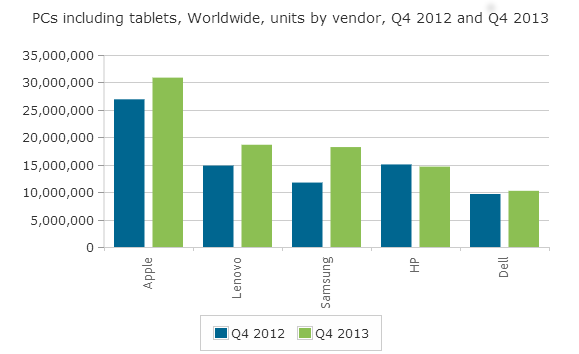
Canalys’ estimates show that 84.3% of Apple’s shipments, or 26 million units, were iPads. The combined launch of the iPad Air and the Retina iPad mini helped boost the company’s share of the overall tablet market from 27.4% in Q4 2012 to 34.1% in Q4 2013.
Apple remained the PC market leader in Q4, shipping 30.9 million units to take a 19.5% share of the market. It shipped 26.0 million iPads, which accounted for 84.3% of its total shipments in Q4. Apple’s share of the overall tablet market increased sequentially from 27.3% to 34.1%, with the launch of the iPad Air and iPad mini with Retina display providing a much needed boost. The original iPad mini also fell in price, down to US$299 in the US, making it cheaper than ever to buy an iPad. But competition is mounting and Android tablets are falling in price, which will put pressure on Apple’s market share in 2014.
Overall, the worldwide combined PC and tablet market was bolstered by strong consumer interest in tablets and grew 17.9% in the final quarter of 2013. The tablet market increased 65.2% year-over-year, while PC shipments declined 6.9% yearly. In total, tablets now account for 48.3% of the total PC market.
| |

Apple and Samsung File List of Patent Claims and Accused Products Ahead of Second U.S. Patent Lawsuit
Ahead of a second patent infringement lawsuit set to take place on March 31, Apple and Samsung have filed a final list of the accused patents and products being brought to trial, reports FOSS Patents.

Previously, both companies agreed in September 2013 to drop one patent each from the trial, as Judge Lucy Koh ordered both companies to narrow the scope of their ongoing legal battle. Last month, Judge Koh also invalidated two of Samsung’s patent claims, which will result in the Korean company bringing a total of only four patent claims to trial. Apple will bring the expected amount of five patents to trial.
Apple’s asserted patents:
– U.S. Patent No. 5,946,647 “System and method for performing an action on a structure in computer-generated data” – Claim 9
– U.S. Patent No. 6,847,959 “Universal interface for retrieval of information in a computer system” – Claim 25
– U.S. Patent No. 7,761,414 “Asynchronous data synchronization amongst devices” – Claim 20
– U.S. Patent No. 8,046,721 “Unlocking a device by performing gestures on an unlock image” – Claim 8
– U.S. Patent No. 8,074,172 “Method, system, and graphical user interface for providing word recommendation” – Claim 18
Samsung products accused by Apple:
– Admire
– Galaxy Note
– Galaxy Note II
– Galaxy S II
– Galaxy S II Epic 4G Touch
– Galaxy S II Skyrocket
– Galaxy S III
– Galaxy Tab 2 10.1
– Stratosphere
Samsung’s asserted patents:
– U.S. Patent No. 7,756,087 “Method and apparatus for performing non-scheduled transmission in a mobile communication system for supporting an enhanced uplink data channel” – Claim 10
– U.S. Patent No. 7,551,596 “Method and apparatus for signaling control information of uplink packet data service in mobile communication system” – Claim 13
– U.S. Patent No. 6,226,449 “Apparatus for recording and reproducing digital image and speech” – Claim 27
– U.S. Patent No. 5,579,239 “Remote video transmission system” – Claims 1 and 15
Apple products accused by Samsung:
– iPhone 4
– iPhone 4S
– iPhone 5
– iPad 2
– iPad 3
– iPad 4
– iPad Mini
– iPod Touch (5th generation)
– iPod Touch (4th generation)
– MacBook Pro
Florian Mueller of FOSS Patents noted that both companies’ current products do not appear on either list due to the lengthy process of U.S. patent litigation lawsuits. However, the list of accused products and their outcomes in the trial may be used as a basis for damages and injunctive relief going forward.
Mueller also noted that the anonymous request to reexamine Apple’s infringed autocomplete patent has been granted, with the U.S. Patent and Trademark Office (USPTO) now scheduled to take a closer look at the viability of the patent:
In August 2013, the USPTO granted the reexamination request only in part — and in a way that would have been useful for Samsung’s purposes. But the anonymous requester(s) kept fighting for a more comprehensive review and filed a petition. That petition related to various claims the examiner refused to reexamine, particularly including claim 18, the claim-in-suit. In mid-January, the USPTO published a favorable decision on the petition, holding that the anonymous requester had indeed raised substantial new questions of patentability.
A mediation meeting between Apple CEO Tim Cook and Samsung Electronics CEO Oh-Hyun Kwon is scheduled to take place before the trial, with the date for the session set for on or before February 19. Both companies will also partake in a separate trial centered around Apple’s new call for a U.S. ban on Samsung products set for January 30.
| |
Apple and Samsung to spar over iPhone 5, Galaxy Note II at next trial

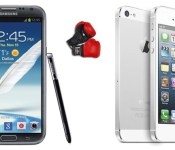
Perpetual court combatants Apple and Samsung have revealed their final list of allegations ahead of a trial starting March 31st. Though each started with five disputed patents, Samsung only has four now since a multimedia sync patent was knocked out earlier by Judge Lucy Koh. She also gave Apple a summary judgement win on its auto-complete IP, putting it ahead before the trial even begins. As for the rest, it’s worth noting that all of Apple’s patents are related to user interaction, while two of Samsung’s are standards-essential (FRAND) patents — which companies are normally obligated to license out. Samsung did have one point in its favor, however: the USPTO has agreed to take a second look at the validity of Apple’s aforementioned auto-complete patent.
As for the devices accused of infringing those patents, none are very recent models and many aren’t even on the market anymore. However, the historical sales of each will affect the size of any award given by the court if an allegation is upheld. That’s a lot of infringement for ultra-popular models like the Galaxy Note II, Galaxy S III, iPhone 5 and iPhone 4s, which have far outsold disputed models from the previous trial (like Samsung’s original Galaxy S). Other names on the list include the Galaxy Nexus and Galaxy Tab 2 10.1 from Samsung, along with Apple’s iPads 2, 3, 4 and Mini. Of course, there’s always the upcoming negotiations between company CEOs to avoid all that, but… nah, who are we kidding.
Filed under: Cellphones, Mobile, Apple, Samsung
Source: Foss Patents
Apple to Restart iPhone 4 Production for India, Indonesia and Brazil [iOS Blog]
 Apple has plans to reinstitute iPhone 4 production in order to sell the device in India, Indonesia, and Brazil, reports The Economic Times. A January report indicated Apple would relaunch the discontinued iPhone 4 in India, but it was unclear at that time if the company was continuing production on the phone or selling old inventory.
Citing three senior executives with knowledge of the company’s plans, the site suggests offering a lower cost iPhone will help Apple recoup market share in those countries. Apple partner Foxconn is said to have already begun production on the devices.
The maker of iPads and MacBooks is betting the lower price point will help it wrest volumes from Samsung’s Grand and S4 Mini, and recoup market share that has slumped, largely because it didn’t have phones that were cheap enough.
Reproducing the iPhone 4 will mark the first time that Apple has resumed production of a discontinued product. Apple ceased selling the iPhone 4 in stores following the September 2013 launch of the iPhone 5s and the iPhone 5c, and its current lineup consists of the aforementioned models along with 2011′s iPhone 4s.
The entry level iPhone 5s sells for Rs. 53,500 ($856) in India, while the entry level iPhone 5c is Rs. 41,900 ($670). The reintroduced 8GB iPhone 4 retails for Rs. 22,900 ($360).
| |

Apple Hires Sleep Expert From Philips Research to Work on iWatch
Apple has hired Roy J.E.M Raymann, from Philips Research, for its iWatch team, according to a report from 9to5Mac. The hire is the latest in a long series of recent reports that suggest Apple is hiring a wide variety of health and medical sensor experts for its upcoming iWatch product.
According to Raymann’s LinkedIn biography, his main research is in “how to optimize rest and activity”, “non-pharmacological approaches to promote sleep”, and “interpretation of ambulatory physiological and biomechanical data”. He did other research on sleep and coffee, power napping, and he founded the Philips Sleep Experience Laboratory, a non-clinical sleep research facility.

Philips Research has been involved in many major technological advancements, including the development of the compact disc, LED lightbulbs, the MRI, and more.
Philips Research is a global organization that helps Philips introduce meaningful innovations that improve people’s lives. We provide technology options for innovations in the area of health and well-being, targeted at both developed and emerging markets. Positioned at the front-end of the innovation process, we work on everything from spotting trends and ideation to proof of concept and – where needed – first-of-a-kind product development.
The hire suggests Apple could be looking to help iWatch buyers with tracking and improving sleep, while also possibly tracking other health data like pulse and activity, and blood data like glucose levels. Several current fitness tracking devices are designed to track both sleep length and sleep quality. For example, bands like the Jawbone UP and the Fitbit Force are both able to slip into a night time monitoring mode that keeps track of sleep.
Philips confirmed to 9to5Mac that Raymann no longer works at the company, but would not say where he was currently employed.
| |
iOS 7.1 Beta 5 Fixes Additional Exploits Used by Evasi0n Jailbreak [iOS Blog]
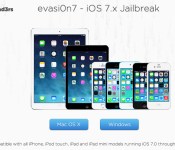
Today’s iOS 7.1 beta 5 release has patched additional exploits (via @iH8sn0w) used for the evasi0n iOS 7 jailbreak after the primary kernel exploit was patched in iOS 7.1 beta 4.
Because the main exploits for the jailbreak have been patched, it will not be possible to jailbreak iOS 7.1 using the untethered evasi0n 7 jailbreak, according to iJailbreakEvasion. This means that users who have jailbroken their devices will not be able to upgrade to iOS 7.1 when it is released.

It’s 100 percent official that the evasi0n7 UnTethered 7.0.4 jailbreak was partially patched by Apple in their previous beta release, which will effectively render the utility useless once Apple releases 7.1 to the masses.
The site recommends that users who wish to keep their devices jailbroken avoid the latest iOS 7.1 beta and the finalized version of the software “at all costs.”
First released in December of last year, the evasi0n iOS 7 jailbreak continues to work with iOS devices that are running versions of iOS up to iOS 7.0.5.
| |

