


Apple Again Rumored to Release iOS 7.1 in March
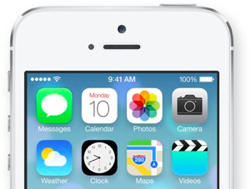 A new report from 9to5Mac claims iOS 7.1 will indeed be released to all iOS users in March, representing the first major revision since iOS 7 was launched publicly in September of last year.
Sources note the next version of iOS 7 will continue with the visual improvements, minor tweaks and bug fixes reported in earlier beta versions seeded to developers.
While recent reports are pegging a launch sooner than later, reliable sources say that Apple is currently planning to ship iOS 7.1, the first significant update to iOS 7, in March. The iOS 7.1 update is said to not have any “secret features,” and it will basically be what we have been told to expect by the past five betas: some user-interface tweaks in the Phone app, an improved Calendar app, speed improvements, and numerous bug-fixes.
BGR originally cited a March release date for iOS 7.1 back in late December, but a follow-up report earlier this week seemed to hedge on that claim somewhat by noting that the update was expected in the “coming weeks.” Slowing increments of build numbers from the developer beta versions suggest the software is nearing a public launch, but whether that date lands in late February or the early March is not clear.
Previous iOS 7.1 betas have included various improvements such as a new “Button Shapes” option in Accessibility, keyboard tweaks that indicate shift and caps locks, a new event list view within the Calendar app and refined icons for the Phone, FaceTime, and Messages app. The unreleased iOS in the Car feature has also been refined in the iOS 7.1 beta testing period, but it is unclear when the functionality will be made available to the public.
Details on features in past beta releases can be found in our previous beta posts: Beta 1, Beta 2, Beta 3, Beta 4 and Beta 5.
     |
Apple Lowers Licensing Costs for Lightning Cables and Other MFi Accessories
 Last month, Apple reportedly reduced the licensing costs for accessory manufacturers who are producing official gear for the iPhone, iPad or iPod. According to Mac Otakara, this reduction applies to Lightning cables as well as other accessories that are part of Apple’s MFi (Made for iPod/iPhone/iPad) Program.
Made for iPod (MFi) was launched in 2005 as a licensing and quality control program that allowed iPod accessory makers to ship their products with an Apple-approved “Made for iPod” label. At launch, Apple reportedly charged companies that wanted to participate in this program a 10% fee based on the wholesale cost of the device.
Apple expanded its MFi Program to include the iPhone and iPad as those devices were added to the company’s product portfolio, with Apple’s Lightning cable introduced last in 2012 falling under the program’s guidelines due to the serialized authentication chip embedded in the connectors. At last year’s Worldwide Developers Conference, Apple again extended the licensing to include game controllers for iOS devices.
Those game controllers have generally arrived with higher pricing than expected by consumers, with some of the blame for pricing and quality issues being placed on Apple’s requirements administered through the MFi Program. One high-profile controller, the SteelSeries Stratus, did, however, see a $20 price cut in the few weeks between announcement and launch last month, and while a cut to MFi licensing fees undoubtedly would not have accounted for the entire price drop, it may have given SteelSeries a bit of flexibility to make its pricing more competitive.
Beyond licensing and technical requirements, Apple allegedly also requires manufacturers in the MFi Program to agree to the company’s supplier responsibility code. This code takes steps to ensure that employees have access to safe working conditions and requires companies to submit to inspections that ensure compliance with Apple’s Code of Conduct.
| |

1976 Apple Marketing Proposal Included Plans for Retail Locations [Mac Blog]
The first Apple retail location could have opened in the late 70s, according to a new account from distinguished Silicon Valley marketer Regis McKenna (via CNET). During a fireside chat held Thursday at the Computer History Museum, McKenna recalled a 1976 meeting in which he turned down an offer from Apple founders Steve Jobs and Steve Wozniak to market the Apple II.
However, McKenna stated that he eventually decided to assist Apple after a dinner with Jobs where both discussed the future of the company:
Jobs and McKenna had dinner and talked about what the future of Apple could look like, and McKenna signed on. Eventually McKenna drafted an eight-page marketing plan in December 1976. Lo and behold, what was written under “Distribution Channels”? Apple stores.
“I had actually presented this to Apple a couple of times,” he said. “I had talked about putting them in different parts of the country.
 Apple Retail Store located at the Royal Hawaiian Center in Honolulu, Hawaii
McKenna went on to state that his plan for Apple’s retail locations were to have them placed in office parks, and to cater the stores toward high-profile customers. McKenna also added that the locations would have served as centers for corporate sales and training, and that the eventual goal was to shift toward more traditional retail stores for the company, similar to Apple Stores today.
Apple opened its first two retail stores on May 19, 2001 and currently has 420 stores total, with 166 of those located outside of the U.S. During its financial results conference call covering the 2013 holiday quarter, the company reported $7 billion in revenue generated from its stores with 21,000 visitors per store per week, and an average revenue per store of $16.7 million.
| |

California law could end grand theft mobile with kill-switches in all smartphones

Lawmakers in California are so intent on curbing record levels of smartphone theft, they’re ready to fine phone makers if anti-theft measures aren’t available on their devices. The New York Times reports that the order will come from State Senator Mark Leno, who is set to introduce a new law requiring all smartphones and tablets sold in the state to include a “kill switch” solution. Ignore the ruling and device makers could face a $2,500 fine for each device sold.
San Francisco and New York prosecutors George Gascón and Eric Schneiderman set the ball rolling when they met with representatives from Apple, Google, Samsung and Microsoft last year. Apple then won praise for including its Activation Lock feature by default in iOS 7, requiring device owners to set a passcode that stopped thieves reactivating a stolen phone. While it would only officially cover California, the new law could force phone makers into a full US rollout, likely upsetting the carriers. The CTIA, which represents the likes of AT&T, Verizon, T-Mobile and Sprint, believes its stolen phone database is a better solution and will fight the ruling. If it is signed into law, phone makers will have until January 1st, 2015 to implement a solution or they will not pass Go and will be forced to hand out more than $200.
Filed under: Cellphones, Tablets, Wireless, Internet, Software, Mobile, Apple, Samsung
Source: New York Times

Tim Cook Says Apple Working on ‘Some Really Great Stuff’ in New Product Categories
 Apple will launch products in new categories and the company is working on “really great stuff”, according to an interview with CEO Tim Cook in The Wall Street Journal this evening.
He demurred when asked about specific possible products, but said anyone “reasonable” would consider Apple’s upcoming products to be in new categories.
Cook has said on prior occasions that new product categories are coming for Apple in 2014 and, with this interview, he is likely looking to encourage spooked investors that Apple is still focused on growth.
Cook said in the interview that Apple remains a “growth company” and has significant opportunities in existing products as well as new ones. In addition, Apple strives to be the number one smartphone, tablet, and computer maker in the world.
He said his statement that Apple doesn’t aim to make the most phones has been misunderstood.
“I don’t view that as being satisfied with being small or however you want to define it,” he said. “I just want to say that the macro thing for us is making a great product and we must do that. If we can’t do that, we’re not going to force ourselves to hit a price point that makes us produce a product that we’re not proud of because we lose who we are in that. We’re not going to do that.”
Apple executives have repeatedly said that they are only interested in making the best products in the world, not generating revenue for revenue’s sake. Tim Cook has previously said that Apple is “focused on making great products that enrich lives” and that the company is “deeply committed to doing this and maniacally focused on it.” He said last month that innovation is “deeply embedded” at the company and that Apple has “no issue” coming up with new ideas.
Elsewhere in the interview Cook revealed that Apple has repurchased $14 billion in stock over the past two weeks, and that the company is open to making large acquisitions if it makes sense.
| |

Wal-Mart Offering New 16GB Wi-Fi iPad 2 for $299 [iOS Blog]
 Walmart is offering the iPad 2 for $299 in-store or online, a savings of $100. The discount applies to new 16GB Wi-Fi models in black or white and, according to CNET, the sale will run for thirty days.
The iPad 2 was first released in 2011 but Apple has continued to sell it for a discounted price as many educational and business customers have opted for the cheaper full-screen iPad, and it is the only iPad that Apple sells that has the legacy thirty-pin connector.
The original-generation iPad mini has been available for the $299 price as well since the Retina model was introduced back in October. It has the same processor and a smaller screen than the iPad 2, though with an identical resolution.
| |

Apple Repurchases $14 Billion in Shares in 2 Weeks, Company Open to Large Acquisitions
 Apple has repurchased $14 billion of its own stock in the two weeks following its first quarter earnings call on January 27th, according to a report in The Wall Street Journal.
The Journal spoke to Apple CEO Tim Cook who said that Apple wanted to be “aggressive” and “opportunistic” with its repurchases after Apple’s share price dropped 8 percent the day after the results were reported.
With the latest purchases, Mr. Cook said Apple had bought back more than $40 billion of its shares over the past 12 months, which Mr. Cook said was a record for any company over a similar span.
“It means that we are betting on Apple. It means that we are really confident on what we are doing and what we plan to do,” said Mr. Cook, speaking in a conference room at the company’s corporate headquarters here. “We’re not just saying that. We’re showing that with our actions.”
He went on to say that the company would share “updates” to its buyback program in March or April, roughly a year after it more than doubled its capital return program to $100 billion. Apple has bought back $40 billion in shares over the past 12 months.
Cook said that though Apple has not made any large acquisitions, it is open to making a big purchase if it made financial sense: “We have no problem spending ten figures for the right company, for the right fit that’s in the best interest of Apple in the long-term. None. Zero.”
As of its earnings call last month, Apple had $158.8 billion in cash, with $34.4 billion located in the United States. It’s likely that the repurchase was done entirely with Apple’s domestic cash.
| |

Flagship San Francisco Apple Store Approved by Planning Commission
The City of San Francisco today approved Apple’s plans to build a new retail store in the city’s famous Union Square, taking over the former Levi’s building at the corner of Post and Stockton streets.
According to an Apple representative presenting the company’s plans to the city’s planning commission, the flagship store will be “more iconic” than the well-known Fifth Avenue glass cube retail store in New York City, reported IFOAppleStore‘s Gary Allen after attending the meeting.

Renderings of the location shared earlier this week depict the new store with two massive 44-foot tall sliding glass panels that allow the building to be exposed to the street.
Apple originally filed plans to move its existing Stockton Street store to the prime Post Street location back in May of 2013, but the company was forced to revise its initial building plans after critics objected to the removal of the historical Ruth Asawa fountain and the installation of an 80-foot wide wall along a key pedestrian and transit corridor.
Revised plans for the site were filed in August, and Apple pledged to move the fountain to a nearby location, add an eight-foot wide window, and move the glass wall of the store back by four feet.
The commission has now accepted Apple’s second proposal with one small caveat — the company will need to offer improved accessibility options for the store’s upper floor. Earlier today, the San Francisco Historic Preservation Commission also approved a permit for the project, giving Apple a green light to move on with the store’s construction.
| |

OpenTable Testing Ability to Pay Restaurant Checks In-App [iOS Blog]
 OpenTable is testing a new feature to allow customers to pay their restaurant checks in the OpenTable iPhone app. The feature is being beta tested at select restaurants in San Francisco, but the company says it does plan a broader launch in the future, including Android support.
We’re pleased to announce that it will soon be just as easy to pay for your meal. Rather than waiting for a check or, worse yet, being late for the theater, with the new OpenTable payments feature, you will be able to tap to pay – and be on your way.
OpenTable mobile payments are currently being tested by diners at select restaurants in San Francisco. Over the next few weeks, we will be adding more diners to the test program and will provide you a way to request access. If you receive an email invitation to be part of our pilot program, you can get started by making a reservation at a participating restaurant. Simply add a credit card in the OpenTable iPhone app before your meal and you’ll be able to view and pay your check. There’s no scanning or bar codes involved.
In addition to its online reservation system, OpenTable offers full point-of-sale and register services to restaurants, meaning rollout of an online-payment system should be a relatively straightforward feature addition for the firm.
Supported restaurants include Jardiniere, Dosa on Fillmore, Out the Door on Bush Street, Boxing Room, Chouquet’s, Radius, Bask, Chambers, Café Bastille, Plouf, and Garcon — though users must have a beta invite to try it.
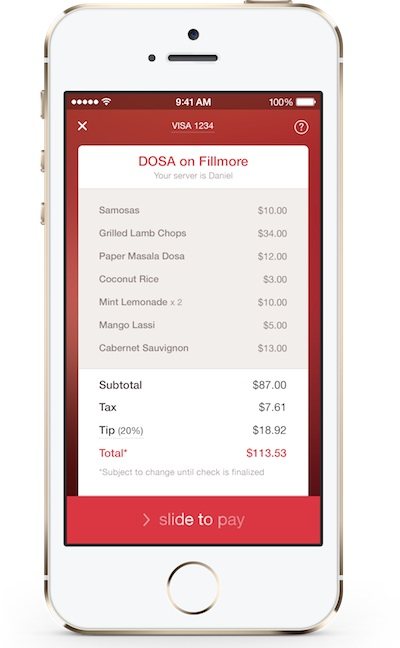
OpenTable is a free download for the iPhone and it is also available through Siri. [Direct Link]
| |

Apple Seeds OS X Mavericks 10.9.2 Build 13C53 to Developers [Mac Blog]
 Apple today seeded build 13C53 of OS X 10.9.2 to developers, marking the fifth beta iteration of 10.9.2. The release comes a week after the fourth OS X 10.9.2 beta, build 13C48, and over a month after the first OS X 10.9.2 beta.
The update is available to registered developers through the Software Update mechanism in the Mac App Store as well as through the Mac Dev Center.
Apple continues to ask developers to focus on mail, messages, graphics drivers, VoiceOver, VPN, and SMB2. Earlier betas of OS X 10.9.2 began allowing Mac users to block people on iMessage and FaceTime, as can be done in iOS 7, and also introduced FaceTime Audio.
| |

