


‘Flappy Bird’ Removed from App Store by Developer
 As promised, Dong Nguyen, the developer of Flappy Bird, has removed the popular game from the App Store. Flappy Bird has been the number one downloaded free app on Apple’s App Store for almost a month. The game was generating $50,000/day in revenue from in-app ads.
Nguyen had previously expressed frustration at the attention he has received since the sudden popularity of his game. In a tweet last week he said “Please give me peace.”, and yesterday, he announced that the game would be removed from the App Store today.
The removal appears to be propagating, but in several locations, Flappy Bird no longer shows up in search, developer’s app listing, and Top Free games.

In subsequent tweets, he said the removal was not due to legal reasons and that he was not interested in selling the game.
If you already have downloaded the game, you can still play it even though its been removed from the App Store.
     |

Judge denies re-retrial in never-ending Apple v. Samsung patent battle

It turns out we’re not the only ones who are ready to see this patent battle royale come to an end. Last night, Judge Lucy Koh denied Samsung a retrial in the case that will not die, but took the opportunity to shame Apple’s lawyers for bringing the Korean company’s foreignness into the equation. The court-appointed shaming comes as a result of closing arguments made during a partial retrial that saw a portion of Apple’s original award bumped from $450 million down to $290 million in damages. At the time, Apple’s attorney argued that Samsung’s infringement of Apple’s patents could have an impact on the US economy.
When I was young, I used to watch television on televisions that were manufactured in the United States. Magnavox, Motorola, RCA. These were real companies. They were well known and they were famous. They were creators. They were inventors. They were like the Apple and Google today.
But they didn’t protect their intellectual property. They couldn’t protect their ideas. And you all know the result. There are no American television manufacturers today.
Samsung originally moved for a mistrial in that case based on those comments, but was denied. Instead, Koh informed the jury to avoid letting prejudice inform its decision. While Koh didn’t see a need for yet another trail, she repeatedly referred to the comments as “troubling,” saying they “could have been perceived as invoking racial or ethnic prejudice.”
Filed under: Mobile, Apple, Samsung
Via: re/code
Source: Scribd

‘Flappy Bird’ Creator Promises to Remove Game From App Store Tomorrow [iOS Blog]
Dong Nguyen, the developer of Flappy Bird, the viral hit that remains at the top of the App Store rankings, has promised on Twitter to remove the app from the App Store because the sheer amount of attention the app has drawn is something he isn’t interested in dealing with.
Nguyen has repeatedly said on Twitter that the press is “overrating the success” of his games and that the sudden fame and attention is something he doesn’t want, tweeting “please give me peace”. He said today that though he is planning to remove Flappy Bird from the App Store, he will continue to make games. However, he isn’t interested in the future of Flappy Bird and he won’t sell the app to another developer.

I am sorry 'Flappy Bird' users, 22 hours from now, I will take 'Flappy Bird' down. I cannot take this anymore.
— Dong Nguyen (@dongatory) February 8, 2014
It is not anything related to legal issues. I just cannot keep it anymore.
— Dong Nguyen (@dongatory) February 8, 2014
I also don't sell 'Flappy Bird', please don't ask.
— Dong Nguyen (@dongatory) February 8, 2014
For the moment, Flappy Bird is a free download from the App Store. [Direct Link]
| |

Samsung Reprimanded Over Use of Standards-Essential Patents for Import Ban [iOS Blog]
 Samsung has been reprimanded by the U.S. Justice Department for using its standards-essential or FRAND patents to seek an import ban against some older Apple products into the United States. The DoJ investigated the case after concerns were raised about companies unfairly wielding their standards-essential patents to hamper competition.
As part of their extensive legal back-and-forth over patents, Samsung and Apple went before the U.S. International Trade Commission which ordered an import ban on several older Apple products saying they had violated a particular standards-essential Samsung patent. Apple argued that Samsung was asking an unfair licensing fee, but the ITC ruled that the Samsung’s claims could proceed nonetheless.
The Obama administration ended up vetoing the import ban, the first time since 1987 that the President of the United States had interfered with an ITC decision. A number of companies had lined up support for Apple, asking the President to veto the ban because the patent in question was deemed essential for 3G wireless functionality and Samsung was asking for inappropriately large licensing fees in violation of patent rules.
The DoJ said that it would not take action against Samsung because of the Presidential veto, but warned the firm against taking similar actions in the future:
In many cases, there is a risk that the patent holder could use the threat of an exclusion order to obtain licensing terms that are more onerous than would be justified by the value of the technology itself, effectively exploiting the market power obtained through the standards-setting process.
FRAND patents are supposed to allow companies to cross-license so-called “essential” patents at reasonable rates to avoid having companies with one necessary patent from extorting an entire industry with extreme licensing requirements.
| |

Tim Cook: ‘Android is Like Europe’, Many Different Things Under One Name
 Apple CEO Tim Cook compared Android to Europe in his wide-ranging interview with The Wall Street Journal yesterday, saying that the PC and mobile platform wars couldn’t be compared. Cook said that Android is made up of many different things under one banner, as opposed to Windows which was one uniform platform.
Cook’s statement was in response to a question asking if the mobile device market will ultimately follow the PC market, where Apple remains a comparatively niche player compared to the dominance of Windows.
He said that the examining the PC and mobile markets as a direct comparison doesn’t work, largely because one of the historical differences between the Mac and Windows was the lack of availability for applications on the Mac, while iOS has a very strong developer base.
“There was a vast, vast difference in the number of applications that were available for the Macintosh”, Cook said. And, over the years, the gap continued to grow because the Mac lost some key applications.
However, on mobile devices, Apple has more than one million applications with half of those specifically optimized for the iPad. On Android, Cook says, there are only 1,000 apps optimized for tablets. He says the lack of properly optimized apps is one of the reasons “why the experience on Android tablets is so crappy”.
The other thing is that Windows pretty much was one thing. Android is like Europe. Europe was a name that somebody came up with for Americans who didn’t understand that Europe was a lot of countries that weren’t like U.S. states. They were very different. Android is many things. How many people who use a Kindle know that they’re using Android? And you see what Samsung is doing by putting more and more software on top. I think it’s night and day. The compare is so off.
Cook also noted that he doesn’t view the PC market a a monolith because he works at Apple — he joined the company from Compaq and said he understands the PC world “at that time because [he] was in it”. He continued, “if you really talk to the people who went through it… I don’t think any of them would tell you it’s the same” as the mobile device market today.
Elsewhere in the interview Cook revealed that Apple has repurchased $14 billion in stock over the past two weeks, and that the company is open to making large acquisitions if it makes sense. He also reiterated that Apple is working on “some really great stuff” in new product categories, an assertion that Apple executives have made numerous times over the past few months, and that Apple is spending an enormous amount of time and money on the “Macs of the future”.
| |

Bobsled and Skeleton Olympic Teams Analyze Performance With iPad [iOS Blog]
Coaches for the U.S. Bobsled and Skeleton Olympic teams are using a slow-motion video iPad app to record, analyze, and improve athlete performance ahead of competitive events that will begin next Wednesday.
Ubersense Coach, the app being used, specializes in slow motion video analysis, allowing coaches to record up to 120 FPS video using the iPhone or iPad camera. Captured video is then played back in super slow motion for a frame-by-frame analysis of technique.

The app, which Ubersense says is used by professional and amateur coaches alike, also includes zooming and panning tools, side-by-side comparisons, and both audio recording and drawing tools for making notes.
Along with being used by the U.S. Bobsled and Skeleton Olympic teams, the Ubersense Coach app has also been promoted by international figure skating coach Ghislain Briand and U.S. speed skating Olympian Joey Mantia.
USA Bobsled & Skeleton coaches record and analyze their athletes sliding over 80 mph using Ubersense on iPad. pic.twitter.com/HT56bHnbPl
— Ubersense (@Ubersense) January 29, 2014
Though Apple has never highlighted Ubersense Coach, it has focused on similar apps in several segments on its “Your Verse” iPad page, which shares stories of how people use their iPads.
In one segment, for example, Apple describes how hockey team LA Kings uses the ThunderCloud iBench app to capture video and evaluate players. Apple also shares the story of Bridie Farrell, a champion speedskater who uses the Dartfish Express app to train. Like Ubersense, that app in-depth provides video analysis of technique.
Ubersense has actually had a long-running partnership with the U.S. Bobsled and Skeleton Federation, originally teaming up in 2011 to license the Ubersense app to the U.S. national team for training.
The first U.S. Skeleton team event will take place on February 12 and the first Bobsled event will take place on February 16.
Ubersense Coach: Slow Motion Video Analysis can be downloaded from the App Store for free, with an “Elite” add-on available for $4.99 per month. The Elite in-app subscription adds cloud syncing, higher quality recording, and premium video content packs. [Direct Link]
| |

Tim Cook: Apple ‘Spending an Enormous Amount’ on ‘Macs of the Future’
 Apple hasn’t “given up on the Mac” like some of its competitors and has “some really cool things” coming, according to CEO Tim Cook who sat down for a wide-ranging interview with The Wall Street Journal.
Answering a question about new product categories, Cook said the company is going to focus on “only doing a few things and doing them great”, but that Apple does have significant new products, in new categories, in the works.
He went on to say that he felt Apple has a long way to go in its existing categories as well, the Mac in particular.
I think Apple can grow well with great improvements and new products on its existing category of products.
[…]
And we haven’t given up on the Mac. A lot of people are throwing in the towel right now on the PC. We’re still spending an enormous amount on really great talent and people on the Macs of the future. And we have some really cool things coming out there. Because we believe as people walk away from the PC, it becomes clear that the Mac is what you want if you want a PC.
According to the well-sourced KGI Securities analyst Ming-Chi Kuo, Apple is planning to release an ultra-slim 12-inch Retina MacBook in the middle of 2014 and it could be one of the “really cool things” that Cook talked about.
Elsewhere in the interview Cook revealed that Apple has repurchased $14 billion in stock over the past two weeks, and that the company is open to making large acquisitions if it makes sense. He also reiterated that Apple is working on “some really great stuff” in new product categories, an assertion that Apple executives have made numerous times over the past few months.
Investor Carl Icahn, who has been agitating for an increase in Apple’s stock repurchase program, tweeted today that Wall Street is “still not listening” to Cook’s statements and Apple’s stock price remains relatively flat.
Tim Cook again confirms $AAPL will launch new products in new categories (plural) this year. Wall Street apparently still not listening.
— Carl Icahn (@Carl_C_Icahn) February 7, 2014

| |

Snapchat Vulnerability Can Lead to iPhone Denial-of-Service Attacks
 A vulnerability in the Snapchat app opens the iPhone up to denial-of-service attacks that can cause the device to freeze and crash, according to cyber security researcher Jamie Sanchez [Google Translation] (via The Los Angeles Times).
A weakness in the app’s system can allow a hacker to send thousands of messages to a Snapchat user in seconds, which can cause a crash that requires a hard reset to fix. Tokens generated by the app used to verify user identity can be reused by hackers to send a flood of messages.
By reusing old tokens, hackers can send massive amounts of messages using powerful computers. This method could be used by spammers to send messages in mass quantities to numerous users, or it could be used to launch a cyber attack on specific individuals, [Sanchez] said.
Sanchez demonstrated the flaw for The Los Angeles Times, sending a reporter 1,000 messages within five seconds in a denial-of-service attack, which caused the reporter’s iPhone to freeze until it restarted.
The security researcher declined to contact Snapchat with his findings as he believes the startup “has no respect for the cyber security research community” after ignoring previous app vulnerability reports.
Snapchat has faced multiple problems as its private messaging app has grown in popularity, including vulnerabilities that allowed users to bypass screenshot notifications and a recent security breach that compromised the user names and phone numbers of more than 4.6 million customers, which Snapchat was warned about ahead of time by a security group.
When asked about this particular vulnerability, Snapchat said it was unaware of the problem but interested in learning more.
| |
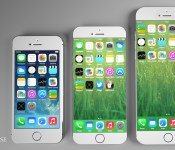
Tapered iPhone 6 Concept in Larger Sizes Shows New Home Screen Possibilities [iOS Blog]
A new rendering of the iPhone 6 presented in multiple sizes has been released by Italian designer Federico Ciccarese. The concept images give an accurate size comparison of the existing iPhone 5s next to a 4.7-inch iPhone and a 5.5-inch iPhone, two sizes that have been rumored for Apple’s next-generation smartphone.

iPhone 6 4.7″ 750×1338 px Aspect ratio 16:9
iPhone 6 5.5″ 878×1568 px Aspect ratio 16:9
iPhone 5S 4″ 640×1138 px Aspect ratio 16:9
Ciccarese does take some liberties with the look of Apple’s next iPhone, however, incorporating both a tapered back and an almost bezel-less display. While early iPhone 6 rumors indicated the iPhone would have a curved design, more recent rumors from The Wall Street Journal have refuted that claim, and no mention has been made of a tapered design. As far as the bezels go, there have yet to be any indications that Apple is planning on an edge-to-edge display.
Though the iPhone renderings incorporate app icons that are similar in size to the icons of the existing iPhone 5s, it remains unclear how Apple will handle icons on a larger display. It is possible that rather than allowing a huge number of icons on a screen, Apple will instead increase the spacing of the icons as it has done on the iPad and the iPad mini.

Apple has been experimenting with a range of screen sizes for the next-generation iPhone since early 2013, with size rumors varying from 4.7 to 5.7 inches.
It is widely believed that Apple has plans to release two separate phones in that size range, continuing with the dual-iPhone lineup it introduced with the iPhone 5s and the iPhone 5c. One phone may be on the smaller end of the spectrum near 4.7 inches, while the second could enter “phablet” territory at a size above five inches.
While Apple has plans to stick with a dual-iPhone lineup, The Wall Street Journal has said the company will not continue producing a plastic-shelled phone like the iPhone 5c. Instead, both iPhone 6 models will include metal outer casings similar to the iPhone 5s and neither will include a curved display.
| |
CA Bill Requires Antitheft Technology in Smartphones
California State Senator Mark Leno is introducing a bill that would require all cellular phones sold in the state to include antitheft technology, reports The New York Times. This measure is being introduced as a way to curb smartphone thefts, which are on the rise in major metropolitan areas like San Francisco and New York City.
“With robberies of smartphones reaching an all-time high, California cannot continue to stand by when a solution to the problem is readily available,” Senator Leno said in a statement. “Today we are officially stepping in and requiring the cellphone industry to take the necessary steps to curb violent smartphone thefts and protect the safety of the very consumers they rely upon to support their businesses.”
Co-sponsored by San Francisco’s district attorney George Gascón, this kill switch requirement could go into effect as soon as January 1, 2015, if passed by the state legislature and signed into law by Governor Jerry Brown.

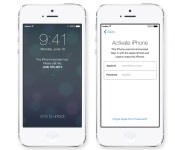
Apple likely won’t be affected by the bill as it introduced its own antitheft technology with iOS 7′s Activation Lock feature. This feature locks the device to the user’s iCloud account and is automatically turned on when Find My iPhone is enabled. Thieves are prevented from turning off Find My iPhone, signing out of iCloud or wiping the device without supplying the original account credentials. This feature appears to meet the antitheft requirements of Leno’s bill.
Any advanced mobile communications device that is sold in California on or after January 1, 2015, shall include a technological solution that can render the essential features of the device inoperable when the device is not in the possession of the rightful owner. A technological solution may consist of software, hardware, or a combination of both software and hardware, but shall be able to withstand a hard reset. No advanced mobile communications device may be sold in California without the technological solution enabled.
Gascón and New York Attorney General Eric Schneiderman expressed interested in Activation Lock when it was introduced at WWDC 2013. After reviewing the technology, Gascón and Schneiderman were impressed with the feature, praising Apple for taking “an important first step towards ending the global epidemic of smartphone theft.”
Cellular industry trade group CTIA will likely oppose the bill and its terms that require a $2500 fine for every phone sold without antitheft technology. The group has argued against kill switches and offered a nationwide database of stolen phones as an alternative. Law enforcement officials, however, claim the US-based blacklist is ineffective as many stolen phones are sold overseas.
| |

