


Tablet deals of the week: 2.21.14

If you’ve taken a look at our winter 2014 tablet buyer’s guide, you now have a good idea of what slates you should be buying. With many purchases, price can be a sticking point, but thanks to our pricing tools, it doesn’t have to be. We’ve compiled some of the best deals from over the past week — including products from the buyer’s guide, and a few older models you should also take a look at — so you can add a new tablet to your tech arsenal without taking a serious hit to your wallet.
If there are other tablets you have your eye on that we haven’t included here — join us and add them to your “Want” list. Every time there’s a price cut in the future, you’ll get an email alert!
Nexus 7 (2013)

Price: $200
Regular Price: $229
Engadget Score: 90
Buy: Newegg
Though it’s not the most powerful small tablet, the 2013 version of the Nexus 7 still packs in a gorgeous screen, a fast processor, stock Android 4.4 and a rubberized casing that feels good in the hand. While its full retail price is still pretty affordable, today’s deal for a refurbished model takes the 16GB version to a sweet spot of $200, the lowest it’s been since November.

Nexus 7 (2012)

Price: $160
Regular Price: $199
Engadget Score: 88
Buy: Amazon
When we last looked at the original Nexus 7, it could be had for the low price of $170. If you passed on that deal, you’ll be happy to know that the 32GB version can still be had for the even lower price of $160. If that $40 difference between the old and new is making a buying decision hard, take a look at a direct comparison of specs, scores and prices; you can even add other tablets from our database to the mix if you want to see how they stack up.

Kindle Fire HDX 7-inch

Price: $200
Regular Price: $230
Engadget Score: 85
Buy: Best Buy
Another product from our buyer’s guide that’s getting a discount this week is the 7-inch Kindle Fire HDX, with Best Buy offering the 16GB version for $30 less than the folks at Amazon. If you value speed, the Kindle Fire HDX is a good buy (see how it compares to some other 7-inch tablets), but if you love the freedom that Android brings, you might want to look elsewhere — with the HDX you’re limited to Amazon’s content ecosystem and support services.

iPad 2

Price: $299
Regular Price: $399
Engadget Score: 90
Buy: Target
The iPad Air might be the big thing right now, but it’s worth noting that the iPad 2 is a great tablet that’s still available from Apple for $100 less than the Air — and it’s even cheaper at other retailers. It’s not featherweight like the iPad Air, but it does have the standard 10 hours of battery life and it runs iOS 7, so the iPad 2 can still run all the latest apps in the App Store.


Intel’s Processor Roadmap Leaves Uncertainty for Apple’s 2014 Mac Updates
 With Apple’s Mac lineup beginning to show signs of aging, consumers are no doubt starting to wonder when they can expect updated models to hit the market. Apple’s product update cycles are in large part driven by availability of new processors, so it pays to take a look at Intel’s roadmap to see what might be coming when to give Apple new options for upgrades.
The MacBook Air is the older of Apple’s two current notebook lines (setting aside the non-Retina MacBook Pro that has been reduced to a single 13-inch model and hasn’t been updated since June 2012), and Apple’s ultrathin notebook currently offers a choice of two low-power 15-watt Haswell chips to help achieve remarkable all-day battery life. Entry-level models include a 1.3 GHz i5-4250U chip, while higher-end models bump up to a 1.7 GHz i7-4650U processor. Both chips include Intel’s “Iris 5000″ integrated graphics that offers reasonable everyday performance in a power-efficient design.
According to an Intel roadmap leaked by VR-Zone [Google Translate], a successor to the current low-end chip is set to launch in the third quarter in the form of an i5-4260U Haswell refresh, presumably carrying just a small speed bump compared to the current chip. Another alternative for Apple could be the 1.4 GHz i5-4350U or its just-announced successor 1.5 GHz i5-4360U. The 4350U chip has been available since last year, but Apple elected not to use it in the current MacBook Air. The high-end MacBook Air situation is less clear, as leaked roadmaps have not yet shown a direct successor to the current i7-4650U chip.
Read more 

Fitbit Issues Recall for Fitbit Force Over Skin Irritation Reports [iOS Blog]
Fitbit today stopped sales of its Fitbit Force and issued a voluntary recall of the product following multiple consumer complaints of skin irritation.
First released in October of 2013, the Fitbit Force is the company’s latest wearable activity tracker, monitoring sleep, steps taken, distance traveled, calories burned, and stairs climbed.
Reports of skin irritation from the Fitbit Force began gaining traction in January after a report from The Consumerist pointed to multiple users experiencing contact dermatitis after prolonged use of the band.

Fitbit quickly began offering refunds or product replacements to affected customers and suggested the problems could be caused by a nickel allergy, as nickel is an element of the stainless steel used in the band. Fitbit’s full recall letter is below, courtesy of TechCrunch:
We wanted to provide an update on our investigation into reports we have received about Force users experiencing skin irritation.
From the beginning, we’ve taken this matter very seriously. We hired independent labs and medical experts to conduct a thorough investigation, and have now learned enough to take further action. The materials used in Force are commonly found in many consumer products, and affected users are likely experiencing an allergic reaction to these materials.
While only a small percentage of Force users have reported any issue, we care about every one of our customers. We have stopped selling Force and are in the process of conducting a voluntary recall, out of an abundance of caution. We are also offering a refund directly to consumers for full retail price. We want to thank each and every member of the Fitbit community for their continued loyalty and support. We are working on our next-generation tracker and will announce news about it soon.
For additional information, please contact our support line at: 888–656–6381, or visit http://www.fitbit.com/forcesupport.
According to Fitbit co-founder and CEO James Park, only 1.7 percent of Fitbit users have reported skin irritation issues. An independent study did, however, determine the Fitbit is causing allergic contact dermatitis in some users, likely as a result of nickel contact or from the strap materials/glue used in the device’s construction.
Fitbit Force owners can request a refund for their devices from the Fitbit website, with the company promising to send a reimbursement check within two to six weeks after a returned device is received. Fitbit is also working on an updated hypoallergenic version of the Force to be released sometime in the near future.
     |

iOS 7 Roundup Updated
The current publicly available version of iOS 7 was updated to iOS 7.0.6 on February 21, adding a fix for SSL connection verification.
iOS 7.1, which is likely slated for release in March, may include new Mobile Device Management options designed to allow corporate and educational organizations to manage a large number of devices. New over-the-air supervision could alleviate the need for management via Apple Configurator and the update may also introduce new methods to prevent students from bypassing restrictions on school issued devices.
| |

iPad Air Roundup Updated
According to KGI Securities analyst Ming-Chi Kuo, Apple is planning to introduce a new iPad Air in 2014, offering an upgraded A8 processor along with a Touch ID fingerprint sensor.
Kuo does not believe that Apple will debut an updated Retina iPad mini in 2014 as Apple is said to be focusing its resources on the 12.9-inch “iPad Pro.” The larger iPad could be released in limited quantities in late 2014 or in early 2015.
| |

Apple Acquires Burstly, Including iOS Beta Testing Platform TestFlight [Updated]
Apple may have purchased Burstly, the company behind the popular iOS beta testing platform TestFlight, according to TechCrunch. The site says its sources have “pointed in Apple’s direction” and that though it’s just a rumor at this point, it would make a good fit.
TestFlight said on Wednesday that it would be discontinuing its Android product and it will no longer take new customers for its beta testing SDK — existing customers can continue using TestFlight, however.

Odder still is how these product announcements – which greatly impact the company’s mobile developer user base – have been handled so far. There’s been no mention of them on the TestFlight changelog, for example, no company blog post, no emails, and no mention of them on social media channels – that is, unless you count the replies to confused developers from @testflightapp, the company’s main Twitter account. Developers are being asked to reach out directly to the company via an email form instead of being given a more useful public reply.
There are a number of different beta testing iOS platforms, including TestFlight and HockeyApp, though a number of larger developers have created their own testing platforms through Apple’s Enterprise distribution program.
Update: Apple confirmed the purchase to Re/code, but did not disclose pricing.
| |

iWatch Roundup Updated
Apple may bolster its iWatch development with the purchase of Basis, the company behind the Basis Health fitness tracker. The smart watch includes a number of health-related sensors that measure heart rate, sleep activity, movement, perspiration levels, and skin temperature. Basis is currently for sale and reportedly entertaining a buyout from several tech companies including Apple, Google, Samsung, and Microsoft.
A recent rumor suggests Apple may use flexible AMOLED panels from touch panel supplier TPK for the iWatch, utilizing silver nanowire touch screen technology for the displays.
| |

Apple Releases iOS 7.0.6 With Fix for SSL Connection Verification
Apple today released iOS 7.0.6 for iPhone, iPad, and iPod touch, a minor update that includes a fix for SSL connection verification. iOS 7.0.6, which carries a build number of 11b651, is available as an over-the-air-update and weighs in at 35.4MB on an iPhone 5s.

iOS 7.0.6 comes three weeks after the release of iOS 7.0.5, which was available only for a limited number of devices and more than three months after the release of iOS 7.0.4, a minor bug-fix update.
Apple has also released iOS 6.1.6 (build 10b500) for the iPhone 3GS and fourth-generation iPod touch.
| |

Apple Planning New Retail Store in Lansing, Michigan [Mac Blog]
Apple is preparing to open a new retail store in Lansing, Michigan, according to the Lansing State Journal. The plans for a 6,000 square foot store at the Eastwood Towne Center were discovered in paperwork submitted to Lansing Township officials by a contractor working with Apple.
A contractor for the Cupertino, Calif.-based technology company filed an application with Lansing Township officials to start work on a nearly 6,000-square-foot retail store at 3025 Preyde Boulevard, which is part of the shopping center near U.S. 127 and Lake Lansing Road.
Apple will remodel a vacant commercial space between Bath & Body Works and Victoria’s Secret as part of a multimillion dollar project led by Chicago-based Pepper Construction Co.

Apple started hiring for this new Lansing store several months ago and still has 13 available positions ranging from Store Leader to Specialist (Via ifoAppleStore). This would be Apple’s sixth location in Michigan and would provide retail coverage for customers in the central part of the state. Other Michigan stores are located in Ann Arbor, Clinton Township, Grand Rapids, Novi and Troy.
As part of its annual 10-K filing with the U.S. Securities and Exchange Commission, Apple revealed that the company plans to open 30 new retail stores in 2014, with approximately two-thirds of these new stores located outside the U.S. This international push already is in progress, with the company opening its first retail store in Brazil last week. Over 1,700 customers visited the Rio de Janeiro location on its opening day.
| |
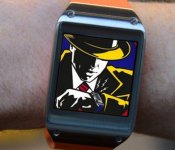
Smartwatches are dumb, but they don’t have to be

If recent trends are any indication, there are two roads that lie ahead for smartwatches and the companies foisting them upon us: the all-you-can-eat, tracker + smartphone approach and the single-minded focus on health and wellness bands. One meanders off to a fuzzy horizon laden with disregarded Dead End signs, a jumble of features and an overload of quantified-self data. And the other… well, that narrowly focused path to wellness simply falls off a cliff. It’s not because dedicated health and wellness devices have no place in the wearables market — right now, they do. It’s because that area of lifestyle tracking will inevitably be consumed by the smartwatch borg as a subset of ancillary features. And yet, here we are — about to enter into the irrevocable phase of mobile technologies as wrist-worn wearables with questionable (for now) benefits. A future we’ll preview more intensely at this year’s Mobile World Congress in Barcelona as some big-name manufacturers unveil their in-development takes on what can currently be described as redundant lifestyle tech.
Am I being dismissive of a new technology? Not quite. It’s more realism than pessimism at this point; a perspective made that much stronger by the faults of existing smartwatches. I own and gave what I consider a fair shake to Sony’s SmartWatch 2. The end result being yet another device left to whiten under an accumulation of dust somewhere in my apartment. There’s just no room in my everyday life for another product to charge, let alone one that offers mere previews of the fully fledged functions on my smartphone. I don’t need a smaller, second window into my connected life, nor do you. That already exists and you’re probably holding it in your hand right now. The four to five inches of which allow us a greater range of motion, input and screen real estate for actual, meaningful productivity. You see, efficiency should be the hallmark of smartwatches, not the clumsy duplication the category currently engenders.
I don’t need a smaller, second window into my connected life, nor do you.
It doesn’t have to be this way, though. Manufacturers just need to train their focus on three key areas to turn the smartwatch into a viable fourth pillar of lifestyle tech: design, display and battery life. Namely, we need wider, “always on” displays that offer high pixel density and look good doing it — the latter of which Pebble’s already addressing with Steel. Think your smartphone in landscape mode (but blessedly thinner thanks to advances in flexible display tech) strapped to your wrist and with a two-week charge. Sounds a lot more appealing than the two inches-or-less window to a preview that Pebble, Samsung and Sony have cobbled together, doesn’t it? It’s not that far-fetched a concept either, especially now that flexible displays (exhibit A: LG’s G Flex) and energy-sipping screen tech like Qualcomm’s Mirasol are making their way to market. That extra horizontal space wouldn’t just enable a more natural reading experience for texts, emails and social communications; it’d also make way for a less-cluttered app layout and the use of QWERTY software keyboards. Wouldn’t you like more room to read your messages and reply from your wrist? More space to precisely select icons and input text? Maybe even the ability to watch videos in 16:9 format?
It seems like I’m asking a lot, but really that’s the very least we should expect from a smartwatch. And, admittedly, none of it is revolutionary. For that, we’ll have to look to HTC and Apple, both of which are rumored to be hard at work on smartwatches that surpass the gimmick factor with an emphasis on lifestyle integration. HTC chief Peter Chou’s even gone on record to say these devices have “to meet a need, otherwise … it’s not for people’s day-to-day lives.” So what is it then about smartwatches that’s meaningful, and where’s this hole in our everyday mobile lives we didn’t know needed filling? The answer to that lies largely with contextual data.
Imagine a stylish smartwatch that blends the best of Jawbone’s Up24 with HTC’s One, or any other combination of high-end fitness tracker with flagship smartphone. By marrying the sensor-heavy wellness technology we see exploding within the industry right now with a first-class mobile experience on our wrists, companies could create the perfect digital assistant to slot seamlessly into our lifestyles. A device that could even control the connected homes of the future. It’d keep tabs on our movements, eating and communication habits, exposure to sunlight, temperature, sleep cycles, calendar and media consumption. Not to mention that it’d make and receive voice calls, record and display video and photos and function as a web browser, as well as a messaging hub.
Imagine a stylish smartwatch that blends the best of Jawbone’s Up24 with HTC’s One, or any other combination of high-end fitness tracker with flagship smartphone.
Best of all, by its very nature as a watch, it’d be constantly attached to our body — in large part thanks to waterproofing, power management and wireless charging — offering the most accurate overview of how we actually live. And it’d be able to quantify all of that data in a neat, assistive manner to encourage us to be that much healthier and that much wiser about maximizing our time. We’d be emboldened, not hampered, by our reliance on technology and we’d possibly be even thinner, too. We’d be more efficient soft machines.
That’s the dream, anyway.
The reality right now is that manufacturers are in a rat-race scramble for your dollars, eager to oversell the empty promises of their commercially available, yet stunted prototypes. Because, let’s face it: Two revenue streams — i.e., smartphones and their codependent smartwatch counterparts — pad a company’s bottom line better than a single well-executed product. And, quite frankly, if present-day smartwatches really could handle all of our communication needs well enough to be daily drivers, there’d be no real need for smartphones in our lives. So while Samsung, Sony and Pebble are busy kicking up as much dirt as possible to get consumers to notice their respective half-baked smartwatch takes, others, like Apple, LG, Microsoft and HTC, are working quietly behind the scenes to deliver something with actual purpose and value. Or, at least, that’s the presumption based on their collective silence.
And what about Google? Surely, a Nexus smartwatch must be in the works over in Mountain View. It’s an inevitability, really, made all the more possible by the company’s purchase of WIMM Labs and Nest; acquisitions that brought smartwatch and connected-home tech in-house for Google. Besides, do you really expect those overachieving Googlers to pass up a chance to show the industry how it’s done? Until then, I’ll find some other, much more reasonable way to set fire to $300.
Filed under: Cellphones, Wearables, Mobile, Apple, Samsung, Sony, HTC, Google

