



Microsoft’s Office for iPad Team Discusses Ballmer’s Role in Launch, Mac Synergy, and More
Since Microsoft Office for iPad was released shortly after Satya Nadella took the reins at Microsoft, many assumed that he had given the final go ahead for the release of the software. As it turns out, it was actually outgoing CEO Steve Ballmer who gave the green light for the launch of the project.
The details come from a new “Ask Me Anything” session on Reddit with Microsoft’s Office for iPad team. On the post, a user asked how many of the company’s recent moves could be attributed to Ballmer and the team states that the decision to ship Office for iPad was made before Satya became CEO.
 Microsoft’s Office for iPad Testing Lab
The decision to ship Office for iPad was made before Satya became CEO. Steve Ballmer approved the plan to ship Office for iPad. — Kaberi, Technical Product Manager, Office for iPad
Office for iPad was in development for years before it was released to the public in March, with hints of the software first appearing in 2011 and a prototype surfacing in 2012. Microsoft was initially focusing on bringing the Office software to its own line of touch-based tablets before bringing it to the iPad, but the company reversed course earlier this year and launched the software. The team commented on the delay:
Since we were designing Office for iPad from a “blank slate” so to speak, we wanted to take the time to deliver the highest possible quality Office experience that is fully optimized for the iPad. A wise man once said, “Details matter, it’s worth waiting to get it right.” That rings true for how we thought about it.Han-yi Shaw, Group Program Manager & Design Manager for Office for iPad
Thus far, Microsoft Word, Excel, and PowerPoint have done well in the App Store, hitting the top of the Free App Store Charts within a single day. Microsoft announced last Friday that the apps had reached a collective 12 million downloads since release, and they remain the top three free iPad apps in the App Store.
Though Microsoft’s apps are available for free from the App Store, creating and editing documents requires an Office 365 subscription, which is priced at $9.99/month or $99.99/year. Apple receives a 30 percent cut of subscriptions that are purchased within the App Store, making the apps lucrative for both companies.
Aside from giving details on the release of Office for iPad, the Microsoft Team also gave out information on when to expect new features. Printing, a feature lacking from the existing version of the software is “a high demand feature that [Microsoft] intends to introduce in due course.”
When asked about a possible update to Office for Mac, the team did not hint at a release date, only confirming that the software is indeed in the works. They did note that Office for iPad has sped up development on Office for Mac, however, as the code for the products is shared and the development platforms are similar.

iPhone 6 Renderings Based on Leaked Schematics Highlight Larger Displays
Late last month, a set of alleged design drawings was published by Japanese magazine MacFan, showing dimensions for upcoming 4.7-inch and 5.7-inch iPhone models. It’s not uncommon for us to see design and case leaks in the months leading up to the new iPhone release.
In some cases, as with the iPhone 5C, early design leaks turn out to be quite close to the final product, though in other instances they turn out to be inaccurate.

Based on those drawings, MacRumors commissioned designer Ferry Passchier to create some full product renderings of the rumored iPhone 6. While these aren’t the first renderings, we asked Ferry to also show how they would compare in size to existing devices such as the iPhone 5s and iPad mini.
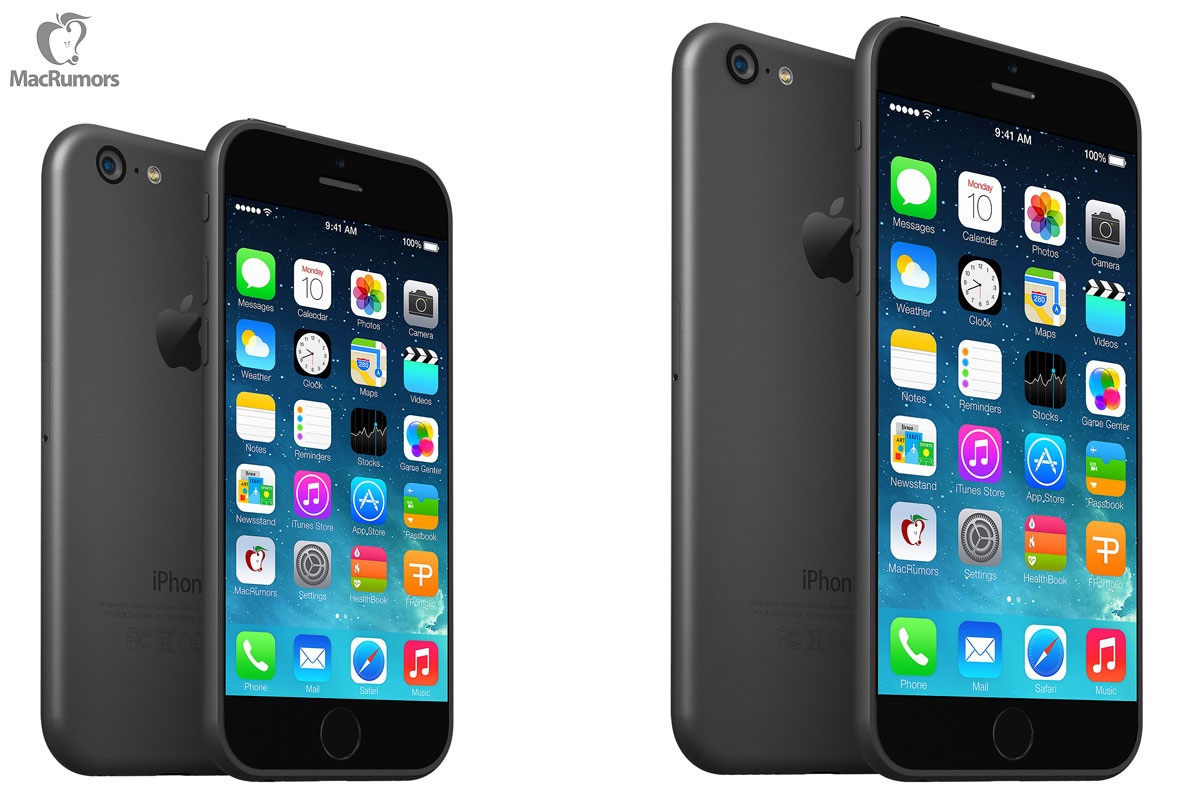
iPhone 6 (4.7″) and iPhone 6 (5.7″)
The iPhone designs in the drawings include several differences compared to the iPhone 5s. The top power button has been moved from the right side to the left side of the device. The rear camera on the larger model is also shown as protruding slightly from the rear shell, as is the case with the current iPod touch. The camera flash has also reverted back to a round-design unlike the one found on the iPhone 5s.
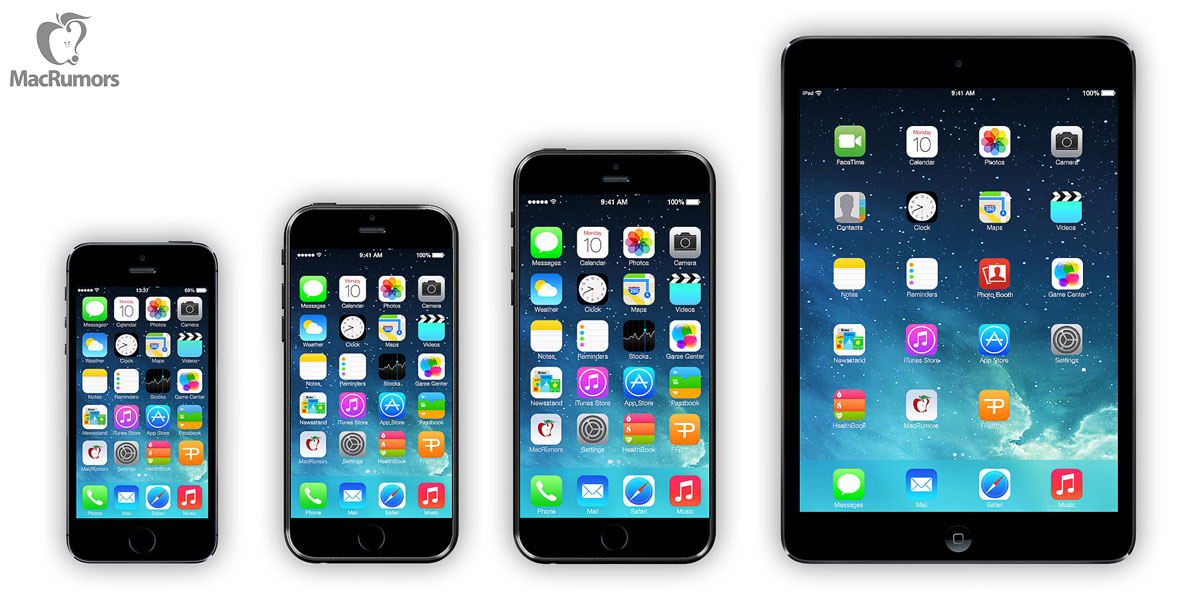
Left to Right: iPhone 5s, iPhone 6 (4.7″), iPhone 6 (5.7″), iPad mini
This image shows how the new iPhone 6 design compares to the existing product line. The iPhone 5s is depicted on the left with a 4″ screen, while the iPad mini (7.9″) is on the far right. In between are the rumored 4.7″ and 5.7″ iPhone 6 from the design document.
Over the weekend, an Apple slide deck from April 2013 surfaced from the ongoing Apple-Samsung patent trial, illustrating Apple’s awareness that smartphone growth was coming from the low end of the market and in phones with screens larger than the iPhone’s 4-inch display. With the slides noting that “customers want what we don’t have”, it’s clear why Apple is reportedly planning to increase the size of the iPhone’s display with this year’s models. The iPhone 6 is expected to debut this fall, although a recent report from Reuters claims that the larger version may not be ready to launch at that time.
We can’t be certain these schematics are accurate, but Apple clearly sees the need to address the larger smartphone market. We expect more leaks in the future as production of the iPhone 6 begins ramping up.

WWDC 2014 – What to Expect
WWDC 2014 will kick off on June 2nd with a keynote address from Apple CEO Tim Cook. iOS 8 is the mostly likely focus of the event, but there are a number of other possible topics, including OS X 10.10, Apple TV, MacBook Airs, and the long rumored iWatch.
Read full article for more details.

Amazon A9 Executive Joins Apple to Work on Maps, App Store Search
Benoit Dupin, the Vice President of Amazon A9′s Search Technology group, has left his position at the online retailer to join Apple, reports 9to5Mac. Dupin’s profile recently was removed from Amazon’s A9 website, and Dupin’s LinkedIn profile now reflects his new position as Director at Apple.

At Amazon, Dupin worked in the A9 group, which powers product search and advertising throughout Amazon’s international web stores. Dupin has experience working with search infrastructure, search experience and search relevance at Amazon. He also held positions at HP, Easyplanet and Canon Research France.
Dupin is joining Apple as a possible replacement for the exiting Cathy Edwards of Chomp, who joined Apple when the Cupertino company acquired the smartphone app search engine. Edwards served as the Director of Evaluation and Quality for Apple Maps, iTunes Store and App Store. Dupin will assume a similar role as Edwards, bringing his search expertise to those product areas within Apple.
Dupin’s exact role at Apple in not known, but his search expertise could be utilized in Apple’s Maps as well as its iTunes and App Store, all of which have been criticized for their undependable search results. The company regularly tweaks its search algorithm within its App Store, recently adding a new search suggestion feature for iOS owners. Apple also is rumored to be working on improving the Maps experience in iOS 8 with new transit Directions and improved points of interest data.

Apple Narrows Gap in U.S. Advertising Spending With Rival Samsung
Samsung is the leader in mobile advertising, significantly outspending all its rivals on commercials that target the U.S. market. Though still number one, the Korean company’s advertising dollar lead is shrinking, reports the Wall Street Journal, with Samsung’s rivals increasing their advertising spending by 33 percent year over year in 2013.
According to ad research company Kantar Media, the top seven U.S. smartphone makers spent over $1.3 billion in 2013 on advertisements for print, TV online, radio and outdoor venues. Apple spent $351 million last year, with the bulk of that money ($339 million) going toward TV ads.
While Apple increased its spending 5 percent year over year on mobile phone ads, Samsung scaled back its advertising efforts, reducing its U.S. advertising by 10 percent in 2013 to $363 million. The gap between Samsung and Apple now has narrowed to $12 million, which is less than the $68 million gap in 2012.
Samsung is known for its aggressive Galaxy marketing campaigns, which routinely target rival devices. Samsung’s clever tagline “The next big thing” reportedly infuriated Apple executives and lead to a tense email exchange between Apple’s head of marketing Phil Schiller and the company’s longtime ad agency, TBWA/Media Arts Lab.
Despite outspending Apple in advertising dollars, Samsung trails Apple in U.S. smartphone subscribers, with 26.7 percent market share as compared to Apple’s 41.6 percent. Apple’s market share continues to grow, but the overall rate of adoption is slowing as the smartphone market approaches saturation.
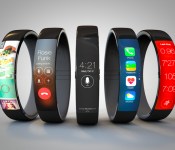
Apple Reportedly Targeting Q3 2014 Launch for iWatch
An alleged bill of materials for Apple’s upcoming iWatch has surfaced, with supply chain sources indicating that the product will launch in the third quarter of this year, reports Taiwan’s Economic Daily News [Google Translation] (via DigiTimes).
 iWatch concept by Todd Hamilton, based on the Nike FuelBand
The report claims that the iWatch itself will be manufactured by Apple supplier Quanta Computer, with Richtek Technology and TPK supplying chips and sapphire touch panels, respectively. Meanwhile, the device’s processor is said to be developed by Apple, with chip production being outsourced to Samsung. In total, Apple is said to be targeting production of 65 million iWatch units by the end of 2014.
Notably, two suppliers mentioned in the report have been linked to previous stories about iWatch production, albeit with contrasting details. In November, Quanta Computer was rumored to have landed a contract to mass produce the iWatch for a Q2 2014 release, while a report this past February claimed that Apple had chosen TPK to supply flexible AMOLED panels for iWatch.
While the exact features of the iWatch are currently unknown, past rumors have indicated that the device will feature biometric sensors to track a number of health-related statistics, including sleep activity, UV light exposure, and heart rate. A “Healthbook” companion app is also said to be in the works for iOS 8, which would integrate with the iPhone and iWatch to monitor and track other health statistics.
To this point, most reports have pointed to a release later in the year for the iWatch alongside the iPhone 6 and iOS 8. A Q3 2014 release as indicated by the Economic Daily News would mean that the device could be unveiled by Apple sooner, possibly at the company’s annual Worldwide Developers Conference.

‘PayPal Here’ for iOS Updated with Revamped User Interface, Dynamic Search [iOS Blog]
PayPal today updated its point-of-sale solution app PayPal Here, bringing a refreshed interface and a variety of features. The app now includes a dynamic search tool that allows users to search for specific items and charges, a streamlined custom inventory entry system, and the ability to swipe cards at any moment during the order process. The update also includes enhanced cart views and simplified order entry fields for quicker sales processing.

What’s New in Version 2.0
• Overall upgraded experience with a fresh look and feel
• New dynamic search tool
• Now you can swipe cards at any time during the order process
• Easier custom inventory entry system
• Simplified order entry, profile, settings, and log-in process
• Quicker visibility of customers that have “checked-in” to pay
• Enhanced cart view for reviewing sales before payment
• Faster entry and auto-fill of customer info for database and receipts
PayPal Here originally launched on the iPhone in 2012, and debuted on the iPad last year with additional features, including the ability to connect to a cash drawer and printer. The app allows individual users and businesses to accept credit and debit cards, send invoices, and track cash payments among other point-of-sale features.
PayPal Here is a free app for the iPhone and iPad and can be downloaded through the App Store. [Direct Link: iPhone/iPad]

Adobe Announces ‘Lightroom Mobile’ for iPad, Enabling Editing On-the-Go
Adobe’s professional photo editing software Lightroom has finally made its way to iOS devices with Adobe’s new Lightroom mobile app for the iPad, allowing photographers who use the desktop version of Lightroom to edit and organize photos from anywhere. Lightroom mobile is not a standalone app, requiring both a subscription to Adobe’s Creative Cloud and Lightroom 5 to function.
Integrating seamlessly with the full version of Lightroom 5 for PCs and Macs, Lightroom mobile allows users to log in to the app with an Adobe ID to access the library of content stored in a desktop version of Lightroom. The app downloads Smart Previews of files from the desktop app, allowing for very fast content transfers between the desktop and the mobile app.
The new Lightroom mobile app brings powerful Lightroom tools to the iPad, delivering photography essentials – such as non-destructive processing of files – and utilizing new Smart Preview technologies to free professional-class photo editing from the confines of the desktop. Lightroom mobile is built on a powerful synchronization architecture, designed specifically for photos, and provides the most efficient way to manage and edit images across desktops, mobile devices and the Web.
Smart Previews do require an ongoing Internet connection to sync back and forth between Adobe’s servers to prevent iPad users from having to download huge files, but files can also be downloaded in full for offline editing if preferred.

Lightroom mobile supports much of the same functionality as the desktop version of Lightroom, offering users access to metadata and a basic editing toolbar that contains desktop presets (except for custom presets) and adjustment tools for altering shadows, clarity, contrast, and more. There are also crop and rotate tools for manipulating photos, and a simple three finger tap on the screen displays the before and after when editing.
All of the adjustments made within Lightroom mobile are automatic and sync to Lightroom on the desktop, with history states saved as well, making all iterations of a final image visible at a glance.
Adobe’s new app has been designed with mobile productivity in mind and it is not, at this time, designed to replace the desktop version of Lightroom for editing. Adobe envisions it as more of a quick-use tool, allowing users to sort through images and make quick edits on files to determine what might need further editing via the desktop.
Swiping through a huge number of images and using quick touch gestures to mark favorites can be done somewhat more quickly on a tablet, for example. Adobe’s Lightroom mobile has intuitive gestures that include a two-finger tap as an app-wide gesture that controls a number of different functions, including toggling metadata, turning on the histogram, and more.
Images are grouped by folders specified in Lightroom and displayed in a grid gallery. Tapping an image allows it to be viewed full screen and a simple swipe up or down allows it to be flagged for editing or rejected. Lightroom mobile also has some powerful organizational capabilities, letting users sort images by different aspects like capture time, file name, modification time, and more.
Photos in Lightroom mobile can be saved to the camera roll or shared via social networking sites and images taken with the iPad can also be set to import directly into the app – and the desktop version of Lightroom via syncing. The app also contains built-in slideshow functionality, allowing users to use their Lightroom photos in presentations.

Adobe purposefully left some features out of Lightroom mobile so the simple touch experience wouldn’t be overwhelmed with a glut of unnecessary functions. Custom created presets are not available, for example, nor are star labels. The company did make it clear, however, that it is open to adding additional features that its customers want in Lightroom mobile in the future.
With Lightroom mobile, photos will also be viewable and shareable on Lightroom.Adobe.com. While Lightroom mobile is limited to the iPad 2 or later at this time, Adobe does has plans for an iPhone version later this year.
Lightroom mobile for the iPad is available as a free download [Direct Link] but using it will require an Adobe Creative Cloud subscription. Access to the app is included with following plans: Creative Cloud Complete ($49.99/month), the Photoshop Photography Program ($9.99/month), which includes access to both Photoshop and Lightroom, Creative Cloud Student and Teacher Edition ($29.99/month) and Creative Cloud for teams ($69.99/month/user). 
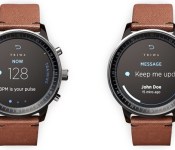
iWatch Rumored to Include UV Light Exposure Sensor
Apple’s long-rumored “iWatch” smartwatch may include a UV light exposure sensor provided by Texas-based Silicon Labs, according to a new research note from Barclays analyst Blayne Curtis (via AppleInsider). The digital ultraviolet sensor, which was announced in February, is described by Silicon Labs as “ideal for activity-tracking wrist and arm bands, smart watches and smartphone handsets.” In addition to tracking UV sun exposure, the sensor is also said to track heart/pulse rate and blood oximetry levels and provide proximity and gesture control.

Traditional watch-style iWatch concept by Gábor Balogh
These chips measure UV exposure to aid those with elevated risk of sunburn or just a general concern about excessive sun exposure, and we believe they may be of appealing to OEMs looking to differentiate in a crowded market. To that end, while these products have seen little public hype thus far, we believe SLAB has a win in Apple’s upcoming iWatch (late 2H14 or early 2015).
Past reports have indicated that Apple is preparing to include the ability to monitor a number of health-related metrics in the iWatch such as heart rate, sleep activity, movement, perspiration levels, and skin temperature. Apple is also said to be developing a “Healthbook” app for iOS 8 which would help the iWatch monitor and track health statistics like weight, heart rate, calories and step counts in conjunction with the iPhone.
Over the past year, Apple has also hired a number of health experts in fields related to heart rate monitoring and fitness tracking, including two executives from pulse-oximetry company Masimo and others from C8 MediSensors, a company that develops non-invasive blood monitoring sensors.
While details on the iWatch have been mostly limited, more information on the product is likely to be revealed as the product’s release grows closer. It is unknown when Apple plans to release the iWatch itself, but a fall release date alongside iOS 8 and the next-generation iPhone is likely.
Apple Bringing More Chip Development In House [iOS Blog]
 Apple is planning on creating an R&D team to develop baseband chips, which are used to control a device’s radio functions like modulation, signal generation and more, for future iPhones in-house, according to a new report from DigiTimes. The baseband chip is separate from the A7 processor, which Apple already designs with an in-house team.
Apple reportedly plans to form a R&D team to develop baseband processors for use in iPhones to be released in 2015 and will place the baseband chip orders with Samsung Electronics and Globalfoundries, according to industry sources.
Qualcomm is currently the company that Apple acquires its baseband chips from, although they’re produced in mass quantities at Apple manufacturing partner Taiwan Semiconductor Manufacturing Company.
Recently, Apple has made moves to bring more chip development in-house, including purchasing chipmaker Renesas Electronics, who creates chips for smartphone displays. It also acquired low-power wireless chip provider Passif Semiconductor, whose chips could be used to improve battery life in wearables, like Apple’s rumored iWatch.
The moves are a part of Apple’s effort to control its own production supplies and core technologies, and include partnerships like Apple’s deal with GT Advanced, which will provide the Cupertino company with massive supplies of sapphire displays.

