



Microsoft Launches ‘Office 365 Personal’ Plan for One Mac and One iPad at $69/Year
Microsoft today started selling its Office 365 Personal subscription, a less expensive version of Office 365 that targets individual users. The cloud-based subscription service provides access to online versions of Microsoft’s Office productivity suite, online storage in OneDrive and a block of Skype calling minutes.

The new personal option allows subscribers to connect one PC or Mac desktop computer and one tablet, including the iPad, to the online service. It will cost $69 per year or $6.99 per month. Customers who require more connections can sign up for the Office 365 Home plan, which is geared towards families with support for up to five desktops and five tablets.
The new Office 365 Personal plan is available for purchase at Office365.com. It also is available at Microsoft Stores and through Microsoft’s online and retail partners. Microsoft also offers Office 365 business plans, which are priced by the number of users and are designed for real-time, online collaboration using the Office 365 suite.
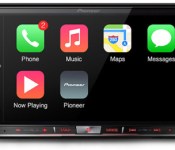
Apple CarPlay coming to Pioneer’s in-dash systems this summer

Apple CarPlay in an aftermarket dash system? You bet! And you may not even need to spend a dime. Pioneer’s NEX line of five in-dash head units, priced from $700 to a whopping $1,400, will score CarPlay compatibility through a firmware update in early summer. NEX owners with an iPhone 5, 5c or 5s will be able to use Apple Maps for navigation, listen to music and other iTunes content, and tap Siri to make phone calls and send text messages. Pioneer’s devices already in stores will be able to take advantage, so there’s no need to wait for CarPlay integration to go live before picking one up.
Filed under: Peripherals, Transportation, Software, Apple
Source: Pioneer

Amazon’s Smartphone with 3D Capabilities Revealed in New Photos
Recent reports suggest Amazon may be preparing a smartphone with 3D capabilities to compete with Apple’s iPhone and Samsung’s Galaxy handsets. New details from BGR and TechCrunch shed some light on this 3D feature and possibly provide us with our first look at the phone, which is partially hidden inside a case.
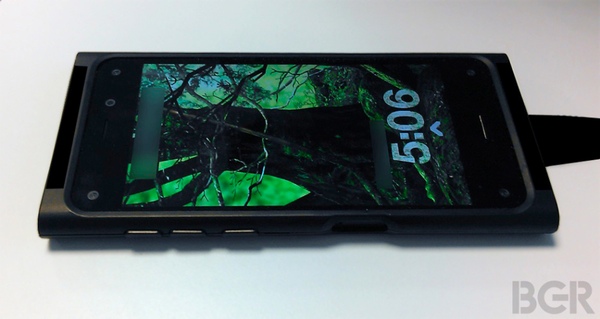
According to BGR, multiple sources claim the phone will include a 4.7-inch display with 720p resolution, which is lower than the 1080p HD display in Samsung’s flagship Galaxy S5 and less than the projected 1600×900 display that Apple may use in the iPhone 6. Under the hood, the Amazon phone is predicted to be powered by a Qualcomm Snapdragon processor and 2GB of RAM.
The biggest differentiator between Amazon’s smartphone and those from Apple and Samsung is a 3D feature, which allegedly uses up to 4 cameras and additional sensors embedded in the phone. Amazon may use the 3D technology to showcase its own products, allowing users to explore a three-dimensional product images, claims BGR.
Another smart use for the phone’s 3D effects is across Amazon’s various stores, such as its book store, music store and the main Amazon digital market. By shifting the position of the phone, users are able to see three-dimensional product images at different angles to reveal surfaces that cannot be seen in 2D photos.
The 3D capability of the phone may also provide a parallax effect, similar to that in iOS 7. Amazon’s implementation in its FireOS may be greatly exaggerated as compared to Apple’s version and supposedly is limited to only a few key gestures, reports TechCrunch.
According to our source, the flagship device, Duke, is powered by a heavily modified version of Android. It’s FireOS with extreme 3D parallax effects, similar to those found on iOS but greatly exaggerated. The screen itself is not 3D, but rather simulates a 3D effect.
By way of four corner-mounted, front-facing cameras, a user can tilt the smartphone left or right to browse and access hidden side panels. We’re told that the 3D feature is very limited out of the box. At launch, there will be just a couple of added gestures built into the operating system that utilize this system.
Rumors point to a possible announcement in the coming months with a target launch date of late September, but this may be subject to change. Amazon allegedly is showcasing the device to key developers as it tries to build third-party support for the platform before it is launched.

Pioneer Brings Apple CarPlay to Existing In-Dash Receivers
In line with earlier reports, Pioneer today announced it is bringing Apple’s CarPlay technology to its existing product line. CarPlay will be added to the company’s five 2014 NEX in-dash multimedia receivers via a firmware update that will be made available in early summer 2014.

“Pioneer’s years of expertise integrating smartphone connectivity into the automotive environment has provided us the opportunity to be among the first to offer CarPlay to drivers,” said Ted Cardenas, vice president of marketing for the Car Electronics Division of Pioneer Electronics (USA) Inc. “By providing an aftermarket option, Pioneer’s 2014 in-dash multimedia systems give many iPhone owners the ability to add CarPlay to their current vehicles.”
Introduced earlier this year, CarPlay is an iOS-driven system that allows an iPhone to tie into the in-dash display of a car, providing Siri-controlled voice access to features like Maps, phone, messages and music. CarPlay works in conjunction with BlackBerry’s QNX Car Platform, which powers many existing in-car infotainment systems, including those from Pioneer.
The service initially debuted in new 2014 car models from Ferrari, Mercedes-Benz, and Volvo.

Photo of Alleged Front Panel from Larger-Screen iPhone 6 Surfaces
An alleged photo of what appears to be a front panel from Apple’s larger-screen iPhone 6 has surfaced on Chinese microblogging site Weibo (via iPhone.fr, Google Translation).

The image appears to show an individual in a factory-type setting holding up an iPhone 5s next to a much larger front panel that contains similar characteristics, including cutouts for a front-facing camera, ambient light sensor, ear speaker, and home button. However, the front panel also features a notably thinner bezel, which is consistent with previous rumors about the iPhone 6′s slimmer design.
While the validity of the image cannot be confirmed, the leak is the latest among a number of others recently. This past weekend, several photos reportedly showed the details on manufacturing molds for the iPhone 6, which was followed by a photo yesterday that hinted at a 4.7-inch display.
Last month, Japanese magazine MacFan published alleged design drawings of what appeared to be 4.7-inch and 5.6-inch iPhone 6 models, with a photo showing cases for the larger iPhone surfacing shortly afterward.
Apple is expected to launch the iPhone 6 later this year, which may ship in two different sizes: 4.7 inches and 5.5 inches. Recent reports have indicated that the smaller 4.7 inch version will ship first in the fall, while the larger version may ship later this year or in early 2015 due to manufacturing challenges.
Along with a larger screen, both models of the next-generation iPhone are rumored to include a new A8 processor, Touch ID fingerprint sensor and an upgraded camera featuring optical image stabilization. A report yesterday from Jefferies analyst Peter Misek also stated that Apple is negotiating with wireless carriers to raise the price of the iPhone 6 by $100.

Alleged iPhone 6 Batteries Photographed in Production Tray
French site Nowhereelse.fr [Google Translation] has shared a photo of what are claimed to be batteries for the iPhone 6 spotted in a production tray. While the validity of the image cannot be confirmed, the batteries do appear to share similar physical characteristics with other iPhone batteries.

As the report notes, however, the positioning of the iPhone 6′s battery appears to be modified as a metallic section present on current batteries appears to be now integrated along the side. This would indicate a potentially new form factor for the iPhone 6.
A report last month indicated that Apple would begin producing all iPhone batteries on automated production lines starting later this year, allowing the company to shift its supply chain resources towards production efforts on other parts. If real, this new image would indicate that Apple has stepped up its battery production efforts ahead of the iPhone 6′s launch.
The leak follows a number of others in recent weeks, including an image from earlier this morning that allegedly depicted the front panel of the iPhone 6 as well as several photos that showed manufacturing molds hinting at a larger-screen iPhone.
Apple’s next-generation iPhone is expected to be unveiled this fall and has been rumored to launch in sizes of 4.7 and 5.5 inches. Various reports have noted that the 4.7 inch version will ship first, while the 5.5 inch version will ship sometime afterward due to production challenges.
Both models of the next-generation iPhone are also rumored to include a new A8 processor, Touch ID fingerprint sensor, and an enhanced camera with optical image stabilization. Jefferies analyst Peter Misek also noted yesterday that Apple is negotiating with wireless carriers to increase the price of the iPhone 6 by $100.
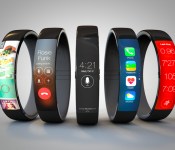
LG Again Rumored to be Sole Supplier of Flexible Displays for iWatch
LG will be the sole supplier for flexible displays to be used in the iWatch as Apple looks to launch the device later this year in two sizes, according to a report from Korea’s Naver [Google Translate, via GforGames].
 iWatch concept by Todd Hamilton, based on the Nike FuelBand
The report notes that Apple is targeting to sell 9 million iWatch units by the end of the year with LG’s collaboration, as the device itself will be released in September. The report also claimed that the iWatch will come in two different sizes of 1.3 inches and 1.5 inches, which falls in line with previous reports about the smartwatch.
In February, a report from Korean publication Digital Daily shared similar details, noting also that LG would be the sole supplier of the panels for the iWatch, and that the Korean company would start mass production of the flexible displays starting in July 2014. Apple was rumored to have selected LG’s panels because they were thin, light and provided adequate brightness with minimal power consumption; characteristics that the company is said to have been pursuing for the device’s display.
In addition to being released in two separate sizes and featuring a flexible display, the iWatch is also rumored to come with a multitude of biometric sensors and include integration with the iPhone, iPad, and Mac. In a research note last week, KGI Securities analyst Ming-Chi also estimated that Apple will release the iWatch at multiple price points and in a variety of materials, with the highest-end selling for thousands of dollars.
Apple is expected to reveal the iWatch later this year alongside iOS 8 and the iPhone 6.

Compliance Monitor Says Relationship With Apple Has ‘Significantly Improved’ [iOS Blog]
 In his first report to US District Judge Denise Cote, external compliance monitor Michael Bromwich says that his relationship with Apple has “significantly improved” since Apple was ordered to hire him to ensure the company complies with antitrust requirements in the wake of the e-book antitrust case, reports the Wall Street Journal.
After the Second Circuit panel issued its decision in early February, we took steps to reestablish contact and to attempt to “reset” our relationship with Apple, as this Court had directed during the January 13, 2014 proceedings and in its January 16, 2014 opinion. Those steps prompted constructive responses from Apple. As more fully described in this Report, the relationship between Apple and the monitoring team has significantly improved over the past six weeks and has become more focused on achieving the goal of enhancing Apple’s Antitrust Compliance Program pursuant to the Final Judgment.
Bromwich goes on to say that there’s been a shift in tone in his relationship with Apple, largely due to the new in-house point of contact that Apple has assigned to work with Bromwich and his team. The new contact has helped Bromwich and his team attain more information and provide a greater commitment to solving disputes than its predecessor, although Bromwich also notes the information was largely about Apple “generally” and that more would be required.
This is a promising turn in a relationship that has so far been troubled, with Apple complaining of Bromwich’s exorbitant fees and Bromwich complaining that Apple was blocking interviews and interfering with his investigation. Apple later requested Bromwich’s removal. While the request was not granted, Judge Cote did place boundaries on Bromwich’s monitorship.

‘Social Network’ Director David Fincher Will Not Helm Steve Jobs Movie [Mac Blog]
 The Social Network director David Fincher will not direct Sony’s Steve Jobs biopic, both written by Aaron Sorkin, reports The Hollywood Reporter. Back in February, a report came out saying Fincher was in negotiations to direct the film.
The report says Fincher was asking for $10 million in fees in addition to control over marketing the movie, with Sony saying his asking price was too high. It is possible that negotiations will proceed between the director and Sony.
A source with ties to the studio says Fincher potentially could re-enter negotiations but that the fee he is seeking is “ridiculous,” adding, “You’re not doing Transformers here. You’re not doing Captain America. This is quality — it’s not screaming commerciality. He should be rewarded in success but not up front.”
Sorkin and Fincher worked together on The Social Network, which made $225 million worldwide and saw Sorkin win an Oscar for best adapted screenplay, in addition to nominations in several other categories.

Windows Phone 8.1 Adds Support for Apple’s Passbook Passes
 Microsoft has added support for Apple’s Passbook passes in Windows Phone 8.1, which was released today as a developer preview. Microsoft announced this latest version of Windows Phone earlier this month and equipped the mobile OS with digital assistant and Siri competitor, Cortana.
As noticed by Tom Warren of The Verge and reported by iMore, Microsoft has created a method that takes the data from a Passbook file and converts it into a card that is imported into Microsoft Wallet.
Passbook passes are just collection of data that get rendered into a card and displayed in Apple’s Passbook app. Think of the Passbook files like the HTML, CSS, and JavaScript data that makes up a webpage, and the Passbook app like the browser that renders the actual page. It looks like Windows Phone 8 is taking the same data and rendering a similar card out of it, and then pushing that card to Microsoft Wallet.
It is not known whether Microsoft’s system is operating independently of Apple or if the Redmond company has an agreement to convert the data to its own wallet. The service may not support iOS-specific features like Passbook updates and notifications, but the importing of data is apparently accurate.
Windows Phone 8.1 supports Apple's Passbook natively. I've been using it for flights. Works perfectly pic.twitter.com/MFScqvEVU7
— Tom Warren (@tomwarren) April 14, 2014
Passbook debuted in 2011 and was one of the major new apps bundled in iOS 6. The digital wallet permitted companies to store tickets, loyalty cards, coupons, gift cards and more in a centralized location on a user’s iPhone and iPod touch. Apple has continued to update the service, allowing third-party apps to create Passbook passes and adding support for gift cards.

