


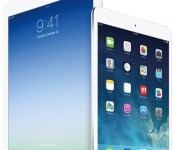
Apple Regains Lead in Latest J.D. Power Tablet Customer Satisfaction Survey [iOS Blog]
Apple reclaimed its spot as the highest ranked tablet manufacturer in J.D. Power’s latest U.S. tablet customer satisfaction study. Apple earned a 5-star rating and scored 830 on a 1,000 point scale, edging out Samsung, which scored a second place 822.

The survey of 2,513 tablet owners found that Apple led its competitors in four of the five measured categories, including performance, ease of operation, features and styling and design. Apple trailed only in cost, which isn’t surprising given the starting $299 price tag of Apple’s iPad lineup. Number two Samsung ranked above-average in features, styling and design, and cost.
All is not rosy in the tablet market, however, with overall satisfaction among tablet owners on the decline, dropping 18 points to 835 in 2014 from a high of 853 in 2012. Ease of operation was the feature that showed the largest drop in satisfaction, with tablets taking longer to setup and becoming more complicated to use.
“Since the inaugural U.S. Tablet Satisfaction Study in 2012, a number of new tablet OEMs have entered the U.S. marketplace, differentiating themselves to satisfy a growing interest in owning a tablet,” said Kirk Parsons, senior director of telecommunications services at J.D. Power. “Price has significantly impacted the marketplace. The average purchase price continues to drop and consumer expectations of tablet performance and features are different than they were for past products. Subsequently, overall satisfaction has declined, especially with ease of operation, as navigation features and functions have changed.”

Not surprisingly, the most important feature cited by consumers when buying a tablet was cost, followed by features and brand reputation. Brand recognition is becoming increasingly important to consumers, beating out both manufacturer websites and personal recommendations as the reasons why they select a particular brand.
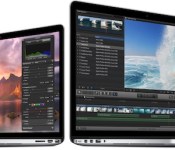
Apple’s Move to Revolutionize Sapphire Manufacturing Likely to Leave Competitors Behind
Apple revolutionized aluminum manufacturing when it adopted the unibody design for its MacBook Pro line of notebooks, advancing the production process in a way that benefitted the industry as a whole. Now, the company is poised to change the nature of sapphire manufacturing in a similar way, but this time the sole beneficiary will be Apple, argues The Verge.

When Apple introduced the aluminum unibody MacBook Pros in 2008, the company was relying on third-party suppliers to provide the material needed for the notebook line. Backed by Apple’s cash, manufacturers were able to streamline and scale up production to meet demand for the new unibody machines. Once rare, processes like aluminum extrusion and forging became commonplace, with Apple “reinventing a whole new supply chain around the material.”
“Aluminum is now cheaper and easier to implement thanks to Apple itself,” says noted analyst Ming-Chi Kuo of KGI Securities. His assessment, shared by many others, is that Apple’s demand drove “related suppliers of aluminum casing to invest more on capacity and technology.” They were all competing for the lucrative prize of satisfying the MacBook maker’s need to extrude, machine, anodize, and recycle vast quantities of the metal.
Apple may have kickstarted the aluminum revolution, but it did not control the production processes it advanced and the adoption of the metal spread across a variety of industries. With sapphire, Apple is taking a different approach. The company is again poised to overhaul a new manufacturing industry, but this time Apple is in a better position to keep most of the benefits to itself.

Apple partnered with materials manufacturer GT Advanced Technologies to build a sapphire production plant in Arizona and is working on mass producing the material for use in its iPhone lineup and possibly the iWatch. Any advancements the company makes in sapphire production to make it more affordable and to scale its manufacturing output to support hundreds of millions of devices per year will stay within the walls of Apple and GT.
Competitors will have to pursue their own sapphire manufacturing endeavors or concede sapphire to Apple and pursue different transparent cover materials to use in their devices. Most companies will be left behind as they do not have the financial reserves that allows a company like Apple to invest in a full-scale production facility dedicated to a single material used in their devices.
Apple and GT have already started producing small quantities of sapphire in their Arizona plant, with approximately 100 furnaces online producing 2,220 kg of sapphire in early production runs. GT is expected to install more than 1,000 additional furnaces as the company ramps up production for the end of 2014 ahead of the release of the iPhone 6 and iWatch.
Recent reports suggest Apple may incorporate sapphire into its upcoming wearable product and may outfit its high-end iPhone 6 models with a sapphire screen. The company currently uses sapphire as a covering for its iPhone rear camera lens and its Touch ID sensor.

Can’t I help you? Shoppers are shunning store assistants in favor of smartphones

Although it often feels like you’re stealing, being able to walk into an store, pay for a product with your phone and leave without any employee interaction can be liberating. It’s an experience that an increasing number of consumers are starting to enjoy too, as evidenced by a new report from Deloitte that suggests shoppers would rather pull out their smartphone or tablet inside a store than speak to an associate. More than half of the people surveyed admitted they prefer using a mobile device to compare prices, gather more information or check availability, while just under half of respondents said they’d rather use complete a mobile payment than head to a cash register. Even unmanned kiosks (think touch displays or tables full of tablets) outranked small talk with a retail employee.
Deloitte isn’t suggesting retailers should immediately go ahead and give sales associates the boot (at least not right now), but instead reinforces the need for companies to support consumers’ digital shopping needs. People are now more aware and comfortable around technology, which has given rise to automated self-checkouts inside supermarkets and the need to prove to an Apple Store associate that you’ve paid for your item with your iPhone before you leave (even though you don’t need to).

Filed under: Cellphones, Internet, Software, Mobile, Apple
Via: Wall Street Journal
Source: Deloitte (PDF)
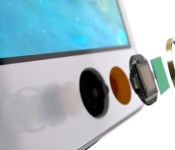
TSMC Provides First Batch of Fingerprint Sensors for iPhone 6, iPad Air 2, and iPad Mini 3
Apple supplier Taiwan Semiconductor Manufacturing Company (TSMC) has reportedly provided the first batch of Touch ID fingerprint sensors to be used in the iPhone 6, iPad Air 2 and iPad Mini 3, according to a new report from component information website cecb2b.com citing supply chain sources (Google Translate, via GforGames).

In addition to production at TSMC, the report notes that the fingerprint sensors are being assembled by TSMC subsidiaries Xintec and Suzhou Crystal Semiconductor. A report in January noted that TSMC would begin production on the sensors sometime in the second quarter of this year with a new 12-inch fab processing method, however a report in February stated that TSMC would be using the same 8-inch fingerprint sensor processing method that was used for the iPhone 5s.
The inclusion of Touch ID on the next-generation iPad Air and Retina iPad Mini would also fall in line with predictions from KGI Securities analyst Ming-Chi Kuo, who noted that both devices would gain the feature alongside processor upgrades and various other improvements.
Apple’s head start on Touch ID fingerprint sensor production will likely help the launch supplies of all three devices. The component was said to be a key factor contributing to the limited supplies of the iPhone 5s at its launch last September, with low yield rates at Xintec and iOS 7-sensor integration slowing production.

Apple Looking to Open Sixth Manhattan Retail Location in Late 2015 [Mac Blog]
Apple is apparently gearing up to open a sixth retail location in Manhattan by late 2015, according to a new report from ifoAppleStore.

The current interior of the building as occupied by VBH (via ifoAppleStore)
Likely to be located at 940 Madison Avenue, the future store will occupy a former banking complex built in 1921 that currently houses luxury retailer VBH. The building itself offers a large amount of space, featuring a 4,000 square-foot ground level and 1,000 square-foot mezzanine.

An outside view of the building in 1922 (via Museum of the City of New York)
Apple has notably constructed a number of stores in historic locations, including a flagship store in Brisbane, Australia that is located in the famous MacArthur Chambers building and a store in a century-old theater complex located within Berlin’s Kurfürstendamm avenue. The company’s Grand Central, Opéra, and Buchanan Street retail stores have also been noteworthy for their significant locales.
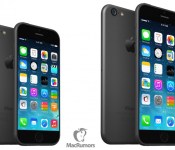
Pegatron Reportedly Receives 15% of 4.7-Inch iPhone 6 Orders Ahead of September Launch
According to a new report from Taiwan’s Industrial and Commercial Times (Google Translate, via Mac Otakara), Apple supplier Pegatron has received 15% of the orders for Apple’s upcoming 4.7-inch iPhone 6 ahead of the device’s launch this September. The report also notes that Pegatron will produce a total of 50 million iPhones this year, which includes iPhone 6, iPhone 5c, and iPhone 4S units.

The report contrasts a story from Taiwan’s Liberty Times in January, which stated that half of all iPhone 6 orders were expected to go to Pegatron. A report last month also noted that Foxconn was preparing for iPhone 6 production in the second quarter of this year at its new Kunshan, China plant, as the company has recruited new workers in China to meet the desired number of orders. In addition to Pegatron, fellow Apple suppliers Foxconn and Hon Hai are also likely aide with production.
Last year, Apple shifted iPhone 5c production to Pegatron in order to improve supply chain risk management, allowing Apple to balance its supply chain and minimize the risk of potential supply chain disasters.
Apple is expected to launch the iPhone 6 in two different screen sizes of 4.7-inches and 5.5-inches. The 4.7-inch iPhone 6 will likely ship ahead of the 5.5-inch version, as Apple attempts to solve issues with the latter’s display and battery. Aside from a larger screen, Apple’s next-generation iPhone is expected to include a thinner profile, a faster A8 processor, and an improved camera.

Google Maps for iOS Gains Uber Integration, Lane Guidance, Improved Offline Maps [iOS Blog]
Google is updating its Google Maps app today, boosting the app’s turn-by-turn direction capabilities. Google Maps will now show drivers which lane to use through its new lane guidance feature and it’s also easier to access alternate routes while navigating.
While Google Maps has always supported the storage of maps for use offline, there’s now a specific “save maps to use offline” option within the app, making it easier to keep track of saved routes. The app has gained new filters to let users browse restaurant and venue selections based on hours, ratings, price, and more, and specific points of interest can be saved to the app.
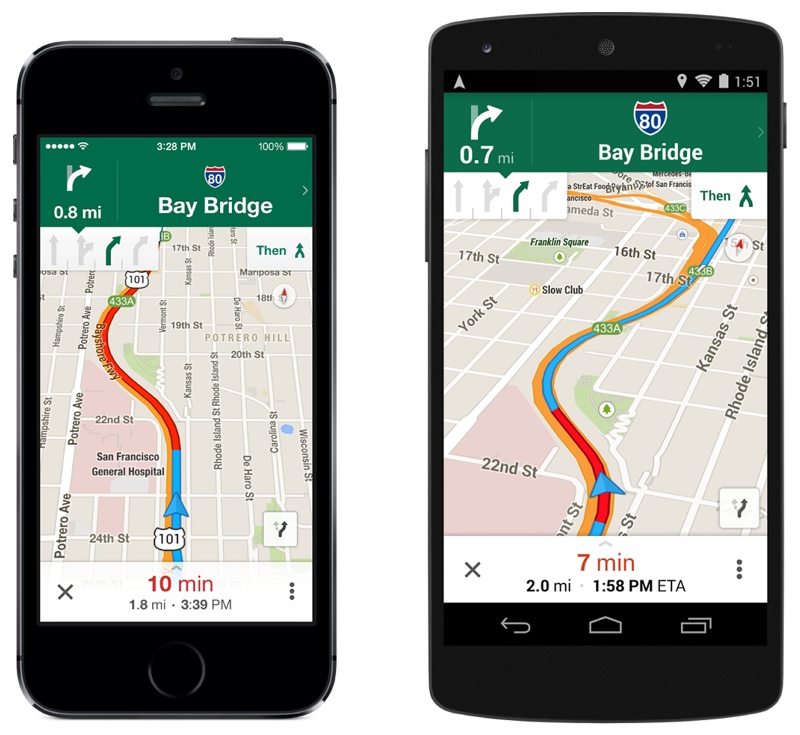
Don’t worry if you’re not online. Before setting off on your next vacation, hike, or roadtrip, search for an area and tap on its place info sheet, then when available, you can select “Save map to use offline,” and give your map a custom name, like “Toronto Vacation.” To find your offline maps, sign-in, tap the profile icon next to the search box in the top right corner, and scroll to see “Toronto Vacation” and other saved maps.
In select cities, Google Maps will integrate with Uber, letting users compare an Uber ride option with transit and walking directions to determine the faster travel option. Google’s newest update is rolling out to users today and should be available on the iPhone and the iPad shortly.
Google Maps can be downloaded for free from the App Store. [Direct Link]
SSD Speed Variations in 2014 MacBook Air Still Due to Drive Brand Mix, Not Broader Changes
For many years, Apple has used different suppliers for the solid-state drives (SSDs) in its MacBook Air models, with drive performance varying among manufacturer brands. A recent study by Macworld demonstrated rather dramatic differences in SSD read and write speeds between tested 2013 and 2014 models, but at the time it was unclear whether the poorer performance for the 2014 models was still simply due to drive brand variances or if there was something specific to the 2014 machines causing an overall degradation in performance.
Other World Computing (OWC) has now performed some apples-to-apples testing between 2013 and 2014 models with SanDisk SSDs, and has found that performance is nearly identical.
In OWC’s testing using Blackmagic Disk Speed Test, the new MacBook Air model with a 128 GB SanDisk SSD reported read/write speeds of 705/315 MBps, while the 2013 version also with a 128 GB SanDisk drive scored similarly with read/write speeds of 711/316 MBps.

Macworld‘s testing of four machines (various combinations of 2013/2014 models at 11 and 13 inches) had included drives of two different capacities from three different manufacturers, making it difficult to determine the exact cause of the performance differences.
This variability in brand performance was noticed years ago, when Apple started using both Toshiba and Samsung SSDs in its MacBook Air models. Apple continues to use drives from different manufacturers in its 2014 models, including units from Samsung, Toshiba and SanDisk. How various batches of drives from the different manufacturers are assigned to various machines is unknown, and consumers are unable determine which brand of SSD is in their MacBook Air without opening the box and either booting the machine to examine system profile information or physically opening the machine.
Apple’s new MacBook Airs are available from Apple’s website beginning at $899, while the 2013 models are being sold at significant discounts through a number of retailers.

Samsung to Appeal $119M Patent Verdict as Foreman Says Apple Should Target Google Instead
Samsung yesterday confirmed it will challenge the $119.6 million verdict in the second Apple versus Samsung patent infringement trial, claiming the decision was “unsupported by evidence.” According to Bloomberg, Samsung will ask Judge Lucy Koh to reduce the damages to zero and will follow with an appeal if this initial request is denied.

After several days of deliberations and weeks of testimony, the jury found that Samsung willfully infringed on three of the five Apple patents involved in the lawsuit and ordered the company to pay $119.6 million, a figure well below Apple’s requested $2 billion. Speaking after the verdict, jury foreman Thomas Dunham said the compensation was “fair and just” based on the evidence presented at the trial (via Re/code).
“The damages were based on the fact that both sides presented their view of what a reasonable amount of, I guess, compensation would be,” he said. “We didn’t really feel either one was what we felt was a fair and just compensation.”
Dunham, who is familiar with the patent system from his work at IBM, hinted that Apple should pursue Google because the Android operating system is the real target in this case, an argument that Samsung’s lawyers used during the trial (via The Wall Street Journal).
“If you really feel that Google is the cause behind this, as I think everybody has observed, then don’t beat around the bush,” said Mr. Dunham, whose job at IBM was to oversee developers expected to file patents. “Let the courts decide. But a more direct approach may be something to think about.”
Though Samsung was the defendant, Google played a role in the case as it was part of a larger “holy war” against Android instigated by Steve Jobs following Android’s debut Google also sent VP of engineering Hiroshi Lockheimer to testify on behalf of Samsung and agreed to offer partial legal protection to Samsung in case of an Apple win.
While Dunham suggests that Google should be Apple’s real target in the ongoing litigation, jurors claim that Google’s part in the trial was not a factor when they were deciding on the merit of the infringement claims. It also did not influence the amount of damages ultimately awarded to Apple.

Waitrose and Tesco begin trialling iBeacons for in-store offers and alerts

Apple’s Bluetooth-based iBeacon technology looks set to enrich in-store shopping experiences, so it should come as no surprise that two of Britain’s biggest supermarkets are looking to see what it’s all about. Mirroring pilots by their counterparts in the US, Tesco and Waitrose have commenced trials that deliver location-sensitive notifications and offers to shoppers via their smartphone without the need for GPS. Tesco began trialling in its Chelmsford store in April, issuing messages to customers to remind them to pick up pre-ordered goods. Waitrose started using the technology at its new experimental Swindon store last week, using iBeacon to alert shoppers to promotions when they’re near a particular aisle or food counter. Unlike its rival, Tesco has said it will holding off using beacons to issue marketing messages (including promotions) over fears it could scare customers away. Whether or not iBeacons will make their way to more supermarket stores across the UK depends on the outcome of the trials. However, the technology has seen strong early backing, suggesting your local store could one day begin sending you tailor-made notifications and offers.
Source: Marketing

