


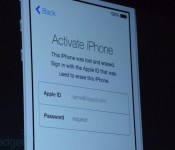
Police say Apple’s anti-theft switches have dramatically reduced iPhone thefts

When mobile sales are booming, smartphone thefts are almost certain to rise. That’s something San Francisco and New York prosecutors George Gascón and Eric Schneiderman have been telling smartphone makers for over a year, but now they’re finally making some headway. After pressuring Apple to implement a “kill switch” inside its devices, the New York Times reports that police officers in London and San Francisco saw iPhone robberies in the cities fall by 24 percent and 38 percent respectively in the six months before and after the company implemented its Activation Lock feature inside iOS 7. Over in New York, robberies were down by 19 percent and those involving grand larcenies dropped 29 percent when the police compared data in the first five months of 2014 with the same period from 2013.
It’s clear to see those small changes are making a difference, and lawmakers have rightly commended smartphone makers for implementing tougher security measures. However, things will move forward significantly from July 2015, when all smartphones sold in the United States will come with an anti-theft tool set as standard. Apple and Samsung are on board, as are Google, HTC, Huawei, Microsoft (and Nokia), Motorola and the country’s biggest wireless carriers. It could save collective total of $2.5 billion a year in replacement costs and insurance fees, and some major headaches too.
Filed under: Cellphones, Mobile, Apple, Samsung
Source: New York Times
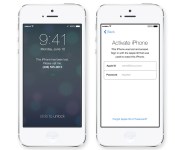
iOS 7’s Activation Lock Feature Helping Reduce iPhone Theft in Three Major Cities
New York Attorney General Eric Schneiderman announced today that Apple’s Activation Lock feature in iOS 7 has led to a “significant” reduction of iPhone-related theft in New York, London, and San Francisco, reports The New York Times.

Measuring crime after Apple introduced Activation Lock alongside iOS 7 last Fall, police officers in San Francisco said that iPhone robberies in the city fell 38 percent, with London experiencing a 24 percent drop. Meanwhile, the New York Police Department said that iPhone robberies dropped 19 percent, while grand larcenies including the device dropped 29 percent in the first five months of 2014 compared to the same time period last year.
“The introduction of kill switches has clearly had an effect on the conduct of smartphone thieves,” Mr. Schneiderman said in an interview. “If these can be canceled like the equivalent of canceling a credit card, these are going to be the equivalent of stealing a paperweight.”
Apple’s Activation Lock feature, which prevents stolen phones from being reactivated without an iCloud password, has received praise from various groups since its inclusion in iOS 7. Schneiderman, along with San Francisco attorney George Gascón, spearheaded smartphone anti-theft efforts last year and called Apple’s Activation Lock the “world’s first attempt to implement a technological solution to the global smartphone theft epidemic.”
Apple also entered a voluntary agreement with a number of other smartphone makers in April to include anti-theft technology on all smartphones going on sale after July 2015. Under that agreement, every phone sold would have capabilities allowing users to remotely wipe data and to prevent reactivation without the owner’s permission. It is likely that Apple’s Activation Lock and Find My iPhone features already satisfy the requirements of the agreement.

T-Mobile Announces ‘Test Drive’, A One Week Network Trial With a Free iPhone 5s
At its Un-Carrier 5.0 event in Seattle, T-Mobile announced a new program called Test Drive, which allows prospective customers to try out its network for 7 days with a free iPhone 5s.
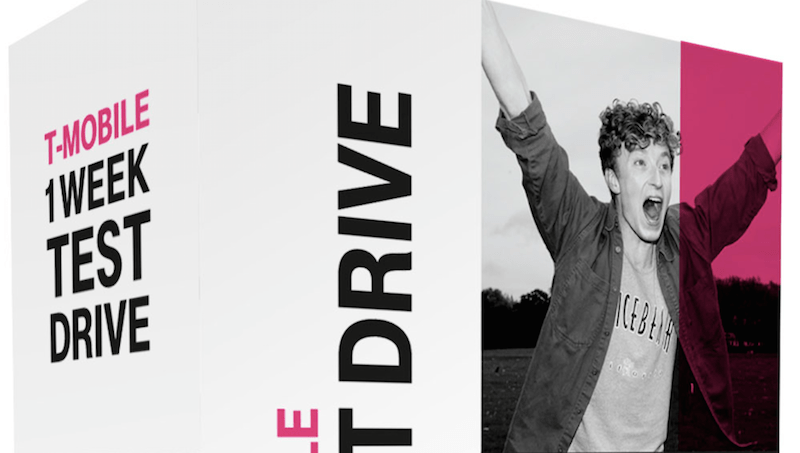
Starting this Monday, June 23, people can sign up for T-Mobile Test Drive at http://www.t-mobile.com/testdrive. A few days later, they’ll receive an iPhone 5s fully loaded and ready to go, and they can put T-Mobile’s data-strong network to the test for seven full days on the “most forward-thinking” smartphone. After the test drive, just drop it off at any T-Mobile store. That’s it. Absolutely no money down. No obligation. No strings attached.
The carrier said that Apple is providing “tens of thousands” of iPhones for Test Drive, and expects more than a million users to use the program within the first year. In 1984, Apple itself used a similar test drive program to get people to try out the original Mac.
T-Mobile CEO John Legere said the goal of the program is to change the perception some people have of the carrier’s network, according to Re/code. The carrier has been rapidly enhancing its network in recent years, adding LTE and expecting to reach 250 million customers with that LTE network by the end of the year. Additionally, T-Mobile has 16 markets with “Wideband LTE”, which lessens potential network congestion and increases speeds, and plans on introducing Voice-Over-LTE.
The carrier also announced that current T-Mobile customers will be able to stream music from Spotify, Rdio, iTunes Radio and Pandora for free. T-Mobile negotiated deals with those streaming companies so that data from those apps don’t count against a customer’s data plan, according to Engadget. The company plans to add other services, like Google Play Music and Beats Music, if enough customers request them.
Additionally, T-Mobile announced UnRadio, which allows customers on a Simple Choice plan to gain access to Rhapsody’s entire music library for free with unlimited skips and no ads. UnRadio also doesn’t count against a customer’s data plan. Customers not on the Simple Choice plan will have to pay $4 a month for the service.
Those who want to sign up for Test Drive must do so at T-Mobile’s website for the program. Once a user signs up, T-Mobile will place a $699.99 (plus taxes) hold on a user’s credit or debit card. If the phone isn’t returned at the end of the 7 day trial, T-Mobile will charge the hold amount. Additionally, if the phone has water damage, a damaged display or screen or has Find My iPhone activated, T-Mobile will charge the user with a $100 “damage fee”. If the phone is returned with no damage at the end of the 7 days, the hold is lifted.
T-Mobile Test Drive lets you borrow an iPhone 5s for a week

T-Mobile clearly wants you to become a customer — the company’s “UnCarrier 5.0” move will get you an iPhone 5s to try out for a full seven days. At an event in Seattle today, the carrier introduced Test Drive, a service that will help customers avoid “buying blind,” giving you an opportunity to experience LTE at home before you commit to making a purchase. The service launches this Sunday and lets you borrow Apple’s latest handset for a week, at which point you’ll need to return the device to any T-Mobile store, even if you plan on signing up and purchasing a device.
After you sign up on T-Mobile’s website, the carrier will place a hold on your credit card in the amount of $700. Your loaner device (typically a refurb unit) will arrive with two-day shipping, and the clock starts ticking the moment you sign for the package. You’ll have free unlimited access to talk, text and data within the US (T-Mobile doesn’t want Test Drive to become an international loaner phone service, so this device is for domestic use only). A T-Mo rep will call you on day two to see how the test is going, and you’ll get a few reminders as the big day draws near.
If you return the phone with a cracked screen, water damage or entirely non-functional, you’ll be charged a $100 fee. The same penalty applies if you lose the iPhone — if you simply keep the device (which you’re absolutely not supposed to do), you’ll be responsible for the full $700. It’s available only once per household, so no, you can’t simply sign up again each week and avoid paying for a phone altogether. T-Mobile isn’t the first carrier to run such a program — Verizon’s own “test drive” ran from 2007 through 2009 — but reps appear to be committed to the initiative, with Test Drive set to continue indefinitely.
Filed under: Cellphones, Mobile, Apple, T-Mobile
Source: T-Mobile
Memory in New $1099 iMac is Soldered and Not Upgradable
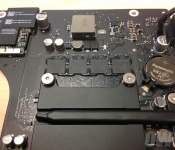
The 8GB of memory in the new, cheaper 21.5-inch iMac introduced earlier today is permanently soldered to the motherboard and is not upgradable, according to a teardown of the new machine by Other World Computing.
The $1,099 machine includes a 1.4GHz Dual-Core i5 processor from the MacBook Air, but users are permanently locked to 8GB of RAM. There is no build-to-order option to increase it and it cannot be increased later.

Now that we’ve had time to teardown the new iMac, unlike the $1,299 iMac, we found this iMac has the memory is soldered to the motherboard removing any possibility of adding additional memory. Users will be permanently locked in to the 8GB of memory, as there is no Apple factory upgrade option.
The other 21.5″ iMacs, launched last fall, can be upgraded through the Apple Online Store from 8GB to 16GB. RAM can also be added after purchase, but it requires removal of the screen and is an extremely difficult upgrade.
The current 27″ iMac, on the other hand, has a easily accessed door on the rear of the machine that allows for simple RAM upgrades.
Bluetooth LE Adapters Don’t Enable OS X Yosemite’s ‘Handoff’ on Older Macs
Over the past few days, we’ve been exploring some of the system requirements for Apple’s Continuity features such as Handoff, noting that an apparent requirement of Bluetooth LE support for Handoff would leave out a number of older Macs that are otherwise compatible with OS X Yosemite.
In discussing the limitations for Handoff support, some MacRumors forum members suggested that adding an inexpensive third-party Bluetooth LE adapter to an older Mac might be enough to add support for the feature. Unfortunately, several forum members have discovered that this does not appear to be the case.
One forum member has shared details of their testing, noting that in tests with a 2010 MacBook Air that does not include built-in support for Bluetooth LE, adding IOGEAR’s Bluetooth 4.0 USB Micro Adapter works out of the box to add Bluetooth LE support to the machine, but does not enable support for Continuity features such as Handoff or AirDrop.
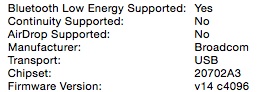
System information for 2010 MacBook Air with IOSGEAR Bluetooth LE adapter
While OS X Yosemite remains in beta testing and things could change before final release, it appears that Bluetooth LE support alone is not sufficient to enable Handoff and that Apple is instead enforcing a stricter requirement for built-in Bluetooth LE support, perhaps by defining specific models that are able to use the feature.
Beyond Handoff, Apple is also adding a number of other features under the Continuity umbrella, not all of which require Bluetooth LE support. For example, the new phone relay feature that will allow users to make and receive iPhone calls right from their Macs relies on Wi-Fi rather than Bluetooth, meaning that more devices should be compatible with this feature and it is likely to work over longer distances.
OS X Yosemite and iOS 8 are scheduled to launch to the public in the fall of this year, likely around the September-October timeframe.
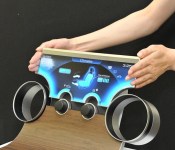
Sharp’s ‘Free-Form Displays’ with Ultra-Thin Bezels Make New Display Shapes Possible
Sharp today announced its upcoming “Free-Form Display” technology that will allow the company to nearly eliminate the traditional bezel that surrounds LCD displays. As a result, Sharp will be able to build LCD panels in nearly any shape to conform to the display area of the intended product.

Conventional displays are rectangular because they require a minimal width for the bezel in order to accommodate the drive circuit, called the gate driver, around the perimeter of the screen’s display area. With the Free-Form Display, the gate driver’s function is dispersed throughout the pixels on the display area. This allows the bezel to be shrunk considerably, and it gives the freedom to design the LCD to match whatever shape the display area of the screen needs to be.
As an example, Sharp demonstrates a prototype display for a vehicle dashboard, with the display conforming to the shape of the main instrument panel, but the company also address the possibility of using the technology for “wearable devices with elliptical displays”.
The concept of non-rectangular LCD displays naturally ties in to Apple’s rumored iWatch, which at least one analyst believes will include a round display, although most recent rumors have suggested the device will use an OLED display. Still, advancements in LCD technology that would allow for non-traditional display shapes open the door to many different possibilities for future devices, particularly as wearables appear set to become an increasingly significant focus for mobile device companies.
Reducing bezel thickness on traditionally shaped devices such as the iPhone and iPad has also been a goal for Apple, seeking to maximize display size relative to the overall device size. Sharp’s technology could serve to push this effort even further, and issues with devices registering unintended touches from simply holding the device should be minimized as Apple has already developed software solutions for recognizing those touches as part of the development of the iPad mini and iPad Air.
Sharp has not announced when its Free-Form Display technology will be ready for use, noting only that will enter mass production “at the earliest possible date.”

Amazon Announces ‘Fire Phone’ With 3D ‘Dynamic Perspective’ Interface, ‘Firefly’ Object Recognition Engine
Amazon today unveiled its much-anticipated new smartphone, the Fire Phone, which Amazon calls “refined, beautiful, and robust.” The phone has a 4.7-inch LCD HD display along with Gorilla Glass 3 on both sides and “precise” aluminum buttons.
It includes a quad-core 2.2Ghz processor, an Adreno 330 Graphics Processor, 2GB of RAM, and dual stereo speakers. There’s a 13-megapixel rear-facing camera with an f/2.0 five element lens and built-in optical image stabilization.

Aiming at Apple, Amazon touted the low-light capabilities of the camera included in the phone and announced free unlimited photo storage through its Amazon Cloud Drive service. Apple recently announced its own iCloud Photo Library, but it offers a limited amount of storage for free.
Along with standard cameras, Amazon’s Fire Phone utilizes four additional cameras for a 3D interface, called “Dynamic Perspective.” 3D images on the phone change as it is tilted and viewed from different angles, thanks to advanced eye and face tracking capabilities. Demonstrated with a mapping app, the 3D UI displayed a 3D version of the Empire State Building that could be viewed from all angles, with a tilt of the phone expanding the view.
Amazon’s Fire Phone accomplishes the facial tracking with its four corner cameras and knows where a user’s head is at all times to aid Dynamic Perspective, using infrared for tracking in the dark and advanced algorithms for head continuous tracking.

Accelerometers enable navigation through tilt gestures, demonstrated within a maps app that brought up Yelp when the phone was tilted slightly. Tilting and Dynamic Perspective can also be used in apps and for web browsing — scrolling through items, zooming in, pulling up menus, and more. There’s an autoscroll feature that will scroll through web pages and books automatically, which Jeff Bezos called “incredibly natural.” Amazon is releasing a Dynamic Perspective SDK for developers today.
Also included with the phone is a new flagship feature called Firefly, a virtual recognition program able to recognize QR codes, barcodes, objects, and more, which facilitates the discovery and purchase of various items. Firefly is built directly into the Fire Phone with a dedicated button on the side.
On stage, Amazon demoed Firefly scanning barcodes, URLs, and products like games, keeping a record of what was scanned and allowing the info to be used to make purchases, phone calls, and more. Firefly is also able to listen to music and recognize audio like TV shows, much like Siri can now do with Shazam, and it’s also able to recognize art, pulling up a Wikipedia page for a painting.
It’s a fully featured recognition system that can even read street signs and phone numbers from a distance. According to Amazon, it recognizes a hundred million different items in real world situations, and provides a button so users can buy most of them on the spot. There’s also a Firefly SDK that developers can utilize to build Firefly into apps.

As for the phone’s UI, it includes an app grid that lets users pin content like books, apps, magazines, and more, and there’s also a scrollable carousel of apps at the top of the screen and four common apps on the bottom of the phone’s interface. The phone also includes active widgets that can be used when opening a full app is unnecessary.
Both the Kindle Fire’s Second Screen and X-Ray feature work on the Fire phone, and users are able to “fling” video from the phone to the Amazon TV, while X-Ray gives details on whatever is being watched. HBO Go, Netflix, YouTube, ESPN, and more are all supposed in addition to Amazon’s own video services.
The Fire Phone will also support Amazon’s new Prime music service, which the company launched last week, as well as music from Spotify, Pandora, and iHeartMusic, and it will include Kindle and Audible support. Much like the latest Fire tablets, it supports MayDay, a free service that lets users contact customer support representatives for free.
Amazon’s Fire Phone is exclusive to AT&T and will be priced at $199/$299 for 32/64GB of storage with a standard contract or carrier agreement. The price includes the phone, stay-flat cables, and premium magnetic earbuds. It can be pre-ordered from Amazon.com and is expected to begin shipping in July.
(Images courtesy of CNET)

Apple TV May Gain Deeper Integration With iOS and Macs via Continuity
Developers who have installed the newest iOS 8 beta, the latest version of OS X Yosemite, and the current Apple TV beta, all released yesterday, have noticed a new pop up notification suggesting the Apple TV will gain some of the Continuity features Apple introduced during its Worldwide Developers Conference.

As noted by 9to5Mac, the notifications are being received on Macs running on the same local WiFi network as Apple TVs that also have the newest software, suggesting at the least, that with Yosemite, Macs will be able to interact with the Apple TV in new ways.
It is unclear how Yosemite and the Apple TV might interact as any Continuity features between the two are not yet functional, but it is possible that a feature like Handoff could be used in conjunction with AirPlay, allowing a movie, TV show, or music to be seamlessly transferred from one device to another.
It’s also possible the Apple TV could display notifications when a phone call is incoming to an iPhone, much like the Mac and the iPad are able to do. Call notifications and on-screen caller ID are not far-fetched, as some telecommunications providers that offer TV, Internet, and phone access are able to display caller information on screen.
Continuity features like Handoff appear to require Bluetooth 4.0, a feature that is only available in the third-generation Apple TV. Yesterday’s update was only available for third-generation Apple TVs, providing more evidence that the device is likely to gain some Continuity features.
OS X Yosemite, the new Apple TV software, and iOS 8 are all expected to be released to the public in the fall after an extended beta testing period. Apple is also said to be working on an upgraded Apple TV set top box with new capabilities, which could also take advantage of Continuity features.
Evidence of iPhone 6 Atmospheric Pressure Sensor Found in iOS 8
Apple may add an atmospheric pressure sensor to the iPhone 6, according to a report by 9to5Mac. This follows on a rumor from March that suggested the iPhone 6 could include humidity, temperature and pressure sensors when it comes out this fall.
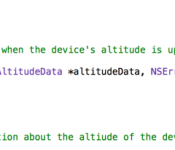
A barometer is used to measure atmospheric pressure, giving indications on current and future weather trends as well as altitude data. The report says new APIs in iOS 8 reference altitude data, including one called “isRelativeAltitudeAvailable” that tells apps if a device “supports reporting relative altitude changes”. For an iPhone 5s, the API returns “no”.

According to sources at Apple, the Cupertino-company has been working on an updated version of the Compass application that includes altitude tracking, so perhaps that application, which was originally added in 2009 alongside the iPhone 3GS, is what customers will utilize to track their altitude.
iOS 8 is expected to be launched this fall alongside new, larger iPhones. The altitude and pressure sensors could make an appearance in the phone as well as new iPads that are expected later this fall.

