



WSJ: Apple’s smartwatch will feature ‘more than 10 sensors’

Apple is said to be creeping ever closer to launching a smartwatch, and there could be more than one. The Wall Street Journal reports that the company is planning a new wearable that comes in “multiple screen sizes” and includes “more than 10 sensors” capable of tracking fitness and wellbeing. It’s believed that the smartwatch will include more sensors to differentiate it from Apple’s smartphones and tablets, like being able to collect fitness data without the need for a mobile device. What could those sensors be? Well, an accelerometer, magnetometer, gyroscope, compass, heart-rate monitor, altimeter and an ambient light sensor are all possible inclusions. Samsung and Google are already detecting body temperatures, location and integrating voice commands inside their wearables, so perhaps Apple’s ambition is to find a way to cram in the whole lot.
This latest rumor builds on a recent New York Times report which indicated that Apple was testing new ways to charge its wearable without plugging it in. Inductive, solar and motion charging were all said to have been mooted, which if true, would offer users longer usage times. The Journal’s sources suggest production of the fabled iWatch could begin in the coming weeks ahead of an October launch, suggesting Apple could have more than new smartphone(s) to show us before the year is out.
Filed under: Wearables, Mobile, Apple
Source: Wall Street Journal

Apple Seeds OS X Mavericks 10.9.4 Build 13E19 to Developers [Mac Blog]
 Apple today seeded build 13E19 of OS X 10.9.4 to developers, just over a week after seeding the second OS X 10.9.4 beta and more than a month after the public release of OS X 10.9.3, which included enhanced support for 4K displays and syncing improvements.
The beta is available through the Software Update mechanism in the Mac App Store as well as through the Mac Dev Center.
It remains unclear what improvements the 10.9.4 update will bring to Mavericks, but it is likely to include bug fixes and stability enhancements. Apple is asking developers to focus on Graphics Drivers, Bluetooth, Audio Drivers, Finder, App Store, and Safari.

Third-Party Chargers May Damage iPhone 5 Charging Circuitry
Apple has warned consumers against using third-party power adapters with their iOS devices as they can cause safety issues such as burns and electrocutions, but as it turns out, third-party chargers may also be responsible for causing damage to one of the chips in the iPhone 5.
According to UK repair company mendmyi and first reported by iMore, cheap third-party iPhone chargers and USB cables can possibly damage the U2 IC chip on the logic board of the iPhone 5, which might the device to fail to boot up or charge past 1% battery life after the battery drains.

The U2 IC chip controls the charge to the battery, the sleep/wake button, some USB functions, and regulates the charging power to the power IC that actually charges the phone. When damaged, the chip can fail to work properly, which prevents an iPhone 5 from turning back on. While a fresh replacement battery will power the iPhone, once the battery is depleted, the issue resurfaces.
Mendmyi says that it has seen multiple iPhone 5 devices with a damaged U2 IC chip and has narrowed the problem down to third-party chargers and USB cables, which do not properly regulate voltage.
The cause of this component becoming faulty is really quite simple — third party chargers and USB leads!
The original Apple chargers and USB leads regulate the voltage and current to a level that protects your valuable iPhone and prevents it from damage.
Charging your iPhone using a third party charger or USB lead that does not regulate this as much allows for larger variables in voltage and current, this then damages the U2 IC and can leave you with a seemingly dead iPhone 5.
It is not clear if the issue is limited to the iPhone 5 as some users have also reported third-party charger issues with the iPhone 5c, which may use the same component, but the iPhone 5s and the iPhone 5 use different U2 IC components. Users with an iPhone 5 experiencing charging issues that have used a third-party cable may have damaged their devices, which will need to be repaired by Apple or another repair outlet.
Apple has regularly recommended against using third-party chargers and cables. In mid-2013, the company even launched a third-party power adapter recycling program, following the electrocution of a Chinese woman allegedly caused by a counterfeit charger. Apple ran the recycling program from August to October of 2013, recycling counterfeit adapters and providing customers with a $10 credit towards an Apple-branded charger.
As of iOS 7, Apple also warns customers when they are using unauthorized cables or accessories with their devices. The company’s Lightning connector, introduced with the iPhone 5, fourth generation iPad, and original iPad mini, utilizes several different chips to manage dynamic pin assignment and to recognize whether connectors came from authorized channels.

Apple’s own chargers “undergo rigorous testing for safety and reliability,” according to the company, and are designed to be safe and work properly with iOS devices.
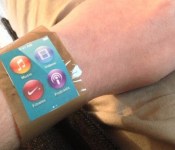
iOS Interface Depicted on a Hypothetical 2.5″ iWatch Screen
Since news of Apple’s iWatch development first surfaced in 2012, supply chain rumors and analyst speculation have all pegged its display size at a modest 1.3 to 1.7 inches. Earlier today, Reuters released a report suggesting the display will be much larger than anyone expected, coming in at 2.5-inches diagonally.
MacRumors forum member Lewis Dorigo has previously speculated that the iWatch would have a 2.45-inch display with a 480×640 display, and has even created a crude mockup depicting what an iWatch of that size would look like on a wrist.

On his blog, Dorigo goes deeper into his predictions for the iWatch, explaining that a 2.45-inch iWatch with a Retina display of 480×640 would have same pixel density (326 ppi) as the iPhone 5s, the iPhone 5c, and the Retina iPad mini. He’s speculates on what a 2.45-inch iWatch’s UI might look like, with the creation of several mockups with an iOS 7-style design.
While several rumors have suggested the iWatch will indeed run iOS, it is still possible that Apple could go in an entirely different direction with the device, creating a standalone interface or an iOS-based interface that deviates from the iPhone’s interface.
Dorigo suggests that 80 pixels of the screen might be reserved for a CarPlay-style digital home button, leaving a 240 pixel space for apps, but that’s pure speculation — Apple could also choose to place a physical home button on the side of the device.
Along with a home button built into the screen, Dorigo imagines a largely touch-based interface, where Siri is activated via a press on the screen and individual apps have large, easy-to-press buttons. He also speculates on what the interface might look like when connected to an iPhone, as the iWatch is rumored to be heavily integrated with existing iOS devices.

The status bar shows the current connectivity of the device that the watch is connected to. If it’s connected to an iPhone, it shows the iPhone’s cellular and wifi signal strengths. If it’s not connected to a device, it just says “iWatch”, much like iPods (and iPads without cellular) do.
While Dorigo’s speculation gives a look at what a larger iWatch might look like, the device’s screen resolution and prospective user interface remain a mystery at this time.
According to rumors, the iWatch is expected to include a range of health sensors, such as a pulse monitor, along with wireless charging capabilities. The iWatch is expected to make its debut in the fall, possibly at an October event.
More of Dorigo’s predictions on Apple’s iWatch can be found on his blog.

Apple’s Spaceship Campus Shown Off in Rendered Fly-Through
Construction at Apple’s “Spaceship” campus in Cupertino is progressing at a rapid pace, and while the circular structure is still far from finished, the old buildings on the 176-acre site have been fully demolished, roadwork is underway, and the outer walls of the campus are taking shape, outlining where foundation will be poured.
Apple isn’t slated to finish its the first construction phase of its second campus until 2016, but a video rendering from Technology Integration Services, a company that focuses on 3D design, shows what Apple Campus 2 might look like when it is completed.
Created from public plans of the structure’s design, the video shows the multi-story circular building surrounded by greenery, as well as all of the additional buildings and parking structures that Apple plans to add to the area. There are hiking paths snaking around the property, in addition to a performance stage in the middle and a massive fountain area where employees can gather.
 Current progress on Apple Campus 2 as of June 12, image courtesy of Ron Cervi
The first phase of construction on the property includes a 2.8 million square foot ring-shaped main building, an underground parking facility capable of holding 2,400 cars, a 100,000 square foot fitness center, and a 120,000 square foot auditorium for events. Apple has plans to add more than 4,500 trees to the area, creating a lush working environment for employees.
Phase 2 of construction, to take place after 2016, will add research and development buildings and additional parking.
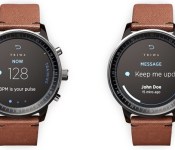
2.5-Inch iWatch with Wireless Charging and Pulse Sensor to Enter Mass Production in July
Apple’s upcoming iWatch may measure in at 2.5 inches diagonally with a slightly rectangular face, reports Reuters, citing sources familiar with the product. The watch face is also expected to protrude slightly from the band to create an arch shape, and it will reportedly include a touch interface and wireless charging, in line with previous rumors.
Reuters also suggests the iWatch has a sensor that monitors a user’s pulse, which is just one of many sensors that may be included in the device. Rumors have indicated that the iWatch will be able to measure several different health metrics in addition to heart rate, like steps taken, sleep quality, and more.

Taiwan’s Quanta Computer is currently producing a trial run of the smartwatch and mass production is expected to begin in July, in preparation for a possible fall launch. LG Display is said to be the exclusive supplier of the screen.
While the watch is widely expected, the start date of its mass production and the extent of Quanta’s involvement were not known until now. Mass production will start in July and the commercial launch will come as early as October, according to the source and another person familiar with the matter.
Along with providing an array of health-related information via sensors, Apple’s iWatch is also expected to interface closely with the iPhone and iOS 8, providing users with at-a-glance notifications and information.
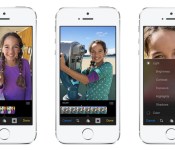
iOS 8 to Expand Manual Controls for iPhone Photographers
Apple is working to open up camera controls in iOS 8, giving photographers granular control over settings such as ISO, shutter speed, and more, reports AnandTech. While only a few manual controls will make it into the stock camera app, almost full manual control will be made available for third-party app developers to implement as of iOS 8.

According to AnandTech, iOS 8′s AVCaptureDevice APIs will let developers tap into advanced controls such as ISO, shutter speed, focus, white balance, exposure bias, EV bracketing, and shutter speed/ISO bracketing. The ability to manipulate these controls will provide photographers with new ways to creatively compose a shot or a video clip. Developers also can use these controls to offer a variety of camera presets and other behind-the-scenes algorithms that manipulate images during the capture process.
While only the exposure bias controls will make it into the stock camera application, all of these new controls exposed through the AVCaptureDevice APIs will enable camera applications similar to Nokia’s Pro Camera or HTC’s Sense 6 camera application. It’s been said that Apple is one of the few OEMs that take camera seriously, and these new controls can only cement that position.
Apple has steadily boosted camera performance in its iPhone models by improving both the hardware and software that powers this feature. As a result, the iPhone is known for its exceptional camera performance and has been among the most popular cameras on Yahoo’s image hosting service Flickr.
The next-generation iPhone 6 is expected to continue this trend with iOS 8 camera improvements such as time-lapse mode as well as new iPhone camera hardware that may include optical or electronic image stabilization, a wider aperture, as well as an ARTON filter to minimize CMOS color shifts.

Retina iPad Mini as Low as $300 With Best Buy EDU Discounts [iOS Blog]
Best Buy is currently offering a $50 discount Apple’s Retina iPad mini as part of a Grad sale, dropping the price of the entry-level tablet to $349. Combined with a student deal that offers an additional $50 off, it’s possible to get a Retina iPad mini for as little as $300.

The combined $100 discount is good on any Retina iPad mini, cellular and WiFi and with all storage capacities. To take advantage of the full deal, a valid .EDU email address is required, but prospective buyers without an .EDU email address can still get a $50 discount on any Retina iPad mini.
The $50 grad sale will last from June 19 to June 21, while the $50 student discount will last until July 12.
Best Buy’s deep student discounts on 2014 MacBook Air models are still ongoing as well, dropping the price of the entry-level MacBook Air down to $649 with an .EDU email address. Students can also get $150 off any Mac by taking advantage of Best Buy’s student deals.
MacRumors is an affiliate partner of Best Buy.

Hidden ‘City Tours’ Flyover Feature for iOS 8 Maps Discovered in Beta 2
One of the many new features coming in iOS 8 that Apple did not directly address during its Worldwide Developers Conference is “Flyover city tours”. The feature is not currently available by default to those running iOS 8 betas, but developer Pierre Blazquez has discovered how to unlock Flyover city tours and partnered with Mac4Ever [Google Translate] to publish a video showing the feature in action for Paris.
At the moment, only the cities of Rome, Stockholm, Barcelona, New York, Paris, Glasgow, Cape Town, Perth, Bordeaux and the San Francisco Bay are available. One imagines that the visit was carefully prepared manually, and the list is therefore extend gradually over time.
Apple’s Maps app received significant criticism following the shift from a Google-powered app to an in-house version for iOS 6. But over the past two years Apple has continued to improve existing features and build out new ones to better compete with Google Maps. The Flyover feature showing 3D perspectives of buildings and physical features has been a particular emphasis for Apple, and the company has been working steadily to extend it to new areas of the world and improve the quality of its renderings.
Still, Apple’s Maps team is said to be struggling with internal politics that have resulted in the departure of several key employees. While improvements such as transit information for Maps have been expected for iOS 8, the company mostly glossed over mapping issues with the exception of some new indoor mapping initiatives at WWDC. As a result, it is unclear just how many of the Maps improvements will make their appearance in time for the public launch and how many might be folded into later updates.
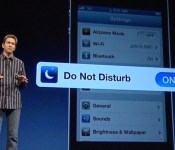
Apple Looks at Using Wearable Sensors to Auto-Adjust iPhone Notifications and Alarms
The U.S. Patent and Trademark Office today published several patent applications describing an iPhone-based system to collect and analyze data from wearable and other types of accessory sensors, reports AppleInsider. Under the system, the iPhone could then track the owner’s activity and respond with appropriate notifications and changes in the device settings.
One patent application, “Method and apparatus for automatically setting alarms and notifications,” describes a method of associating motion data with a set of alarms. In this described invention, the iPhone could detect whether a user is sleeping or awake and adjust the settings for features such as “Do Not Disturb,” for example. These motion data points may be collected from a device that is worn by the user.

In a second patent application, “Method and apparatus for automatically repeating alarms and notifications in response to device motion”, Apple proposes methods to control the timing of notifications that are delivered to an iPhone owner. In this invention, the iPhone can use sensor data to determine when a user is napping and can turn off all notifications until the owner is awake and moving again.
A final patent application, “Method and Apparatus For Personal Characterization Data Collection Using Sensors,” describes how an iPhone-driven system could detect a user’s activity level from “motion sensors, location sensors, ambient light sensors, and the like.” This sensor-based data may be used to create a “personal scorecard” that compares your activity level to others in a group.
A processor-based personal electronic device (such as a smartphone) is programmed to automatically collect data sent by various sensors from which the user’s activity may be inferred. One or more of the sensors may be worn by the user and remote from the device. A wireless communication link may be used by the device to obtain remote sensor data. In certain embodiments, data from on-board sensors in the device–such as motion sensors, location sensors, ambient light sensors, and the like–may also be used to deduce the user’s current activity. In yet other embodiments, user data (such as calendar entries) may also be used to characterize the user’s activty.
As with many patent applications, these inventions may or may not be incorporated into consumer-level products. In this case though, these methods align with Apple’s rumored iWatch device, which is expected to ship with a variety of sensors to measure basic health and fitness parameters. Apple also recently announced a new Health app and HealthKit API that allows for the aggregation of health and fitness data from apps and wearable devices into a central repository that can provide an overview of a user’s relative health.

