


iPhone 6 Cases and Images Circulating on Amazon Based on Rumor, Don’t Offer Insider Information
Prior to the launch of a new iOS device, accessory manufacturers often create cases months in advance in an attempt to gain publicity and score pre-orders from users eager to protect their new devices. These cases are often created based on leaked schematics and the manufacturers themselves rarely have any information on the devices they’re creating cases for beyond what’s seen on rumor sites.
While third-party cases for the iPhone 6 have been available for purchase for months, several different cases from popular accessory manufacturer Spigen have been generating a growing amount of interest on Amazon.com.
Spigen has listed multiple cases, both for the 4.7-inch iPhone and the larger 5.5-inch iPhone 6, which it has taken to calling the “iPhone Air.” MacRumors has been contacted several times in regard to these cases, which many readers believe offer legitimate details on the iPhone 6 because they’re coming from a “reputable” source.
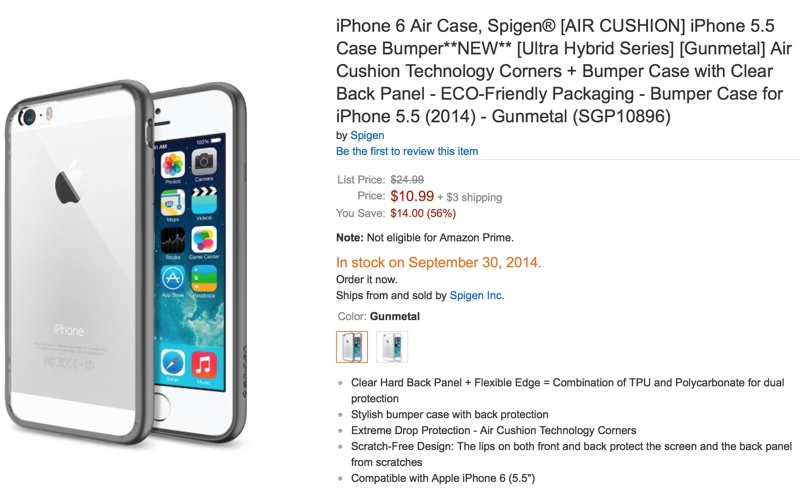
Spigen uses photoshopped iPhone 5s images with curved edges to fit into its iPhone 6 cases, which are undoubtedly based on leaked schematics that have been circulating around the Internet for months. The images do not offer any insight into the next-generation iPhone’s appearance and Spigen’s “iPhone Air” moniker for the 5.5-inch iPhone is a mere guess, based on a term bandied about by Chinese media reports. Spigen’s September 30 release date also delivers no inside information about the iPhone 6, as it is a safe date in line with rumors pointing towards an early September introduction.
Along with the cases posted on Amazon by Spigen, Amazon Japan also made headlines last week when an iPhone 6 listing appeared with specific details on the iPhone 6, including a 4.7-inch display, dimensions of 13 x 6.5 x 0.7cm, and a weight of 113 grams.

Many sites reported on the listing as a leak directly from Amazon.com, but in fact, it was listed by a third-party seller who used images taken from MacRumors and coupled them with details derived solely from rumors. The listing was later removed by Amazon.
As we draw closer to the launch of the iPhone 6, similar “leaks” will undoubtedly pop up from seemingly reliable sources taking advantage of the iPhone 6 frenzy, but it is important to note that accessory makers and third-party vendors are unlikely to have insider information sourced directly from Apple.

Apple and IBM Team Up For Major Enterprise Mobility Partnership
Apple and IBM today announced plans for an exclusive partnership that will see them teaming up to “transform enterprise mobility” through a series of new business apps and services for iOS devices that will undoubtedly skyrocket Apple’s enterprise sales.
IBM will begin selling iOS devices to its corporate customers and will also create more than 100 industry-specific native apps that are built from the ground up for the iPhone and the iPad. IBM will also provide cloud services optimized for iOS with capabilities like device management, security, analytics, and mobile integration.
As part of the deal, Apple also has plans to offer a new AppleCare service that will be tailored to meet specific enterprise needs.
Apple CEO Tim Cook appeared on CNBC to discuss the news, where he said the partnership is about “transforming enterprise” and delivering on “the promise of mobile in a big way.”
The partnership will join IBM’s data and analytics capabilities with Apple’s consumer experience and its hardware and software integration, allowing the duo to create apps able to “transform specific aspects of how businesses and employees work using iPhone and iPad.”

iPhone 6 Battery Supply Woes Alleviated With Addition of New Supplier [iOS Blog]
Following reports earlier this year that suppliers’ struggles to produce an adequate volume of wafer-thin batteries for the rumored 5.5-inch iPhone 6 may contribute to an early 2015 launch for the device rather than a late 2014 launch alongside the smaller 4.7-inch model, a new report from Chinese media sources (via GforGames) suggests the problem may have been solved as Apple has found a new supplier capable of meeting demand.
 iPhone 5s with physical mockups of 4.7-inch and 5.5-inch iPhone 6
The report claims that Dynapack has been pushed to sidelines of Apple’s supply chain as Simplo and Desai become the main suppliers of batteries for the rumored iPhone 6. While Desai reportedly is struggling to work within Apple’s design constraints, Simplo supposedly has designed a workaround that allows it to produce mass quantities of the thin, but efficient battery module. If this report is accurate, then battery supply may not be an issue for Apple going forward.
Apple is expected to unveil the iPhone 6 at a media event around its usual September timeframe. The next-generation iPhone is rumored to feature a larger display, thinner design, improved camera optics, enhanced Touch ID sensor and a new, faster A8 processor.

Google Search Results Now Notifying iPhone Users When Websites Use Flash [iOS Blog]
Google recently implemented a feature that warns iPhone users when search results include websites that use Adobe Flash, as Flash is not supported by the iPhone.
When searching for a site, pages that primarily use Flash are clearly marked by Google with a warning that the site may not work on a particular device.

A common annoyance for web users is when websites require browser technologies that are not supported by their device. When users access such pages, they may see nothing but a blank space or miss out a large portion of the page’s contents.
Starting today, we will indicate to searchers when our algorithms detect pages that may not work on their devices.
Google goes on to recommend that websites use the universally supported HTML5 and provides both Web Fundamentals and a Web Starter Kit for website developers.
Apple received a good bit of criticism when the iPhone was first released for not supporting Flash as it was used often back then, but interest in Flash has since been dying out in favor of mobile-friendly solutions.
USPTO Preliminarily Denies Apple’s ‘Touch ID’ Trademark Application [iOS Blog]
The U.S. Patent and Trademark Office has denied Apple’s trademark application for the “Touch ID” name used for its fingerprint recognition technology, citing a similar trademark owned by Kronos Technology. The USPTO rejection letter was sent to Apple in May 2014, according to Patently Apple, which recently uncovered the communication.

In its letter to Apple, the USPTO said Apple’s trademark for Touch ID was too similar to U.S. Registration number 2735480, which was issued to Kronos in 2003 and protects the term “Kronos Touch ID.” Apple has until November 2014 to change the nomenclature of its trademark application, which would require the company to rename its fingerprint scanning technology. Alternatively, Apple can seek to acquire or license the trademark from Kronos.
Apple faced a similar situation with its iPhone name, which was trademarked by Cisco. Apple and Cisco negotiated a deal that allowed Apple to license the trademark following an infringement lawsuit filed by Cisco shortly after the iPhone debuted. In recent years, Apple also settled an iPhone trademark infringement case with Brazilian company IGB and an iPad name dispute Chinese company Proview Technology.
Apple Said to Be Planning Three iWatch Models from 1.6 to 1.8 Inches, Sapphire on High End
 According to a new report [Google Translate] from Taiwan’s Economic Daily News (via G for Games), Apple is planning to launch three versions of the iWatch in the third quarter of this year. The lineup is said to include a model with a 1.6-inch display and two models with 1.8-inch displays, with the high-end version of the larger size coming with a sapphire display cover for durability.
The display range of 1.6-1.8 inches has been the focus of most rumors dating back many months, but last month Reuters claimed the device’s display will be as large as 2.5 inches.
The launch timeframe for the iWatch has also been the subject of much discussion, with the reliable Re/code claiming last month that Apple has been aiming for an October introduction of its “first wearable device”, presumed to be the iWatch. That report did, however, note that Apple’s plans could change over time.
A fresh report from relatively reliable analyst Ming-Chi Kuo has claimed that the complexity of the iWatch makes it likely that mass production on the device will not begin until November of this year. The two claims are not necessarily in conflict, as with the iWatch being a new product category Apple could make an announcement in October and not launch the device until several months later without impacting sales of its current products. Apple used a similar tactic with the iPhone and iPad, waiting several months between announcement and launch.
Today’s report is set in the context of Apple adopting new touch technologies from TPK, with sources also claiming Apple’s rumored “iPad Pro” with a display of 12.9 inches will finally be made official later this year. The subject of a number of rumors over the past year, Apple’s 12.9-inch iPad was most recently reported to be looking at a 2015 launch or perhaps on hold entirely.
(Image: 2.5-inch iWatch concept by SET Solutions)
iStick Flash Drive with USB and Lightning Allows File Transfers Between Mac and iOS Devices [iOS Blog]
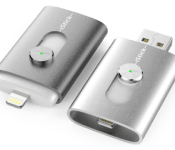
Slated to arrive sometime next month, Kickstarter-funded iStick will allow iPhone and iPad owners to easily transfer files between their computers and iOS devices that are equipped with a Lightning connector.

The thumb drive, which raised $1.1 million on Kickstarter, features a slider that allows users to switch between a standard USB connector and a Lightning connector that plugs into an iPhone 5/5s or a recent iPad model. Inside the plastic housing is a flash memory module offering 8GB, 16GB, 32GB, 64GB or 128GB of storage space.
While the iStick is automatically recognized by computers as a USB storage device, the iOS file system requires users to install an app to manage files. On the iOS side, you can use the USB stick to transfer files or play them directly from the connected thumb drive.
Recode‘s Walt Mossberg recently tested a pre-production model and found that device transfer files as advertised, but it is not as easy to use as a basic USB thumb drive.
In my tests, iStick file transfers worked between a variety of devices, including an iPhone 5s, an iPad mini, an iPad Air, a Mac and a Windows laptop. I was able to move and use files ranging from pictures, songs and videos to Microsoft Office files and PDFs — in both directions. […]
The cumbersome part comes in when you want to use a file transferred to the iStick local storage area with another app on your iOS device, and it’s due to the way iOS manages files, not an issue with the iStick itself. Unlike on a computer, iOS devices don’t have a visible, system-wide file system. Instead, files that can be used by an app can only be fully used, beyond just viewing them, via that app.
The iStick is made by Sanho, which also produces the popular Hyper charging accessories. When it is available for retail sale, pricing for the iStick will start at $129 for the 8GB model and climb to $399 for 128GB, although Kickstarter backers who got in early were able to receive significant discounts on that pricing. The relatively high pricing is said to be related to Apple’s Lightning licensing fees and its strict quality requirements.
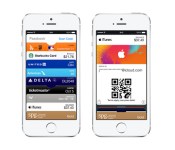
iTunes Pass links your credit to iOS’ Passbook app (but only in Japan)

Scratch-cards are fun. Inputting lengthy serial codes, less so. We’re not sure why Apple’s testing this out in Japan first, but iTunes Pass marks another effort in the direction towards smoothing mobile payments — something that country knows plenty about. Spotted on Apple’s Japanese iTunes page by 9to5Mac, the company describes how users can now deposit money directly to their iTunes account inside bricks-and-mortar stores. Apple sales assistants will scan the Passbook card (seen above) and the payment will go through then and there, ready to be used instantly. The Passbook app can already be installed from the iOS iTunes Store app in Japan and as 9to5Mac notes, with only eight stores, the country could be the easiest way to gauge the service before deciding whether to take it global. Oh yeah, and it’s completely different to Apple’s 2009 iTunes Pass.

Filed under: Cellphones, Tablets, Mobile, Apple
Via: 9to5Mac
Source: Apple Japan

Apple Searching for Retail Employees to Test Upcoming Photos App for OS X
Apple is actively looking for retail employees that are “passionate photography enthusiasts” to test the upcoming Photos app for OS X, reports 9to5Mac.

We are seeking a technical and passionate photography enthusiast to join our Quality Assurance team working on Photos for OS X. You will be part of a fast moving team of specialists tasked with delivering the next generation of photography tools for Apple.
Photos for OS X was briefly introduced at WWDC 2014, as Apple will launch the software early next year. It was also reported last month that the new Photos app will be replacing Apple’s existing iPhoto and Aperture programs. Apple revealed that Photos would feature a number of professional-grade features, including image search, editing, effects, and support for third-party extensions.
Apple has invited retail employees to try pre-release software for the past few years. Last year, the company offered beta access to OS X Mavericks and iWork for iCloud last year, which followed access to OS X Mountain Lion in 2012.
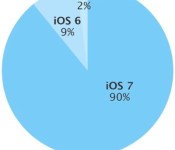
iOS 7 Adoption Hits 90% Ten Months After Release [iOS Blog]
Apple’s iOS 7 adoption rate continues to grow, even as the release of iOS 8 approaches. As of yesterday, 90 percent of devices connected to the App Store are running iOS 7, according to new numbers posted on Apple’s App Store developer support page.
The new milestone, which comes 10 months after the operating system’s original release, is a three percent increase from installation numbers of 87 percent back in April.

As adoption of iOS 7 has climbed, iOS 6 installation rates have dropped slightly, going from 11 percent in April to 9 percent on July 13. Earlier operating systems continue to run on two percent of devices.
Apple’s mobile operating systems have traditionally seen quick adoption rates due to the company’s easy over-the-air updates, and just three months after being released, iOS 7 was on 74 percent of devices. iOS 8, coming this fall, will undoubtedly see a similarly rapid adoption rate, overtaking iOS 7 in a matter of weeks.
iOS 8 includes a number of new features that will be highly appealing to consumers, including interactive notifications, third-party keyboard support, and several new Continuity features that allow an unprecedented level of integration between iOS devices and Macs.

