


Apple Working to Remedy Labor Violations Found at Quanta Factories
The Fair Labor Association (FLA) today published a new report examining two factories operated by Apple-supplier Quanta Computer, finding several code violations related to working hours, recruitment policies, compensation, health and safety, and more in August of 2013 [PDF] (via TechCrunch).
Factories examined included a Quanta facility in Shanghai and one in Changshu. Quanta is a long-time Apple partner that manufactures Apple’s MacBook Air and much of the rest of the company’s Mac lineup.
Violations were found in both locations, with some of the more egregious issues including verbal abuse by supervisors, a hiring fee charged to workers by a broker or labor dispatch agent and long working hours. According to the report, 62 percent of workers in Changshu received no rest day for much of Q4 2012, working as many as 16 days in a row.
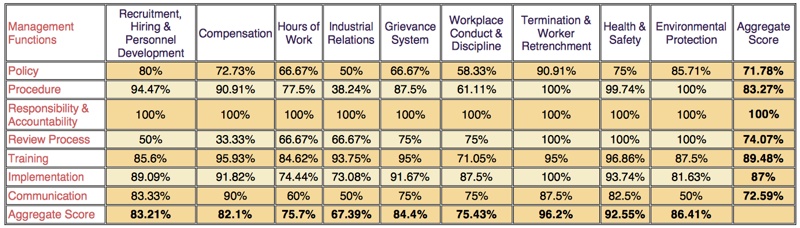 Overall score summary of management functions at Changshu
Many workers were also underpaid for sick leave and may have been uncompensated for up to an hour of work each day, based on clock in and clock out times. Some workers were forced into joining the All China Federation of Trade Unions, and there were several safety violations.
Both of the factories fell short of the local requirements for indoor air quality, and neither had easy access to a shower/eyewash station in case of emergency. There was no active worker participation in the Employee Health and Safety committees, and flammable and toxic substances were stored improperly at Shanghai while chemicals at Changshu were not properly monitored.
The Fair Labor Association provided a number of recommendations to improve conditions at the factory, and according to the report, Apple is using the recommendations to work with Quanta to fix each code violation. Apple released a statement on the FLA’s Quanta inspection, stating that it has worked closely with Quanta to bring improvements to working conditions.
Our suppliers must live up to the toughest standards in the industry if they want to keep doing business with Apple, which is the first and only technology company to be admitted to the Fair Labor Association. We are committed to providing safe and fair working conditions for everyone in our supply chain.
Last year we conducted 451 comprehensive, in-person audits deep into our supply chain so we could uncover problems and work with our suppliers to fix them. We track and report the weekly working hours for more than 1 million workers, and our 18-month Apple Supplier EHS Academy training program is raising the bar for environment, health and safety management in the industry.
The Quanta facilities inspected by the FLA last year were included in our 2014 Supplier Responsibility report, which we released in February. Our own experts have audited these sites 16 times, most recently last month.
In the year since the FLA’s visit, we have worked closely with Quanta to drive meaningful improvements in areas identified by both the FLA and Apple. Apple conducted four follow-up inspections on top of the annual audits of both facilities, to ensure the needed corrections are in place.
This year, through the end of July, Quanta has averaged 86 percent compliance with our 60-hour workweek. Excessive overtime is not in anyone’s best interest, and we will continue to work closely with Quanta and our other suppliers to prevent it.
Apple initially signed up for factory assessments by the Fair Labor Association back in 2012, following a rash of worker suicides at Foxconn, the factory responsible for assembling many of Apple’s mobile devices. The FLA has since helped to improve working conditions in several of Apple’s factories, with Apple aiming to bring all workplace compliance standards in line with the FLA’s guidelines.
Apple also maintains a Supplier Responsibility team that audits supply chain facilities to ensure compliance with Apple’s strict code of conduct preventing underage labor and providing safe, comfortable living conditions for workers. An additional Supplier Responsiblity academic board also evaluates Apple’s labor policies and practices and researches labor standards within the supply chain to create ethical working conditions wherever Apple products are produced.
.CPlase_panel display:none;
Back to School Guide 2014: Laptops

No gadget — besides a smartphone, maybe — is as crucial to a college student as the laptop. Regardless of your major, you’ll want a solid machine with a well-crafted keyboard to see you through term papers, class presentations and more. From a sub-$400 Chromebook to sleek models from Lenovo and Samsung, our roundup has something for everyone. Click through the gallery below to see all 11 picks, and don’t forget to check out the rest of our guide for other gadget recommendations.
Filed under: Laptops, Apple, Samsung, Dell, Acer, Lenovo
.CPlase_panel display:none;
Earphones Filled With Health and Fitness Sensors Ready to Flood the Wearables Market
As Apple moves closer to launching its rumored health and fitness oriented iWatch, there has been significant focus on the types of sensors Apple might be looking to deploy. Among the intriguing options have been sensor-equipped earphones, which Apple has filed patent applications on in the past and which saw renewed attention following the posting of an unfounded rumor about EarPods with embedded biometric sensors earlier this year.
Earphones with health and fitness sensors do continue to be a topic of interest, and other manufacturers are preparing to bring their own products to the wearables market later this year. One biometric headphone attracting attention is a new offering from Intel and SMS Audio, which has musician 50 Cent as a co-founder (via Re/Code).
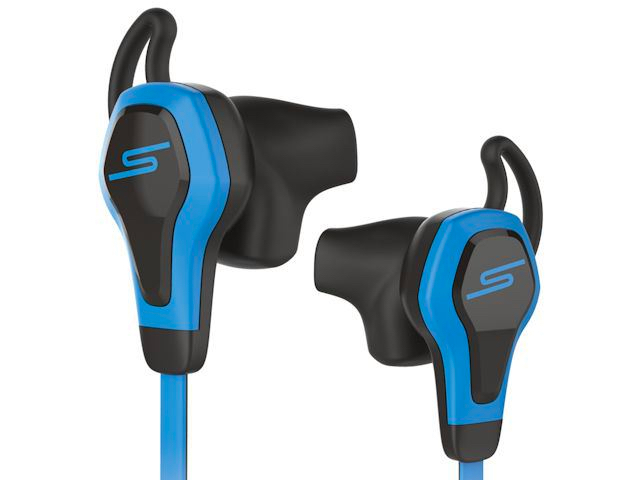
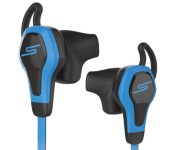
The SMS Audio BioSport In-Ear Headphones include heart rate monitoring powered by Intel technology and feature SMS Audio’s high-quality sound, comfort and fashion. The ear buds will use a combination of sensors, including an optical light sensor, to measure both resting and active heart rates. Powered by the smartphone’s audio jack, the headphones will share their data with a variety of third-party apps, with RunKeeper integration available at launch.
Intel and SMS Audio may be among the biggest names entering the sensor headphone market, but they are not alone. Earlier this year, LG released its own Bluetooth-connected, heart-rate-measuring earphones with mixed reviews. Hitting the market later this year are wireless Smart Earphones from FreeWavz, which monitors heart rate and other key fitness metrics. The Kickstarter-backed product reached its funding goal earlier this month and has a target ship date of October 2014.
Beyond the ultimately false rumor of EarPods with biometric sensors and Apple’s patent applications dating back a number of years, the company also recently hired former MIT researcher Eric Winokur as a Sensing Hardware engineer. Winokur is known for his work on wearable medical devices, including ear-worn sensors for cardiovascular monitoring. It is not known, however, whether Winokur is continuing his work on ear-worn sensors at Apple or if he is contributing more broadly to the biometrics team working on the iWatch.
.CPlase_panel display:none;
Apple Now Using China Telecom as Data Center Provider in China
 Apple has officially added China Telecom as a data center provider in China, reports The Wall Street Journal. The move comes after 15 months of “stringent tests and evaluation” by the Fuzhou city government, as Apple states that all data stored on the servers is encrypted. According to Reuters, Apple says the new data center will help improve the speed and reliability of iCloud and the iTunes Store in the region.
“Apple takes user security and privacy very seriously. We have added China Telecom to our list of data center providers to increase bandwidth and improve performance for our customers in mainland China,” it said.
The move could also help ease tensions between Apple and China as of late, as the country recently deemed iOS’ location tracking services a “national security concern.” Apple responded to those claims reiterating its commitment to privacy and stating that its Location Services exist to aide navigation features.
China has become an important market for Apple, as the company has looked to improve its presence in the country as of late. Late last year, the company started selling the iPhone on China Mobile, the country’s biggest carrier, and opened more retail stores throughout the region. CEO Tim Cook has also made a number of visits to China, meeting with Bejing’s mayor and the Chinese Vice Premier to discuss opportunities.
.CPlase_panel display:none;

Photos Claiming to Be of New Lightning Cable with Reversible USB Connector Surface
Apple may be shipping a new Lightning cable that features a reversible USB connector with forthcoming iOS devices, reports Chinese website Dianxinshouji.com (Google Translate, via Nowhereelse.fr).

The source shares a few photos of the new cables said to be from Apple supplier Foxconn, with the images showing a USB connector that is attached to the center of its metal casing. By comparison, the USB connector on Apple’s current Lightning cable attach against the bottom of the metal housing’s inner surface.

While it is unable to tell for sure whether these cables are legitimate or not, it is possible that Apple could ship new Lightning cables to match the forthcoming USB 3.1 cables that will soon come with newer smartphones. As revealed last week by the USB 3.0 Promoter Group, the USB 3.1 Type-C cable comes with reversible ends and will start shipping next year. An Apple patent for a reversible USB connector also surfaced last month, perhaps further indicating that the company will look to equip its newer devices with new Lightning cables at some point.
Furthermore, a report this past May from Mac Otakara claimed that Apple is preparing an upgraded Lightning cable to accommodate high-definition playback on Made for iPhone audio accessories, which may include a next-generation version of its In-Ear Headphones. Apple also introduced Lightning Cable MFi specifications for headphones in June, which could also be integrated with newer Lightning cables.
Apple is expected to launch the iPhone 6, next-generation Retina iPad mini and iPad Air 2 by the end of this year, as a new Lightning cable could technically be packaged with those devices.
.CPlase_panel display:none;

Apple Hiring for Future Retail Store in United Arab Emirates
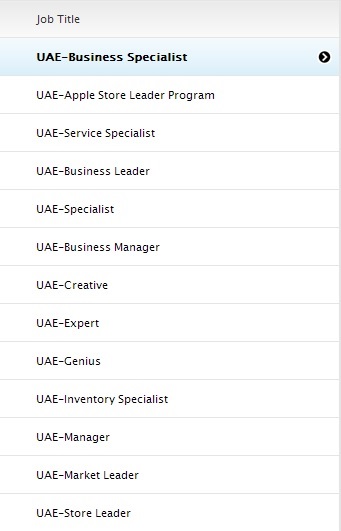
Apple today posted retail job listings for a future store to be located in the United Arab Emirates, indicating that the company may be soon opening its first store in the Middle East. The postings were initially spotted by ifoAppleStore and show typical openings for Specialists, Creatives, and Experts, as well as managerial positions for Store Leader and Market Leader. The report speculates that the store could already been under construction for an opening in February 2015 based on hiring schedules.
Earlier this year, Apple CEO Tim Cook visited the UAE, posing for photos at various Apple resellers and meeting with UAE Prime Minister Shaikh Mohammed bin Rashid Al Maktoum. While the reason for his visit was unknown, it is possible that Cook may have been meeting with officials about the possibility of an Apple Retail Store in the region.
Additionally, MacRumors received a tip last year that Apple was planning to open a flagship store at The Galleria in Sowwah Square in Abu Dhabi, a luxury mall that opened late last year. The source claimed the store would not open for several years, but noted that it could be Apple’s largest retail store to date.
.CPlase_panel display:none;
Apple Sued by Shareholders Over Anti-Poaching Agreements with Other Companies
 Apple shareholder R. Andre Klein is suing Apple on behalf of all of its shareholders over the company’s anti-poaching agreements, reports Patently Apple.
The lawsuit claims that Apple’s no-hire agreements with other companies including Google, Adobe, and Intel caused the company to grossly mismanage its assets, mislead its investors, breach the duty of “honest services”, and hurt its overall value. The suit seeks damages for all shareholders through a jury trial, and names a number of Apple executives as individual defendants including current CEO Tim Cook and even former CEO Steve Jobs.
The suit follows a rejection of a $324 million settlement proposal between the four tech companies and tech workers by a California court. In the filing’s court documents, Judge Lucy Koh stated that the total settlement “falls below the range of reasonableness” when compared a $20 million settlement given last year by Pixar, Lucasfilm, and Intuit. Comparatively speaking, Apple and others should pay a minimum of $380 million.
Employees of the various tech companies originally brought forth a lawsuit against the companies no-hire agreements in 2011, with a trial revealing anti-poaching tactics dating back to 2005. The United States Department of Justice intervened in the case in 2010, forcing the companies to stop engaging in anti-poaching agreements. However, the class-action civil lawsuit brought against the aforementioned companies by over 64,000 employees will remain open until a settlement has been reached.
.CPlase_panel display:none;
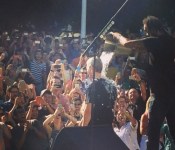
Apple CEO Tim Cook, Phil Schiller Take On ‘Ice Bucket Challenge’ to Promote Awareness for ALS
Apple CEO Tim Cook today took the “Ice Bucket Challenge,” which is designed to raise awareness for amyotrophic lateral sclerosis or ALS, also commonly known as Lou Gehrig’s Disease.
The challenge asks people to pour buckets of ice water over their heads (documented on film and shared on social media sites) and then tag three friends to do the same. Friends unwilling to complete the challenge are asked to donate money towards ALS, but as noted by The Verge, many participants have chosen to participate and donate money to the cause.
According to Instagram and Twitter photos, Tim Cook had a bucket of ice water dumped on him at Apple’s Cupertino campus this afternoon during the company’s weekly beer bash, after being challenged by Apple marketing chief Phil Schiller yesterday.
 Image courtesy of Instagram user world_of_possibilities
Phil Schiller, who dumped a bucket of ice water over his head at a beach in Half Moon Bay, also challenged actor Chris O’Donnell. Cook has gone on to challenge Apple board member Bob Iger, musician Michael Franti, and Beats co-founder Dr. Dre.
 Phil Schiller takes the challenge
Many notable celebrities and tech industry leaders have completed the ice bucket challenge in recent weeks, including Facebook founder Mark Zuckerberg and Microsoft CEO Satya Nadella. As of August 12, the challenge has raised more than $4 million in donations.
.CPlase_panel display:none;

Beats Music Creates Documentary On Spike Lee’s ‘Do the Right Thing’ [iOS Blog]
Beats Music, now owned by Apple, has created a documentary to celebrate the 25th anniversary of Do The Right Thing, a Brooklyn-based film created by Spike Lee. The 22-minute short features Spike Lee and Danny Aiello revisiting some of the original spots where the movie was shot, contrasted by shots from the film itself.
It also delves into some behind the scenes information on the building of the set and the creation of the movie, revisiting many of the actors who starred in the film and getting details on the making of the movie from the original crew.
Towards the end, the documentary features a huge block party thrown by Beats Music in the Brooklyn neighborhood where Do The Right Thing was filmed, with celebrity attendees like Erykah Badu, Dave Chapelle, Wesley Snipes, and Mos Def. The family-friendly event featured a performance of “Fight the Power” by Public Enemy along with activities for kids and adults alike.
As noted by Variety, Beats Music’s new documentary suggests the company remains dedicated to expanding the Beats Music brand even after its purchase by Apple. According to rumors, one of the many potential reasons Apple purchased Beats was to up its “coolness” factor among younger consumers, a position Beats has earned with both edgy advertising campaigns like the Do the Right Thing documentary and celebrity endorsements.
.CPlase_panel display:none;

Most new Android phones sell for less than $200

Want to know a big reason why Android smartphones are virtually ubiquitous these days? Because many of them are very affordable, that’s why. IDC’s latest market share estimates show that 58.6 percent of Android phones shipped in the second quarter cost less than $200, many of them from surging Chinese manufacturers like Huawei, Lenovo and Xiaomi. Simply speaking, many in China and other developing countries can’t (or won’t) justify buying the expensive phones that thrive in regions like Europe and North America. It’s no wonder that Samsung is losing the battle at the moment, then — while the company has budget handsets, it’s heavily invested in high-end hardware like the Galaxy S line.
The influx of low-cost devices also helps to explain year-over-year dips in market share for both iOS (11.7 percent) and Windows Phone (2.5 percent), which pale next to Android’s 84.7 percent slice of the pie. Apple doesn’t participate in the sub-$200 realm to start with, so it won’t compete in terms of sheer units; it’s doing fine profit-wise. Windows Phone, meanwhile, has few bona fide hits in this space outside of the aging Lumia 520. There are new iPhones and more budget-friendly Windows Phone makers right around the corner, though, so it won’t be shocking if there’s a different story in the months ahead.

Filed under: Cellphones, Mobile, Apple, Microsoft, Google, Blackberry
Source: IDC
.CPlase_panel display:none;

