


iPhone 6 and iPhone 6 Plus
Apple launched the iPhone 6 and iPhone 6 Plus yesterday. Here’s what’s new with iPhone 6 and iPhone 6 Plus, some hands on impressions, as well as how to buy them when they go on sale on September 12th.
.CPlase_panel display:none;
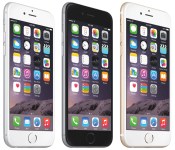
With larger iPhones, Apple accepts that smartphones have evolved

So it finally happened — after seemingly ages of rumors and speculation, Apple has unveiled larger iPhones (the 6 and 6 Plus) that are really, truly bigger than the 3.5-inch original. It’s no doubt a welcome move if you’re a fan who has been craving a big display, and it might even reel in people who have held off on an iPhone until now. However, this isn’t just an instance of a company tweaking its product line to accommodate changing tastes. That happens all the time. For Apple, it’s an acknowledgment that the very definition of a smartphone has changed over the years.
When Steve Jobs introduced the iPhone in 2007, the primary function of a smartphone was… well, the phone bit. Mobile data was too slow for many uses beyond email, while apps were both harder to find and more often for business than pleasure. You weren’t about to share selfies or stream your favorite show, since neither the technology nor the software was there for it. It’s not surprising, then, that Apple put a lot of its initial emphasis on basic (and usually one-handed) tasks, like calls and music.
You just have to watch the first iPhone launch event for proof. Jobs paid attention to web browsing, video and other tasks that benefit from a “really big” screen, but he was also proud of how well the iPhone fit in the hand and played Beatles albums. As far as the company was concerned, a 3.5-inch display was the sweet spot for everything, whether it was the mobile web or calling home. And it was, for a while; if you switched from a BlackBerry or Palm Treo, the iPhone’s then-huge display felt like a minor revelation.

The smartphone market started changing soon after the iPhone arrived, however. Mobile apps took off thanks to easy-to-use stores (including Apple’s own), making it simple to check your social networks and play games. Cameras got better, and cellular data got much faster. It was no longer far-fetched to share pictures with your friends or stream TV during your morning commute. Today, social sites like Facebook assume that you’re usually posting from your phone. The smartphone was quickly becoming a pocket computer that just happened to take calls, and that perfectly palm-sized design wasn’t as important as it used to be. A lot of phone makers helped fuel this trend through their endless attempts to one-up each other. Screen sizes grew to the point where a 5-inch display is now considered mid-range, and extra-large phones easily top six inches.
Only Apple’s hardware design didn’t seem to acknowledge this shift. While iOS was quick to support more sophisticated apps and media, the iPhone was purposefully limited to a 3.5-inch screen size for five years. As Jobs explained at a 2010 press event, he believed that people weren’t going to buy “Hummer” phones that they couldn’t grip using one hand. He had point a regarding the clunky designs at the time (a 5-inch Dell Streak feels gigantic compared to a Nexus 5), but this opinion was in stark contrast to an industry where larger phones were becoming commonplace. Even the 4-inch iPhone 5, while excellent, showed Apple’s reluctance to let go of its philosophy. The folks at 1 Infinite Loop went so far as to run ads where one-handed use was the big selling point, such as the TV spot you see below.
That insistence on going against the grain hasn’t hurt Apple’s bottom line so far. The company still sells gobs of iPhones, after all, and plenty of fans like the notion of a compact phone with top-tier performance. Even so, it’s apparent that this strategy clashes with modern tastes. If research is any indication, you probably prefer a big screen for internet access and video — I know I feel claustrophobic when web surfing or watching YouTube on my iPhone 5 versus the other devices at my disposal. There’s an appeal to having a phone small enough that you can easily use it in one hand while juggling bags in the other, but that convenience is arguably outweighed by the limitations it puts on software.
And practically speaking, there’s at least some concern that the world might eventually move on, leaving small iPhones by the wayside. At least one of Apple’s internal studies suggested that it was missing out on sales by sticking to 4-inch displays, since nearly all of the growth in high-end phone sales was limited to larger hardware. The company has definitely been losing opportunities in countries like China and India, where some people save money by buying an oversized smartphone in place of both a smaller handset and a PC or tablet. If your phone is going to be your only computing device, why wouldn’t you get the largest screen possible?

And that’s why the super-sized iPhones represent a milestone. Whether or not you think Apple needs to change to make a tidy profit, the company is clearly aware that the smartphone world has changed. It accepts that there’s a lot more on your phone than just messages and albums, and that all your content should have more room to breathe, whether it’s a Netflix video or a social update. The 5.5-inch iPhone 6 Plus in particular is a recognition that your smartphone can be good enough to replace a tablet, since it expands what you see in landscape mode. If Apple is afraid of losing iPad sales, it’s not showing that concern — it’d clearly prefer that you buy something from its lineup than risk losing you to a Galaxy Note.
It’s hard to say whether or not these new iPhones are hints that we’re looking at a more responsive Apple that not only creates trends in the smartphone space, but adapts to them as well. This could be the start of a more aggressive update strategy, or just a brief change in direction for a tech giant that will otherwise plot a steady course. Either way, it’s evident that the crew in Cupertino isn’t looking at the iPhone in the same light as it did in years past.
Filed under: Cellphones, Mobile, Apple
.CPlase_panel display:none;

OK Go Accuses Apple of Ripping Off Concept From Hit Music Video
Apple is facing criticism from alternative rock band OK Go following the release of its promotional video, “Perspective,” that promotes the company’s philosophy of “seeing things differently.” Showcased as the introduction to Apple’s Phone 6 press event, the video pans around a room, using camera angles to align random shapes into words. OK Go is accusing Apple of lifting this visual trick from the band’s recently released “The Writing’s On the Wall” music video.
While the general concept used in the videos is not unique, there does appear to be more to this story. Speaking to Bloomberg Businessweek, OK Go manager Andy Gershon claims the band met with Apple to discuss the concept for its music video in hopes that Apple would collaborate on the project. Apple declined, and OK Go made the video along with production company 1stAveMachine. Released in June 2014, the video won a Video Music Award for best visual effects and has accrued over 10 million views on YouTube.
Following the talks between Apple and OK Go, Gershon claims Apple also hired 1stAveMachine and even employed the same director that worked with OK Go on its hit music video to produce the video for the company’s iPhone launch event. As a result, Apple’s latest promotional video has an uncanny similarity to OK Go’s “The Writing’s On the Wall”.
“The videos speak for themselves and you can draw your own conclusions,” says Gershon, adding that the band is exploring its legal options.
OK Go may have a hard time proving a copyright violation or idea theft in court, but that isn’t stopping them from complaining publicly about the perceived injustice. This isn’t the first time Apple’s advertising efforts have face scrutiny. In one high-profile case, the company faced a complaint over its Siri commercials that showcased an ease-of-use which the lawsuit claimed was not present in real-world usage.
.CPlase_panel display:none;

Philips Unveils Lightning Cable-Equipped Fidelio M2L Headphones
Apple recently updated it Made for iPhone (MFi) program with a new set of specifications that allow for the transmission of audio through Apple’s Lightning cable port instead of the traditional 3.5-mm headphone jack. As spotted by Pocket-Lint, one of the first manufacturers to produce this new category of Lightning cable-equipped headphones is Philips, which is preparing its Fidelio M2L headphones for launch later this year.

Pascal van Laer, headphones business leader, WOOX Innovations says: “We’re excited to launch the Philips Fidelio M2L, our first headphone that has a direct digital connection to your iOS device. This means we can deliver an incredible audio experience today, and also opens up exciting opportunities for innovation for the future.”
The Fidelio M2Ls connect to an iPhone or iPad via a Lightning port and will support 24-bit audio using an internal DAC and amplifier built into the headphone unit. The closed headphones also feature two 40-mm high magnetic intensity neodymium speaker drivers and leather memory foam ear pads.
The Philips Fidelio M2L headphones will be available starting in December. They will debut in Western Europe and North America with a suggested retail price of €250/$320.
.CPlase_panel display:none;

Apple iPhone 6 and 6 Plus vs Android: The flagship showdown
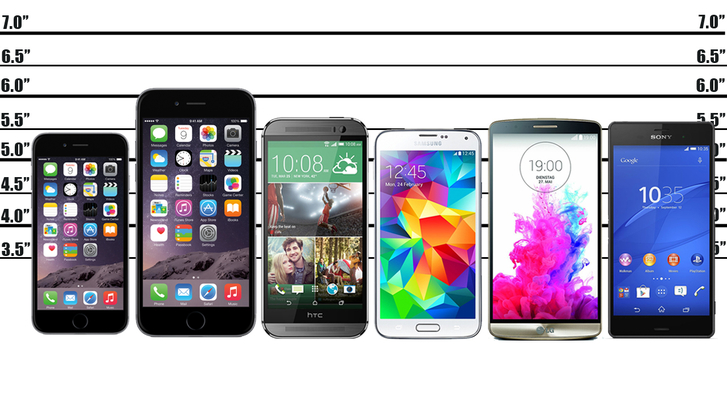 Apple has announced not one, but two new iPhones, which only means one thing – there are two new flagship smartphones that have been added to the mix of already stiff competition.
But which is the best device overall in terms of the numbers? Here we are breaking down all the specs into simple, matter of fact statements so you can see which flagship smartphone is the biggest, which is the lightest, which has the highest resolution display and which has the best camera.
Enter the usual suspects – Apple iPhone 6, iPhone 6 Plus, HTC One (M8), Samsung Galaxy S5, LGG3 and Sony Xperia Z3 – and let the spec crunching begin.
Build
The Apple iPhone 6’s aluminium build measures 138.1 x 67 x 6.9mm and weighs 129g, while the iPhone 6 Plus measures 158.1 x 77.8 x 7.1mm and hits the scales at 172g.
If you are looking for the lightest of all six devices, the Apple iPhone 6 is the winner, followed by the Samsung Galaxy S5 at 145g.
For those after the slimmest, both Apple iPhones are thinner than any of the Android competitors, with the Sony Xperia Z3 taking third place for its 7.3mm build.
The largest of the bunch is the iPhone 6 Plus at 158.1 x 77.8 x 7.1mm and the most compact is the iPhone 6 at 138.1 x 67 x 6.9mm.
Display
You’ll find a 4.7-inch 1334 x 750 pixel resolution display on the Apple iPhone 6, and a 1920 x 1080 pixel resolution on the 5.5-inch iPhone 6 Plus, which means a pixel density of 326ppi and 401ppi respectively.
The biggest display award goes to both the LG G3 and the Apple iPhone 6 Plus, both offering 5.5-inches.
LG mops up the sharpest display however, with its 2560 x 1440 resolution providing a pixel density of 534ppi.
All the other Android smartphones offer a 1920 x 1080 pixel resolution.
The smallest display is Apple’s iPhone 6, which is 0.3-inches smaller than the next contender, and also the lowest resolution and ppi.
Processor
The Apple iPhone 6 and Apple iPhone 6 Plus both feature the company’s latest A8 processor on board with 64-bit architecture, supporting the 64-bit software of iOS 8. It has the M8 coprocessor to handle motion.
Android is not 64-bit yet, which is lucky as none of the flagship Android devices support it.
All of the Android devices have a quad-core Qualcomm Snapdragon processor under the hood but the Sony Xperia Z3 has the most RAM at 3GB.
Comparing the devices like for like is very difficult: with undisclosed hardware from Apple, and different operating systems, there’s no easy way to measure them on the spec sheet.
Camera
When it comes to camera, the Apple iPhone 6 and Apple iPhone 6 Plus both feature an 8-megapixel rear snapper and a 1.2-megapixel front snapper.
If you arbitrarily want highest number of pixels on the rear camera, you’ll want the Sony XperiaZ3 with its 20.7-megapixel sensor.
If you are a selfie snapper, then you’ll want the HTC One (M8) for the best front camera with its 5-megapixel offering.
This is the fiercest battleground of all, but we’d expect the iPhone 6 and iPhone 6 Plus to be strong performers with the latest tech they are offering including HDR selfies. That’s not to say they will win though, we suspect the camera battle to be the hardest fought.
Battery
The Apple iPhone 6 comes with a better battery than the iPhone 5S and Apple claims it will offer 14 hours talk time and 240 hours standby, while the Apple iPhone 6 Plus is said to provide 24 hours talk time and 384 hours standby. Apple hasn’t disclosed the battery capacity, however.
For the biggest battery capacity, the Sony Xperia Z3 wins the group at 3100mAh, which means the longest standby too at 740 hours.
The Samsung Galaxy S5 and the LG G3 fight for the most amount of talk time though, both claiming up to 21 hours.
For audio playback, you’re answer is the Sony Xperia Z3 again with up to 130 hours of music playback.
The smallest battery capacity is the HTC One (M8) at 2600mAh and 496 hours standby.
Storage
Apple doesn’t offer microSD support but its iPhone 6 and iPhone 6 Plus will come in 16GB, 64GB and 128GB storage capacities.
This means Apple’s iPhone 6 and iPhone 6 Plus offers the biggest internal storage options.
All the Android flagships have microSD slots for storage expansion up to 128GB, but typically offer 16 or 32GB storage.
Features
The Apple iPhone 6 and iPhone 6 Plus has iOS 8 on board, which means a whole host of new features but its most unique offering is Apple Pay, which is launching initially in the US.
In terms of unique features for the Android handsets, the HTC One (M8) has a Duo Camera that captures depth of field information, the Samsung Galaxy S5 brings a heart sensor to the mix, theLG G3 uses laser focusing and the Sony Xperia Z3 is waterproof and lets you play PS4 games.
Prices
The new iPhone 6 will start at £539 for 16GB. The iPhone 6 Plus will start from £619 (16GB).
The cheapest SIM free handset on our panel of Android flagships is the LG G3, at £479 (16GB), which is the most affordable overall.
The iPhone 6 Plus is the most expensive and ironically has the same size display as the LG G3.
Conclusion
It depends what is most important to you as to which of the usual suspects will win you over, but if you just take them all on number value and nothing else … this is how it goes down.
The smallest, lightest and slimmest phone is the new Apple iPhone 6.
The biggest display is shared between the LG G3 and the Apple iPhone 6 Plus, but the sharpest display is the LG G3.
The highest resolution rear camera is the Sony Xperia Z3 and the best front camera is the HTCOne (M8).
The biggest battery capacity is the Sony Xperia Z3.
The most internal storage goes to Apple’s iPhone 6 and iPhone 6 Plus, but all the Android devices offer microSD card support.
The most affordable device is the LG G3 at £479.
And that friends, are the tech specs crunched.
.CPlase_panel display:none;
iPhone 5s and 5c get a £100 price drop

Not really interested in Apple’s new iPhone 6 or iPhone 6 Plus? How about a smaller iPhone with an even smaller price tag? That’s exactly what’s on the table after Apple cut the price of an unlocked iPhone 5s and iPhone 5c by £100 each following yesterday’s event. That means can now pick up a 16GB or 32GB iPhone 5s for £459 or £499 respectively, while the price of the more colourful iPhone 5c (8GB) has dropped to £319. Although the Apple Watch won’t be available until the new year, the company has said iPhones from the 5c up will support the new wearable, meaning you won’t miss out if you decide later that you want a smaller screen on your wrist.
Filed under: Cellphones, Mobile, Apple
Source: Apple Store
.CPlase_panel display:none;
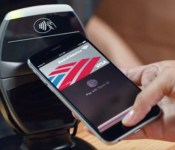
US carriers are bringing their tap-to-pay wallet to the iPhone 6

Don’t worry that Apple Pay will be the only game in town for tap-to-pay shopping on your iPhone 6. The carriers behind Softcard (aka Isis) have revealed that they’re working with Apple to bring their NFC-based payment system to newer iPhones sometime in 2015. While you’ll need a Softcard-aware SIM card in your phone for this to work, you hopefully won’t have to slap a bulky case on your device this time around. It’s doubtful that this solution will work as elegantly as Apple Pay, which doesn’t even require that you launch an app, but it should let you purchase with your iPhone in considerably more places.
Filed under: Cellphones, Mobile, Apple, Verizon, AT&T, T-Mobile
Source: Isis
.CPlase_panel display:none;

LaCie d2 External Hard Drives Upgraded With Thunderbolt 2, SSD Option [Mac Blog]
LaCie today updated its d2 desktop storage hard drives, adding an aluminum unibody, dual Thunderbolt 2 ports, and an optional SSD upgrade. Designed to be a companion device to the Mac Pro, the d2 is aimed at audio/video/photography professionals.
The default d2 comes equipped with a 7200 RPM Seagate hard disk (up to 6TB) that’s able to reach speeds of 220MB/s, but it can be boosted with an optional LaCie d2 SSD upgrade, which increases speeds up to 1150MB/s and adds 128GB of PCIe storage. The SSD upgrade is an additional purchase, and snaps right into the back of the d2’s removable rear panel.
Two separate drives mount on the computer – one for the SSD and one for the hard disk. Use the SSD for bandwidth-intensive tasks, such as fast file transfers, audio mixing, video editing, or OS booting, and the hard disk for file archiving. No other solution offers this level of performance and capacity in such a compact footprint.
According to LaCie, the d2’s new aluminum unibody is designed to draw heat away from the hard disk, and a cushioned base and disk mounts are aimed at reducing vibration. In addition to two Thunderbolt 2 ports, the hard drive also has a USB 3 port and can daisy chain up to six devices.
The LaCie d2 Thunderbolt 2 will be available in September from both Apple and LaCie.com. Prices will start at $299 for 3 TB, going up to $399 and $499 for 4 and 6 TB capacities, respectively. The d2 SSD upgrade will be available in October, and is priced at $299. LaCie is also offering USB 3.0-only versions of the d2, which will also be available in October.
.CPlase_panel display:none;

Going pear-shaped: Samsung Belgium combats news about Apple with pear donation campaign
 It’s good to know that at least some part of Samsung has a sense of humour (and a heart). In an interesting attempt to try and draw away massive attention Apple was generating earlier today (something about iPhones I hear), Samsung Belgium launched a campaign that says they will buy a pear for every tweet about apples that is made. No doubt this would result in a huge number of pears being purchased, but Samsung intends to hand out all purchased pears at the Brussels-North railway station.
Now you’re probably thinking, “this seems a lot like a very silly, expensive ploy for attention.” Well, as it turns out, the campaigns ulterior motive is to support Belgian pear growers who are in danger of losing 40% of their revenue due to the trade sanctions imposed by Russia. So as you can see, it’s actually quite a nice campaign and a nice way for Samsung to try and help out a little in a time when things are extremely unstable in that part of the world. I hope more companies will take Samsung Belgium’s lead and help out where they can in the countries affected.
What do you think about this #aPearForAnApple campaign by Samsung Belgium? Let us know your thoughts in the comments below.
Source: Samsung Belgium via Phone Arena
//<![CDATA[
ord = window.ord || Math.floor(Math.random()*1E16);
document.write('‘);
//]]>
The post Going pear-shaped: Samsung Belgium combats news about Apple with pear donation campaign appeared first on AndroidSPIN.
.CPlase_panel display:none;

Apple Launching iPhone 6 and iPhone 6 Plus in India on October 17 [iOS Blog]
Apple will launch its new iPhone 6 and iPhone 6 Plus in India on October 17, according to the company’s official website for the region. Apple has not revealed pricing details for the two devices in the region, although it is likely that prices will be close to the $649 (Rs 39,500) and $749 (Rs 45,600) U.S. prices for the 16GB iPhone 6 and 16GB iPhone 6 Plus, respectively.

It is also possible that Apple will roll out the iPhone 6 and iPhone 6 Plus to a number of other countries on the same day as it has done with past launches. Last year, Apple launched the iPhone 5s and iPhone 5c in India and 15 other countries on November 1, and eventually reached its slated target of availability in 100 countries by the end of 2013.
Apple will launch the 4.7-inch iPhone 6 and 5.5-inch iPhone 6 Plus in the first wave of countries on September 19, with pre-orders beginning on September 12. Both models will be available in Space Grey, Gold, and Silver variants in storage capacities of 16 GB, 64 GB and 128 GB.
.CPlase_panel display:none;

