


‘Plastc’ Smart Payment Card Aims to Replace Card-Stuffed Wallets [iOS Blog]
With Apple Pay’s launch likely just days or perhaps weeks away, “card tech” startup Plastc today announced its plans for its new digital wallet, replacing credit cards, debit cards, RFID access cards, gift cards and more. On paper, Plastc promises to go above and beyond competitor Coin, offering an expanded set of features that are better optimized for today’s new wireless mobile payment future.

The Plastc card allows users to store up to 20 cards or barcodes on its internal flash memory and ships with a companion iOS Wallet app that lets users manage the card. Plastc looks like a standard 0.8-millimeter-thick credit card, but it features an eInk touchscreen display for selecting stored content, Bluetooth to connect to an iPhone, rewritable RFID, and support for payment technologies such as magnetic stripes, NFC, and EMV chip and PIN. It also includes wireless induction charging and a remote wipe feature that lets users erase the card in case of theft or loss.
Though its feature set is impressive, Plastc will be competing with the upcoming Apple Pay, which is scheduled to launch this month with broad industry support. Apple has worked on Apple Pay with all three major credit card companies, several major banks, and a variety of retail partners such as Macy’s, Walgreens, McDonald’s, Whole Foods, Disney and others.

Despite this competitive threat, Plastc COO Ryan Marquis told The Verge that he is optimistic about the company’s future.
“Ultimately a cloud-based digital wallet will be the winner,” says Marquis, “but with our technology, we can allow consumers to build a digital wallet using a form factor that they’re used to today.” Marquis says there are still many use cases where we need physical cards like subway ticketing machines, ATMs, and gas pumps. “I will utilize Apple Pay because it’s simple and easy, but there are so many use cases in our world where I’m still going to need a physical card,” he says. “There are so many things that point-of-sale machines just aren’t ready for yet.”
Similar to Coin which was announced last year and has yet to ship, Plastc is available now only for pre-order. The card costs $155 and is expected to ship next summer.
.CPlase_panel display:none;
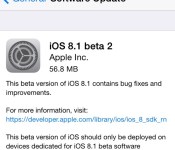
Apple Seeds Second iOS 8.1 Beta to Developers
Apple today released the second beta of iOS 8.1, build 12B407, to registered developers for testing purposes, just over a week after the release of the first iOS 8.1 beta.

iOS 8.1 includes several bug fixes for issues in iOS 8, including a fix for a Bluetooth connectivity problem, and it also includes support for Apple Pay, Apple’s mobile payments service that is launching in October.
Along with iOS 8.1, Apple is also simultaneously working on iOS 8.2 and iOS 8.3, all of which are expected to add new functionality to the operating system.
iOS 8 has had a rough start, with Apple temporarily removing HealthKit ahead of the launch of iOS 8 and then releasing an unstable iOS 8.0.1 update that disabled the cellular and Touch ID service of many users. Apple released iOS 8.0.2 to fix the issue, but several other problems have come to light, including a bug that causes iCloud Drive documents to be deleted.
.CPlase_panel display:none;
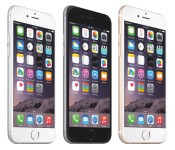
Apple Reportedly Shifting iPhone Production Balance More Toward iPhone 6 Plus [iOS Blog]
Supply of Apple’s iPhone 6 Plus may gradually improve as Apple shifts production in favor of the unexpectedly popular handset, according to upstream supply chain sources speaking to Digitimes. This claim echoes an earlier report that suggests the iPhone 6 Plus may account for up t0 60 percent of total future iPhone 6 device shipments.

Though the production ratio has been adjusted to meet demand for the 6 Plus, retail supply will take time to improve as component suppliers and assemblers gradually ramp up to meet this new level of production.
But most component suppliers’ current inventories are not sufficient for extra iPhone 6 Plus orders, and device manufacturers also do not have sufficient production lines for related assembly. Therefore, the retail channel may need to wait a while before seeing a signifciant increase in iPhone 6 Plus supply, the sources noted.
The supply of Apple’s iPhone 6 Plus has been constrained since its launch last month. The handset quickly sold out during pre-orders and has remained in short supply. The estimated online shipment time for the handset currently sits at three to four weeks with iPhone tracking websites showing little to no inventory at brick and mortar retail stores.
Real-world usage is showing strong preference for the smaller iPhone 6 model, but with availability constraints on the iPhone 6 Plus, that result is not unexpected. With an upcoming launch in China on October 17, reservations there are seeing a more even split between the two sizes.
.CPlase_panel display:none;
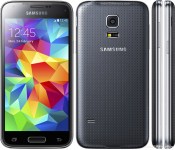
Samsung Profits Tumble as Apple Enters Large-Screen Phone Market and Low-End Options Thrive
Samsung’s third quarter 2014 earnings are likely to disappoint as the company faces intense competition from both high-end and low-end competitors, even as Apple’s newly launched iPhone 6 and 6 Plus are just starting to roll out. According to the Wall Street Journal, Samsung is expected to announce a quarterly operating profit drop of up to 62 percent in what may be its fourth consecutive quarterly decline.

Though it may see a marginal increase in smartphone shipments, Samsung’s operating profit decline may be the result of lower handset selling prices and increased marketing costs as smartphone competition escalates.
Samsung’s smartphone business is facing intense competitive pressure at the low-end from Chinese handset makers, and at the high-end from the iPhone. With the iPhone 6, Apple essentially wiped out Samsung’s distinguishing feature: a big screen size. And with the jumbo iPhone 6 Plus, Apple has now entered into the “phablet” segment that Samsung pioneered.
Samsing's handset revenue is forming an uncomfortable trend. Squeezed from above & below even before iPhone 6/6 Plus pic.twitter.com/npOE9PS83U
— Benedict Evans (@BenedictEvans) October 7, 2014
While its mobile device division struggles, Samsung’s components business is expected to increase 10 percent over the coming year, accounting for more than 40 percent of operating profits in 2015.
One of Samsung’s main component customers is Apple, although the iPhone maker has cut back significantly on its usage of Samsung parts. One major move away from Samsung came with the main A8 chip used in the iPhone 6 and 6 Plus, with Apple turning to TSMC for the first time for chip production. Some industry sources believe Samsung to still be producing a portion of A8 chips, but so far it does not appear any have been seen in teardowns of the new devices.
.CPlase_panel display:none;

Apple Opening New Retail Store in Venice, Italy This Saturday, October 11 [Mac Blog]
Apple today announced on its website (via Setteb.it) that it will be opening a new retail store in Venice, Italy this Saturday, October 11. The store will be located in Venice’s Nave de Vero shopping center, which spans multiple floors and hosts over 100 stores.
 Image credit: The Apple Lounge
Apple put up its traditional black barrier at the location earlier this year, as some pictures have shown the location occupying a large space on the shopping center’s larger floor. The new location will be Apple’s 15th in Italy, joining stores in Rimini, Florence, and Bologna.
At store openings, Apple usually hands out commemorative T-shirts to the first 1,000 customers to visit. Apple’s new store in Venice opens at 10 A.M. this Saturday, and the location has begun accepting reservations for workshops and Genius Bar appointments.
.CPlase_panel display:none;
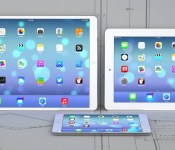
Report Claims 12.9-Inch iPad May Adopt Integrated iOS/OS X Operating System [iOS Blog]
Apple’s rumored 12.9-inch iPad may feature an operating system that integrates OS X and iOS, according to supply chain sources speaking to Digitimes. The sources state that Apple has two 12.9-inch iPad prototypes in development, with one model being a “2-in-1 device” that utilizes elements from both operating systems while the other resembles previous iPads. The report also notes that the 12.9-inch iPad isn’t expected to go into mass production until 2015.
 Mockup of a 12.9-inch iPad next to a 13-inch MacBook Air
The idea of Apple combining both OS X and iOS into one platform has been a popular subject for quite some time, as both have begun to share design principles and features. Notably, J.P. Morgan analyst Mark Moskowitz predicted earlier this year that the company is working on a combo operating system which would utilize an iOS device docked to a secondary display for a full computer experience.
However, Apple executives Phil Schiller and Craig Federighi stated in a January interview with Macworld that iOS and OS X convergence is a “non-goal” for the company, with the latter saying that Apple’s is focused on making best products for unique purposes. That vision was also shared by Federighi at this year’s Worldwide Developer Conference, where he stated the following during the reveal of Apple’s new “Continuity” features for iOS 8 and OS X Yosemite:
At Apple, we believe you should be able to use the right device for the moment. We want the transitions between these moments to be as absolutely natural and seamless as possible.
Some of the Continuity features Apple is integrating with iOS 8 and OS X include “Handoff”, which allows users to start a task on one device and finish it on another. Other features include the ability for users to answer a call made to their iPhone on the Mac, and the ability for iPads and Macs to receive SMS messages from non-Apple devices. It is likely that Apple will look to build more Continuity-like features that improve cross-platform integration between iOS and OS X as opposed to working on a full-blown hybrid platform.
Apple is said to be preparing its 12.9-inch iPad for early 2015. Some rumors have claimed that the tablet will come with an ultra high-resolution display and adopt an ultra-thin chassis and narrow side bezels similar to the iPad Air and Retina iPad mini.
.CPlase_panel display:none;
Apple’s own stats show iOS 8 upgrades have slowed to a crawl

Despite the introduction of custom keyboards, Notification Center widgets and lots more, Apple users aren’t taking to iOS 8. According to stats displayed on the company’s developer portal, the proportion of iPhone and iPad owners currently running the latest version on their devices stands at 47 percent, only an increase of 1 percentage point from two weeks ago. By this point last year, iOS 7 uptake was already hovering around 60 percent, according to analytics firm Fiksu. We can only speculate, but it seems likely a combination of very large install files, the bungled point updates, and the dropping of iPhone 4 support could be reason enough for many users to stick with what they know, for now. Or maybe they’re just paranoid.
Filed under: Cellphones, Software, Mobile, Apple
Source: Apple Developer
.CPlase_panel display:none;

iOS 8 Adoption Stagnates Just Two and a Half Weeks After Launch
After almost three weeks of availability, Apple’s iOS 8 operating system is now installed on 47 percent of devices, according to new numbers posted on Apple’s App Store support page for developers.
That marks a very slight increase in adoption over the past two weeks, as back on September 21, iOS 8 was installed on 46 percent of devices. 47 percent of iOS users continue to stick to iOS 7, possibly due to a number of bugs that have plagued the launch of iOS 8.

Just ahead of the launch of iOS 8, all HealthKit-enabled apps were pulled from the App Store due to a major HealthKit bug. A fix was quickly released, but the update, iOS 8.0.1, disabled the cellular service and Touch ID functionality on iPhone 6 and 6 Plus devices.
iOS 8.0.2 fixed the problems introduced with iOS 8.0.1 and brought several other bug fixes, but the publicity surrounding the iOS 8.0.1 issue may have discouraged some users from updating.
Along with the critical bug introduced with iOS 8.0.1, several other problems have come to light. An iCloud Drive issue with the “Reset All Settings” option causes iCloud Drive documents to be deleted from iCloud, and multiple users have experienced problems with Bluetooth. Furthermore, iOS 8 users have complained of other issues with the operating system, including slow wi-fi speeds and excessive battery drain.
Apple’s iOS 8 adoption numbers closely mirror data from Mixpanel, which also puts iOS 8 adoption at 47 percent. iOS 8’s adoption rate appears to be slower than iOS 7 adoption as Mixpanel’s numbers last year put iOS 7 adoption at 69.7 percent 20 days after launch.
 Mixpanel iOS 8 adoption numbers, October 4 to October 7
In late September, Apple stopped signing iOS 7.1.2, making it impossible for iOS 8 users to downgrade back to a previous-generation operating system. The company is working to combat the issues facing iOS 8, however, simultaneously working on iOS 8.1, 8.2, and 8.3.
iOS 8.1, seeded to developers last week, fixes at least one major problem, repairing the Bluetooth pairing issue many users have been facing. The update also includes support for Apple Pay, which is expected to debut in October.
.CPlase_panel display:none;

LTE Speeds of iPhone 6 and iPhone 5s Compared in New Video
According to Apple, both the iPhone 6 and the iPhone 6 Plus have “faster LTE download speeds” than the iPhone 5s, reaching up to 150Mbps thanks to the inclusion of the Qualcomm MDM9625M LTE chip, which supports LTE Advanced.
A demonstration of the speed difference between the iPhone 5s and the iPhone 6 when connected to a high-quality LTE network has been conducted by iClarified, suggesting the iPhone 6 is able to reach much higher speeds than the iPhone 5s.
The test, which was conducted in London, Ontario, Canada on the Fido network, shows the iPhone 6 topping out at download speeds of 101Mbps while the iPhone 5s reaches 35Mbps. Upload speeds are similarly improved, reaching 27Mbps on the iPhone 6.
According to iClarified, the tests, which were conducted using the Ookla SpeedTest.net app, were done in a spot in the city where the best reception was found.
We were able to consistently reach speeds in the high 90s with the iPhone 6. The absolute highest download speed we were able to obtain was 111 Mbps. I’m confident that if the conditions were optimal we could have obtained even higher speeds.
First introduced in 2013, LTE Advanced takes advantage of carrier aggregation technology, combining separate spectrums into a single faster connection to increase data speeds and network capacity. Several carriers offer the technology, and the iPhone 6 and 6 Plus are Apple’s first devices to support it. Because not all carriers support LTE Advanced and due to differences in connection strength, not all users may see increased speeds on Apple’s new devices.
Along with LTE Advanced, Apple’s iPhone 6 and 6 Plus offer several other connectivity improvements, including support for up to 20 different LTE bands. With additional bands (7 more than the iPhone 5s), iPhone users are able to connect to more LTE networks when traveling abroad and LTE connections are available in more countries. The phones also include support for voice over LTE (VoLTE), improving voice quality and allowing some users to access voice and data simultaneously over LTE for the first time.
.CPlase_panel display:none;

Cycloramic for iPhone 6 Captures 360-Degree Video Using Power Adapter for Support [iOS Blog]
Back in 2012, the first iteration of Cycloramic launched, using the vibration motor in the iPhone 5 to capture hands-free 360 degree video. When balanced on a flat surface, the vibration motor allowed the phone to spin on its own, a capability that also worked for the iPhone 5s, as it shared the same design as the iPhone 5.
The iPhone 6, however, has rounded edges that prevent the Cycloramic app from working in the same way — it’s no longer possible to balance the phone on its edge, allowing it to spin freely. The Cycloramic team has come up with an innovative solution to enable 360 hands-free panoramic video on the iPhone 6, however, utilizing the power adapter that the two phones ship with.
As demonstrated in the above video, when the iPhone 6 is placed between the prongs of the power adapter that it ships with, the vibration motor is strong enough to spin it around, capturing 360 degree panoramic videos in landscape mode.
Just put your iPhone 6 on top of your power adapter on a smooth and level surface (granite, marble or wood desk) and it will automatically rotates 360 degrees using the phone’s internal vibration motor. As it rotates, the phone takes multiple photos, instantaneously stitches them together, and generates a panoramic photo viewable in our immersive viewer.
The hands-free video mode is limited to the iPhone 6, unfortunately, and does not work with the larger-screened iPhone 6 Plus. Other app features, including a guided panorama mode and photo editing tools work with other devices, including the iPhone 6 Plus.
Cycloramic for iPhone 6 can be downloaded from the App Store for $1.99. [Direct Link]
.CPlase_panel display:none;

