



Latest Play Services APK findings show new “Copresence” app is on the way

If a line of code hidden within Google’s latest Play Services APK and pending patents are anything to go by, it certainly looks as if the search engine giant is preparing to release a new mobile communication service, entitled “Copresence,” which should make sharing data between Android and iOS incredibly easy.
This system sounds an awful lot like Android Beam, which made its debut appearance alongside Ice Cream Sandwich (4.0) back in October, 2011 and Bump for iOS back in November, 2009. Both of these apps were developed for their own respective operating systems. Copresence, however, is believed to be a cross-platform application and completely contactless.


While Google is still yet to announce or even confirm the existence of its Copresence service, Simon Tucker recently discovered the application in a leaked patent filing and spotted several files linked to the project in the latest Play Services package.
And if that’s not enough proof, Tucker also found several Chrome code review comments referring to an in-house service called “Copresence” that will not require the use of a Google account. He explained all of his findings in an exclusive email to TechAeris — which you can see below.
Google is going to launch a service titled “Copresence” in the coming weeks. The goal of the service will be to allow cross communication between Android and iOS devices through Bluetooth, Wi-Fi and Location-based data.
I located a large quantity of files referencing the service in the latest Google Play Services APK, including banner images for setup, explanations of how the service works and XML’s defining the layouts of the setup app.
Upon investigation, I noticed that Google already has patents in the works for a service titled “Copresence”, allowing data retrieval from a device using a server and then feeding back relevant data.
There is also numerous Chrome code review comments referring to a service called “Copresence” stating that it will not require a Google account to use, and confirming that it will be in fact multi-platform.
We don’t know for certain if Copresence will come to fruition; only time will tell, but it definitely looks like it’s on its way.
Source: TechAeris
Come comment on this article: Latest Play Services APK findings show new “Copresence” app is on the way

‘iPad Pro’ Said to Feature 12.2-Inch Display, 7-mm Thickness, Stereo Speakers at Top and Bottom
Apple’s rumored “iPad Pro” has reportedly been in the works for some time, although the most recent rumors have indicated the company has pushed back its plans for the device as it seeks to give its manufacturing partners time to catch up to iPhone 6 Plus demand. Development work on the project is likely still continuing and a new report from Mac Otakara claims to share some new details on the device.
According to the report, the larger iPad will include a 12.2-inch display, somewhat smaller than the 12.9-inch measurement most commonly rumored for the device. Sources also indicate the device will contain speakers and microphones on both the top and bottom edges, opening the door to an improved stereo audio experience.
Product design concept seems to be based on iPad Air 2, pair of speakers and microphones will be added on top-side not only bottom’s pair. iPad Pro might be capable for supporting stereo audio.
As for thickness, the report claims the iPad Pro will not match the 6.1 mm measurement of the new iPad Air 2 but will still be quite thin, coming in around the same 7 mm mark as the iPhone 6 (6.9 mm) and iPhone 6 Plus (7.1 mm).

The report also includes a rough illustration, and while the sourcing of the illustration is unclear, it appears to show a row of holes presumably representing a speaker along the top edge of the device next to the power button.
Mac Otakara has a relatively strong (but by no means perfect) track record with Apple product rumors, most recently accurately predicting the arrival of the iPad mini 3 last month alongside a relatively specific claim of new Smart Cover and Smart Case color options that did turn out to be true. Some of the site’s previous major claims that were accurate included details on redesigns for the iPod touch and iPod nano back in 2012.

A group of retailers can’t support Apple Pay due to contract with rival tech

When CVS and Rite-Aid shut off their NFC-based payments to prevent customers from using Apple Pay, we heard it was because they’re part of a large group developing rival technology CurrentC. Now, The New York Times has shed more light on the issue, and it turns out they did it not just to stifle the competition, but also because they’re contractually obligated not to offer Apple Pay in their stores. The whole Merchant Customer Exchange (MCX) group, including these two drug stores and big-box retailers Walmart and Best Buy, signed a contract years ago that binds them to Current C. That contract, signed way before anyone knew if Apple Pay was ever going to materialize, prevents them from supporting rival technologies, as doing so will earn them outrageous fines.
CurrentC’s the ideal payment method for MCX retailers, because it connects directly to people’s bank accounts, eliminating the need to pay credit card fees. Also, it allows stores to track customers’ spending habits themselves. Problem is, it won’t be ready until 2015, and by then customers might already be too attached to Apple Pay to consider anything else and demand its use in MCX members’ outlets. Of course, it’s always possible for Apple Pay not to catch on in the end, but — bad news for this bunch of companies — it’s doing really well thus far.
Filed under: Cellphones, Mobile, Apple
Source: The New York Times

An FCC rule change could put internet TV on a level playing field with cable

Right now internet services don’t always have the opportunity to show the same content as traditional TV, but the FCC might be about to change that. Chairman Tom Wheeler described in his blog post “Tech Transitions, Video, and the Future” the “first step” to open cable programs and local TV to internet services, by giving them the same classification that cable and satellite providers have. That wouldn’t apply to Netflix or Amazon (as they currently exist), but anyone streaming live TV channels over the internet — like Sony, Verizon and Dish are planning, Intel tried before selling to Verizon, and Apple’s TV project has been rumored to include — would be covered.
Wheeler notes that a similar move in 1992 helped competition from satellite TV companies flourish, and sees the same potential for internet providers. Another company stuck in the current hole between being too much like a cable provider and not enough like one is Aereo, and its CEO Chet Kanojia said “By clarifying these rules, the FCC is taking a real and meaningful step forward for competition in the video market.” Until now, owning a delivery method has been required for a company to be classified as a “multichannel video programming distributor,” but Wheeler is asking the commission to create rules to cut that out. He also says changing the rules would make sure cable systems remain regulated as able, even if they switch to all-IP delivery, as some have been rumored to do.
He also claims it will let internet-based providers offer smaller channel bundles than what currently exists, giving customers more choices, and encourage the creation of broadband competitors that don’t feel the need to bundle TV service. It will take some time to see how much, if any, of this comes true, but in the future companies like Apple, Google and Microsoft could jump in to compete with Comcast and its ilk right away, offering customers a way to switch providers without losing access to the stuff they want to watch.
[Image credit: Photo by Mark Wilson/Getty Images]
Filed under: Home Entertainment, Internet, HD, Apple, Google
Source: FCC, Aereo (Facebook)
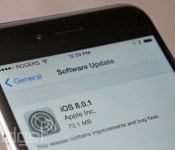
Apple explains its busted iOS 8.0.1 update

Sure, Apple’s already fixed that buggy iOS 8.0.1 update that disconnected devices from their networks and just pretty much broke iPhones for a while. It’s even been a month since then, but you still can’t let it go until you get an explanation, huh? Well, friends, this is probably the closest thing you’ll ever get: apparently, there was nothing wrong with the update itself, and it was Apple’s distribution methods or how the update was “wrapped” that broke devices. At Recode’s Code/Mobile conference earlier, Apple product marketing executive Greg “Joz” Joswiak said the issue resulted from “the way the software was being sent over servers,” though he didn’t go into specifics. He also defended his company, claiming that mistakes are inevitable when you’re pushing software and that Apple always tries to fix them quickly. Since Joz dismissed questions on whether he thinks the company has bigger quality control issues, you’ll just have to speculate about that on your own.
Filed under: Cellphones, Tablets, Mobile, Apple
Source: Recode
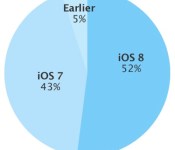
iOS 8 Now Installed on Over Half of Active iOS Devices
After five and a half weeks of availability, Apple’s iOS 8 operating system is now installed on 52 percent of iOS devices, according to new numbers posted on Apple’s App Store support page for developers.
iOS 8’s installation numbers have increased approximately four percent over the course of the two weeks, which means adoption numbers are on the rise after several weeks of stagnation. During Apple’s October 16 iPad-centric event, Apple CEO Tim Cook said that iOS 8 was installed on 48 percent of devices as of October 13, and before that, the OS was installed on 46 percent of devices on September 21.

The jump in iOS 8 installation numbers follows the October 20 release of iOS 8.1, which brought several new features that undoubtedly enticed iOS users to upgrade, including Apple Pay support, SMS Forwarding, Instant Hotspot, iCloud Photo Library beta access, and the return of the Camera Roll.
iOS 8.1 also addressed several notable bugs that had been present in the operating system for several weeks and that were the source of several user complaints about iOS 8. The update fixed Wi-Fi connection issues, Bluetooth problems, screen rotation bugs, and more.
Apple’s own iOS 8 adoption estimates are based on App Store usage and are mirrored closely by data from MixPanel, which puts iOS 8 adoption at just over 54 percent. MixPanel’s numbers suggest installation rates have been trending upwards since the release of iOS 8.1.

iOS 8’s release was plagued with a number of early bugs that may have scared users away from updating. Ahead of launch, all HealthKit-enabled apps were pulled from the App Store due to a major HealthKit bug, and the fix for that issue, iOS 8.0.1, brought its own bugs, disabling cellular service and Touch ID for thousands of iPhone 6 and 6 Plus users.
iOS 8.0.2 fixed the problems introduced with iOS 8.0.1 and brought several other bug fixes, and with iOS 8.1 fixing even more issues with iOS 8, the operating system is far more stable now than it was in the days following its release.

FTC Sues AT&T Over ‘Misleading’ Unlimited Data Throttling Practices [Updated]
The Federal Trade Commission (FTC) of the United States today filed a federal court complaint against AT&T, accusing the carrier of misleading its smartphone customers by charging them for unlimited data while reducing their data speeds by up to 90 percent.
According to the FTC, AT&T did not adequately explain to customers with unlimited data plans that they would be throttled if they reached a certain amount of data during a billing cycle. AT&T also did not inform customers of the throttling when they renewed their unlimited contracts.

“AT&T promised its customers ‘unlimited’ data, and in many instances, it has failed to deliver on that promise,” said FTC Chairwoman Edith Ramirez. “The issue here is simple: ‘unlimited’ means unlimited.”
AT&T ceased offering unlimited data plans to customers several years ago, but has allowed Grandfathered customers to retain those plans. AT&T implemented throttling shortly after eliminating its unlimited data plans, initially restricting throttling to only its highest usage customers but later capping data for everyone on an unlimited plan. Currently, customers on unlimited plans are able to use 5GB of LTE data or 3GB of 3G data, after which AT&T throttles their data speeds.
The FTC alleges that AT&T throttled customers who had used as little as 2GB of data beginning in 2011, and that the throttling is severe, “resulting in speed reductions of 80 to 90 percent for affected users.” AT&T is said to have throttled 3.5 million customers more than 25 million times, violating the FTC Act in the process.
Update 11:15 AM PT: AT&T has given a statement to MacRumors in response to the FTC’s “baffling” complaint, stating that the allegations are “baseless” and that it has been “completely transparent” with customers.
“The FTC’s allegations are baseless and have nothing to do with the substance of our network management program. It’s baffling as to why the FTC would choose to take this action against a company that, like all major wireless providers, manages its network resources to provide the best possible service to all customers, and does it in a way that is fully transparent and consistent with the law and our contracts.
“We have been completely transparent with customers since the very beginning. We informed all unlimited data-plan customers via bill notices and anational press release that resulted in nearly 2,000 news stories, well before the program was implemented. In addition, this program has affected only about 3% of our customers, and before any customer is affected, they are also notified by text message.”


Class Action Lawsuit Filed Against Apple Over 2011 MacBook Pro Graphics Issues
Back in January, we highlighted graphics issues being experienced by a number of owners of 2011 15-inch and 17-inch MacBook Pro models, with many users needing to pay for (sometimes multiple) expensive logic board replacements due to the issue. The apparent widespread nature of the issue has led to claims that it is a manufacturing defect that should be covered by Apple, with a change.org petition seeking relief from Apple now exceeding 20,000 signatures and affected users organizing in a Facebook group of over 5,000 members.

We noted in August that law firm Whitfield Bryson & Mason LLP had begun researching the issue, soliciting feedback from affected users to determine whether a class action lawsuit against Apple might be warranted. The firm apparently found sufficient reason to proceed as it has announced today that it has indeed filed suit against Apple on behalf of affected consumers.
Our firm recently filed a class-action lawsuit in a California federal court against Apple, Inc. on behalf of residents in the States of California and Florida who purchased 2011 MacBook Pro Laptops with AMD GPUs who experienced graphical distortions and system failures.
The firm is continuing to solicit feedback from affected users and is considering filing actions in other jurisdictions around the country.
The lawsuit lays out the plaintiffs’ argument that the issues stem from hardware defects related to the lead-free solder used on the AMD graphics chips in the 2011 MacBook Pro models.
When the lead-free solder cracks it degrades the data flow between the GPU and the logic board. A small crack can cause the laptop’s graphics to become distorted on occasion. But as cracks in the lead-free solder propagate over time, the graphics issues worsen and system stability decreases, until eventually the computer is completely unusable. This defect related to the lead-free solder connecting the GPU to the logic board (the “Graphics Defect”) limits all computers at the point of sale forward from performing as advertised and warranted.
The suit goes on to note that Apple’s only solution offered for the issue is complete logic board replacement, but that the remedy is ineffective as replacement parts use the same solder and fail in the same way, sometimes within days. Apple has also in many cases charged consumers for the repairs and has refused requests to reimburse consumers for repairs paid for out of pocket.
Drawing parallels to similar graphics issues in the 2008 MacBook Pro that ultimately resulted in a recall by Apple, the plaintiffs in this case request that Apple acknowledge a defect in the 2011 MacBook Pro models, notify owners of the issue, bear the costs of inspection of affected machines, and pay the full costs of repairs and damages. The suit also requests that users who have paid out of pocket for repairs be reimbursed for their expenses.

Apple VP Greg Joswiak Apologizes for iOS 8.0.1 Bug, Points to Software Distribution as Cause
Apple’s VP of iPhone marketing, Greg Joswiak, sat down for an interview with Re/code‘s Ina Fried and Walt Mossberg this afternoon, discussing iPhone 6 and 6 Plus supply, the flawed iOS 8.0.1 update, Apple Pay, and the Apple Watch.
According to Joswiak, the major iOS 8.0.1 bug that caused many iPhone 6 and 6 Plus users to lose access to both cellular service and Touch ID was caused by the software distribution rather than a flaw in the software. “It wasn’t the software itself, it was the way it was distributed, said Joswiak. “We’re very sorry.”

The iOS 8.0.1 bug surfaced shortly after the software was first released, bricking many iPhone 6 and 6 devices. Apple pulled the update a few hours later, directed users to downgrade to iOS 8, and released iOS 8.0.2 to fix the problem the next day.
On the iPhone 6 and 6 Plus, Joswiak echoed a statement made by Tim Cook during Apple’s recent earnings call, saying that while he’s not sure which iPhone had higher demand, Apple is selling everything that it makes. According to Joswiak, Apple’s goal isn’t to sell the most iPhones, but to provide a better experience.
Repeating much of what Tim Cook had to say on Apple Pay and the situation with Rite Aid/CVS, Joswiak commented that retailers aiming to be successful will accept the way customers want to pay. He went on to state that Apple is focused on improving mobile payments for consumers, minimizing the amount of personal data shared and keeping that data safe from hackers.
Some of Joswiak’s final comments were on the Apple Watch. When Mossberg implied that the Apple Watch could cost thousands of dollars, Joswiak told the audience that a wider price range allows customers to choose the best option for them. More on Joswiak’s interview will be added later, after Re/code makes a video of the discussion available on its site.

Hugo Barra discusses Xiaomi’s popularity, its Apple rivalry and the future

Hugo Barra, former Googler and current VP of International for Xiaomi, went on stage at the WSJD Live conference in Laguna Beach, California to not only explain the company’s popularity, but also to combat accusations of design theft from Apple’s Jony Ive. Barra said that their designers and engineers are certainly inspired by great products, “but, well, who isn’t?” “Show me a completely unique design,” he said. “I bet you can’t find one.” He even points at Apple, stating that while the iPhone 6 is the “most beautiful smartphone ever built,” it carries design language that is very HTC-like. He also quotes Time Magazine, which said that iOS 8 borrows very liberally from Android, but that’s a good thing. “They took existing ideas that are good, added their twist of innovation on top, and made it better.” It’s this concept of building upon great ideas that Barra said is something that both companies share. “People who accuse us of theft need to take a closer look at what we do.”
Barra also spent some time explaining Xiaomi’s secret to success — it’s currently hailed as the number three smartphone manufacturer in the world. Google, he says, calls its clientele “users”, Microsoft says “customers,” while Xiaomi calls its base “fans.” Xiaomi apparently has a user forum in China with around 30 million users that sees around 400,000 posts per day. They talk about everything from product feedback to bug reports. “20 percent of those posts have to do with feature discussions.” Additionally, the company sells their phones at cost, stating that the hardware is the delivery vehicle for the software. It has its own ecommerce platform, which is the third largest in China. “All of our marketing is social media,” Barra added. The company only does one television ad buy a year — about a minute’s worth during Chinese New Year.
As far as the future goes, Barra has been living in India for the past few months, in hopes of making Xiaomi a big thing there as well. He said they’ve already made a big splash, selling out their initial batch of phones during a flash sale in July. Xiaomi also hopes to launch its Android-based 4k Smart TV in India and other international markets later this year. As for wearables? Well, aside from the Mi Band, Barra said that “Xiaomi has a bunch of new products coming.”

