



iMessage and FaceTime Ranked as Most Secure Mass-Market Messaging Options
The Electronic Frontier Foundation or EFF, a non-profit digital rights group, has investigated the security of various messaging apps and created a new Secure Messaging Scorecard, ranking messaging apps and tools like iMessage, FaceTime, BlackBerry Messenger, Skype, Snapchat, and more, based on seven different factors:
– Is a message encrypted in transit?
– Is it encrypted so the provider is unable to read it?
– Can you verify contacts’ identities?
– Are past communications secure if keys are stolen?
– Is the code open to independent review?
– Is security design properly documented?
– Has the code been audited?
Unsurprisingly, the apps that score highest on the EFF’s chart are those dedicated to secure messaging, such as iPhone apps ChatSecure, Signal, and CryptoCat, both of which scored checkmarks in all categories.
Apple’s iMessage scored five out of seven checkmarks, earning points for encrypting messages in transit and encryption that’s unreadable by Apple, but the messaging app was faulted for an inability to verify contact identities and the fact that Apple’s code is not open to independent review.

FaceTime was scored in the same way as iMessage, also offering encryption but no contact verification/independent review capabilities. Outside of dedicated secure chat messaging apps, both FaceTime and iMessage scored higher than competing messaging platforms like Skype, WhatsApp, Viber, Snapchat, Kik, Google Hangouts, and BlackBerry Messenger.
Few of the competing messaging services offer encryption that prevents the companies offering the services from accessing messages, though all encrypted messages in transit. Most iMessage/FaceTime competitors also fail to secure past communications if keys are stolen, and few had properly documented security design. QQ, a highly popular Chinese messaging app, failed at providing any of the qualities the EFF was looking for in a secure messaging app, not even bothering to encrypt messages.
According to the EFF, Apple’s iMessage and FaceTime products were the “best of the mass-market options,” which is not much of a surprise given Apple’s unparalleled focus on user privacy. Apple has a comprehensive privacy site that details all of its privacy policies and the security of various apps and services, including iMessage and FaceTime.
On the site, Apple specifically says iMessage and FaceTime calls “are your business, not ours.” The company offers end-to-end encryption and Apple has no way to decrypt it. “Unlike other companies’ messaging services, Apple doesn’t scan your communications and we wouldn’t be able to comply with a wiretap order even if we wanted to,” reads the site.

Just how secure are your messaging apps? The EFF knows.

Like it or not, your messages — those funny, tragic, productive, intensely personal missives you fire off without a second thought — aren’t nearly as safe as we all thought. That’s why the Electronic Frontier Foundation decided to do a bit of digging into how secure all those messaging apps we use actually are, and it threw its results into this handsome little scorecard. Unsurprisingly, few entrants (like the security-minded calling and texting apps from outfits like Whisper Systems and Silent Circle) scored full marks on the EFF’s rubric. What’s even less of a surprise is how many well-known services – services we probably all use everyday – don’t fare particularly well by the EFF’s standards.
Messaging mainstays like AIM, BlackBerry Messenger, Viber and the once-buzzy trash-talking app Secret brought up the rear with a single point because all they do is encrypt messages as they move from device to service (though the metadata associated with those messages might not be scrambled). Facebook Chat, Whatsapp, Snapchat and Google Hangouts encrypt missives in transit too, but they only gain one additional point because the companies involved audit their code. Comparatively speaking, Apple’s doing pretty well, since the content of your iMessages are shielded from eyes in Cupertino, and because attackers can’t piece together extended conversations from multiples ones you’ve already deleted.
And what about the losers? As it turns out, only two apps tested manage to fail on every front. The first is MXIT, a smaller South African social service with just a touch under 5 million users. And the other? QQ, the world’s second most widely used social message service, with close to 900 million people pinging each other monthly.
Source: Electronic Frontier Foundation

Spotify reportedly earns musicians more cash than iTunes in Europe

If you ask some musicians, Spotify is a trap; they earn so little from the service that they’d rather pull their albums and risk additional piracy. That’s not necessarily true in every case, though. Kobalt Music Publishing, which represents songwriters like Lenny Kravitz and Paul McCartney, claims that its artists earned 13 percent more royalties from Spotify in Europe during the first quarter of the year than they made through iTunes sales. That’s a sharp contrast from the year before, when iTunes was still the dominant money-maker. Kobalt claims that it’s all about volume. While songsters get far less revenue per person from Spotify, the sheer number of listeners (three times as many) makes up the difference.
The publisher is quick to note that this reversal of fortune hasn’t taken place in the US, and it’s just representing 6,000 artists. This isn’t necessarily proof of a broader trend, and some musicians are thriving without Spotify — just ask Taylor Swift, who ditched Spotify shortly after she managed the best one-week album sales since 2002’s The Eminem Show. Also, Kobalt’s roster may only underscore the arguments from Spotify opponents like Thom Yorke, who contend that the service mostly rewards veteran artists (such as Kravitz and McCartney) and punishes newcomers. Nonetheless, it’s evidence that all-you-can-eat music services can be profitable. If this keeps up, Swift and crew may have to change their minds.

Via: iMore
Source: Wall Street Journal
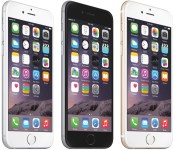
Next iPhone Rumored to Carry Glasses-free 3D Display
Taiwanese media website Economic Daily News [Google Translate] (via GforGames) is reporting that Apple may be gearing up to introduce a glasses-free 3D display on next year’s iPhone. The site also reports that Apple is aiming to create a 3D “hardware and software ecosystem.”
Economic Daily News also mentions that this “naked eye 3D screen” could not be built using the current embedded touch technology Apple has used since the launch of the iPhone 5. The site claims Apple would once again seek the help of touch screen manufacturer TPK to assist in the development of the next generation of iPhone.

This all comes on the heels of the Taiwanese site claiming Apple has plans to discontinue the iPad mini in favor of the upcoming release of the still-rumored iPad Pro. Though the validity of that rumor is still in question, Economic Daily News has had some hits (regarding Apple Watch sizes and release dates) and misses (claiming the iPhone 6 Plus would ditch the “iPhone” brand), making it difficult to assess the latest claim’s reliability.
Though the story is still firmly speculative, Apple has shown interest in 3D devices for many years now. The company applied for a patent regarding glasses-free 3D stereoscopic displays over six years ago. The proposed system was intended to solve issues found in previous incarnations of the technology, allowing tracking of the user to ensure proper 3D rendering no matter the location.
Apple later applied for a patent regarding 3D “Hyper Reality” displays that proposed to change the perspective of objects on a screen in relation to the movement of the user’s head, combining software and hardware to achieve the effect. The 3D technology that Apple has employed, of course, is the parallax feature that gives depth and 3D effects to iOS as the device is moved.
More comprehensive implementations of 3D display technology such as that rumored for the next iPhone have seen a limited amount of interest from smartphone manufacturers, but none have so far seen significant success. Given apparent tepid consumer interest in the technology and a lack of other recent rumors regarding any plans by Apple to pursue it, today’s claims should be considered questionable for the time being.

Google Maps for iOS Rolling Out New Look With OpenTable and Uber Integration [iOS Blog]
Google today announced a significant update to its Google Maps apps for iOS and Android, with the most immediately visible change being a new, bolder look for the apps.
Bold colors and textures are in—and Google Maps is on trend, with a slick new style to make traveling with Maps even easier. Over the next few days, when you open up Google Maps on your Android or iPhone, you’ll be greeted by bright colors and a fresh new design. This new look is all about creating surfaces and shadows that echo the real world; with Google Maps’ new material feel, layers and buttons come to life so you know just where to touch to get directions, recommendations and imagery.
Beyond the new look, Google Maps will also be adding OpenTable support in the United States, allowing users to make reservations at participating restaurants right from the app.
 Google Maps’ new look with Uber (left) and OpenTable (right) integration
New support for car service Uber is also included for those who have the Uber app installed on their phones. Uber users will be able to see estimated pickup times and fares for routes plotted in Google Maps.
The Google Maps [Direct Link] update is not yet live, but the company says it will be rolling out in the next few days.

Intel Developing New 3D Camera Business, Aiming to Replace Passwords With Facial Recognition
Earlier this year, Intel demonstrated an impressive wireless cable computer system made possible with Skylake, Intel’s next-generation chip technology (after Broadwell), and at a recent venture capital event, the company showed off even more of its upcoming technology, including a face-recognition 3D camera system that aims to do away with passwords and allow for new methods of computer control.
As detailed by The Wall Street Journal, Intel’s “YAP” concept (which stands for “you are the password”), is designed to recognize a user’s voice, face, or fingerprint, to allow biometric access to a device. Kirk Skaugen, in charge of Intel’s PC chip business, believes that such technology could be coming to computers as early as next year.
 Intel’s Kirk Skaugen
Facial recognition capabilities are mainly enabled through new camera technology that’s able to create 3D models, which can also be used for other methods of computer control. According to Skaugen, the cameras could track a user’s facial expressions and map them to an animated avatar.
Intel’s betting big on camera technology able to scan and create 3D models and will create a new 3D camera business. “We are planning to be the number one 3D camera manufacturer,” said Skaugen.
Apple itself may be working on similar technology, as in 2013 it acquired PrimeSense, a company that specialized in 3D sensing and scanning techniques. Apple has not yet produced a product taking advantage of PrimeSense technology, but rumors have suggested its gesture-tracking features could be built into the Apple TV.
Just today a rumor coming out of the Asian supply chain suggested Apple’s working on a glasses-free 3D display for next year’s iPhone, which would go hand in hand with 3D camera technology possibly being developed by former PrimeSense employees.
During the event, Skaugen also commented on the production of Intel’s next-generation Broadwell chips, which is said to be ramping up to millions of units. Ultra low power Core M chips are already available, and Intel is prepping to release its main Broadwell chips in 2015.
Google Wallet Sees Surge in Usage Alongside Apple Pay Launch
Increased consumer interest in NFC mobile payments related to Apple’s recent launch of its Apple Pay mobile payment service appears to be having benefits for other services as well, reports Ars Technica. A major beneficiary of this new consumer awareness of mobile transactions is Google Wallet, which reportedly has seen a marked increase in usage over the past few months.

NFC-based mobile payments have had a boost in recent months, possibly thanks to the launch of Apple Pay, which was announced in September. Now, a person with knowledge of the matter tells Ars that Google Wallet, which launched back in 2011 and saw tepid success in the ensuing three years, has had considerable growth in the last couple of months. According to our source, weekly transactions have increased by 50 percent, and in the recent couple of months, new users have nearly doubled compared to the previous month.
Apple launched its mobile payment service in October with the support of major retailers and credit card companies. The service logged over 1 million card activations in the first three days of usage with overall positive reviews.
The Apple Pay launch was not without controversy with both CVS and Rite Aid suspending their mobile payments shortly after the service made its official debut, moves that affected not only Apple Pay but all NFC-based payment services including Google Wallet.
The two pharmacy chains, along with a number of other major retailers, are developing a competing service, CurrentC, which as currently implemented uses QR codes and an app to process transactions. The shutting down of NFC at these retailers has even resulted in an alliance between Android and iOS users on Reddit to boycott retailers involved in the CurrentC effort.
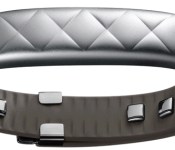
Jawbone Announces ‘UP3’ Wristband with New Sensors, ‘Smart Coach’ Functionality [iOS Blog]
Jawbone today announced the third iteration of its UP wristband, which features an adjustable design and a number of new sensors that more effectively track sleep and physical activity.

Jawbone has added a new tri-axis accelerometer, skin and ambient temperature sensors, and set of “bioimpedance” sensors that allow the UP3 to analyze a wide range of biometric data. The UP3 can measure resting heart rate and can track detailed sleep stages including REM sleep, light sleep, and deep sleep. The device can even identify the type of workout being performed and classify activities like tennis, running, cross-training, and more.
The UP3 uses the biometric data to power what Jawbone calls the “Smart Coach”, which is a feature built into the UP app that keeps track of progress and makes suggestions based on a user’s recent actions. For example, getting two hours of deep sleep causes the Smart Coach to inform the user about the extra energy they’ll have during the day, while completing an extended tennis match triggers a reminder to rebuild energy by eating a meal. The Smart Coach also improves its suggestions as more activities is tracked and more tasks are completed on the UP3.
The UP3 also now features a slim design that can be adjusted to fit wrists of different sizes, and is made out of a durable aluminum material. Jawbone says the UP3 gets up to seven days of battery life and is water resistant. The Jawbone UP3 will be available later this year for $179.99 at the company’s own website and will also be sold at Apple Stores and Best Buy locations. Jawbone is also launching the $49.99 UP Move, which includes an accelerometer and support for Smart Coach functionality.
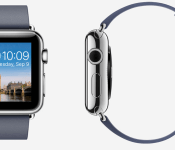
Apple Watch Pricing to Reportedly Start at $500 for Stainless Steel, $4,000 for Gold
French Apple website iGen.fr is reporting [Google Translate] that pricing for the stainless steel Apple Watch may start at $500, while the gold Apple Watches’ pricing could start between $4,000 and $5,000. iGen.fr has been reliable in the past, most recently reporting the dimensions of both the iPhone 6 and 6 Plus.

While Apple had announced that the Apple Watch would start at $350, which was widely assumed to be the price of the aluminum model, and estimates pegged the price of the gold Apple Watch at prices as low as $1,000 or as high as $5,000, there has been little information regarding the pricing of the stainless steel option.
The site’s sources also indicate that Apple still aims to release the Apple Watch by Valentine’s Day 2015, which somewhat echoes an earlier report that said the company would be “lucky” to release the device by that timeframe. iGen.fr also mentions that manufacturers and resellers are preparing as if the Watch would release in mid-February 2015. Previously, Apple Senior Vice President of Retail and Online Stores Angela Ahrendts said the Watch would release in Spring 2015.

Michael Fassbender in Talks to Play Steve Jobs in Upcoming Sony Biopic
 Following yesterday’s news that Christian Bale had opted to pull out of Sony’s upcoming Steve Jobs biopic penned by Aaron Sorkin, Variety has shared news that Michael Fassbender is now in talks to take on the role of Steve Jobs.
According to the site, Fassbender is in “early talks” with director Danny Boyle and Sony executives about possibly starring in the film. Fassbender, while less well known than Christian Bale and previous Jobs candidate Leonardo DiCaprio, has been in several high profile movies including Inglourious Basterds, Prometheus, 12 Years a Slave, and The Counselor. He’s perhaps most widely known for his role as Magneto in X-Men: First Class and X-Men: Days of Future Past.
Aaron Sorkin’s upcoming Steve Jobs biopic focuses on three continuous 30-minute scenes that depict three of Jobs’ product launches including the debut of the Mac, the introduction of the NeXT Computer, and the release of the iPod.
While it is unclear who will take on the role of Steve Jobs, Seth Rogen is reportedly in talks to play Apple co-founder Steve Wozniak. Jessica Chastain, from The Help is also being considered for an unspecified role in the film.

