


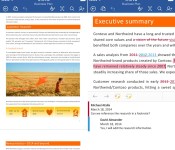
Microsoft Launches New Office Apps for iPhone, Makes Creating and Basic Editing Free on iOS
Back in March, Microsoft launched dedicated Word, Excel, and PowerPoint apps for the iPad in a first effort to bring Office capabilities to everyone, everywhere. The apps have been highly successful, garnering more than 40 million downloads, and as of today, Microsoft is expanding its Office for iOS suite, offering dedicated Word, Excel, and PowerPoint apps on the iPhone.
While Microsoft’s Office apps for the iPhone have been designed with the existing iPad apps in mind, offering full feature parity, the iPhone versions have been built to adapt to the iPhone’s smaller interface and optimized to put touch controls first.
All three apps take advantage of an innovative “vertical ribbon” that puts a full suite of editing tools right within thumb’s reach at the bottom of the device’s screen. Each individual app also has built-in tools to make the viewing experience more streamlined on the iPhone’s Retina screen.

Word for iPhone, main view and review changes view
In Word, there’s a Reflow button (located at the top menu bar) that shifts to a mobile-optimized view for reading and previewing what’s been added to a document, and in Excel, Microsoft has focused on making it simple to edit formulas. Tapping on a cell brings up editing buttons and a dedicated formula keyboard.
Excel has a fullscreen view that lets users have an unobstructed view of their spreadsheets, and PowerPoint has similar tools, including the ability to project slides from the iPhone using AirPlay.

Excel for iPhone, main view and Pivot Table view
Today’s Office update that brings Microsoft’s popular productivity apps for the iPhone also includes new features and functionality for the iPad versions.
In addition to expanding its Office apps to the iPhone and updating its iPad apps, Microsoft has also decided to offer the core Office experience on the iPhone and iPad to all users for free. That means Office users will no longer be required to have an Office 365 subscription in order to access features like basic editing.
Word, Excel, and PowerPoint users on iOS will be able to view, edit, create, and print documents for free, but many advanced editing capabilities will still be reserved for Office 365 subscribers. For example, advanced change tracking features in Word such as accepting or rejecting changes are reserved for subscribers, as are Pivot Tables in Excel and Presenter View in PowerPoint. Office 365 subscribers also get 1TB of OneDrive storage.
Microsoft’s Office apps for the iPhone are compatible with the iPhone 5, 5c, 5s, 6, and 6 Plus, and include full optimization for the two larger-screened iPhones. iOS 7 or later is required.
Since releasing Office for iPad in March, Microsoft has added 150 new features. Microsoft’s Principal User Experience Manager Han-yi Shaw told MacRumors that the company will continue to aggressively add features in the future, and it is investigating new iOS 8 technologies like Handoff.
Microsoft’s updated apps, which are now universal, will be available today from the App Store.

Opera Mini for iOS Updated with ‘Video Boost’ Feature, iPhone 6 and 6 Plus Report [iOS Blog]
Web browser Opera Mini today received an update to version 9, bringing support for the iPhone 6 and 6 Plus in addition to a number of new features. Most notably, Opera Mini now includes a “Video Boost” setting which promises to cut down on buffering times while conserving mobile data. The app also now features extended Speed Dial functionality for saving bookmarks, and supports the larger displays of the iPhone 6 and the iPhone 6 Plus.
So, what exactly happens to the video data when it is optimized? When you select a video to watch, our servers take a quick peek at the video’s resolution and quality. Video data that’s too big is shrunk before it lands on your phone, lessening buffering time. All this happens in the blink of an eye.
Opera Mini launched in 2011 as one of the first third-party alternatives to Apple’s iOS version of Safari and reached a million downloads in its first few days of availability. Since then, the app has seen a number of significant updates which have brought speed improvements, better mobile data optimization, and Speed Dial functionality.
Opera Mini is a free app for iOS devices and can be downloaded through the App Store. [Direct Link]

Apple Opening New Retail Store in Lille, France Saturday, November 15 [Mac Blog]
Apple today announced on its website (via ifoAppleStore) that it will be opening its store in Lille, France on Saturday, November 15. The store will be located on 1 Rue Faidherbe, which also hosts a number of other luxury retailers and outlets. The store itself will contain two levels and span 1400 square meters (15000 square feet) and wrap around the city block, offering a wide amount of space for both sales and services.

Apple put up its traditional black barrier around the store just last week, with the location marking Apple’s eighteenth store in France. The Apple Store Opéra in Paris has become known as one of the company’s most visually stunning locations, as Apple also has stores in Dijon, Lyon, and Nice.
Apple is expected to hand out commemorative T-shirts to the first 1,000 customers to visit. The Apple Store Lille opens at 10 A.M. on Saturday, November 15, and the location has begun accepting reservations for workshops and Genius bar appointments.
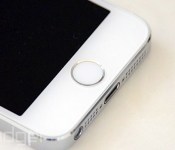
New Apple malware can infect your iPhone or Macbook via USB

China and Apple devices still aren’t getting along super well, it turns out. WireLurker’s a malware that’s been attacking Cupertino’s ecosystems in the region for the past six months, and according to cyber-security firm Palo Alto Networks (which discovered it), it’s the biggest that’s delivered via trojan-horse OS X apps. What’s more, it’s the first that can infect iOS applications like a traditional virus, and even auto-generates infected software. Some 467 apps have been infected and downloaded over 350,000 times, and could have affected “hundreds of thousands” of users. And here’s where the regional issue comes into play: the malware is hosted on Maiyadi, a Chinese, third-party app store.
That isn’t the only way for WIreLurker to attack, though — it can gain access to iOS devices via USB as well, and even through a charger it seems. Oh, and you can infect an OS X device by connecting your iPhone or iPad via USB, too. Sounds fun, right? That isn’t the half of it as once your device is compromised, WireLurker will snag your phonebook and read through any iMessages. The malware’s ultimate goal, however, isn’t clear just yet. Palo Alto Networks says to avoid it, don’t connect to any unfamiliar devices (desktop or otherwise) to one another and avoid any strange chargers too. We can’t imagine that Justin Long is super happy about any of this.
Filed under: Cellphones, Desktops, Laptops, Mobile, Apple
Via: New York Times
Source: Palo Alto Network

Jimmy Iovine and Dr. Dre Discuss Their New USC Academy Focused on Technology and Liberal Arts
In a new profile of Beats co-founders and new Apple employees Dr. Dre and Jimmy Iovine, The Wall Street Journal interviews the duo about their newly launched undergraduate academy at the University of Southern California called the USC Jimmy Iovine and Andre Young Academy for Arts, Technology and Business of Innovation. The Beats co-founders, who bankrolled the academy with a $70 million gift last year that led to the first students being enrolled this past August, are being profiled as part of the WSJ. Magazine 2014 Innovator Awards.
 Photo courtesy of The Wall Street Journal
Echoing Steve Jobs’ description of the philosophy of Apple, the school is aimed at preparing young people to be able to work in businesses that are at the intersection of technology and liberal arts.
“We wanted to build a school that we feel is what the entertainment industry needs right now,” he says. “There’s a new kid in town, and he’s brought up on an iPad from one and a half years old. But the problem with some of the companies up north [in Silicon Valley] is that they really are culturally inept. I’ve been shocked at the different species in Northern and Southern California—we don’t even speak the same language. The kid who’s going to have an advantage in the entertainment industry today is the kid who speaks both languages: technology and liberal arts. That’s what this school is about.”
Erica Muhl, the school’s first executive director, says that while other schools aim to mix business and technology, none of them add in the arts or culture. Iovine says the school’s goal is to “find kids who can work at Beats or at Apple”.
While Iovine and Dre unsurprisingly haven’t shared what their exact roles at Apple will entail, The Wall Street Journal notes that one of the primary things on their minds is to marry people who create art with those who distribute it.
“I think what you’re seeing more and more are companies that are designed to do multiple things,” Iovine says. “If you look at the Beats model, there’s software and hardware. Look at what Amazon is doing; look at what Google’s trying to do. It’s technology and content in one.”
In recent months, Apple’s music strategy has seen increased cooperation from artists in its distribution channels. In December, Beyoncè launched her newest album exclusively on iTunes with no advance promotion, while iTunes Radio has consistently featured specially curated radio stations from artists like Sam Smith. More recently, Beats Music highlighted on Twitter that its service will still stream Taylor Swift’s music after she decided to pull her content from rival streaming service Spotify. Apple is expected to launch a revamped version of Beats Music in early 2015.
The full profile, which includes anecdotes on the creation of Beats Music and how Iovine had always wanted to work with Apple, as well as examples of what students are doing at the new school, can be found at The Wall Street Journal.
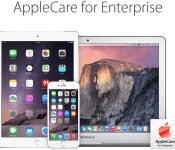
AppleCare for Enterprise With On-Site Support From IBM Now Live
Earlier this year, Apple and IBM announced a major enterprise mobility partnership that would see IBM selling iOS devices to its corporate customers, creating industry-specific native apps, providing iOS-optimized cloud services, and providing support for a new AppleCare service.
IBM and Apple are now moving forward with their partnership, and Apple has recently launched a new AppleCare for Enterprise website, suggesting that its promised enterprise-grade AppleCare plan is now available for IBM’s enterprise customers.

As detailed on the website, all AppleCare for Enterprise accounts are handled by an AppleCare Account Manager, providing a personal liaison with AppleCare. Apple promises a one-hour response time for all urgent issues, with IT department-level support available 24/7 via phone or email. All AppleCare for Enterprise customers can also replace 10 percent of damaged iOS devices, giving businesses an easy way to replace iPads or iPhones that have been accidentally damaged by employees.
As promised during the announcement of its IBM partnership, Apple is offering an onsite hardware repair service for AppleCare for Enterprise customers. While Apple is handling all email and phone requests, IBM Global Technology Services will provide onsite repairs.
You have the option to get onsite service coverage for two or three years from the date of your hardware purchase. If you have a hardware issue during that time, AppleCare for Enterprise will help get you back up and running quickly. IBM’s Global Technology Services, a worldwide Apple Authorized Service Provider, will provide onsite service within the next business day.
The new AppleCare for Enterprise site comes just ahead of IBM’s first dedicated enterprise-focused iOS apps. During Apple’s recent earnings call, Tim Cook said that next month, IBM will introduce apps across six sectors: banking, government, insurance, retail, travel, and transportation and telecommunications.
Pricing on the Enterprise plans is unknown, but enterprise customers interested in finding out more about Apple’s AppleCare for Enterprise plans are encouraged to contact their Apple or IBM Account Executives.
MCX CEO Touts Loyalty Perks of CurrentC, Says There Are ‘Consequences’ for Breaking Exclusivity Terms
 Apple Pay competitor Merchant Customer Exchange or MCX, which is a group of retailers working on a QR-code based payment system called “CurrentC,” has been in the spotlight in recent weeks after two prominent MCX members, Rite Aid and CVS, opted to remove Apple Pay support from their retail stores.
After a glut of negative press and a hacking incident, MCX executives have been scrambling to defend CurrentC, hosting a press conference and doing several interviews.
The latest information on MCX and CurrentC comes courtesy of The Verge, in an interview conducted with MCX CEO Dekkers Davidson.
According to Davidson, when it comes to security, CurrentC uses the same tokenization system Apple Pay is based on, replacing card numbers with random numbers. He also says that if customers want to be “totally anonymous” to retailers, “they’ll get that.”
We think Apple Pay, which has also embraced the concept of low value tokens as we did three years ago, we’re probably in simpatico on that one. I pull out my phone, I hold up my phone with a QR code that says “I am a customer at lane 6″, and now we’re each sent a token and a message to the cloud that says “I am the seller” and “I am the buyer and I want to pay for this transaction with the payment instrument that I’ve selected in my phone.” There’s no piece of paper to sign, there’s no print out, there’s no signature to hand back. There are never credentials in my device at the point of sale, it all occurs in a secure server. So like with Apple, if anyone were to intercept the low value tokens there’s nothing they could do with that.
One of the major draws of CurrentC that MCX executives have highlighted time and time again is its ability to incorporate loyalty cards and discounts, suggesting consumers want more than just a payment method. Davidson pointed out that the average American household is signed up for 18 loyalty programs but only uses a handful, with CurrentC making it “rewarding” and “hassle free” for customers to take advantage of loyalty programs. The CurrentC app offers automatic credits, points, and coupons, which are redeemed with each transaction.
This puts all the power in the hand of the consumer to make it simple, to make it rewarding and to make it hassle free. So for us, it’s a lot more than about payments. Paying by mobile is a flat value proposition, it’ll be cool for a while, but we hear from our merchants and they hear from their consumers that they want something that brings it all together, that’s what we’re doing.
On the subject of QR codes, Davidson says that CurrentC is “quite forgiving.” Customers will not need to hold their phones “at a certain angle with certain light,” and it’s “designed to read a QR code pretty quickly.” Davidson pointed towards Starbucks as a QR code success story, and said Starbucks is an “inspiration.”
Davidson also commented on MCX’s exclusivity agreements that have prompted stores like CVS and Rite Aid to stop accepting Apple Pay, while MCX member Meijer has continued to offer Apple’s payment solution. “They have to make the decision that’s best for their business,” he said, but he went on to say that defying MCX’s exclusivity agreements does have “consequences.” Merchants who do not keep agreements will not see MCX “put a lot of energy in helping get [them] launched in the near term.”
Davidson’s full interview, which also includes details on why he thinks customers will use CurrentC, more of his thoughts on QR codes, and more information on the recent hacking attempt that saw customer email addresses compromised can be found over at The Verge.
Researchers Discover New ‘WireLurker’ Malware Affecting Macs and iOS Devices in China
 Researchers from Palo Alto Networks (via The New York Times) have published a research paper on WireLurker, a malware new family that’s been infecting both Mac OS and iOS systems over the course of the past six months. The researchers say that WireLurker, which is targeting users in China, “heralds a new era in malware attacking Apple’s desktop and mobile platforms.”
The WireLurker malware is the “biggest in scale” in the trojanized malware family, and it is able to attack iOS devices through OS X using USB. It’s said to be able to infect iOS applications similar to a traditional virus, and it is the first malware capable of installing third-party applications on non-jailbroken iOS devices “through enterprise provisioning.”
Thus far, WireLurker has been used in 467 OS X apps in the Maiyadi App Store, which is a third-party Mac app store in China. The apps have been downloaded 356,104 times, infecting hundreds of thousands of users.
According to the researchers, WireLurker looks for iOS devices connected via USB to an infected Mac, installing malicious third-party applications onto the device even without a jailbreak.
WireLurker monitors any iOS device connected via USB with an infected OS X computer and installs downloaded third-party applications or automatically generated malicious applications onto the device, regardless of whether it is jailbroken. This is the reason we call it “wire lurker”. Researchers have demonstrated similar methods to attack non-jailbroken devices before; however, this malware combines a number of techniques to successfully realize a new brand of threat to all iOS devices.
WireLurker exhibits complex code structure, multiple component versions, file hiding, code obfuscation and customized encryption to thwart anti-reversing. In this whitepaper, we explain how WireLurker is delivered, the details of its malware progression, and specifics on its operation.
Once installed, WireLurker can collect information from iOS devices like contacts and iMessages, and it’s able to request updates from attackers. It’s said to be under “active development” with an unclear “ultimate goal.”
Palo Alto Neworks offers several recommendations for avoiding apps infected with WireLurker, including an antivirus product and Mac App Store installation restrictions that prevent apps from unknown third parties from being installed. Users should not download and run Mac apps or games from third-parry app stores, download sites, or other untrusted sources and jailbreaking should be avoided.
Unknown enterprise provisioning profiles must be avoided as well, and users should avoid pairing their iOS devices with unknown computers or charging with chargers from untrusted or unknown sources.
Palo Alto Networks has notified Apple of the malware, but an Apple spokesperson declined to offer a comment.

Google Wallet usage doubles on heels of Apple Pay arrival

Let us not forget that Apple Pay is not the only mobile payment system out there. Google Wallet has been around for more than three years. The mobile payment system from Google ran into an issue to remain relevant and now the company rarely talks about it. Luckily, the arrival of Apple Pay seemingly sparked interest in Google Wallet.
The usage of Google Wallet has incredibly doubled in just one month, according to what sources told Ars Technica. That is the period of time that led up to the launch of Apple Pay. And it actually goes beyond just that time period. Google Wallet has been seeing growth for the last few months. This doesn’t necessarily mean that the figures are huge, though. It just means that more people are using Google Wallet than before. So while on paper it sounds great (and it is), understand what it means.
The issue that remains is retailers coming together to block Apple Pay and Google Wallet, redirecting them to something of their own. CurrentC launched recently from a band of retailers including Walmart and Best Buy. Well, that is a great solution if it was secure. Unfortunately, it is not. CurrentC was hacked before its public launch.
Source: Ars Technica
Come comment on this article: Google Wallet usage doubles on heels of Apple Pay arrival
Apple Sending Emails Encouraging Customers to Upgrade to iOS 8
Apple is encouraging customers that have opted to stick with older versions of iOS to upgrade to its latest mobile operating system, iOS 8, released to the public in September.
The company has been sending out emails to iOS users who have yet to install iOS 8, letting them know that their “iOS 8 update is waiting.” The email offers information on what’s included with iOS 8, detailing features like QuickType, the new Health app, Family Sharing, iCloud Drive, and Continuity.
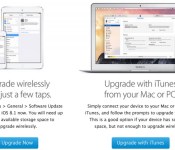
It also gives specific installation instructions, letting users know that they can upgrade wirelessly using the Software Update tool or through iTunes if their devices are low on space. Apple’s iTunes installation tip could spur quite a few users to upgrade, as a lack of free space on low capacity devices appears to be one of the major factors preventing users from updating.

iOS 8 adoption has been somewhat slower than iOS 7 adoption, and just three weeks after it was released, iOS 8 installation numbers had stagnated. While we originally chalked this up to a number of significant bugs in the operating system, our readers quickly pointed out that an over-the-air update requiring 5GB of free space was a major hurdle to overcome. Many users seem to be unaware that installing via iTunes is an option, as evidenced in one comment on our forums:
I have friends who are still on iOS 7 because they don’t have enough free space available to upgrade. When I tell them they can upgrade by connecting their phones to their computers, and thus, doing it through iTunes, they look at me like I’m crazy, or like it’s 2008 or something.
Over the course of the last week, iOS 8 adoption numbers have picked up somewhat, after Apple introduced new features like Apple Pay with the recent iOS 8.1 update. As of October 27, Apple’s official installation numbers suggested the OS was on 52 percent of devices, up from 48 percent on October 13, and data from MixPanel suggests that number has risen even higher in November, hitting 59 percent.
(Thanks, Jaime!)

