


Apple’s negotiation tactics might be hurting its TV plans
We’re nearly a year into the era of the newest Apple TV, which packs plenty of power, access to apps and a reworked remote with Siri voice control. Despite the new hardware, rumors of a big Apple push into TV still haven’t turned into anything real. A report from the Wall Street Journal may help explain why by claiming negotiations with companies like Comcast and Time Warner Cable fell apart over things like how much the cable companies would pay Apple and how they would share customer information.
Attempts to bypass cable companies and negotiate directly with studios are said to have fallen apart in a similar fashion. The sides couldn’t work out which channels to include, if rates would increase annually the way they do with cable, or on implementing features customers want like a cloud DVR and the ability to skip ads. The studios are also leery of ceding too much control to Apple, aware of the influence it has gained in industries like music and books. Instead, Apple’s strategy — for now– seems to revolve around incremental improvements to the experience on Apple TV and picking up content like Carpool Karaoke to fill out its Apple Music package.
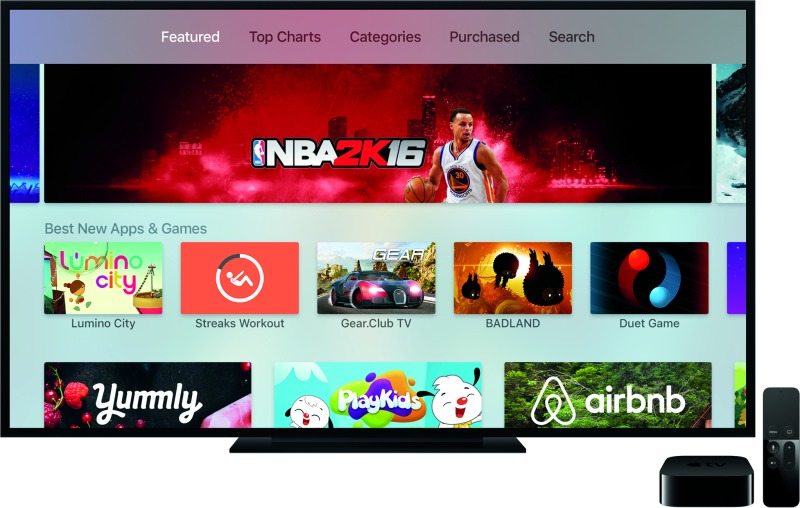
As I wrote in 2012 (when Apple television rumors were still a thing) despite the obvious reasons why Apple would want to be in the TV market, it has to deal with incumbents who are currently raking in massive amounts of money under the current setup. They have little incentive to make the special kinds of deals Apple wants so that it can control the customer experience to its liking. The only thing that may change that is if the business changes dramatically or regulations somehow force the industry into a new deal, and so far, neither has occurred.
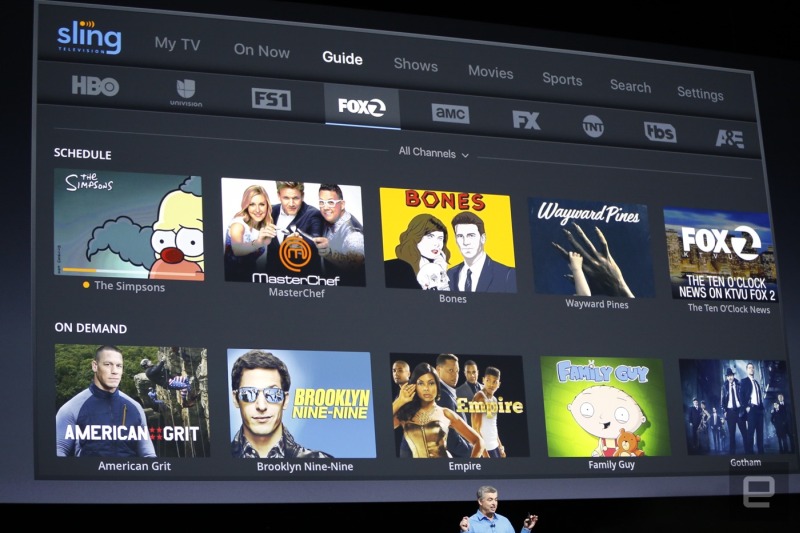
At the moment, TV companies have dug into their positions deeper than ever. Dish is pushing Sling TV, AT&T purchased DirecTV and Hulu is… still trying. Comcast failed in an attempt to buy Time Warner Cable, launched a streaming TV service that it’s failed to expand beyond a couple of cities, and is pushing its next-gen X1 cable boxes. Time Warner’s HBO finally launched an internet-only version of its channel (that was initially exclusive to Apple products), while CBS has already signed up millions of customers for its apps — the list could go on and I haven’t even mentioned worldwide TV provider Netflix or Amazon Prime.
Apple CEO Tim Cook:
On the Apple TV question…you shouldn’t look at what’s there today and think we’ve done what we want to do. We’ve built a foundation that we can do something bigger off of.
It seems inevitable that someday, Apple will get to show and prove its vision for the future of TV. While the TV industry reacts to shrinking subscriber and sales numbers, Apple’s latest earnings report showed lower sales numbers that could make it more eager to strike a deal and CEO Tim Cook suggested on the earnings call that his company would do more with TV in the future. The only problem? We’ve heard that before, back in 2012, and with SVP Eddie Cue reportedly telling people “time is on my side” it’s hard to say who will blink first, if ever.
Source: Wall Street Journal
Square Enix’s first Apple Watch RPG is stylish yet dull
There aren’t enough dedicated apps for the Apple Watch, let alone role-playing games from established publishers like Square Enix. The name alone conjures images of classic RPGs: Final Fantasy, Chrono Trigger and Valkyrie Profile to name a few. That’s why Cosmos Rings, the company’s first Apple Watch-exclusive RPG, feels like such a departure from the norm. It’s vivid, gorgeous and inspired, but unfortunately it falls victim to the very same cliches of so many mobile games that came before it.
At first glance, Cosmos Rings looks quite promising, with a narrative that’s par for the course when it comes to JRPGs. As the God of Time, you’re tasked with wandering an endless expanse called the Rift in a bid to restore time to the way you once knew it. After being moved to stop time to grant the wishes of human beings, you’ve got to repent for causing the Goddess of Time to shatter into pieces. Her crystallized remains were scattered throughout the Rift, and it’s up to you to make things right. Lost love? Check. Protagonist taking it upon himself to make things right? Double check. Now all it needs is an amnesiac to fill the rest of its RPG trope quota.

The Rift acts as the stage on which Cosmos Rings plays out. Get used to the way it looks, because you’re going to be seeing a whole lot of it. After you launch the iPhone app and open up the companion version on your Apple Watch, you’re met with a bit of expository story coupled with artwork that’s meant to move you along. These quickly introduce additional characters whose presence don’t immediately make sense in the context of the God of Time’s story, but you’ll soon realize it won’t matter much when the game basically plays itself, barring a few player-controller machinations.
That’s right — Cosmos Rings is essentially an incremental game that requires little or no input from you. The game is perfect for the diminutive Apple Watch screen, and its neon pixel art absolutely sings on the small display. But in the end, it’s little better than playing Tap My Katamari or Cookie Clicker with a few added mechanics.
The God of Time continues to run headlong into the Rift, fighting off enemies as they appear before him. This is your default screen among the three the game’s comprised of. The God will automatically attack on his own, but if you so desire you can tap the Skills button at the lower right of the screen to utilize various attacks you’ll earn along the way. If you wait for the timer to count down and then fire off a Skill right after the first one, you can chain them for additional damage. You can also rotate the Apple Watch’s Digital Crown to head to the Fragments screen, where you can spend Fragments (displayed on-screen as you collect them in battle) to upgrade your weapons, unlock additional skill slots and most importantly, earn more time.
You’ll want to keep a close eye on the time you’re allotted, especially if you don’t want to keep playing the same “days” over and over. There’s a timer at the bottom left of the screen that continually counts down. Essentially, that’s your HP gauge. Let it run out, and you’re forced to start the game from the beginning, though you’ll retain any Skills or Relics acquired in the process.

It’s more akin to a roguelike in this respect than an RPG, and is one of the most challenging elements of Cosmos Rings. If you make a mistake or forget to use Fragments to level up or augment your equipment, you can also use the digital crown of your Apple Watch in the Rift to rewind time to a specific “hour,” as the game is split into during each day, to go back and do it all again. These light strategic elements add a little variety, but the game is otherwise so hands-off you’ll wonder why you’re even interacting with it.
Bizarrely, time doesn’t cease counting down unless you’re fighting a boss, when the ticker hits 3 minutes, or during a story event where you’re given a slice of story. So if you’re planning on not playing for a long stretch of time you’ll need to make sure you do keep an eye on the game when you want to make progress. It’s almost like toting around a Tamagotchi or a Giga Pet, except you can’t let your “pet” die.
Cosmos Rings is a strange amalgam of clicker mechanics, colorful pixelated graphics and a score that you’ll want to listen to more than once, but it’s also lacking in the RPG department. When compared to its competition, a fantasy adventure called Runeblade from Everywear Games, Cosmos Rings seems feature-deficient. The former utilizes several of the same mechanics Cosmos Rings does (namely time travel), but offers an offline mode, various quests, and other reasons to keep you coming back. It’s hard to recommend Square Enix’s offering over Runeblade, especially since Runeblade is free.
If you’re looking for something to idly tap on while on the way to work or need to use your Apple Watch for a use beyond regular apps, it’s an interesting experiment. If you’re hoping for anything more than an endless grind with little input required from you, you might want to take your 3DS or Vita with you along for the ride instead. Cosmos Rings is available now as an Apple Watch exclusive.
Source: App Store
Apple brings on new talent for autonomous car initiative
Apple has brought on the former head of BlackBerry’s automotive software division to lead its own self-driving car tech projects.
The latest addition to the Apple team previously founded and acted as chief executive officer of QNX, the operating system developer acquired by BlackBerry back in 2010. Dan Dodge joined Apple earlier this year to assist a team headed by Bob Mansfield. As part of Project Titan, Apple’s automobile initiative, Dodge is helping to research development of a new automated driving system in tandem with storied plans for Apple to create its own vehicle. This marks a change in direction from Apple’s previous plans for simply creating its own automobile.
In addition to Dodge, Apple has employed hundreds of additional employees who have been tasked with designing cars for a projected release date of 2020. While this date has changed several times over with the addition and departure of team members and switches in direction.
Via: Bloomberg
Control Nest thermostats with your Apple Watch
The whole idea behind Nest’s smart thermostats is ease of use. And now in case you’d rather not fish your iPhone out of your pocket (or go on a hunt through the couch cushions for it), the smart home gadgets are controllable with an Apple Watch. The update seems pretty straightforward, right? That’s because it is. Assuming your Watch hasn’t run out of battery or your Nest gizmo works at all, of course.
Via: TechCrunch
Source: iTunes
Apple Engineer to Discuss iOS Security at 2016 Black Hat Event
Apple engineer Ivan Krstic is scheduled to host a discussion at this year’s Black Hat Conference, offering a “Behind the Scenes” look at iOS security. Black Hat is an annual event designed for the global InfoSec community, giving security professionals a place to meet up and gain training on new techniques.
According to an overview of Krstic’s talk, three iOS security mechanisms will be discussed in “unprecedented technical detail,” including the first public discussion of Auto Unlock, a feature new to iOS 10.
HomeKit, Auto Unlock and iCloud Keychain are three Apple technologies that handle exceptionally sensitive user data – controlling devices (including locks) in the user’s home, the ability to unlock a user’s Mac from an Apple Watch, and the user’s passwords and credit card information, respectively. We will discuss the cryptographic design and implementation of our novel secure synchronization fabric which moves confidential data between devices without exposing it to Apple, while affording the user the ability to recover data in case of device loss.
Krstic will also cover the Secure Enclave Processor present in iOS devices that include the iPhone 5s and later, creating a discussion around how it enabled a new approach to Data Protection key derivation and brute force rate limiting within a small TCB, and he’ll cover browser-based vulnerabilities and new protective features in iOS 10 Safari.
The 2016 Black Hat Conference will take place from July 30 to August 4 at the Mandalay Bay hotel in Las Vegas, Nevada. Tickets are priced at $2,595.
Discuss this article in our forums
Drinkbox’s creeptastic ‘Severed’ arrives on iOS today
The days are basically numbered for Sony’s beleaguered portable console, the PS Vita, and they have been for some time. But that hasn’t stopped indie developer Drinkbox Studios from supporting it. Three of the company’s four games have been released for the Vita (including the excellent Guacamelee!), and the latest (hack-and-slash explorer Severed) came out earlier this year as a Vita exclusive.
However, Drinkbox knows that it needs to move beyond Sony’s aging handheld: That’s why Severed is coming to iOS devices as well as Nintendo’s Wii U and 3DS. The iOS port arrives today ready for the iPhone and iPad and costs $6.99. That may be a little expensive for an iOS game, but it’s less than half of what the game costs on the Vita. And it dramatically expands the number of people who’ll get a chance to play Severed.

Previous Drinkbox games eventually made their way to various Xbox and PlayStation consoles, but Severed relies heavily on the touchscreen, making iOS and Nintendo’s platforms a far better match this time out. I played an pre-release version of the game on iOS, and it seems particularly well-suited to the wide expanses of the iPad’s screen (though it works on the phone, as well). Slashing your way through enemies feels great on the big screen, and the two-finger gesture to adjust your character’s first-person view is a totally natural gesture.
Everything about the Vita version of the game is intact here, including Drinkbox’s signature bright and eerie art style and some wonderfully creepy atmospheric music. It may cost more than the average game, but Severed is a pretty extensive experience as far as iOS games go. It also has a number of new iOS features, including cloud save across multiple devices, game center achievements, graphics optimizations using Apple’s Metal technology and an easier “casual” difficulty mode.
If you’re a Vita fan, however, Drinkbox has some sad news: It sounds as if Severed will be the studio’s last game for the handheld. “We’ve talked about if we were ever to do a Kickstarter, the Vita might be a stretch goal,” Drinkbox’s Graham Smith told me. “We have an internal game engine that we use that really works well with iOS now, so now all things being equal it’s just as easy to put out a game on iOS as it is on the Vita,” Chris McQuinn from Drinkbox adds. “We love the Vita, but we also need to survive financially.”

But the good news is that Drinkbox appears to be more than capable of bringing its distinctive style to iOS. The company has made some excellent games thus far, regardless of platform, so it’ll be interesting to see what happens once they start building games from the ground up with iOS in mind. And the company’s support of the Xbox One and PlayStation 4 thus far means we’ll likely see new games there in the future as well.
Samsung Doubles Apple’s Share of Smartphone Market as Customers Await iPhone 7
The latest data from market research firm IDC reveals that Samsung shipped nearly twice as many smartphones as Apple in the fiscal third quarter. Android-based Galaxy smartphone shipments totaled an estimated 77 million, compared to 40.4 million iPhones, during the three-month period that ended in late June. For Apple, the fiscal third quarter is seasonally its lowest of the year.
Samsung was the most popular smartphone vendor in the quarter with a leading 22.4 percent market share, nearly double Apple’s 11.8 percent market share. Samsung experienced 5.5 percent year-over-year growth on the strength of the Galaxy S7 launch in March, whereas Apple declined 15 percent compared to the year-ago quarter as customers await the iPhone 7 series in September.
One bright spot for Apple was the lower-priced iPhone SE, although the iPhone’s average selling price dropped to $595 compared to $662 last year:
Apple’s second quarter saw the Cupertino-based giant ship 40.4 million iPhones, representing a 15.0% year-over-year decline from the 47.5 million units shipped last year. The new 4-inch iPhone SE proved successful in both emerging and developed markets as the new SE has captured many first-time smartphone buyers as well as Android users switching over to the Apple ecosystem. The success of the cheaper SE did, however, have an impact on the overall average selling price (ASP) for an iPhone in the quarter. The ASP for an iPhone was $595, down 10.1% from $662 one year ago. As smartphone competition continues to escalate and upgrades continue to slow, Apple will look to drive sales with a newly designed iPhone 7 combined with their upgrade program come this fall.
Apple also ceded market share to Chinese rival Huawei, which ranked third among smartphone vendors with an estimated 32.1 million shipments and 9.4 percent market share. Huawei manufactures Google’s popular Nexus 6P and introduced new dual-camera P9 and P9 Plus smartphones in April, but its presence in the United States and other regions is still limited compared to China.

Chinese rivals OPPO and Vivo rounded out the top five smartphone vendors with quarterly sales of 22.6 million and 16.4 million units respectively. OPPO in particular saw explosive 136.6 percent year-over-year growth over the three months, increasing its market share to 6.6 percent compared to 2.8 percent in the year-ago quarter. Vivo had 9.1 percent market share, an 80.2 percent year-over-year change.
Worldwide smartphone shipments totaled an estimated 343.3 million units in the quarter, an increase of only 0.3 percent from the year-ago quarter, when vendors shipped an estimated 342.4 million units. The relatively flat growth is the result of market saturation and lengthening upgrade cycles, which vendors have attempted to offset by offering incentives such as the iPhone Upgrade Program.
On Wednesday, Apple CEO Tim Cook said the company recently sold its 1 billionth iPhone.
Tags: Samsung, IDC, Apple, Huawei
Discuss this article in our forums
Australia’s biggest banks are tackling Apple Pay
Some of the largest banks in Australia are banding together to protest Apple and its Apple Pay service. Apple Pay first launched in Australia back in April alongside Samsung Pay and Android Pay. Those two payment solutions aren’t attracting the banks’ ire, however. Apple’s option is the target of the banks because they’re unable to provide their own personalized mobile payment options in competition with Apple Pay — the Cupertino company doesn’t allow third-party payment apps with iOS.
So the Commonwealth Bank of Australia and Westpac as well as National Australia Bank, Bendigo and Adelaide Bank have filed an application with the Australian Competition and Consumer Commission to negotiate with Apple and get beyond the rockiness of the situation all without having to worry about anti-competition laws.
There was one bank that did partner with Apple in the end: ANZ (Australia and New Zealand Bank.) It is not currently a part of the complaint filed by the other institutions.
Via: TechCrunch
Source: ACCC (PDF)
Apple has finally sold its billionth iPhone
Apple has managed to pull in some extremely impressive numbers when it comes to its flagship mobile phone. While iPhone sales overall had begun to decline over the last quarter, that didn’t stop the company from selling its one billionth iPhone last week.
Apple’s CEO announced the milestone today during a special employee meeting in Cupertino this morning. Tim Cook, Apple CEO, thanked employees for “helping change the world every day,” noting that Apple has “always set out to make the best products that make a difference.”
The billionth iPhone was sold about two years after Apple sold its 500 millionth iPhone. That’s a lot of units, and with the impending launch of additional phones to its line, it’s likely to sell a whole lot more in the future.
Via: TechCrunch
Apple patents stylus that doubles as a joystick, air mouse
A simple, high-quality pressure-sensitive stylus is all well and good for tablets, but can such a device really meet the needs of a desktop user? That seems to be the question Apple’s asking with its latest patent. The company’s latest technology patent dreams up a do-everything stylus capable of being a drawing device, air mouse and even a joystick.
Over 17 patent claims, Apple outlines a stylus packed with pressure sensitivity and six and nine-axis inertial sensors — and describes a peripheral that can stand in for any number of devices. Used on a touch surface, for instance, the stylus might function as a normal pen. Lifted off a surface, it could be used to perform gestures or mouse movements. Standing on its tip, one could use it as a joystick, or rotate it left and right to turn a dial or move an object on a nearby computer screen.
It definitely sounds like a more advanced stylus than we see with most tablets, or even with Apple’s own Pencil — but not all patents make it to market. Still, the attached art shows the prospective device being used with what looks like a Mac, so at the very least we know that Apple’s /thinking/ about new input devices for its desktop line. Check out the patent for yourself at the source link below.
Source: USPTO
 AIVAnet