



Save Mart Supermarkets Adds Apple Pay as Bank of America Approaches 800K Customers On Board
Apple Pay was introduced last year during Apple’s September iPhone event and debuted alongside iOS 8.1. Months after launch, the service continues to expand with two major announcements today that mark the further expansion of the mobile payments service into regional supermarket chains and the continued adoption by consumers.

Starting today, California supermarket chain Save Mart Supermarkets is rolling out Apple Pay to all 217 Northern California and Nevada stores it operates under the Save Mart, S-Mart Foods, Lucky, Maxx Value Foods, and FoodMaxx brands. Save Mart Co-President & Chief Strategy and Branding Officer Nicole Piccinini Pesco said that the grocery store chain is adding Apple Pay for the “benefit and convenience” of their customers, adding that Apple Pay will “transform the shopping experience for our customers”.
While Apple Pay continues to expand to new retailers, consumer interest in the mobile payment service also remains strong. As part of its Q4 2014 earnings report, Bank of America today announced that almost 800,000 customers have enrolled in Apple Pay and have added approximately 1.1 million cards to the service since it launched in October 2014.
The number of mobile banking customers increased 15 percent from the year-ago quarter to 16.5 million users, and 12 percent of deposit transactions by customers were done through mobile, compared to 9 percent in the year-ago quarter. Since the introduction of Apple Pay™ in October, nearly 800,000 customers have enrolled in the service, adding approximately 1.1 million cards.
Bank of America was a launch partner for Apple Pay, and the company has continued to promote Apple Pay since that time, releasing advertisements showcasing the convenience of using Apple’s mobile payments service with a Bank of America credit card.
iPhone 6s Rumored to Include 2GB of Faster RAM and ‘Force Touch’ Technology
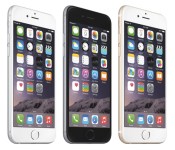
Apple may boost the amount of internal RAM and use faster LPDDR4 RAM technology in its next-generation iPhone 6s, claims TechNews Taiwan (via G Gor Games). These RAM modules offer low power consumption and a significant performance increase over the 1GB of LPDDR3 RAM used in the current-generation iPhone 6 and 6 Plus.

According to supply chain sources, the LPDDR4 RAM modules for the iPhone 6s will be supplied primarily by Hynix, Samsung, and Micron-Elpida. Elpida reportedly was behind schedule, but the company allegedly improved its manufacturing process to a level that will meet Apple’s demand. Micron-Elpida and Hynix were identified in iFixit teardown analyses as the RAM suppliers for Apple’s current iPhone 6 and 6 Plus models.
Apple’s next-generation iPhone also is rumored to sport the same design as the iPhone 6 with internal improvements such as an A9 processor and a dual-lens DSLR quality camera. Today’s report also hints at the adoption of “Force Touch” technology as seen on the Apple Watch to differentiate between quick taps and more forceful presses.
It is not clear, however, how Apple would implement such a system on the iPhone as it would appear to require a major shift in display technology for the device given that the Apple Watch uses a flexible OLED display paired with electrode sensors to support the Force Touch feature.

Apple’s iBooks Platform Seeing 1 Million New Users Per Week After iOS 8
Apple’s iBooks platform is seeing an average of a million new users per week after the company’s decision to ship iOS 8 with the app pre-installed, according to Apple Director of iBooks Keith Moerer, who spoke today at the Digital Book World Conference.
Apple’s decision to ship iOS 8 with several new apps pre-installed, including Podcasts and iBooks, was somewhat controversial because pre-installed default apps are unable to be deleted from a user’s device. At the same time, though, default apps that come automatically installed introduce the content to a range of new people who might not have otherwise discovered it in the App Store.
 iBooks Director Keith Moerer at the Digital Book World Conference, image courtesy of David Lamb
Before iOS 8, the iBooks app had to be searched for and downloaded from the App Store, putting it on par with several other App Store-based e-books apps like Amazon’s Kindle app for iOS. Pre-installing iBooks made it “so easy” for new users to try iBooks for the first time, said Moerer. Family Sharing, also new in iOS 8, helped to improve customer acquisition as well.
According to Moerer, iBooks consumption on phones is also on the rise since the launch of the larger-screened iPhone 6 and 6 Plus. “We are seeing more of our book sales starting to come from the phone,” he told the audience at the conference. Moerer also highlighted the company’s commitment to establishing relationships with creative professionals, including authors, and noted that indie publishing is one of iBooks’ “biggest growth areas.” Foreign publishing is also expanding, with Spanish-language publishing becoming a larger part of Apple’s business in the United States and Japan seeing a lot of growth.
Moerer commented on the overall e-book market, saying that while Apple has noticed a slowdown in “other digital media businesses”, the company is content with “our place within it” and still has many opportunities for growth through leveraging other content from iTunes, including movies and music.
Competing book stores were also a subject of discussion, with Moerer pointing out that Apple does not charge for publishers to promote books, unlike other stores like Amazon. “We accept no co-op payments, no pay for placement,” he said. Apple is most focused on supporting artists big and small, according to a statement relayed by Gigaom:
Whether an author chooses to self-publish or work with a small or large publisher, I’m very proud that our business terms are the same. The same 30—70 split applies to a self-published author as well as an author published by the very biggest house. Because we’re not a publisher ourselves, we work very closely with publishers and we view them as partners. We view what we do as an expansion of our support of print professionals on the hardware and software side and the way we run our other media businesses.
Apple’s iBooks Store has gotten the company into hot water in the past, as Apple was found guilty of conspiring to fix the prices of electronic books. As a result, the company was subjected to a penalty of $450 million and forced submit to anti-trust monitoring.
iBooks has remained a major focus for the company despite its troubles, and along with making the app a default iOS app, Apple also introduced several new iBooks features in iOS 8 like an auto night mode, new organization, and more. OS X Yosemite also saw the introduction of a Mac-based iBooks app that allows users to read books on their Macs.

Apple Retail Chief Angela Ahrendts Talks Expansion in China Amid Five New Store Openings [Mac Blog]
Apple is planning a major retail increase in China in the coming weeks, retail chief Angela Ahrendts tells China’s Xinhua News Agency. According to Ahrendts, Apple’s aggressive strategy involves the opening of five new retail stores in the next five weeks. Apple is timing this expansion with the festive shopping of the February 19 Chinese New Year holiday.
“We are opening five new stores before the Chinese New Year this year. Four of the stores are in brand new cities for us,” Angela Ahrendts, Apple’s senior vice president of retail and online stores, told Xinhua in a telephone interview.
Apple already has opened one of the five planned retail locations, with the recent debut of a new store in Zhengzhou, the provincial capital and home to one of Apple’s Foxconn facilities. Other upcoming stores include the West Lake Apple Store in Hangzhou, which will to open January 24.
 Apple’s just-opened MixC store in Zhengzhou
With the addition of these five new stores, Apple will operate a total of 20 retail locations in China and Hong Kong, on the way toward a goal of 40 stores in the Greater China region over the next several years. These new stores reflect Apple’s increasing emphasis on China, which Ahrendts told Xinhua is “a huge and important market for every global company today.”
Ahrendts said Apple is hiring in China. The biggest challenge she sees is keeping up with demand while providing the same global customer service standards. She would not say where the other three other stores will be, but Apple’s China website lists store jobs in 15 places, including Anhui, Guizhou, Hebei, Inner Mongolia, Shandong, Shanxi and Tianjin, none of which currently have Apple stores. One store in Shanghai is the busiest globally, receiving more than 25,000 visitors a day.
China is a growing market for Apple with an increasing proportion of its revenue coming from its Asian retail and online storefronts. Apple’s Chinese online store is the fastest growing store for the company, with orders up more than 80 percent last year.

iPhone Home Button That Transforms Into Gaming Joystick Shown in Apple Patent Application
The U.S. Patent and Trademark Office today published an Apple patent application revealing the company’s interest in an iPhone or iPad home button that transitions form its normal functionality into a small joystick for gaming (via Patently Apple).
The “multi-function input device” would serve its normal home button functions, ostensibily with Touch ID and all other current features, but with a simple pressure click would pop up and transform into a slightly elevated thumb joystick.
 Home button mode (left) and joystick mode (right)
A simple push of the elevated home button back into a flush position with the body of the iPhone would return it to its original state when done gaming. Diagrams included in the application show a very low-profile joystick , allowing for some level of physical control while being much smaller than traditional game controller joysticks in order to fit into the thin bodies of iOS devices.
Apple’s claims within the patent application note some gamers’ hesitancy to play seriously on a smartphone due to the entire set of controls resting on the screen, with their fingers blocking a significant portion of the game’s content. The company thinks a built-in solution in form of this new home button could be an acceptable option for those unable or unwilling to carry additional gaming accessories.

As noted by Patently Apple, the patent, with inventor credit going to Colin Ely and Fletcher Rothkopf, was originally filed by the company in the summer of 2013. Though it’s highly unlikely this particular technology will show up on the company’s next iPhone, presumably launching later this year, like most patents it’s still interesting to see what possibilities Apple has considered in the past and the possible directions it may choose to go in the future.
New Survey Finds 18% of iPhone 6/6 Plus Owners Will ‘Definitely’ Buy Apple Watch [iOS Blog]
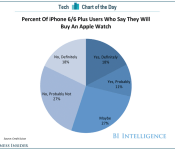
A new survey from finance company Credit Suisse found that of the solely iPhone 6 and iPhone 6 Plus owners questioned, 18 percent of them would “definitely” purchase Apple’s upcoming wearable, the Apple Watch.
As reported by Business Insider, the level of interest from iPhone owners could translate to 35 million units moved during the device’s first year. Beyond the definite purchasers, 11 percent of those surveyed said they “probably” would buy the Watch, another 18 percent said they would “definitely not” buy it, and a large pool of “maybe” and “probably not” users occupied 27 percent each in the middle.

With strong interest levels in the Apple Watch, Credit Suisse believes there will be shortages of the device at its rumored March launch.
But even if one out of every five iPhone 6 owners wants an Apple Watch, Credit Suisse believes Apple will only make about 20 million Apple Watches in 2015, suggesting there might be a supply shortage when the smartwatch goes on sale.
These estimates aren’t far off from a survey by UBS in early December that focused on consumers in general, not just specific iPhone 6 owners, and found that 10 percent are “very likely” to buy the Apple Watch, with the company selling 24 million units in the first nine months. Following Apple’s unveiling of the device last September, speculation on the Apple Watch’s unannounced details has continued in the lead-up to its launch, with the most recent piece of news revealing details of the Watch’s iPhone companion app.

Apple, Google, and Others Offer Increased $415M Settlement in Class Action Anti-Poaching Lawsuit [Mac Blog]
After a judge had rejected an earlier settlement deal, Apple, Google, Intel and Adobe today offered a higher settlement that may end an anti-poaching lawsuit filed on behalf of technology workers, reports Reuters. Citing a source close to the negotiations, The New York Times claims the companies are offering a combined payment of $415 million to settle the case.

The suit asserts that the companies had illegal agreements that they would not directly solicit one another’s employees. That limited the engineers’ mobility and their pay, to the benefit of the companies, the suit said. The case grew out of reported actions by the companies that centered on a period that began in 2005, when Google was ascendant and Apple was trying to defend its turf.
Judge Lucy Koh rejected an earlier settlement of $324 million when plaintiff Michael Devine objected to the proposed amount. In her rejection, Koh agreed with Devine, stating that the total compensation “falls below the range of reasonableness,” when compared to the settlement that Pixar, Lucasfilm, and Intuit previously reached with the employees in 2013.
Lawyers confirm this new settlement amount is acceptable to the plaintiffs, but Judge Lucy Koh will still need to approve the deal. A settlement would allow the companies to avoid a potentially embarrassing trial that would expose internal communications between top technology companies such as Apple, Google, Intel, Adobe, Intuit and others.

Skype for iPhone Adds Enhanced UI Improvements and Pre-Release Feedback Program [iOS Blog]
Microsoft today announced the release of an updated version of its Skype iOS client app bringing a few tweaks to the dial pad and chat picker alongside a new pre-release feedback program.
The first major user interface overhaul focuses on the dial pad, streamlining the process by automatically detecting matching numbers as soon as the user begins inputting a phone number. The update to the new chat picker further expedites the process of starting a chat or a call, letting users scroll through a quick list of their contacts, making them all a tap away from a video call or voice chat.

Perhaps most interesting in the 5.9 update, however, is Microsoft’s introduction of the new pre-release program for the iOS Skype app. The company states it is currently looking for “enthusiastic Skype users” who can provide feedback on the chat program’s iOS app to “shape and enhance” the program in the future.
Those willing to sign up will gain access to early versions of Skype for iOS in the future, provided they agree to update the company with “regular feedback” as each update is rolled out to them. Applicants must also be 18 years or older with a valid email address and Skype or Microsoft account.
You can help us shape your skype experience by:
-Trying out some new or upgraded features (don’t worry we’ll let you know what’s new) and tell us about your experience after doing so
-Giving us feedback and suggestions on what you would like to see in the app in the future
-Letting us know of any issues that you run into while using this previewed version
The new version 5.9 is available now, and those interested in the pre-release program, which the company promises has limited availability, can sign up on Skype’s official website. Skype for iPhone is available for free from the App Store. [Direct Link]

Google Maps for iOS Gains Restaurant Filters, Weather Info and More [iOS Blog]
Google today updated its Google Maps app to version 4.2, adding a number of new features to enhance the user experience including filters to sort restaurant searches by cuisine and built-in weather information for various cities around the world.
It’s now possible for users to drop pins for both starting and destination points when mapping out directions, and Google Maps allows users to add transit directions to their calendars. Finally, the update also includes several bug fixes.

What’s new
– Filter searches for restaurants by cuisine type
– See current weather information for cities around the world
– Drop a pin for your starting and destination points in directions and navigation
– Add transit directions to your calendar
– Bug fixes
Google Maps can be downloaded from the App Store for free. [Direct Link]

Apple Seeds OS X Yosemite 10.10.2 Build 14C99d to Developers [Mac Blog]
 Apple today seeded a fifth beta of OS X Yosemite 10.10.2 to developers, just one week after seeding the fourth beta of OS X 10.10.2 and nearly two months after seeding the first beta.
The new beta, build 14C99d, is available through the Software Update mechanism in the Mac App Store and through the Mac Dev Center.
As with previous betas, Apple asks developers to focus testing on Wi-Fi, Mail, and VoiceOver. Many Yosemite users have had some ongoing problems with Wi-Fi since the new OS was first launched in October, and a November 10.10.1 update did not resolve all of the lingering issues.

