



Microsoft Debuts 84-Inch Surface Hub Touch Display, HoloLens Augmented Reality Headset
Alongside officially debuting Windows 10, Microsoft today unveiled two new futuristic hardware products, the Microsoft HoloLens augmented reality headset, and the Microsoft Surface Hub, an 84-inch 4K touch screen tablet with multi-touch and multi-pen support, dual camera, and advanced sensors.
The Microsoft Surface Hub runs a version of Windows 10 that’s been adapted for the huge 84-inch display, and Microsoft showed the device being used in workplace meetings, as a hub for communication. The screen was used for making drawings and notes, and content projected to the Surface Hub was then shared to all people on a Skype conference call. The Surface Hub was also demonstrated using various Microsoft apps adapted for a larger screen.
 Microsoft Surface Hub, image via The Verge
Microsoft has not announced pricing, but the Surface Hub is aimed at enterprise users and is likely to be quite expensive.
The company’s second major product debut was the Microsoft HoloLens, which is a headset that uses holographic see-through lenses to allow its users to see and interact with holograms in an augmented reality environment. The HoloLens has spacial sound and advanced sensors to capture location information, allowing for a totally immersive holographic experience, and it has a built-in high-end CPU and GPU, as well as a “holographic processing unit” that processes information and data from the headset’s sensors. “HoloLens enables native holographical computing,” said Microsoft Kinect developer Alex Kipman.

There are no wires or external connections, and there is no need to have a phone or PC to use the HoloLens. Running a version of Windows 10 called Windows Holographic, the HoloLens knows where a user is looking, providing a virtual display that can be interacted with to launch apps.
In a video, Microsoft showed a holographic view that saw a virtual to-do list projected onto a real refrigerator, and a set of quick-launch apps portrayed on a wall for easy access. It was able to display virtual maps, reminders, and information like weather, all laid over a real view, with Microsoft promising it delivers “new ways to visualize work.”
With HoloLens, a Skype conversation could be projected on a wall, or people could play a holographic version of Minecraft. “Imagine an architect walking around their designs while clients are viewing it from a remote location,” said Kipman.
On stage, Microsoft demoed something that it calls Holo Studio, which can be used to design personalized 3D creations in just minutes, which can then be 3D printed. The Holo Studio was used to create a full-on quad copter in just a matter of minutes, which was fully functional.

Microsoft’s holographic computing was also demoed with the Mars Rover, as Microsoft has had a secret partnership with NASA developing the HoloLens. “We’ve had the great honor of partnering with one of the most innovative organizations in history,” said Kipman as an immersive image from the Mars Rover was displayed on the screen. NASA’s been using the technology to allow its scientists to walk on Mars.
According to Microsoft, the HoloLens will launch during the Windows 10 timeframe, which means that it could be available for purchase at some point later this year. Attendees at Microsoft’s event today will be able to give the HoloLens a try immediately in Microsoft’s lab. More information on the HoloLens will be available in April at Microsoft’s Build Developer Conference.

Twitter for iOS Gains ‘While You Were Away’ Tweet Recaps [iOS Blog]
Twitter today announced plans to add new top tweet recaps to timelines within its iOS app, which display important tweets that were sent while a user was away from the app.
According to Twitter, these tweet recaps will include a “few of the best tweets” that users might not have seen otherwise, which are selected by engagement and other unspecified factors. Users who check in on only every so often may see the tweet recaps quite often, while users who continually use Twitter will see fewer recaps as they’re already up to date on what’s going on.

Our goal is to help you keep up — or catch up — with your world, no matter how much time you spend on Twitter. With a few improvements to the home timeline we think we can do a better job of delivering on that promise without compromising the real time nature of Twitter.
Missed tweet recaps will be marked with a “While you were away” heading within the iOS app, and should begin appearing for iOS users today as the update rolls out. Tweet recaps will make their way to the web “soon.”
Twitter for iOS can be downloaded from the App Store for free. [Direct Link]

Logic Pro X for Mac Gets Major Update With New Drummers, Tools for Electronic/Hip Hop Music Creation
Logic Pro X for Mac today received its most significant update in the last year and a half, adding a slew of new features to the pro-oriented audio software produced by Apple.
Version 10.1 of the software, which is available for free for existing users, introduces new drummer profiles and more tools to make music creation a simpler task, plus it adds in new sounds with a focus on electronic and hip hop music.
There are 10 new drummer profiles to use in the new version of Logic Pro X, which can be used to produce beats in styles like Techno, House, Trap, and Dubstep, and there’s also a new drum machine plug-in for tweaking drum sounds and making mixes. Each drummer has eight preset patterns, but they can be customized and users can create their own patterns as well.
 Logic Pro X screenshot courtesy of CNET
The update introduces 200 synth patches and 10 new Mellotron instruments, and features like the piano roll editor have been improved. The Compressor plug-in now has a Retina-ready interface, and there’s a plug-in manager to keep frequently-used plug-ins at hand and organized.
An expanded Logic Remote toolset offers a new plug-in view for use with the iPad, with multi-touch gestures able to manipulate tracks using the Visual Equalizer. Read more 

When did Apple become the boring one?

In less than a decade, Apple completely changed the world of personal computing, and the music industry in the process. First came the iPod and the iTunes Store; then the iPhone and App Store; and then the iPad. The Apple of the 2000s was an exciting company to follow. It’s just not that company anymore. Instead, it’s spent the past few years slowly improving its admittedly great cash cows, iterating and iterating and iterating. It’s made cheaper iPhones, bigger iPhones and even gave in and made a phablet. It’s made cheaper iPads, smaller iPads and is apparently planning a bigger iPad. It’s made cheaper MacBooks, smaller MacBooks… you get the point. Its latest project, the Apple Watch, sure looks like a smartwatch, and it might be very successful, but is it doing anything totally unique? Is it really exciting? No.
The 2000s Microsoft, on the other hand, spent its years trying to fix Vista, Internet Explorer and Windows Mobile — playing catch-up. Apart from the success of the Xbox 360, it had a pretty torrid time, even if it was never in trouble financially. But let’s briefly summarize what Microsoft, energized by the appointment of Satya Nadella as CEO almost a year ago, just showed us. An operating system that runs universal apps across PC, tablet, phone and Xbox One. Streaming games from your home console to any Windows PC or tablet. A voice assistant for your PC that seems like a prequel to Scarlett Johansson’s AI in Her. HoloLens. I mean, HoloLens! Microsoft is promising to make the distant dream of functional AR a reality very soon. It even held people’s attention while showing off a new enterprise PC.
Google, the final company in the fabled “big three,” has always been the upstart. It’s fresh, exciting and full of ideas. Some of them are good, and completely change their industry; some of them are bad, and fizzle out. But they’re always something. Project Ara”s modular smartphones are truly exciting, and progressing well; Project Loon — the idea of beaming internet down to developing or rural areas from balloons in the stratosphere — is pretty incredible; and sure, Glass might be leaving us temporarily, but with the creator of the Nest onboard and Google’s massive investment in augmented reality company Magic Leap, you can be certain it’ll be back. So what about Apple?
Apple is the mid-2000s Microsoft. Its revenues are as healthy as ever, but it’s become a company that seems to make things just because it has to, that doesn’t take risks, that plays catch-up. The closest it’s come to a really exciting announcement in recent years was the launch of a niche pro desktop PC.
Microsoft just showed the world some crazy exciting stuff. Holographic computing might not be all it’s chalked up to be. HoloLens might never take off. Maybe people don’t want to talk to their computers. We’ll see. But Microsoft is trying to excite, or, to borrow an Apple buzzword, “delight” us all. If you’re a huge tech company, you should be trying to do that every day. Apple might be trying, but it’s not succeeding.

One of the First Apple Watch Games Shown off in Mockups from NimbleBit
Though developers have had access to the WatchKit API for the upcoming Apple Watch since the debut of iOS 8.2 in November, we’ve still learned very little about what apps will be able to do and what kind of apps we can expect to see when the device launches.
We know that common Apple apps like Messages, Mail, and others will be available on the Apple Watch based on what Apple shared in the keynote and on its dedicated Apple Watch website, but third-party developers have not divulged much about their plans for the device, though hundreds of innovative apps and experiences are undoubtedly in the works.
One major game developer, NimbleBit, is working on a new game that will be playable on the Apple Watch. Shared by our sister site TouchArcade, Letterpad is a simple word game that will be available on both iOS and the Apple Watch. The object of the game is to make words related to a specified topic from a grid of nine letters, and a mockup of what the game might look like is below.

Games may not seem conducive to the Apple Watch given its rumored limited battery life (the device will need to be charged on a daily basis) and its small screen, but simple games like Letterpad will translate well to the device. As we’ve learned from the WatchKit API, the first apps coming out for the Apple Watch will be entirely reliant on the iPhone, powered by the phone itself and projected to the Apple Watch to conserve battery.
This is just a first glimpse of one simple game that will be playable on the wrist thanks to the Apple Watch, and developers likely have a range of unique game experiences in mind. The Apple Watch’s Taptic Engine and Force Touch capabilities, to determine between taps and presses and deliver subtle alerts, may enable all new types of games and apps that we haven’t even considered yet, and over the course of the next few months, we’ll likely get a much clearer picture of what developers are planning to create for the device.
The most recent rumors have suggested that the Apple Watch could see a March debut, and while pricing remains largely unknown, we do know that the entry-level Apple Watch will be priced at $349.
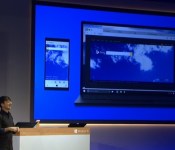
Microsoft Demos Free Windows 10 Update, Debuts New ‘Project Spartan’ Web Browser
In the fall of 2014, Microsoft announced its newest operating system, Windows 10, and gave a brief preview of the upcoming software, which is designed to incorporate elements of both Windows 8 and Windows 7, in an attempt to make it more appealing to users who have thus far not upgraded to Windows 8.
Today, Microsoft is holding an official unveiling of Windows 10, sharing new details on the OS and demonstrating how it works across a range of devices. With Windows 10, Microsoft is hoping to cut down on operating system fragmentation with one unified platform thats designed to run on PCs, tablets, phones, and more.
Microsoft’s tagline for Windows 10 is “More personal computing,” a philosophy that’s evidenced in its three design guidelines that it used when developing the software: mobility of experience, trust, and natural interaction, through a range of different input options from mice and keyboards to pens and simple touch.

Windows 10 somewhat mirrors Apple’s efforts to unify iOS 8 and OS X Yosemite by creating a deep level of integration with features like Continuity, because Microsoft promises a unified experience and platform integration that will make it easy to put one device down and continue where you left off on another device.
In an effort to get its users to adopt Windows 10, Microsoft is planning to distribute Windows 10 to Windows 8.1 and Windows 7 users at no cost for the first year, which is an unprecedented move for the Washington-based company. Unlike Apple, Microsoft has never offered Windows for free, but Apple’s success getting the majority of its users on the same operating system has likely inspired Microsoft to make the same effort.
Once a device is upgraded to Windows 10, Microsoft plans to keep the operating system current for the lifetime of the device. With a unified operating system, developers can target every single Windows device, and Microsoft is planning for long term support.
“Windows 10 is so much more than the latest version of Windows,” said Microsoft VP of Operating Systems Terry Myerson. “Windows is turning into a service that will run across every device.”
Read more

Size does matter: larger iPhone 6 brings the smartphone war to Samsung’s home ground

For years, consumers have been demanding larger screens and have placed their buying power behind original equipment manufacturers (OEMs) willing to give them what they want. Apple, slowly accepting the consumer demand despite the vocal minority’s laments, has finally delivered a modern screen size to its iPhone products with the launch of the iPhone 6 and iPhone 6 Plus.
This news is old and has been talked about for months now, obviously. What is new, though, is the data showing that Apple’s size upgrade with the iPhone has hit Android OEMs in an unlikely location: their home countries. Counterpoint Technology Market Research, an Asian-based consulting firm that delivers data-driven analyses of market trends, has released a report detailing Apple’s newest attack on the Asian front.
If you’ve ever wondered where Android OEMs get their huge competitive strength from despite Apple’s dominance in western markets, it’s due to their widespread popularity in the eastern and emerging market regions. Apple has been fending off the likes of Samsung in places like the United States, while not being able to make much headway against them, because the iPhone simply wasn’t that desirable of a product on the other side of the Pacific. Until now, that is.

Counterpoint reports that from May 2014 to November 2014, Samsung’s presence in Koreans’ pockets dropped nearly 20%, while Apple saw a huge boost of nearly 25% especially after the iPhone 6 and 6 Plus’ release. Tom Kang, Counterpoint’s research director in Korea had the following comment: “No foreign brand has gone beyond the 20% market share mark in the history of Korea’s smartphone industry. It has always been dominated by the global smartphone leader, Samsung. But iPhone 6 and 6 Plus have made a difference here, denting the competition’s phablet sales. Korea being the world’s highest penetrated phablet market (handsets with 5” above screens) earnestly needed a large screen iPhone for quite a time and now this thirst has been quenched. If there was a better supply of iPhone 6 & 6 Plus 64GB & 128GB models during the month then Apple’s share could have climbed to the 40% level.”

An even bigger jump for Apple took place in Japan, a location where Apple sales have generally done better historically than in other Asian markets. In November 2014, it finished out with a record 51% in sales.
In China, iPhone sales rose sharply as well, but still fell behind Chinese favorites Xiaomi and Lenovo. It took the two combined, however, to stay ahead of the singular Apple entry.
Perhaps Apple took a page from Samsung’s playbook: don’t listen to the old-guard technology junkies and look to what real people want. Apple die-hards in the blogosphere might rail against the larger screens and other new technology, but at least half of the US segment owns a large-screen Android device and an unfathomable percentage of the population overseas owns one as well. So Apple ditches the squeaky wheel in order to compete directly across all fronts and, apparently, it’s working.
As I mentioned back in December, I expect Android OEMs to have a tough 2015 unless they pull their collective heads out of, well, you get the idea.
Source: Counterpoint Technology Market Research
Come comment on this article: Size does matter: larger iPhone 6 brings the smartphone war to Samsung’s home ground
Dropbox Acquires Document Editing Service CloudOn [iOS Blog]
CloudOn has announced it has been acquired by popular document storage and syncing service Dropbox, with the two companies joining forces to advance document editing, storage, and more through the cloud. As part of the deal, CloudOn’s existing services will shut down on March 15.

Today, we’re taking the next step toward our vision of reimagining docs – by joining the Dropbox team. Our companies share similar values, are committed to helping people work better, and together we can make an even greater impact.
As pointed out by The Wall Street Journal, Dropbox has been purchasing dozens of small startups to bolster its overseas presence, and CloudOn gives Dropbox a presence in Israel. According to Dropbox’s head of product, business and mobile, Ilya Fushman, the CloudOn partnership is the largest number of employees added into the company through an acquisition.
CloudOn rose to prominence three years ago when it launched an iPad app that used the mobile device as an interface for a full cloud-based app located on their servers, allowing users to run an instance of Microsoft Office on their iPads. CloudOn’s services have evolved over time, but the company has continued to focus on Office document editing and creation, making a partnership with Dropbox a natural fit.
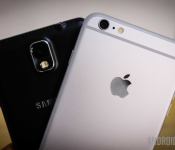
Samsung loses market share to Apple in its home stomping grounds

New market research is showing that Apple has gained market share in Japan, China and Korea. In fact, iPhone sales reached a record high in Japan and Korea during October and November, at the expense of Samsung, Sony and LG.
Samsung is clearly one of the top smartphone makers globally. But in Korea, its home country, it is nothing less than dominant. Samsung historically commands anywhere from 60% and upwards of the smartphone market. However with the launch of the larger iPhones, Samsung has seen some of that dominance erode away.

According to Counterpoint Research’s latest markets report, Apple’s market share in South Korea jumped from below 15% to over 30% during October and November, primarily due to demand for the iPhone 6 and 6 Plus. Tom Kang, Counterpoint’s Research Director in Korea, has even suggested that if there was a better supply of 64GB and 128GB iPhones then Apple’s market share could have reached 40%.
Japan is one of the top premium smartphone markets in the world. Apple has a good track record in Japan, but it was often behind Sony in terms of market share. However with the launch of the iPhone 6 in September, Apple’s market share has jumped significantly. Apple managed to command more than half of the smartphone sales in October, as well as November 2014. Sony was the biggest loser dropping from a high of 30% to just 17%.

In China the iPhone 6 helped Apple achieve a 12% market share, making it the third largest OEM in China behind Xiaomi and Lenovo. According to Counterpoint’s Research Director Neil Shah, “Apple with iPhone 6 & 6 Plus has been able to impact Samsung’s premium Galaxy S5 & Note 4 sales. But with the launch of Xiaomi Note & Note Pro it is going to be a fierce battle in the premium segment, with Samsung being attacked from both ends.”
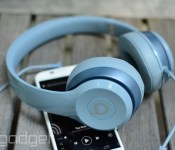
Apple’s latest acquisition will tell it what the world is listening to

When Apple spent $3 billion to buy Beats, it certainly made the headlines, but the company also goes to great lengths to keep smaller deals under wraps. One that has completely flown under the radar is its recent acquisition of Musicmetric. The service, if you’re not aware, specializes in tracking how artists and their tracks are performing not only in the charts, but how often they’re being pirated or how many potential new listeners they might have over a certain amount of time.
Musically reports that Apple may have taken control of Semetric, the UK company behind Musicmetric, as far back as October, but only notified UK authorities earlier this month. But what does it want with the company? Considering that Apple now operates two music services, iTunes and Beats Music, providing enhanced trends and listener data for music labels and rights holders could certainly be a priority. Musicmetric pulls in its data from P2P networks, reviews and comments from millions of websites, blogs and social networks, giving Apple a better understanding of what artists have “buzz” or are going viral before its actually reflected on iTunes or Beats Music.

The change of ownership could have a knock-on effect on one of Apple’s music rivals too. Spotify teamed up with Musicmetric at the start of 2013, providing analytics for over 20 million tracks alongside Musicmetric’s other music data. That said, Spotify already owns The Echo Nest, a “music intelligence platform” that analyzes links between artists and tracks (and powers Spotify’s own radio service).
Given the nature Musicmetric, it’s not likely to become a dedicated service. Instead, it’s likely that Apple will use detailed information on how music, but also movies, TV shows and other digital offerings are performing across the web, while providing users with trending charts and better recommendations. Apple is reportedly already working to incorporate Beats Music into iTunes, maybe it could use those new datasets to understand that people aren’t really fans of U2.
Source: Musically

