


An Apple a day keeps the doctor away
It has been found that people who own iPhones visit the doctor less often. Not because they are healthier, but because they just don’t have enough money left to pay for the visit.
While iPhone owners have no regrets about their $1000 brick, they are often found playing Angry Birds while waiting in line for their food stamps to help them live from month to month.
Now, there is nothing wrong with this picture. Why shouldn’t someone spend hundreds of dollars on a phone before they feed themselves? There can’t be anything wrong with that. Not at all.
If I were a parent, I would definitely want to make sure that I could show off my shiny iPhone 6+ with 128 GB of storage. My children don’t need to eat. Not at all.
I can’t stand the thought of someone catching me with any other phone. How embarrassing would that be? No, I much rather them find me in a line for government support than be caught without an iPhone.
Doctor visits and food are the luxuries in life anyways. Now an iPhone, that is something that you can’t live life without. I would DIE if I couldn’t own an iPhone, but I can live without food.
Note: This is a satirical post. It is meant for humor, not insult.
(function() var script = document.createElement(‘script’);script.src = ‘https://stacksocial.com/widget.js?publisher=androidguys&type=editorial_post_widget_preferences’;script.async = true;var entry = document.getElementsByTagName(‘script’)[0];entry.parentNode.insertBefore(script, entry);)();
http://www.androidguys.com/pubgalaxy/728×90.html
The post An Apple a day keeps the doctor away appeared first on AndroidGuys.
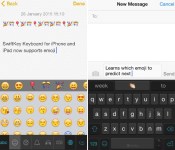
SwiftKey Keyboard for iOS Updated With Emoji, Flow Typing on iPad [iOS Blog]
SwiftKey is one of the most popular third-party keyboard options on iOS, and today it received a major update adding a highly requested feature — emoji. Emoji can be accessed by tapping on the smiley at the bottom of the keyboard, and there’s also a new predictive emoji tool that learns the most frequently used emoji and suggests them while typing.

We’ve built emoji right into SwiftKey Keyboard so you can now express yourself when words don’t quite cut it. Just as it learns the words and phrases that matter to you, SwiftKey also learns and predicts which emoji you use most often so you can spend less time looking for that perfect smiley (or slice of pizza — whatever you’re into).
Using a lot of emoji in text will cause emoji to pop up more frequently in the word prediction box, making it easier to insert fun characters into text.
Today’s update also includes SwiftKey Flow for the iPad, a feature that was previously limited to the iPhone. With SwiftKey Flow, it’s possible to type faster via swiping on the screen. Finally, there are also 11 new languages available in SwiftKey, including Bulgarian, Croatian, Greek, Hinglish, Icelandic, Indonesian, Latvian, Russian, Serbian, Slovak, and Turkish.
SwiftKey Keyboard for iOS can be downloaded from the App Store for free. [Direct Link]

First Impressions of Photos for OS X: ‘Vast Improvement’ Over iPhoto
Following the release of the first OS X Yosemite 10.10.3 beta to developers this afternoon, the embargo has lifted for media outlets to publish their first impressions and hands-on reviews of the all-new Photos for OS X app. Below is a roundup of some of the more interesting comments and opinions about Photos for OS X, which combines iPhoto and Aperture into one for OS X Yosemite.

The Wall Street Journal describes Photo for OS X as a significant improvement for users in the Apple ecosystem, adding that the app is less confusing to use than iPhoto thanks to an improved iCloud-based approach. It also found Photos for OS X to have snappier performance than iPhoto based on the Apple-provided demo notebook.
“If you choose to turn it on, all of your Apple devices feed all their full-resolution photos into iCloud, making them all available over the Internet to the Photos apps on all your Apple devices. […] You can see the advantage to all this when you edit photos. With iCloud, any change you make on one device will show up moments later everywhere else.”
Wired was also impressed with Photos for OS X, describing the software as a “vast improvement” over iPhoto and praising its new built-in photo editing tools. It believes that, while some professionals might opt for Adobe Lightroom and other tools, Photos for OS X is an ideal photo management and editing solution for most Mac users.
“Advanced users, particularly those operating on 5K iMacs or Mac Pros, may be happier eventually switching to Adobe Lightroom—though most of them probably have done so already. But for most of us, particularly recent Mac converts and people who may not fancy themselves serious photographers, Photos is a welcomely humble way to approach image editing.”

Even further praise of Photos for OS X was provided by Re/code, which described the software as a “huge improvement” over iPhoto with easy-to-use editing tools and seamless iCloud syncing. Its hands-on impressions found Photos for OS X to be lacking some advanced editing tools found in Aperture, however, noting that some users might opt for professional software.
“While Photos offers some advanced settings like white balance and level, it lacks some of the professional-level tools found in Aperture. For example, it doesn’t have brushable or curve adjustments and doesn’t support splitting and merging libraries. And you can’t add custom metadata fields in the app.”
The Verge went hands on with Photos for OS X and walked away impressed, noting that it handles large photo libraries much better alongside more powerful photo editing, sharing and syncing options. As with other publications, it found Photos for OS X to be more suitable for beginners than professionals.
“iPhoto was never one of Apple’s most beloved products. Every year, it seemed slower and less connected to the phone — the place where most photos are taken. Photos for OS X does a lot of things right, but mostly it’s just fast and tightly integrated with your other devices. It feels like a big step forward, even if feels overdue.”
Yahoo Tech claims that much of Photos for OS X will be a familiar experience for most Mac users, noting that power users will be impressed with the several photo parameters that can be adjusted. The review finds that Photos for OS X gives up some iPhoto features, however, including flags, star ratings, events, round-trip editing in other apps and sorting albums by keyword, title and rating. Many professional options from Aperture are also missing.
“If you’re happy with iPhoto and Aperture now, you should feel no hurry to switch over when Photos comes out this spring (as part of the free Yosemite 10.10.3 update), unless you want that iCloud Photo Library feature. Which would be understandable. […] Someday, yes, there will be some OS X version that can’t run today’s iPhoto and Aperture at all. But that’s years away. In those years, Apple has plenty of time to bring Photos’ feature list up to code, and you can freely keep using iPhoto and/or Aperture and Photos, side-by-side on the same Mac.”
Overall, Photos for OS X appears to be a significant improvement for users migrating from iPhoto, but a step down in functionality for those coming from Aperture. A number of other publications have shared first impressions and hands-on reviews, including CNET, Engadget, Macworld, Mashable and SlashGear. Photos for OS X will be available as a public beta soon ahead of a Spring launch as a free update on OS X Yosemite.

Apple Seeds First OS X 10.10.3 Yosemite Beta to Developers With Mac Photos App
 Apple today seeded the first beta of OS X 10.10.3 Yosemite to developers, just over a week after releasing OS X 10.10.2 to the public. OS X 10.10.3 includes the much-anticipated Photos app for Mac.
The new is available through the Software Update mechanism in the Mac App Store and should be available in the Mac Dev Center soon.
Recent rumors questioned the removal of mentions of the Photos app for Mac from Apple’s website, suggesting it might be delayed, but today’s beta release indicates that it is still on track for an early 2015 launch.
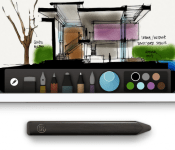
FiftyThree Makes All Drawing Tools in ‘Paper’ iPad App Free of Charge [iOS Blog]
FiftyThree today announced an update to its popular drawing and illustration app Paper that will give users of the app free access to every tool and feature previously locked behind an in-app purchase.
The app is free to download, but users who wanted a more in-depth editing and drawing suite had to pay up to $3.99 for the entire “essential tools” package (originally priced at $7.99) to get access to the best of the bunch. The new 2.3.1 update now brings all of these options to every Paper user, allowing them to draw, sketch, outline, write, and color at no additional charge.

ALL TOOLS NOW FREE
Freedom to draw, sketch, outline, write and color is here! All the original tools, including the Mixer, are now completely free. It’s our way of saying “thank you” to our inspiring community of creators. Enjoy the full expressive power of Paper, and share what you create on Mix!
FiftyThree sells a popular companion stylus called Pencil, which Apple recently began stocking in its retail locations. The Pencil, available in Graphite, Walnut, and now Gold, can also be purchased directly from FiftyThree’s official website in prices ranging from $49.95 to $59.95.
Paper can be downloaded from the App Store for free. [Direct Link]

Swatch Prepares to Go Head-to-Head With Apple Watch
Swatch CEO Nick Hayek today revealed that the company has plans to manufacture and ship its own line of smartwatch devices with a launch target within the next three months, easily setting itself up against Apple’s recent confirmation of an April launch date for the Apple Watch (via Bloomberg).
Hayek previously displayed skepticism about smartwatches, in particular the idea of one from Apple, saying he didn’t believe it would be “the next revolution.” Hayek also previously dismissed the concept of a Swatch smartwatch initiative, arguing the company’s highest-end devices should already be called smartwatches because “they make you look smart.”

Apple and Swatch were rumored at one point to be joining together for a smartwatch, but Swatch quickly denied those claims last summer. Now, building on the decades of experience Swatch has accumulated over the years, Hayek voices determination in the face of going practically head-to-head with Apple on the smart wearables front.
“Entrepreneurs are practical people, and they care more about being successful than being consistent,” said Luca Solca, an analyst at Exane BNP Paribas. “Hayek has always said they have relevant technology for a smartwatch — sensors, display, battery — and seems to be set to make the most [of] it. Better to have an option and a hand in this category than not to. Nobody can yet say how relevant smartwatches will be in the end.”
Some of the biggest claims Swatch makes about its upcoming smartwatch include the ability to connect to the Internet “without having to be charged,” undoubtedly a direct shot at Apple’s yet-to-be-confirmed battery life for the Apple Watch. The Swatch device will also include a form of mobile payments baked into the watch, but as of now will function only in a select few Switzerland-based grocery stores, with the company in talks to acquire more mobile payment retailer partners.
Under the looming launch of the Apple Watch, several other high-end watchmakers have shifted gears and decided to delve into the smartwatch market, including TAG Heuer and Montblanc’s “e-Strap” accessory band that attaches to traditional watches in lieu of buying an entirely new device.

Apple’s HealthKit takes the early lead over Google Fit in U.S. Hospitals

Apple and Google might battle for supremacy when it comes to smartphones and tablets, but the healthcare sector is going to be another big battleground. It’s still early in the game, but Apple is already winning.
Reuters contacted 23 top U.S. hospitals and 14 of them are conducting a pilot program using Apple’s HealthKit. Google offers Google Fit, which isn’t as advanced at HealthKit, but they have started discussions with a few hospitals. Another player is Samsung, but just like Google, they barely have a foot in the door.
Hospitals hope to use these services to help physicians monitor patients for chronic conditions like diabetes and hypertension. They could provide the information necessary to prevent repeat admissions or to prevent more acute issues.
Probably the biggest reason HealthKit is kicking ass is because there are over 600 developers working with it. Google Fit only has a handful. HealtKit can already detect glucose measurements as well as monitor blood pressure. This is on top of the exercise-tracking apps that both Samsung and Google offer. The Apple Watch will bring even more data to both users and health professionals.
It seems like Apple will always have the edge when it comes to development. Developers flock to their products first. Is this early lead an indication of the future or will Google make a comeback? Once a hospital chooses one service, it’s unlikely to switch that easily.
source: Reuters
Come comment on this article: Apple’s HealthKit takes the early lead over Google Fit in U.S. Hospitals

14 Major U.S. Hospitals Now Using HealthKit as Apple Adds Health Industry Advisors
 Fourteen major U.S. hospitals have rolled out their own trials of Apple’s HealthKit tool, with the pilot program earning praise among doctors for its ease of use and advanced tracking of various health metrics, reports Reuters.
According to the news agency, eight hospitals trying out HealthKit are on the U.S. News & World Report’s Honor Roll which ranks the best hospitals, with the program seeing more of a positive reaction versus health tracking programs by Google and Samsung.
Ochsner Medical Center in New Orleans has been working with Apple and Epic Systems, Ochsner’s medical records vendor, to roll out a pilot program for high-risk patients. The team is already tracking several hundred patients who are struggling to control their blood pressure. The devices measure blood pressure and other statistics and send it to Apple phones and tablets.
“If we had more data, like daily weights, we could give the patient a call before they need to be hospitalized,” said Chief Clinical Transformation Officer Dr. Richard Milani.
Apple said that over 600 developers are integrating HealthKit into their health and fitness apps. The company has also hired Rana and John Halamaka, who act as two informal industry advisors that focus on health data privacy and industry introduction. Last September, it was reported that Duke University and Stanford University Hospital had begun trials with HealthKit, with representatives from both hospitals speaking highly about the program’s convenience for patients and doctors.
Apple introduced HealthKit alongside the new Health app in iOS 8 as a part of a new initiative into health and fitness tracking. HealthKit taps into data from the iPhone’s various sensors along with compatible accessories to provide a more comprehensive picture of a user’s health. The upcoming Apple Watch will also contain a number of sensors and health tracking features that seamlessly integrate with the Health app.
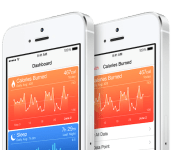
Reuters: more than half of top US hospitals are running Apple HealKit trials

When Apple announced HealthKit, one of the more interesting features was the ability for Doctors to check your health data remotely. HealthKit has already been trialled with health professionals monitoring patients with Type 1 diabetes, cancer and heart disease. Reuters suggests that these trials are moving away from Universities, and into hospitals. It claims that over half (14 of 23) the “top” hospitals (including eight on the News & World Report’s Honor Roll) it contacted were running pilot programs that leveraged HealthKit data.
With the US healthcare market valued at around $3-trillion, it’s a relatively unexploited market for mobile technology. Apple rivals, Google and Samsung have competing health apps of their own, but neither has made significant headway with the establishments polled — though Reuters does say that hospitals are interested in Google’s Fit service, thanks to the high number of Android devices in use. Current trials are mostly using the data to monitor diabetes and hypertension, but with a certain watch just around the corner, the usefulness of HealthKit is likely to expand even more.
Filed under: Cellphones, Mobile, Apple, Google
Source: reuters
Samsung to Produce A9 Chips for Apple’s Next-Generation Devices
Longtime Apple rival and supplier Samsung will be responsible for manufacturing the A9 chips for Apple’s next-generation iPhone and iPad, Re/code confirmed today. Over the past several months, there’s been a lot of confusion over whether Samsung or Taiwan Semiconductor Manufacturing Company (TSMC) would produce Apple’s A9 chips, but recent rumors suggest that Samsung’s technological advances have put it ahead of TSMC.
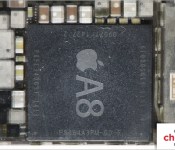
Apple signed a chip production deal with TSMC back in 2013 with the hopes of diversifying its supply chain sources and reducing its reliance on Samsung because of ongoing legal battles, but it has been unable to break away from Samsung for its A-series processors. Both TSMC and Samsung produced 20-nanometer A8 and A8X processors for the iPhone 6 and iPhone 6 Plus in 2014, though TSMC handled the bulk of the orders.
 20-nanometer A8 chip in the iPhone 6 and 6 Plus, via Chipworks
At a time when Samsung’s mobile division is seeing profit loss due to flagging sales, the company’s semiconductor business has helped to balance out some of the losses with continued growth. During the last quarter, Samsung’s chip division earned 2.7 trillion won, making supplier relationships like the one that it has with Apple highly important to the company.
Samsung is reportedly already manufacturing A9 chips for Apple, built on its 14-nanometer chip process that has outpaced TSMC’s production capabilities. As detailed by Re/code, the 14-nanometer process will result in smaller chips that use less power.
That’s because Samsung holds a technological edge over TSMC when it comes to the latest manufacturing process. Samsung has managed to shrink the size of the transistors on its chips to 14 nanometers — effectively packing more processing power into a smaller space and consuming less power. TSMC is still at 20 nanometers.
Samsung has not confirmed that it is producing chips for Apple, but Samsung semiconductor president Dr. Kinam Kim said in October that Samsung is expecting chip profits to grow over the coming year thanks to demand for its 14-nanometer chips.
Little is known about Apple’s next-generation iPhone, but based on past releases and upgrade cycles, the new smartphones will use A9 chips and may feature updates to the camera. Rumors have also suggested that Apple may be planning to incorporate an A9 chip into its “iPad Pro,” which may debut in the second or third quarter of 2014, and the A9 in some form will undoubtedly also make an appearance in 2015 iPad Air/mini upgrades.

