



Uber working on push notifications to let you know when surge pricing ends

Love Uber, but hate surge pricing? We get you, and so does Uber. During the LAUNCH conference in San Francisco Monday, Uber CEO Travis Kalanick says he wants to take the sting out of surge pricing — by letting you know when it’s over. If you get hit with a case of sticker shock, the company is working on a new feature that will notify you via push notification when prices are back down to normal. Kalanick says that sometimes surge pricing can last just a few minutes. All told, that means if you’re willing to wait an extra 15 to head to the club, you could potentially save enough cash to buy a round of drinks once you get there.
Filed under: Transportation

HTC wants to combine all your Android phones to cure diseases (video)

With smartphones packing so much processing power these days, HTC reckons we can combine them all to do some meaningful number crunching à la SETI@home and Folding@home. We’re talking about curing diseases (AIDS, cancer, Alzheimer’s and more) as well as searching for alien life. As such, the mobile company has teamed up with UC Berkeley’s Dr. David Anderson, co-creator of SETI@home, for the HTC “Power To Give” initiative. To take part, you simply grab the app from Google Play, install it and it’ll run in the background when your phone’s being charged up plus connected to WiFi.
HTC claims that the combined power of 1 million Ones is almost just as good as a one-petaflop supercomputer, so the more the merrier — including those from other brands. But for now, HTC will first offer its app’s beta release to the HTC One family and the Butterfly series, and it’ll gradually add more compatible Android devices over the next six months. Isn’t it awesome that even Nokia phones can soon partake in this, too?
Update: The good folks at HTC have now published a couple of videos explaining this initiative. Check them out after the break.
Filed under: Cellphones, Software, Mobile, HTC

Garmin’s new app turns Sony’s Smartwatch 2 into a tiny sat-nav

We like the idea of hooking our watches into our phones, so when we wander around foreign lands, we don’t look like as much of a tourist. Garmin agrees, and has launched a navigation app specifically for Sony’s Xperia devices that’ll push real-time directions straight to the SmartWatch 2. Acting like a premium sat-nav, the app offers offline maps, walking directions, real-time traffic and active lane guidance. It’ll launch in March, and when you’re done with the 30-day trial, it’ll cost you $3 a month to get access to the full set of features. Oh, except for the SmartWatch spanning, which’ll set you back a further, undisclosed amount, because commerce.
Filed under: Cellphones, GPS, Wearables, Mobile, Sony
Source: Garmin

Waze for Windows Phone 8 promises not to drain your battery anymore

Windows Phone 8 fans got a pleasant surprise when social GPS app Waze arrived on the Marketplace after Google snapped it up. That’s why it’s such a shame that it caused massive battery drain issues for some users. After months of people airing grievances on various forums, the service has finally unleashed a new version that promises improved battery life along with the usual bug fixes. Unfortunately, the WP8 app stills lags behind its iOS and Android brethren, lacking Facebook and calendar integration, among other features. If you’re cool with what the app can do and could use the battery fix, though, head on over to the Windows Phone Marketplace.
Source: Waze, Windows Phone Marketplace

BBM beta now offers stickers, because that’s really what it needs to catch up

Good news! BlackBerry has finally figured out how BBM will pose a threat to messaging giants like WhatsApp. It’s… stickers. Yes, of all the things the company could do to improve its chat app, it’s introducing the same sort of purely cosmetic decals that everyone else offers. As with rival services, those using a new BBM beta can buy themed sticker packs to express themselves in creative (and very cutesy) ways. In all fairness, the addition may help BlackBerry court younger chatters. However, we hope that the phone maker has a lot more up its sleeve than this — me-too upgrades can only go so far.
Filed under: Cellphones, Mobile, Blackberry
Via: The Verge
Source: Inside BlackBerry

Lovefilm Instant becomes Amazon Prime Instant Video in the UK

Lovefilm Instant subscribers, prepare yourself for a welcome change. After three years flying under its own flag, the UK movie streaming service will become part of Amazon’s Prime subscription on February 26th, rebranding as Prime Instant Video in the process. That name might sound familiar because it’s the exact same package Amazon has been offering US Prime subscribers for the past 36 months. Before Amazon’s changes begin kicking in next week, a full year of Prime will cost just £49 up until launch day (the original cost of Prime’s one-day delivery service), rising to £79 thereafter. If you’re an existing subscriber, however, you won’t need to pay a penny until your yearly subscription expires. Amazon expects some won’t be impressed by Prime, so it’ll allow customers to stay on their existing monthly subscriptions. They won’t receive the wider benefits of speedy shipping and access to the Kindle Owners’ Lending Library if they do.
In an effort to rival iTunes and provide a local service that Netflix doesn’t, the retail giant will also let customers buy and rent movies, some of which won’t be available on Prime Instant Video. It will be accessible to all Amazon customers and carry Amazon’s Instant Video branding. Offering both on-demand services as part of one yearly payment may tempt UK consumers to consider Prime over Netflix and Sky’s Now TV, and you can bet Amazon will promote its low-cost subscription wherever it can. The company tells us that it is already in the process of rebranding its suite of mobile, console and Smart TV apps. They’ll retain all of their original features but expect the familiar white, red and black branding to disappear. Not everything is set to change, however, Lovefilm will continue to run its DVD rental business, ensuring streaming luddites can still get their their entertainment fix via Her Majesty’s postal service.
Filed under: Home Entertainment, Internet, HD, Amazon
Source: Amazon, Amazon Prime Instant Video UK
Glove’s new Android app finds the best cellphone carrier near you

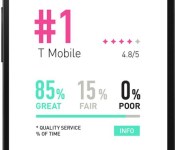
Finding a reliable cellphone carrier is tricky when even a regional performance test can’t prove that you’ll get a good signal in your neighborhood. That’s where Glove’s new Android beta comes into play. The app monitors the areas where you use your phone the most, comparing them with crowdsourced quality reports; after three days, Glove will suggest the carrier with the best-rated service in those areas. Right now, the beta’s US recommendations are limited to New York City and San Francisco, and only with the top four carriers. You’ll also have to wait if you’re looking for the iPhone version. Still, the software may prove a huge boon if you’re thinking of switching providers.
Filed under: Cellphones, Wireless, Mobile, Verizon, Sprint, AT&T, T-Mobile
Source: Google Play, Glove

New Google WiFi app could automatically log you into Starbucks and other public hotspots

Google is working on a new WiFi app that could take a lot of the drudgery out of accessing public hotspots. According to our sources, the search giant has built Android and iOS versions of an app that automatically authenticate and connect to its free hotspots inside Starbucks stores or wherever they are available. Google is currently trialling the Android app at its Mountain View HQ and has plans to offer an iOS app too.
For now it looks like a very limited test, and there’s no definite guarantee that Google will release it officially. Nevertheless, we hear that Google has internally discussed linking the app to its rollout of faster WiFi connections to all 7,000 Starbucks stores in the US, connecting Latte-drinkers to ‘Google Starbucks’ hotspots with no button presses required. Currently, Starbucks customers need to find the access point, open their browser and agree to Google’s terms and conditions. Google may also expand its partnership with Boingo, extending logins to locations where it’s footing the bill for free wireless. The app could utilize a users’ Google account and install a dedicated security certificate on their device to automatically authenticate devices when a connection is available.
It’s a little known fact that Google was one of the first companies to offer free city-wide wireless internet when it launched Google WiFi in 2006. The company rolled out over 500 streetlight hotspots across Mountain View to provide access to all of its residents, but as smartphones and tablet use boomed, the network struggled to cope with demand. Users were also required to log in with a Google account to access the service. We’re told that Google is working to improve connectivity in the city, and that it has specific plans to roll out Google WiFi to more locations across the US and Canada.
Speaking of which, the search giant has already donated $600,000 to equip 31 of San Francisco’s public parks with free WiFi for at least two years. However, its efforts to expand beyond that have been hampered by negotiations with city authorities and a lack of spectrum. To counter the spectrum issues, Google has teamed up with Microsoft, Motorola and major cable companies to lobby the US government to free up bands for unlicensed uses. Google has said it will provide Starbucks stores with a 100x speed boost in Fiber cities like Austin, Provo and KC, and is now exploring the feasibility of deploying fiber connections in 34 US cities. That could see it expand its Google WiFi footprint significantly.
Fleksy ramps up iOS keyboard app integration as SDK exits private beta

Fleksy unveiled its first SDK for iOS in December of last year, finally bringing a third-party keyboard to iOS for the first time ever — as long as it was integrated into the app, of course. After a couple of months of testing and feedback, Fleksy announced today that the SDK has exited its private beta and is now ready for adoption on a much larger scale. Indeed, this means that Syntellia’s alternative predictive touch keyboard is now available for any developer to use for free, no sign-up required, which Fleksy COO Ioannis Verdelis hopes will translate to more apps jumping on the Fleksy bandwagon.
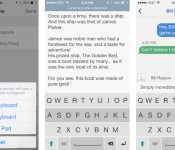
One of the reasons Verdelis is confident this will happen is because the new open SDK has been polished and streamlined so that integration is extremely easy, requiring “zero lines of code.” We should note, however, that you will need to have the standalone Fleksy app installed on the device as well. If you don’t already have Fleksy installed, the supported app links to the App Store and downloads it for you. This way, compatible apps hook up to the same Fleksy keyboard settings and dictionaries, so that your Fleksy experience is shared across all of them. You’ll know an app supports it when you notice a Fleksy button appear next to the cut, copy and paste options in a text field.
Other improvements to Fleksy include better accuracy, a more robust dictionary, new languages and additional color themes to match all the hues of the iPhone 5c. Some of the apps that have already signed on to the new SDK include You Doodle, Cotton Notes, Write for iOS, Tap Forms Organizer, SnapStatus, Vert 2 and MUDRammer, with more on the way. If you’re a developer keen on trying this out, hit the source link below. If you’re just curious about Fleksy, either download one of the listed apps or check out the demo video after the break.
Filed under: Cellphones, Mobile
Source: Fleksy SDK

Tinder security flaw exposed users’ exact locations for several months

Have you been using Tinder (an iOS/Android dating app that shows pictures of users in your area) these past months to try and find the one? Well, if you’re deathly scared of stalkers, you might want to sit down. Apparently, there was a flaw on the dating app’s API, which made it possible to pinpoint user distances down to a hundred feet. According to a report published by whitehat hacker Max Veytsman from Inside Security, he discovered the vulnerability in October 2013. It could’ve been around since July, though, as it was a byproduct of the fix issued for a previous flaw that revealed users’ latitude and longitude coordinates.
To demonstrate how damaging the security loophole could be, Veytsman created an app that automatically shows a user’s location on Google Maps by using triangulation, as you can see in the video after the jump. Thankfully, Tinder’s management was more receptive to feedback than Snapchat’s, and though Veytsman didn’t receive a reply to half his emails, tests he conducted on January 1st revealed the issue no longer exists. Now, we can only hope no ne’er-do-well had any success matching up Tinder addresses with Snapchat phone numbers.
Filed under: Misc
Via: Fast Company
Source: Inside Security
 AIVAnet